
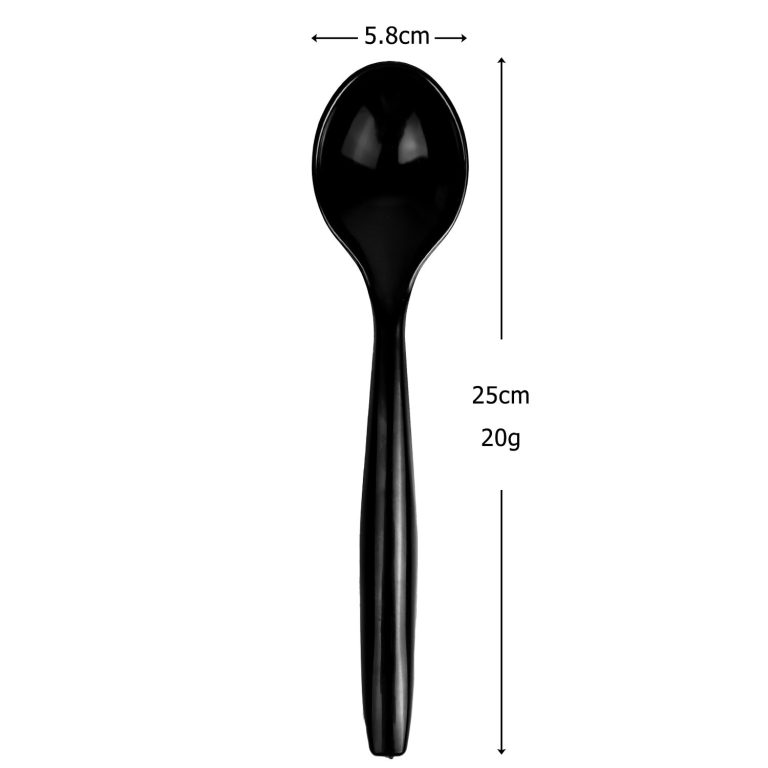
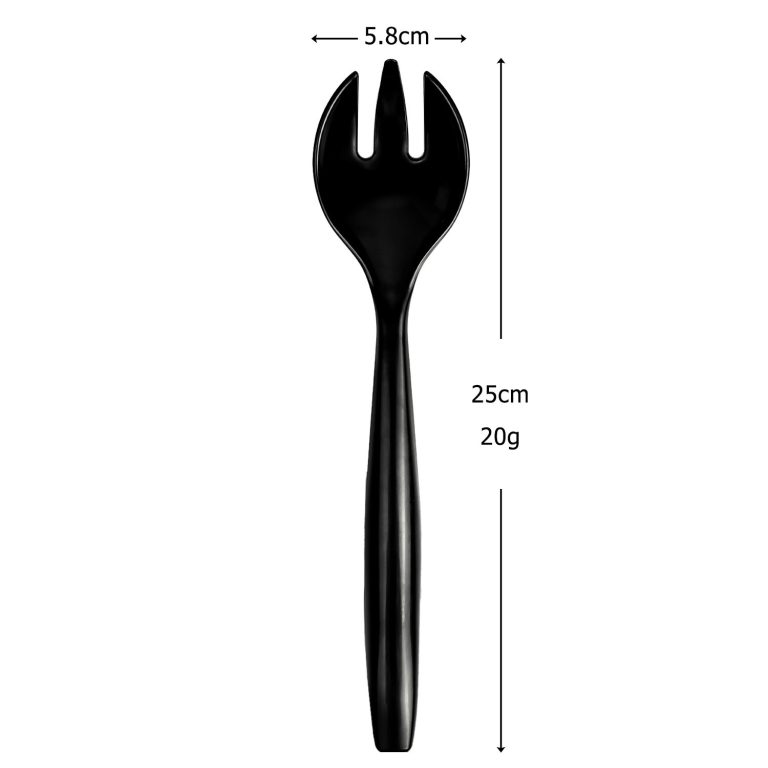
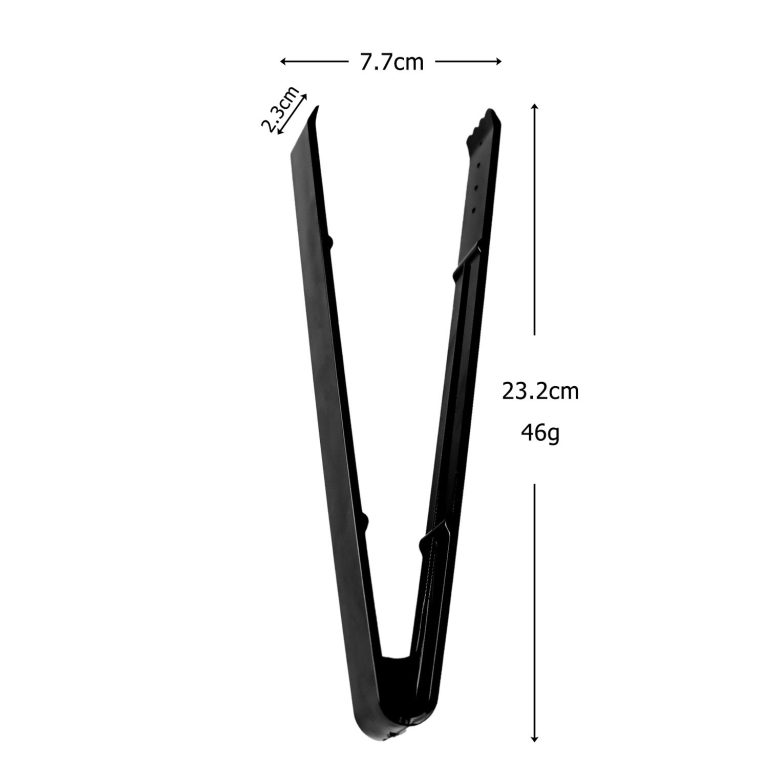
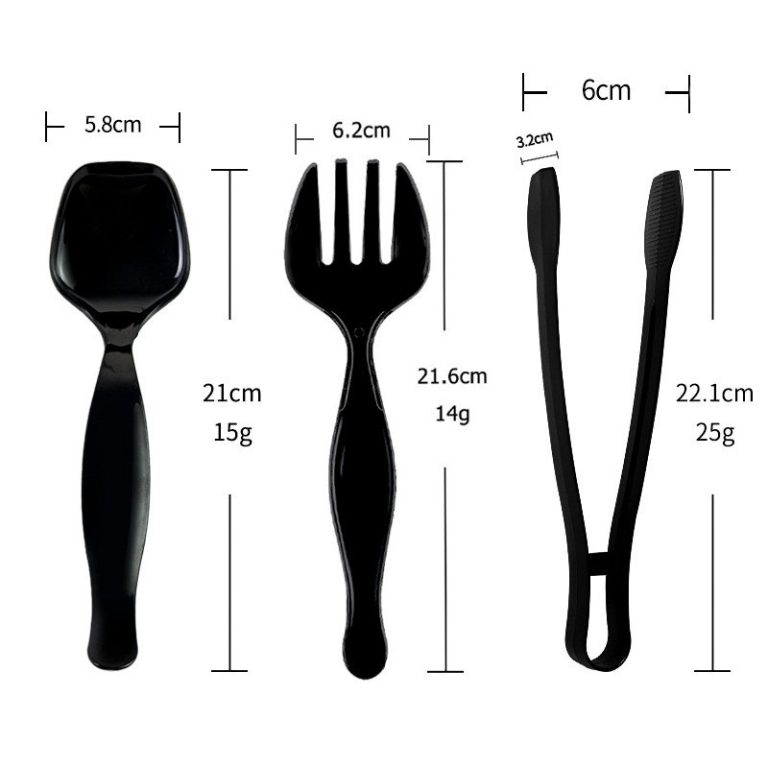
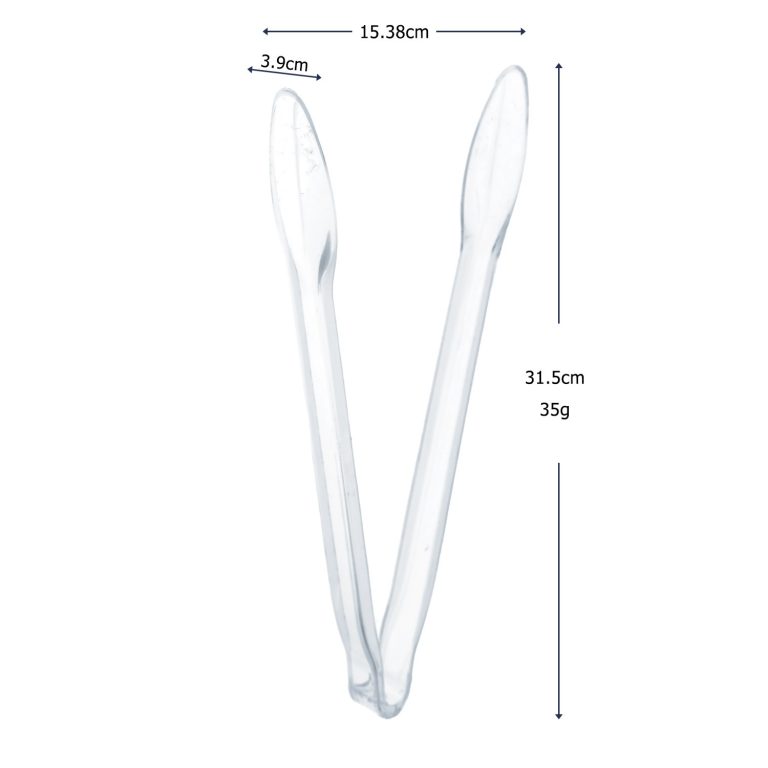
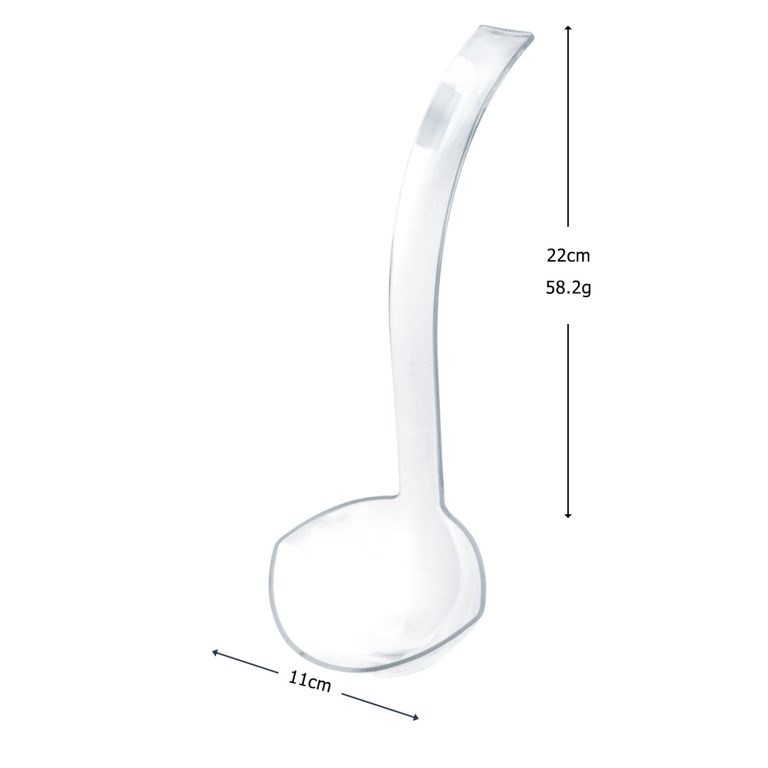
Clear plastic cutlery is the part of a disposable range that cannot hide anything. On an opaque piece a short shot, a flow line or a scratch disappears into the colour; on a see-through piece the same faults sit on the table in front of the guest. That is why “clear” behaves less like a colour choice and more like a quality claim, and why it is worth writing down as a specification rather than picking a line from a photo.
What “clear” means in disposable cutlery
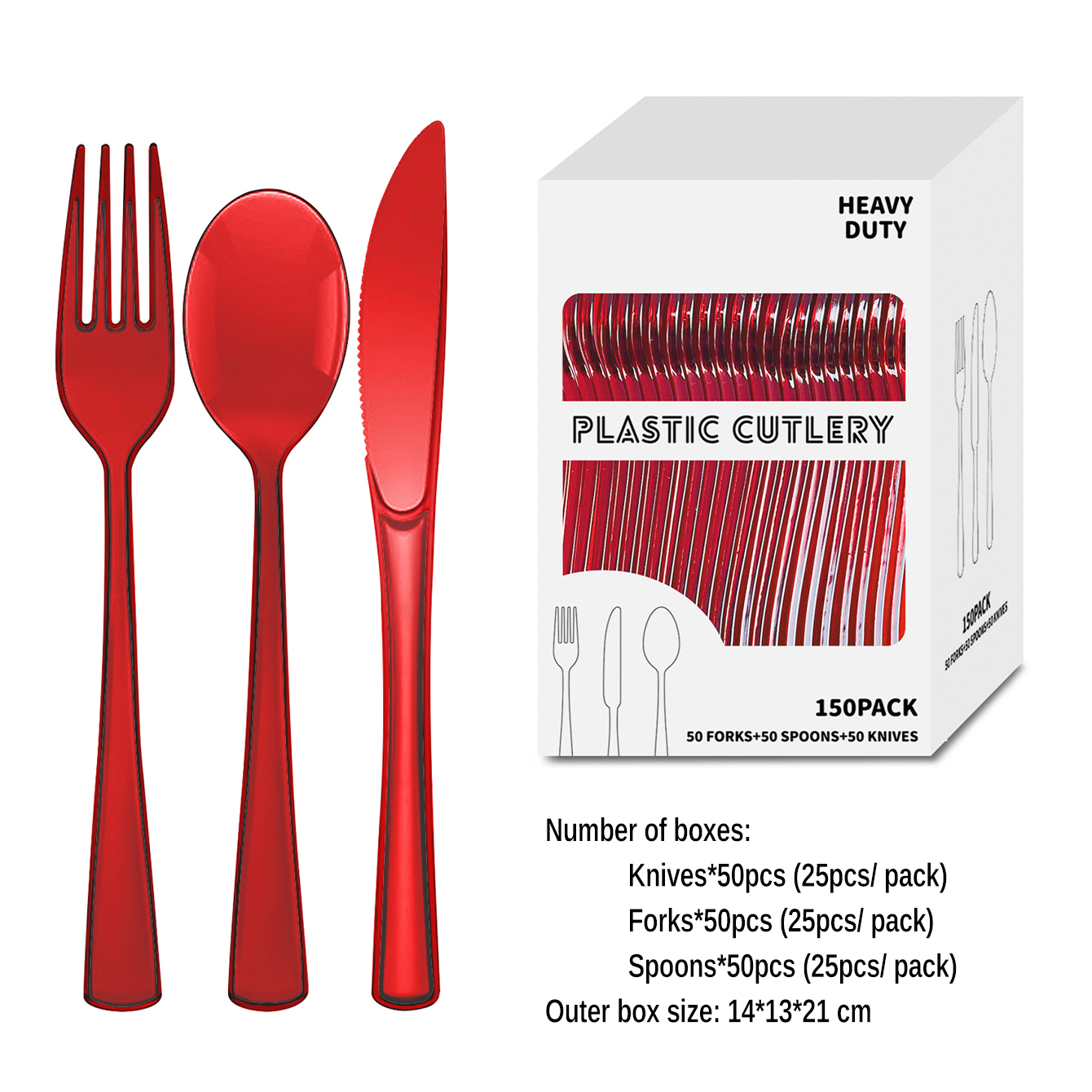
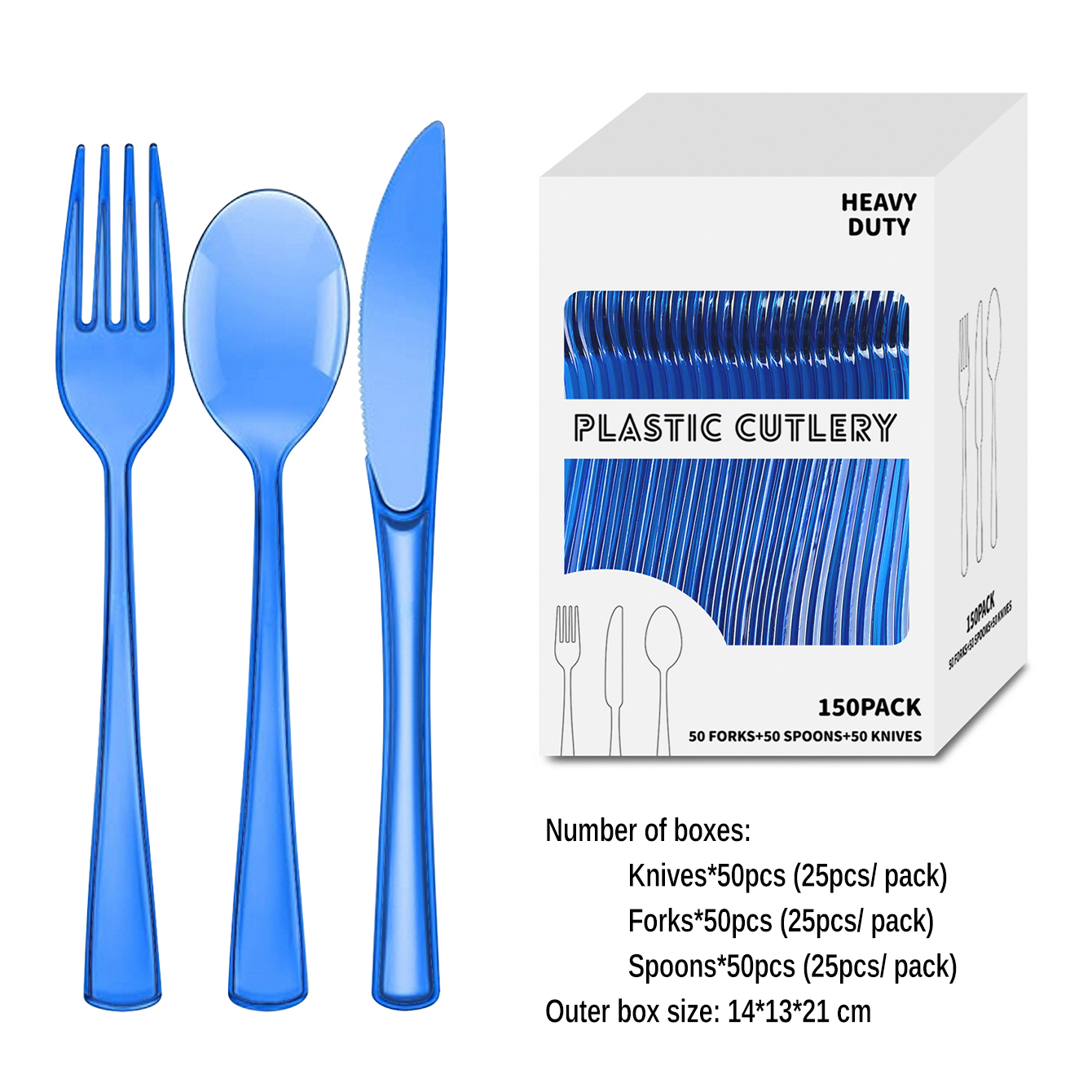
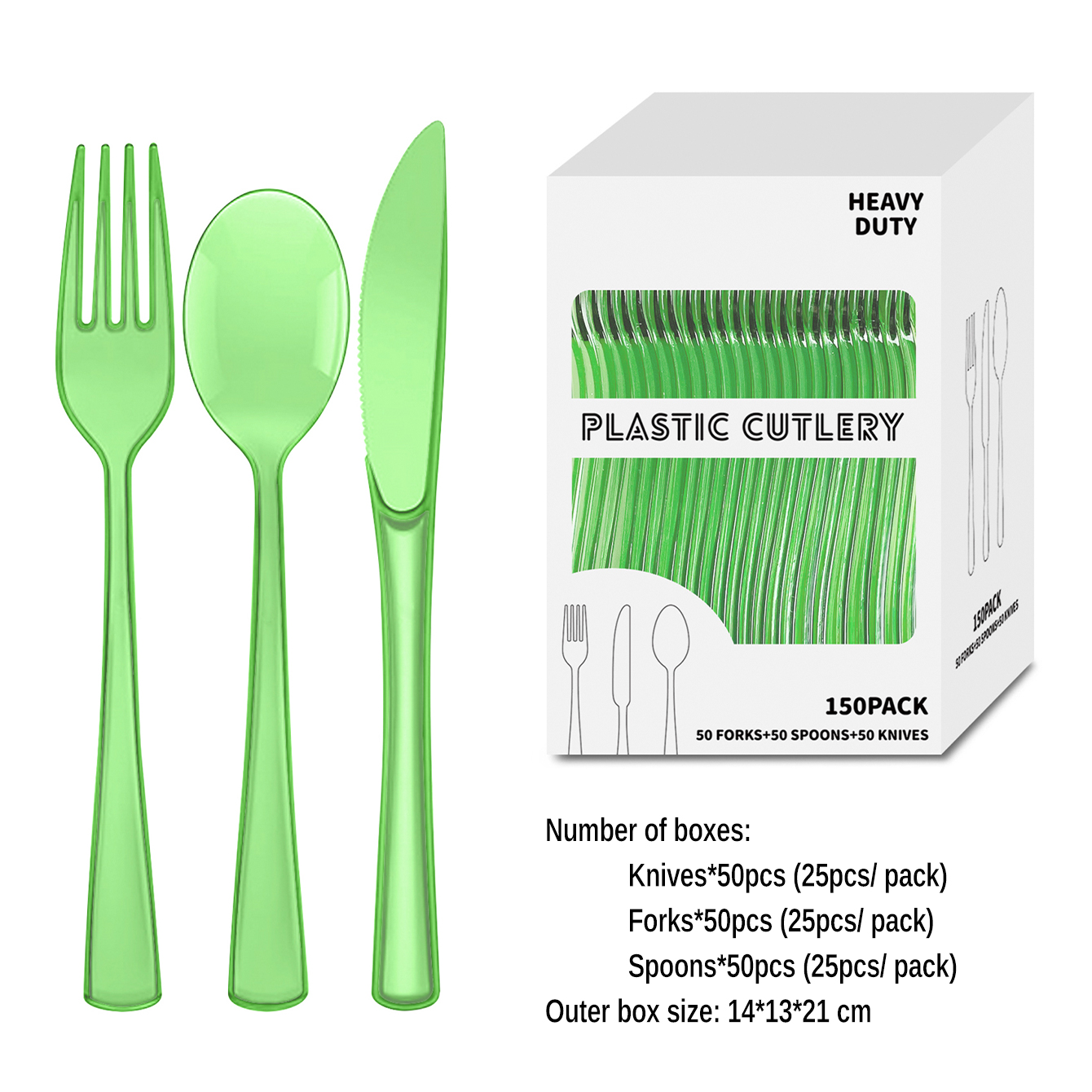
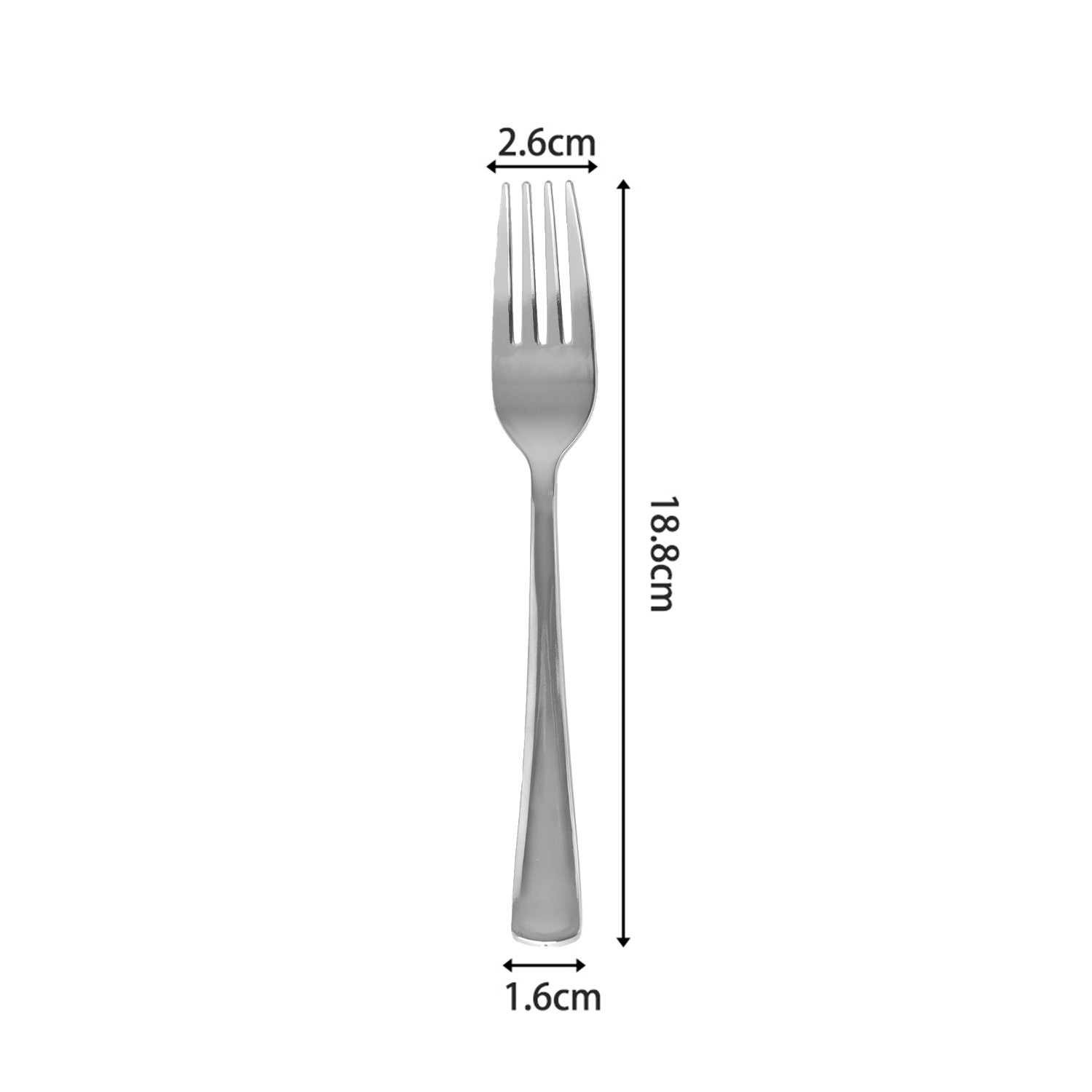
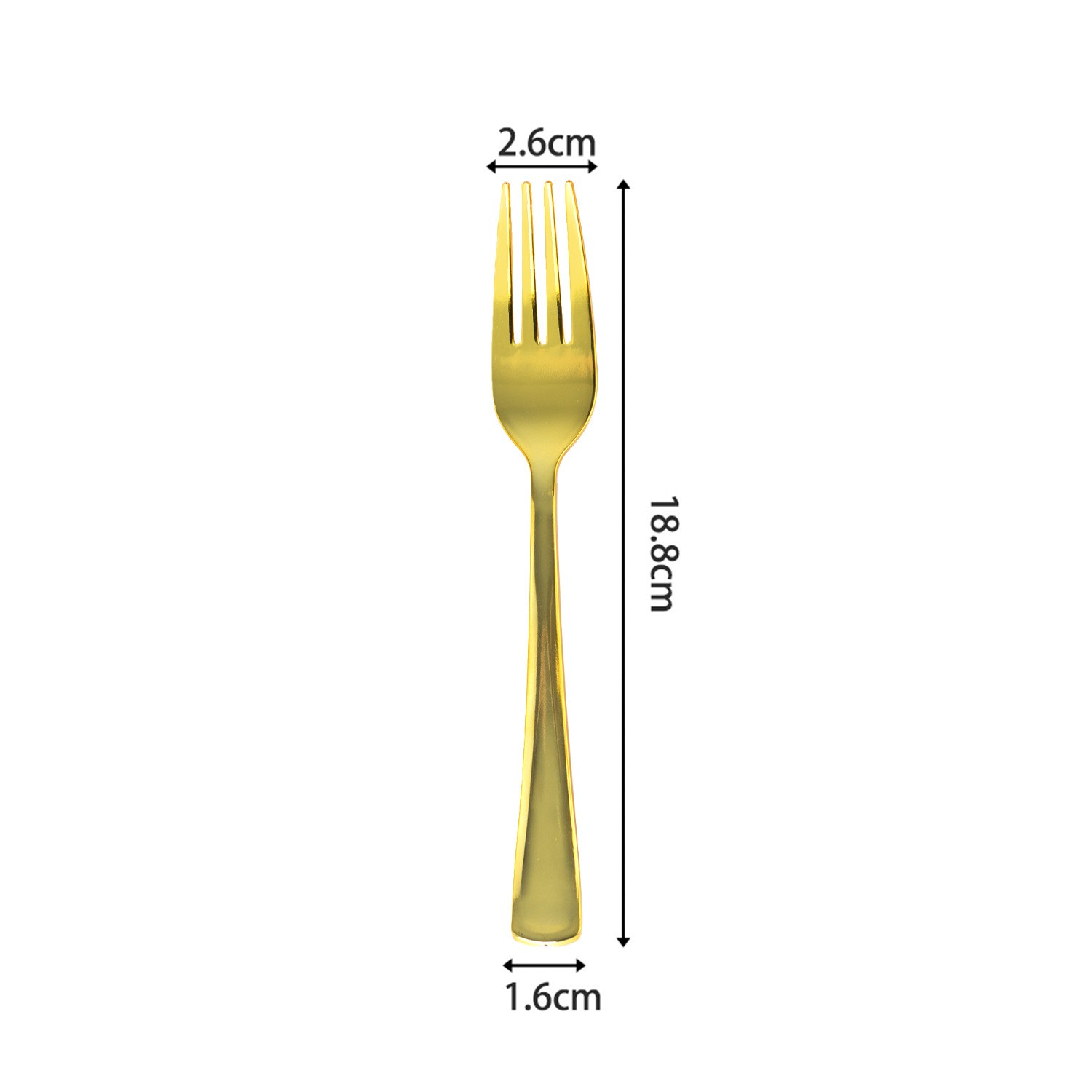
Buyers use the word for three different things and they do not order the same way. Water-clear is polystyrene moulded with no pigment at all: the piece is glass-clear and the mould surface is fully visible. Tinted translucent is the same resin with a small amount of colour, so light still passes through — the piece is translucent — but it reads red, blue, green or black. Metallic-look is a clear or tinted body with a silver or gold finish, sold as a formal upgrade rather than as a neutral.
All three are called “clear” in catalogues, and the difference matters at quote stage: water-clear and tinted share a mould and a piece weight, while metallic lines are a separate finish with their own run. If the enquiry only says “clear”, the factory will quote the tinted line.
Three pieces, four numbers that decide the order
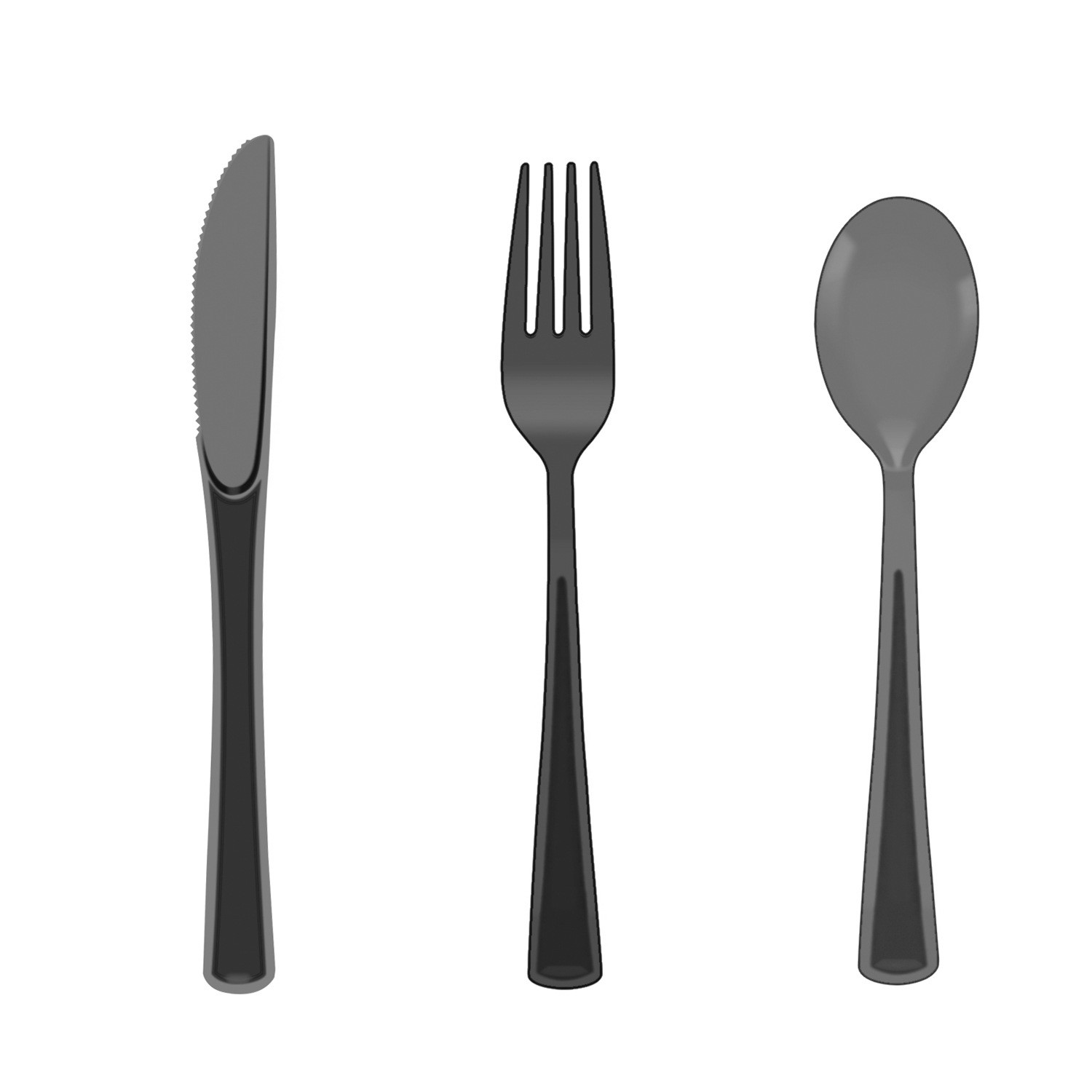
A cutlery order is decided by length and weight more than by shape. Our see-through pieces share one set of dimensions across the colour range, so moving from red to black does not change the tooling:
| Piece | Length | Weight | What buyers actually compare |
|---|---|---|---|
| Knife | 19.6 cm / 7.75 in | 5 g | Edge form, and whether the blade flexes under pressure |
| Fork | 18.4 cm / 7.25 in | 5 g | Tine count, tine length, and how the outer tines splay |
| Spoon | 17.2 cm / 6.8 in | 5 g | Bowl volume and bowl depth, not handle length |
Those numbers are nominal. Ask for the tolerance on length and piece weight before approving a sample: a 5 g fork that arrives at 4.6 g is a different product in the hand even though the drawing has not changed.
What transparency exposes on the mould
Four faults that are invisible on a coloured piece become selling problems on a clear one. Short shots leave a rounded, cloudy corner where the resin never filled the cavity. Flow and knit lines show as faint silver streaks where two resin fronts met. Gate marks appear as a small matte dot at the injection point. Sink marks show as a shallow dimple on the thick part of the handle. None is a food-safety issue, but all are what a buyer sees when the carton opens.
Scratches are the fifth, and the one that decides repeats. Clear polystyrene whitens where it is scratched, so a piece rattled around a drawer looks used after one event; the same scratch on an opaque coloured piece is effectively invisible. Run five checks before approving a sample: hold the piece against a window, bend the outer fork tine and let it go, drag a thumbnail across the handle, load the spoon bowl with the heaviest food it will carry, and cut through a piece of cold meat rather than a tomato.
Clear, tinted or opaque: three finishes, three jobs
Finish should follow the service, not the catalogue page. Water-clear suits buffets, hotels, tasting counters and any event where the table already has a colour story and the cutlery should disappear into it.
Tinted translucent is the workhorse. Colour in the resin lets a kitchen code stations, separate allergen or vegetarian service, or keep a bar’s cutlery out of the dining room’s, without printing anything. It is also what school, office and children’s party buyers reach for, because the piece reads as a colour rather than as plastic.
Opaque colour and metallic do a different job. Solid colour hides scratches and wear and carries a retail range; silver and gold finishes read as a formal upgrade and are quoted as their own line, because the finish is a separate step and the machine is cleaned between runs. If a season mixes gold cutlery with plain clear, expect the two to ship on different schedules.
Heavy duty is a number, not an adjective
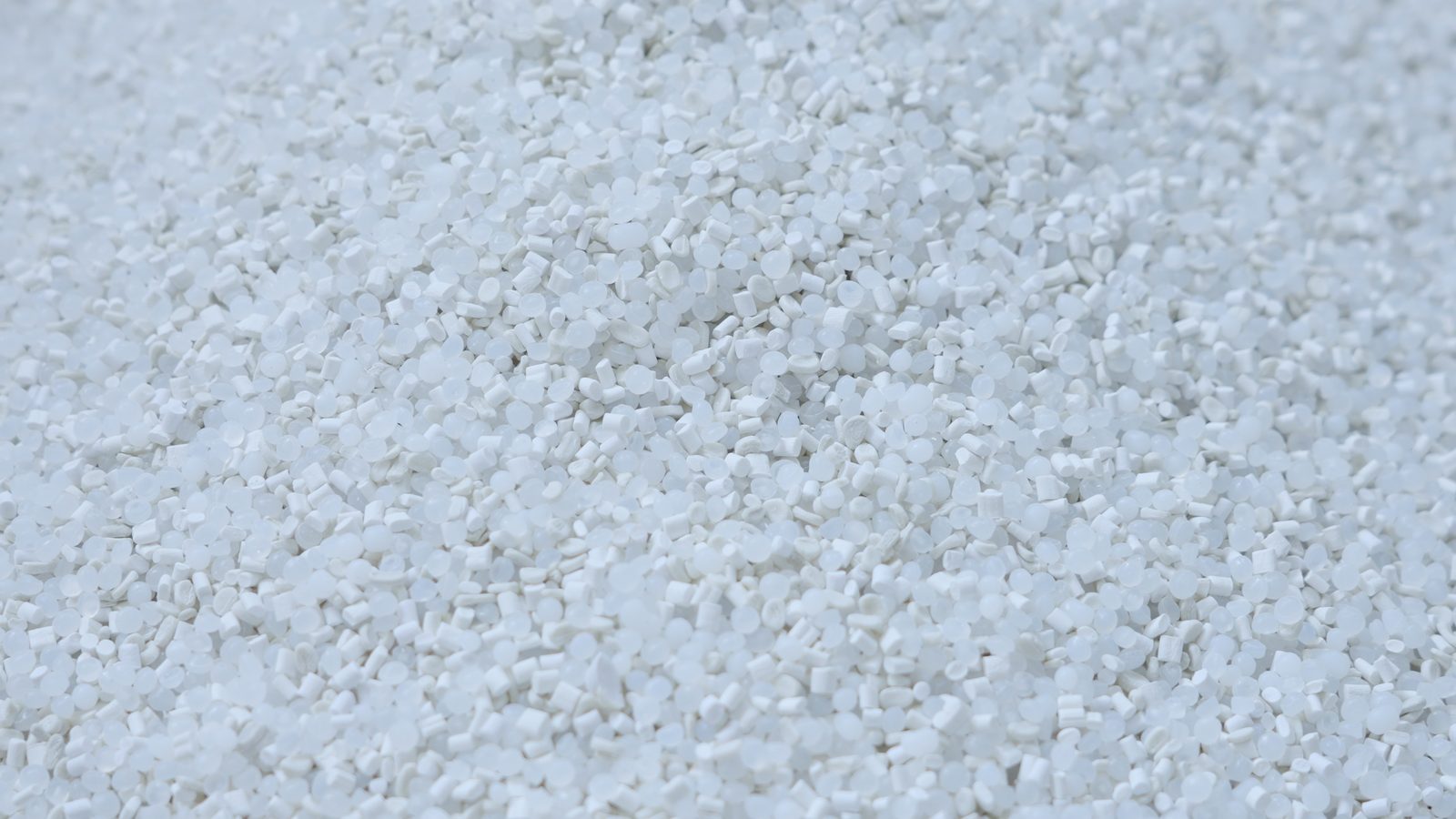
“Heavy duty clear plastic” is the phrase most buyers type and the least defined thing in the category. There is no standard behind the words: a 5 g fork and a 7 g fork are both sold as heavy duty, and neither label tells you which one survives a seated dinner. Grade the piece on three numbers instead — piece weight in grams, resin, and a bench result. Polystyrene — the resin behind most see-through cutlery and a food-contact material under 21 CFR 177.1640 in the US — is stiff, glass-clear when unpigmented, and more likely to snap than to bend, which suits buffet and party service and rules it out for a freezer or a microwave.
The bench test takes ten minutes on a sample: bend each piece until it yields, load the spoon with the heaviest item on the menu, and cut something firm with the knife. A supplier who will not put a gram figure on the quotation is quoting a look, not a product; the wider grading argument is set out in heavy duty plastic cutlery grades and bench tests, and the menu-based view of the same pieces is in plastic cutlery in bulk by menu and pack format.
Packing: loose, wrapped, kits and party sets
The same fork ships four ways, and the format changes the landed cost more than the piece does. Loose bulk in poly bags is cheapest per piece. Individually wrapped pieces suit takeaway and hotel room service. A single-serve kit adds a napkin, often with salt and pepper. A party set bundles the whole table:
| Format | What is in it | Who buys it |
|---|---|---|
| Loose bulk | Forks, spoons or knives bagged by count | Caterers, canteens, buffet lines |
| Wrapped | One piece per film wrap | Takeaway, room service, clinics |
| Single-serve kit | Cutlery plus napkin, sometimes salt and pepper | Delis, airlines, grab-and-go |
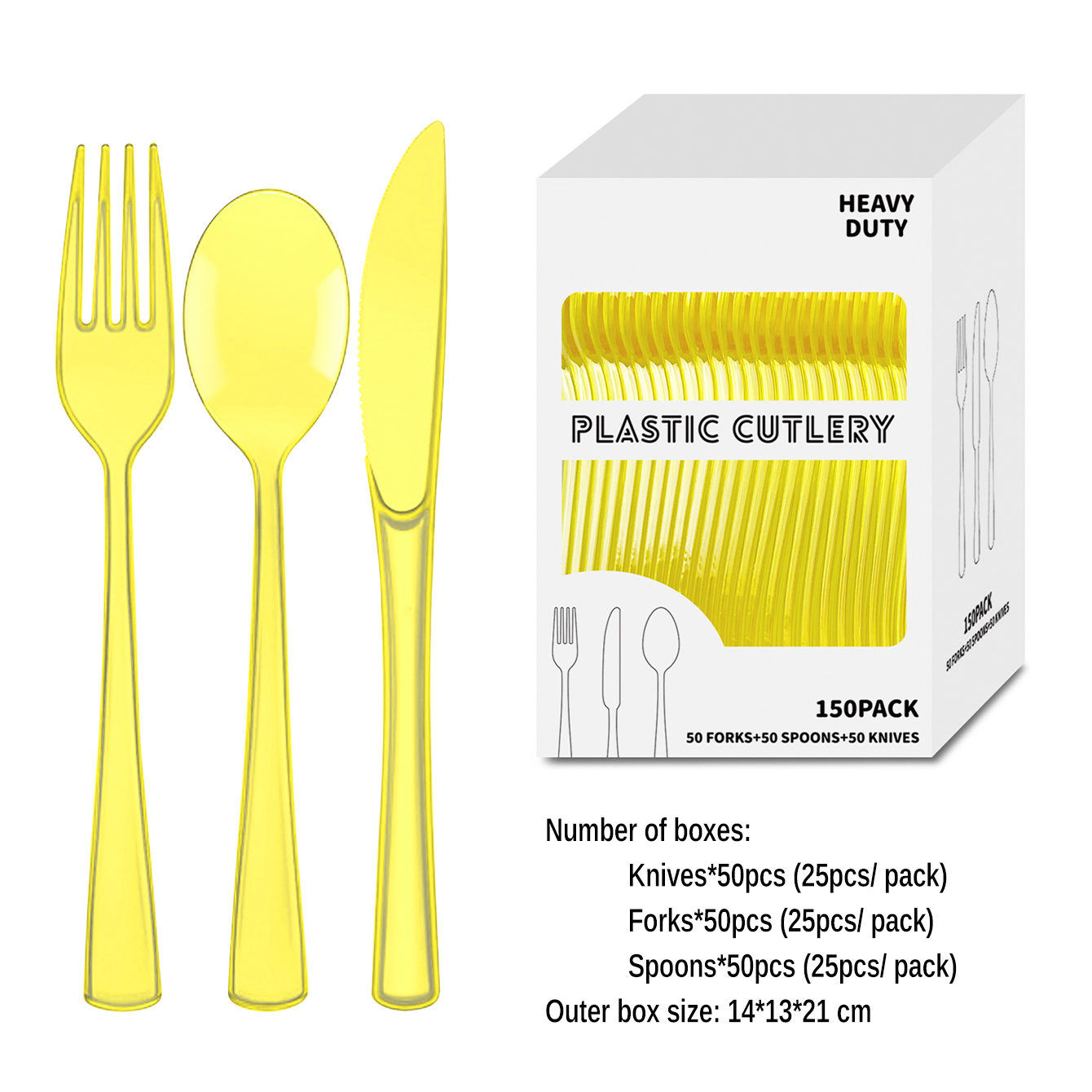
| Party set | 25 knives, 25 forks and 25 spoons, 25 each of 7 in and 9 in plates, cups, napkins and straws, plus one tablecloth | Retail, party shops, one-stop event buyers |
A party set in our own range packs into a carton of 14.6 × 4.2 × 9 in at 2 kg, the figure a retail buyer needs before agreeing a shelf plan. Ask for carton dimensions and gross weight with the quotation. Sets like these are covered in party tableware sets: parts and colour matching.
Matching clear cutlery to the rest of the table
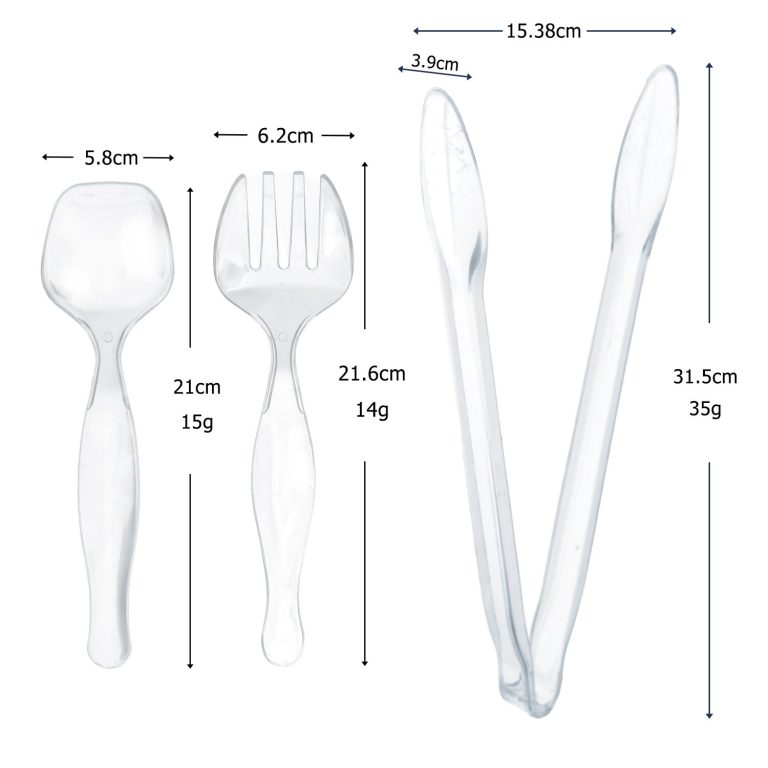
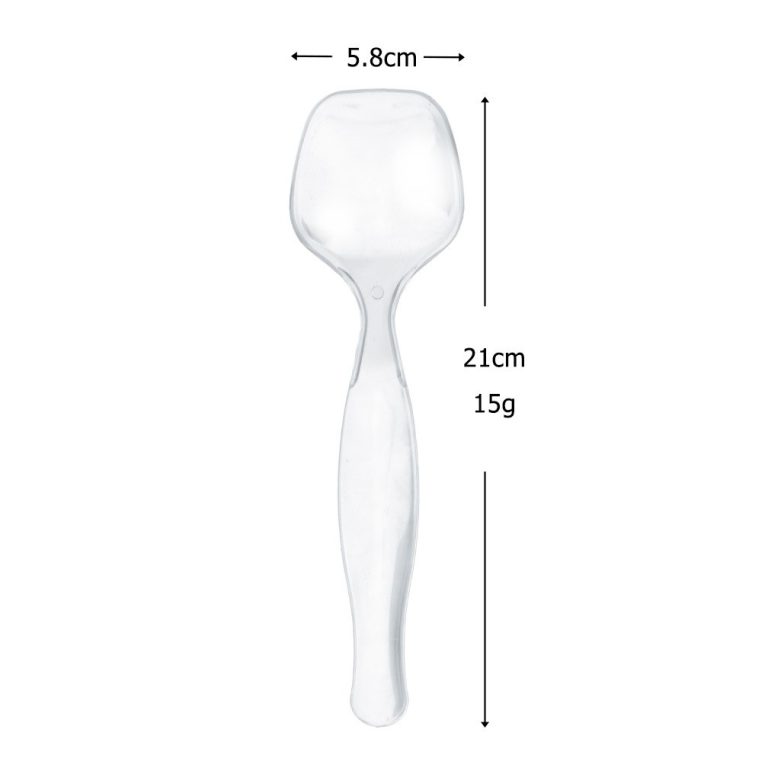
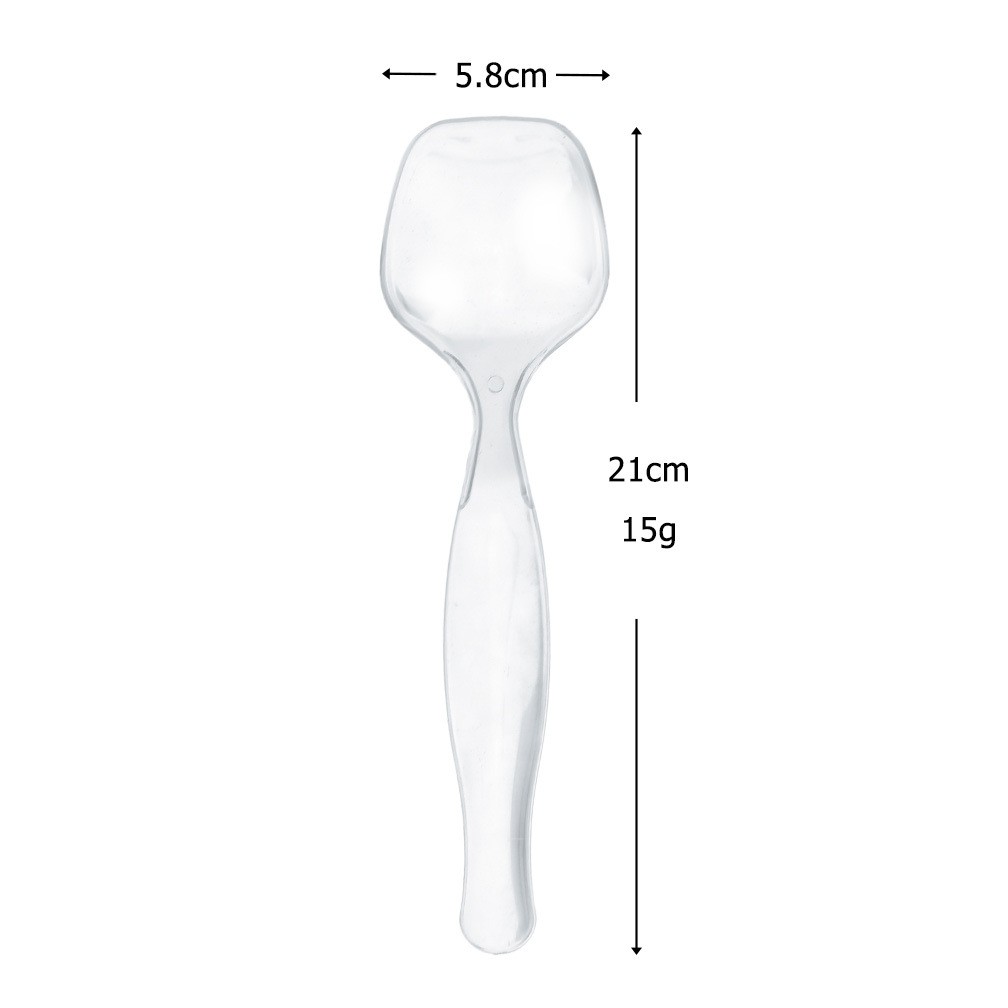
Clear cutlery rarely sells alone. It is bought to sit beside clear cups in 9, 12, 14 and 16 oz, clear plates in 7 and 9 in, and clear serving spoons for the buffet line, so the whole setting reads as one material. Add a plain PEVA tablecloth and a two-layer 13 × 13 in napkin and the table carries a single colour story without a single printed element.
Fix the plastic family first, the colour second. Once a buyer commits to a see-through look, every additional item has to be checked for the same degree of transparency: a water-clear cup beside a heavily tinted fork reads as two different products even though both are called clear. Send the reference piece with the enquiry and ask each supplier to match against it, and apply the same test when the order grows into a party tableware set.

What to put on the enquiry
- Piece list and quantity: knives, forks and spoons counted separately, because they are consumed at different rates.
- Finish: water-clear, a named tinted colour, or a metallic line.
- The piece weight you will accept, in grams, and the length tolerance.
- Packing format: loose bagged, wrapped, single-serve kit or party set, with count per bag and per carton.
- Any coordinated items — cups, plates, napkins, tablecloth — so they can be matched on one colour card.
- In-hand date and destination port, so production can be planned around the factory shutdown.
Runxiang Plastic moulds PS cutlery and prints and cuts PEVA tablecloths, skirts, runners and napkins on our own lines in Changzhou, and has supplied party, retail and catering buyers for over 20 years. Clear, tinted and metallic lines are quoted from your piece list and packing format, and OEM and ODM work starts from your sample or artwork.
Shop the range: plastic cutlery · party tableware sets · plastic plates · cups and drinkware · serving utensils.
Next step. Send your piece list, finish and packing format through our contact form, or see how gram weights, pack counts and carton sizes are turned into a number on How we quote. Related reading: bulk cutlery by menu and gold plastic cutlery finishes.