
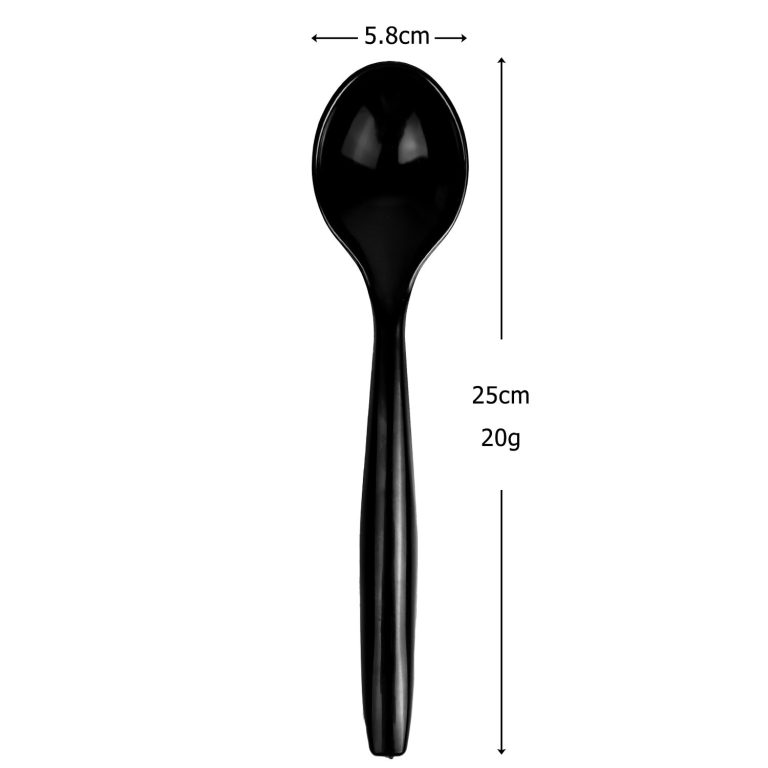
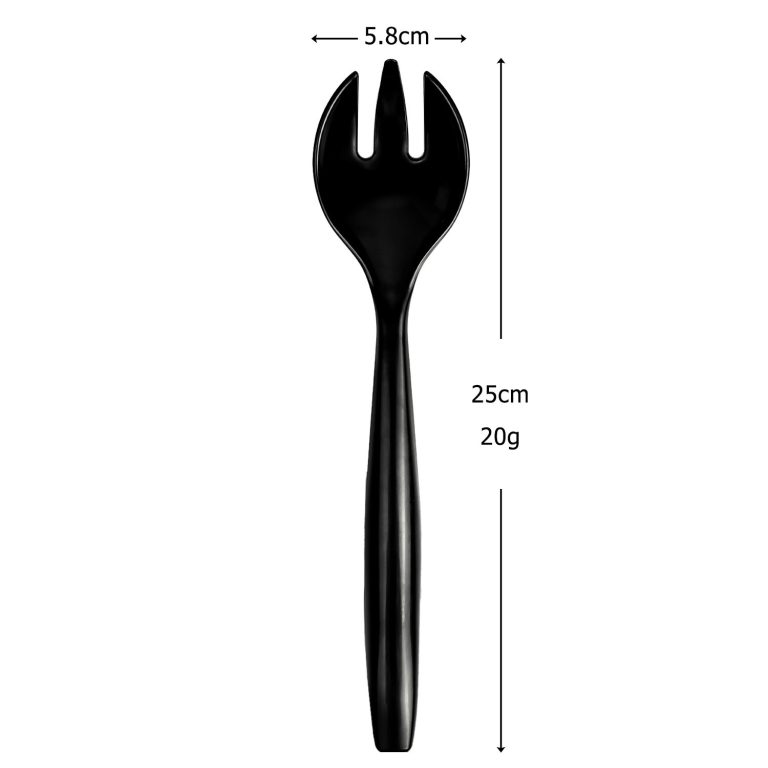
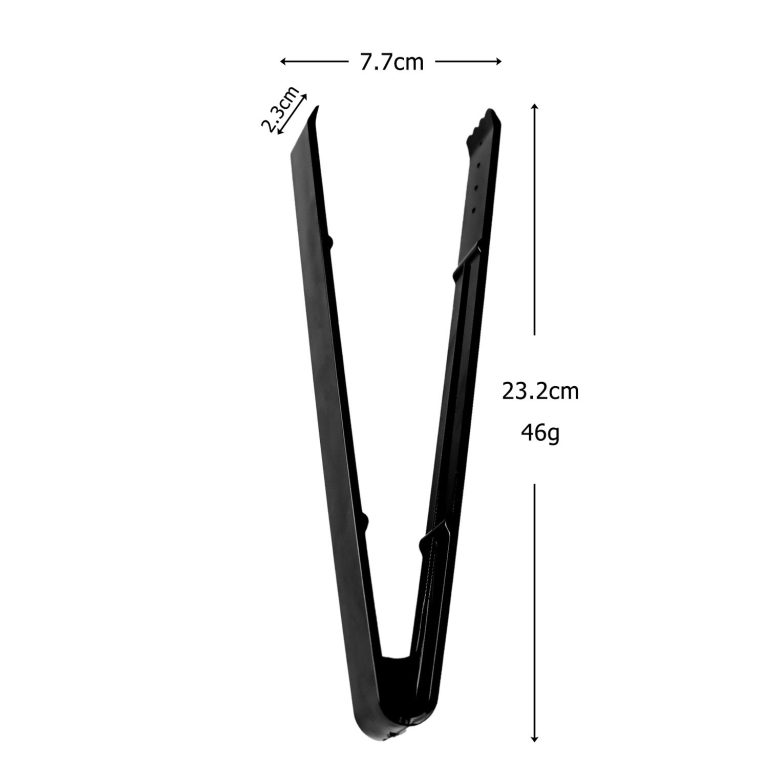
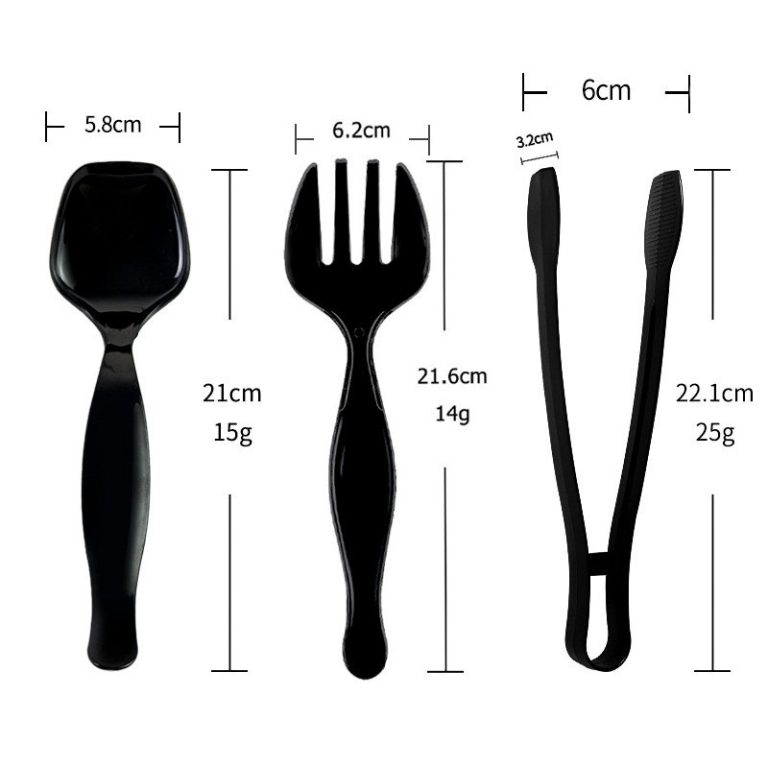
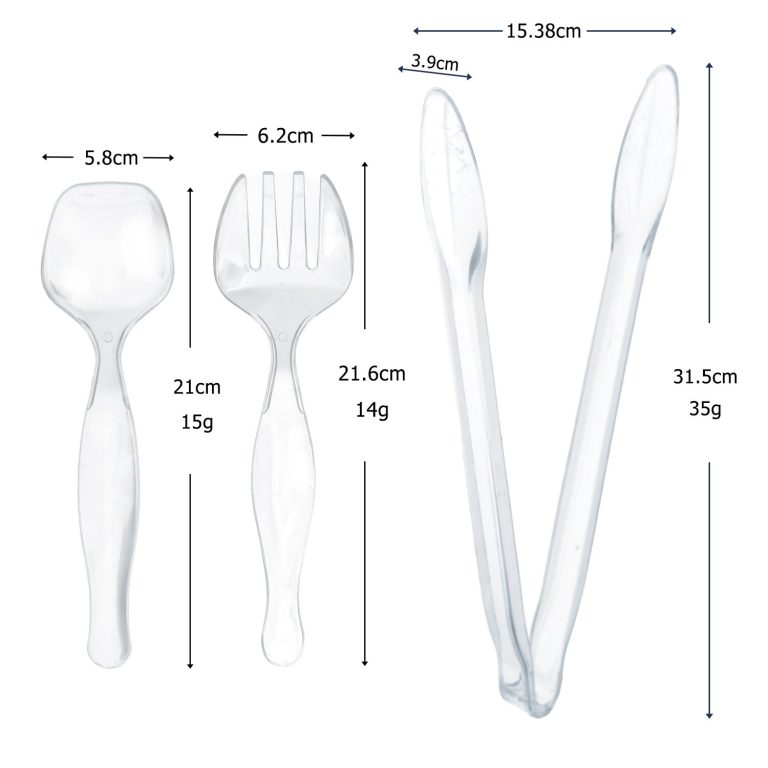
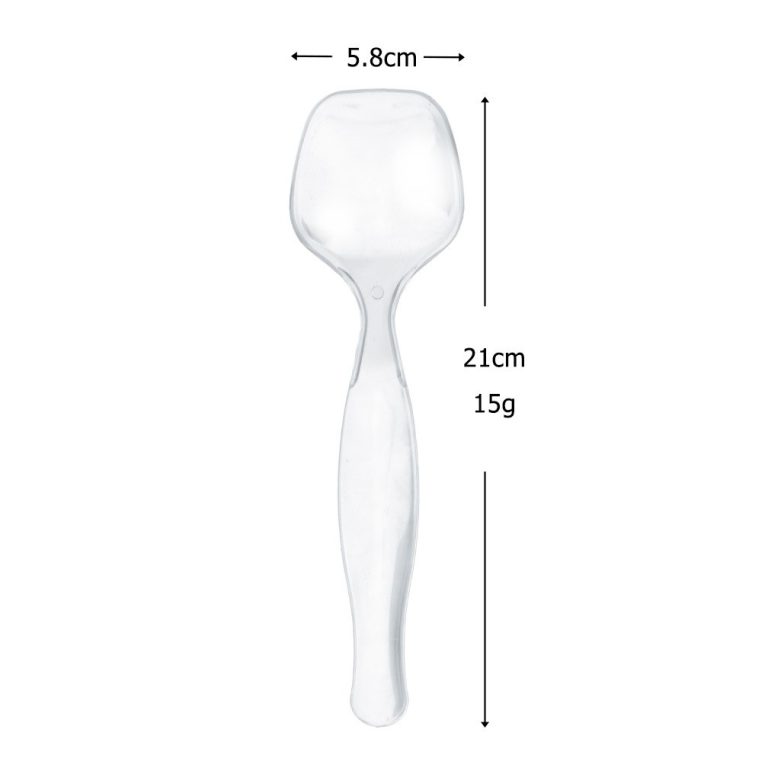
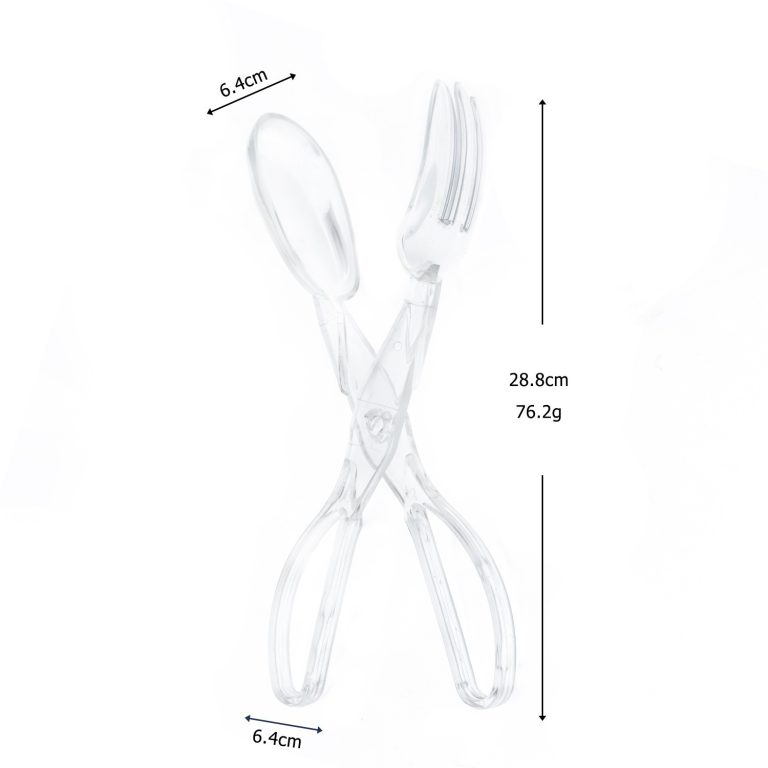
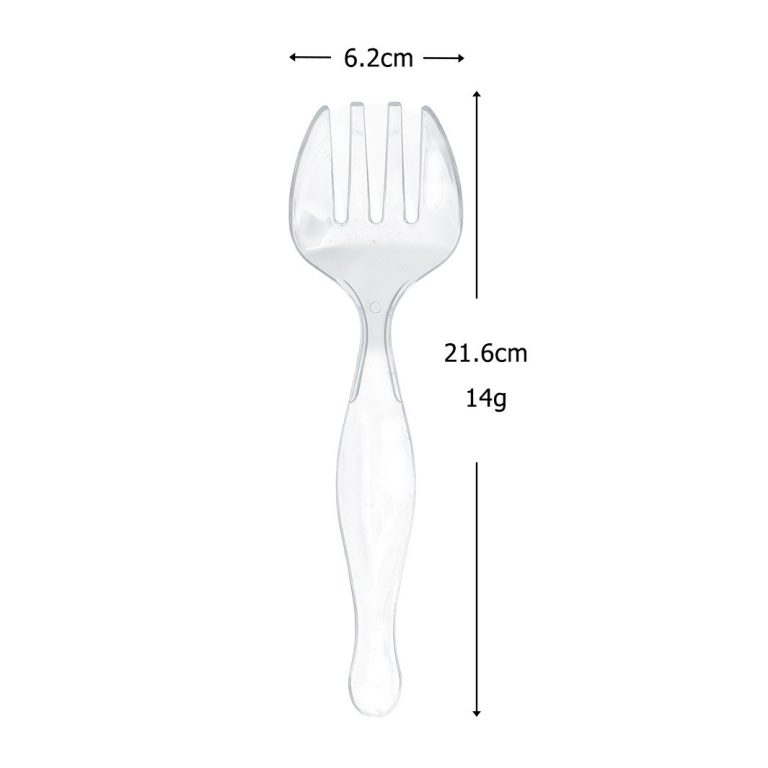
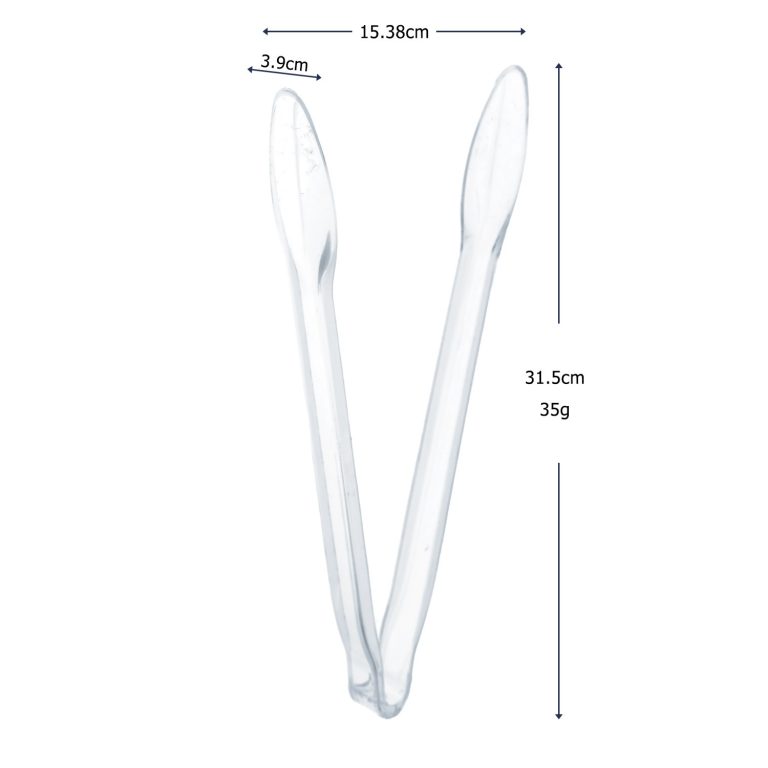
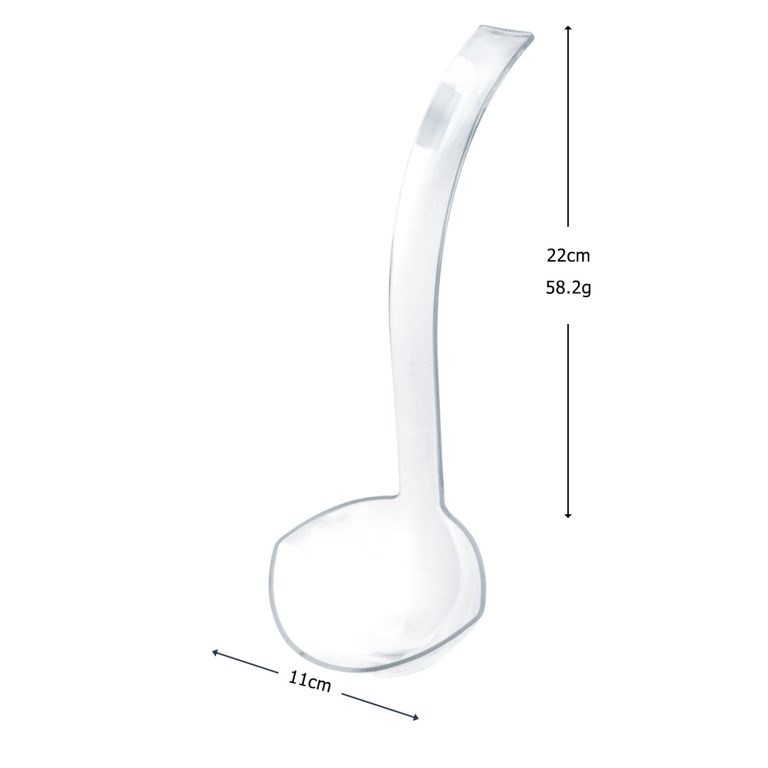
A buyer sends one line to three factories: “gold cutlery, 2,500 pieces”. Two quotes come back close enough to argue about, one 40% higher, and the samples look identical in a photo. On the table they stop being identical. One fork is a PS blank with a thin electroplated metal layer, one is moulded in gold pigment through its thickness, and the plate beside it is simply printed with a gold border. A buyer who cannot name which of the three he ordered gets a second batch that does not match the first.
This guide separates the three gold finishes we actually run, gives the piece weights and carton counts that decide the price, and lists what has to be on the order sheet so shipment two looks like shipment one.
1. Three routes to a gold piece
Gold on disposable tableware is never gold. It is an electroplated metal layer on a moulded PS body, a printed gold ink on a plate face, or pigment mixed into the resin. Each route uses a different process, wears differently in service, and cannot be judged from a photograph. Our plastic cutlery range covers the first two variants plus the plain colour line, which is why the same 5 g piece quotes at noticeably different prices depending on the finish named in the enquiry.
2. Electroplated cutlery: what the 5 g blank buys you
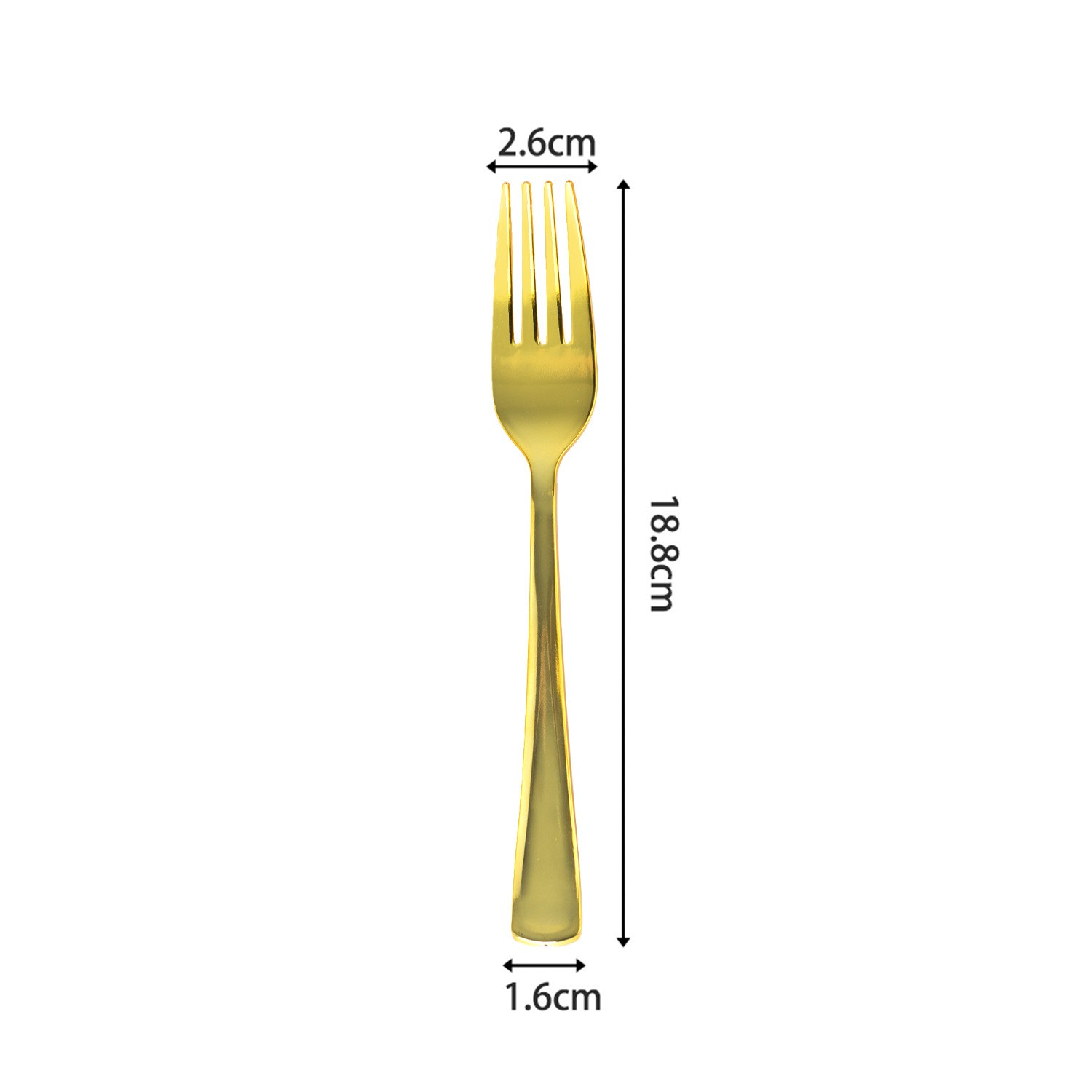
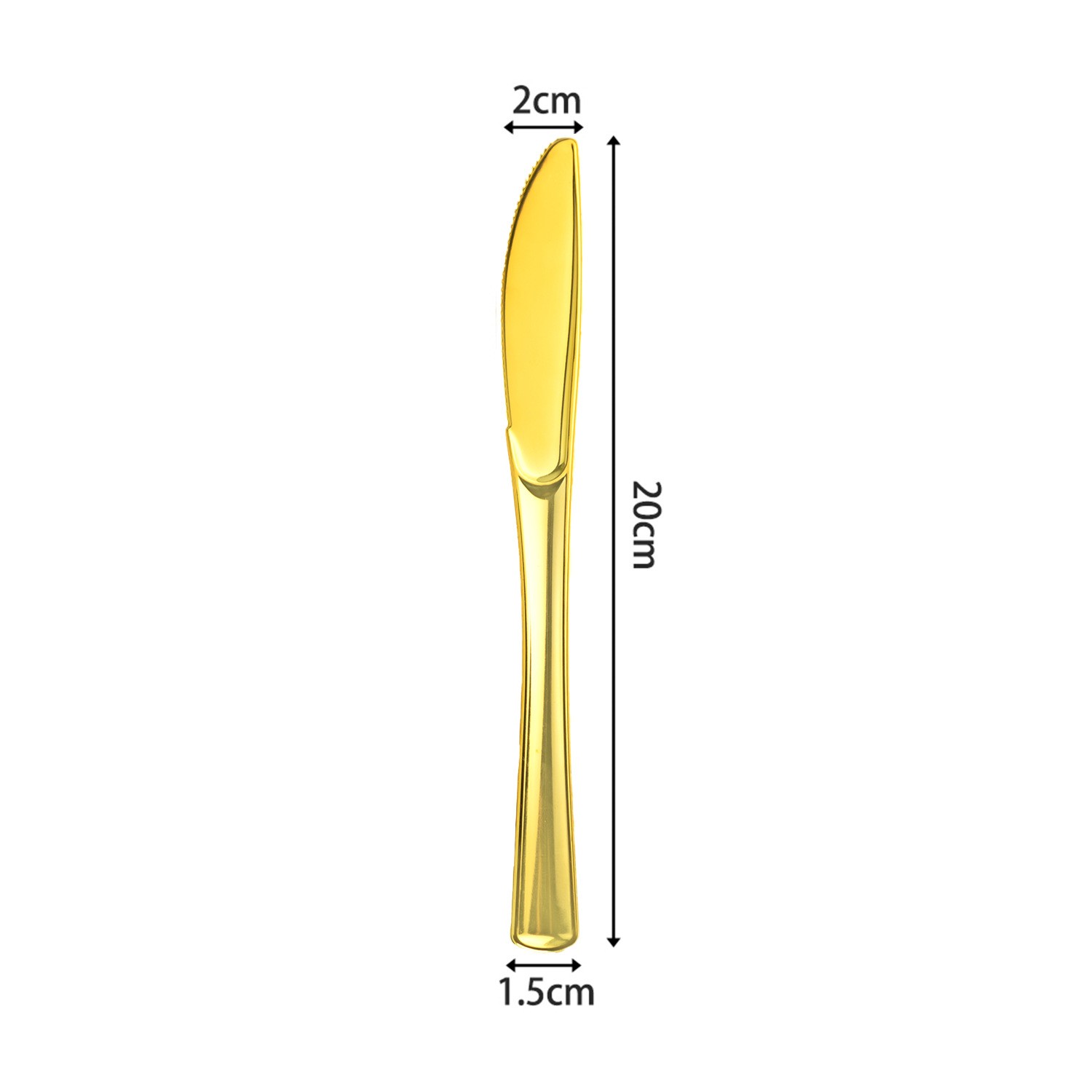
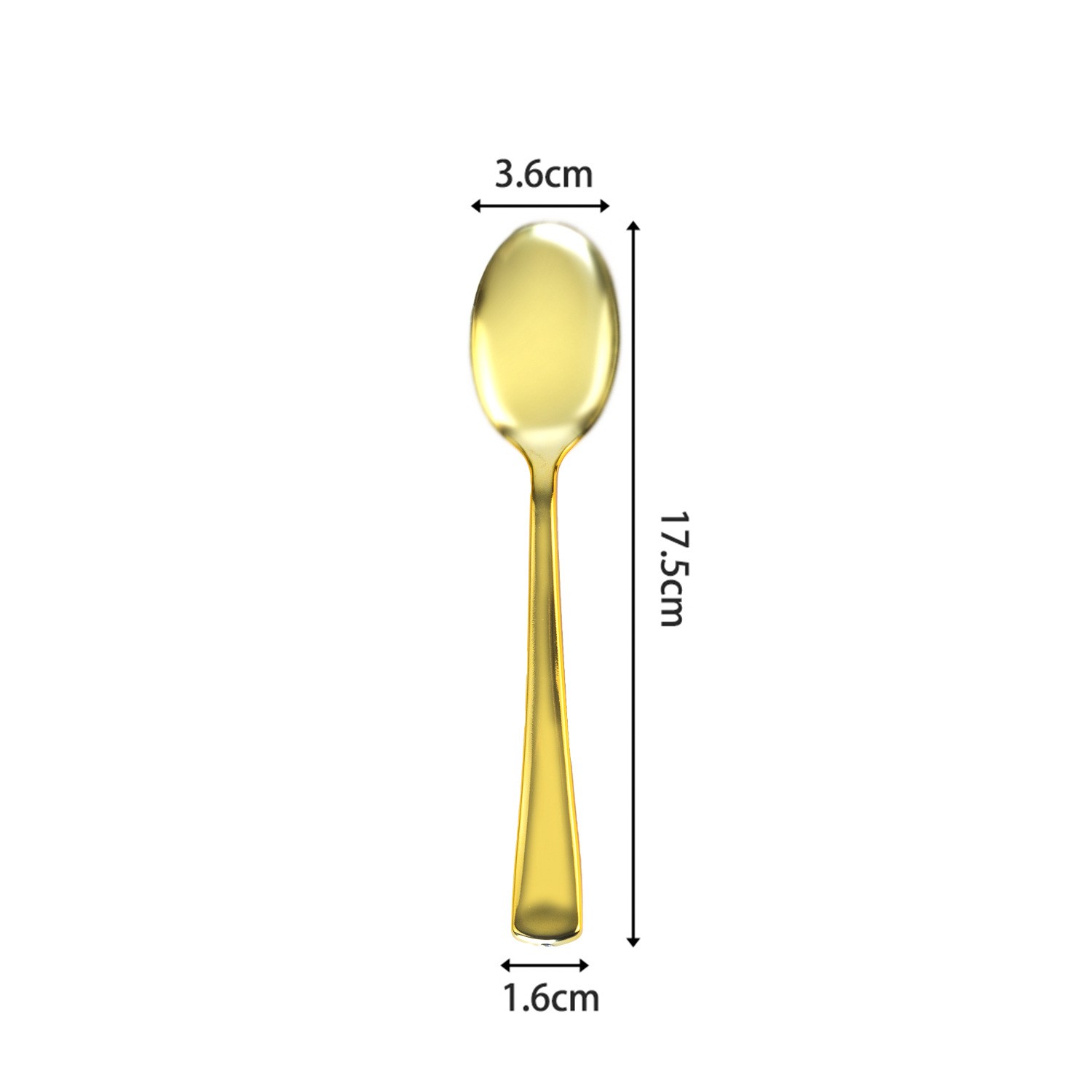
Our golden PS fork, knife and spoon and the silver version share one body: food-grade PS, injection moulded, then electroplated. Knife 19.6 cm, fork 18.4 cm, spoon 17.2 cm, 5 g each. That weight is the number to hold, because it fixes both the feel in the hand and the kilos per container.
Packing runs 25 pieces to an OPP bag and 100 bags to a carton, so 2,500 pieces per carton. Those bags are single-piece retail packs, not designed to be opened and resealed; a reseller who wants loose pieces for a dispenser needs a different packing line, not a different fork. Carton sizes differ by piece: 37 x 20 x 38.5 cm for the knife, 50 x 20 x 48.5 cm and 51 x 24 x 46 cm for the others. For freight, those dimensions matter more than price per 1,000.
Plating is a second pass after moulding, sitting between the moulding line and packing. That is where an order slips, which is why we quote finish, weight and bag format separately.
3. Pigmented cutlery: same geometry, no metal layer
The black, pink, purple and clear lines use the same 19.6 / 18.4 / 17.2 cm dimensions at 5 g, but colour sits in the resin rather than on the surface: a scratch shows as a scratch of the same colour, with no metal layer to thin at a tine tip and no plating bath in the lead time. What it cannot do is read as metal: if the reference shows a mirror sheen on a wedding table, pigment will not reach it. Ask for a photo on a dark table with a phone flash, not a studio cut-out.
4. Plates: gold plating and gold print are different products
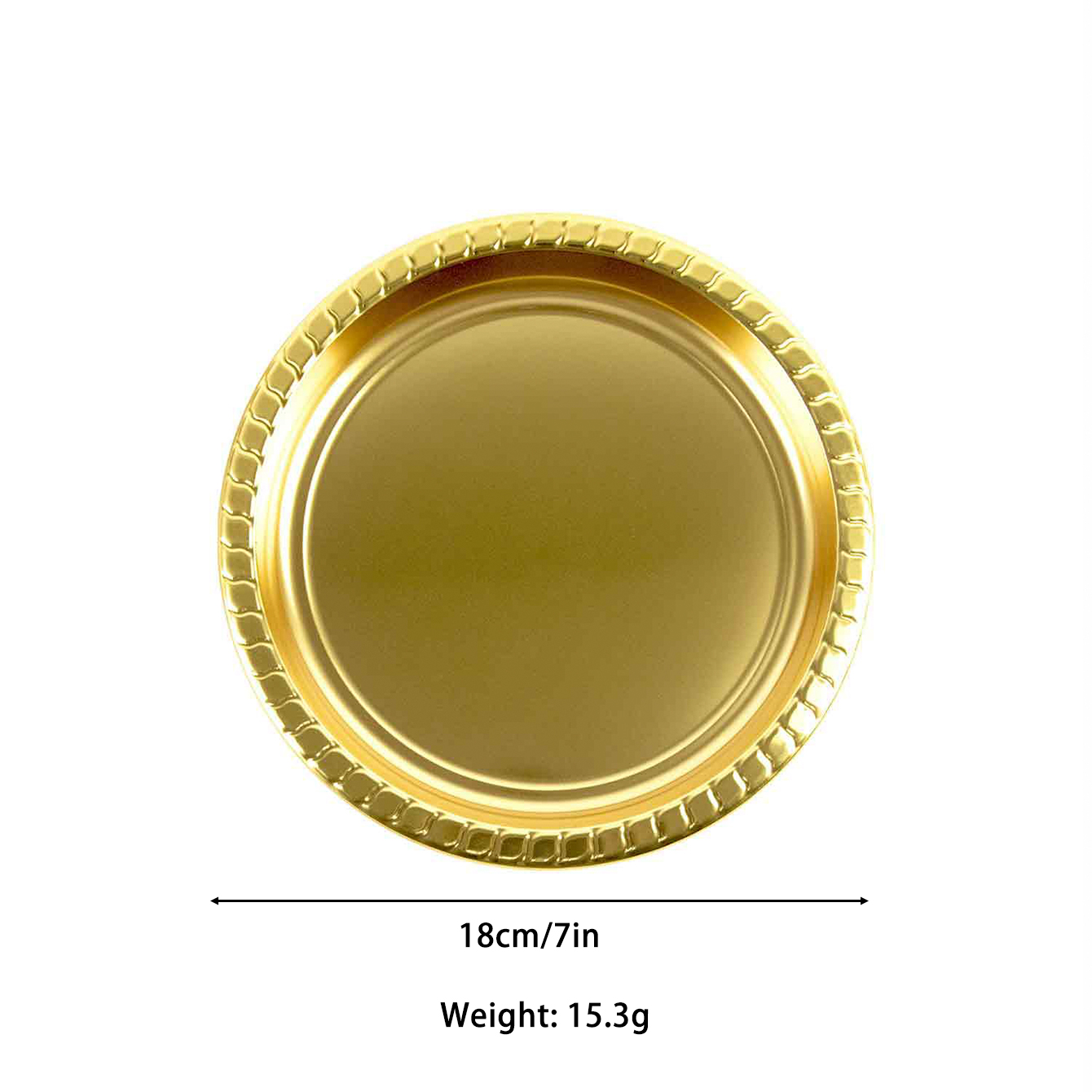
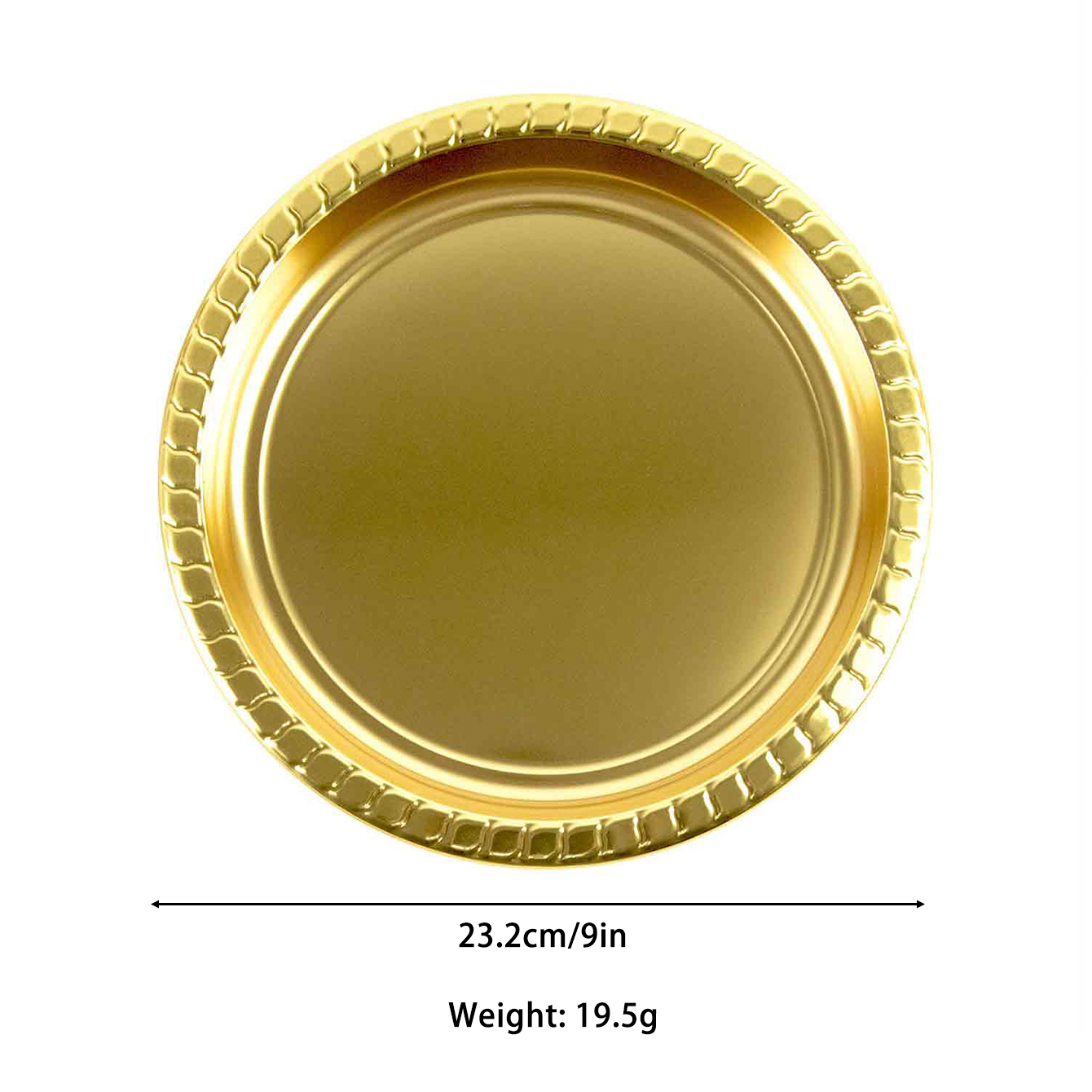
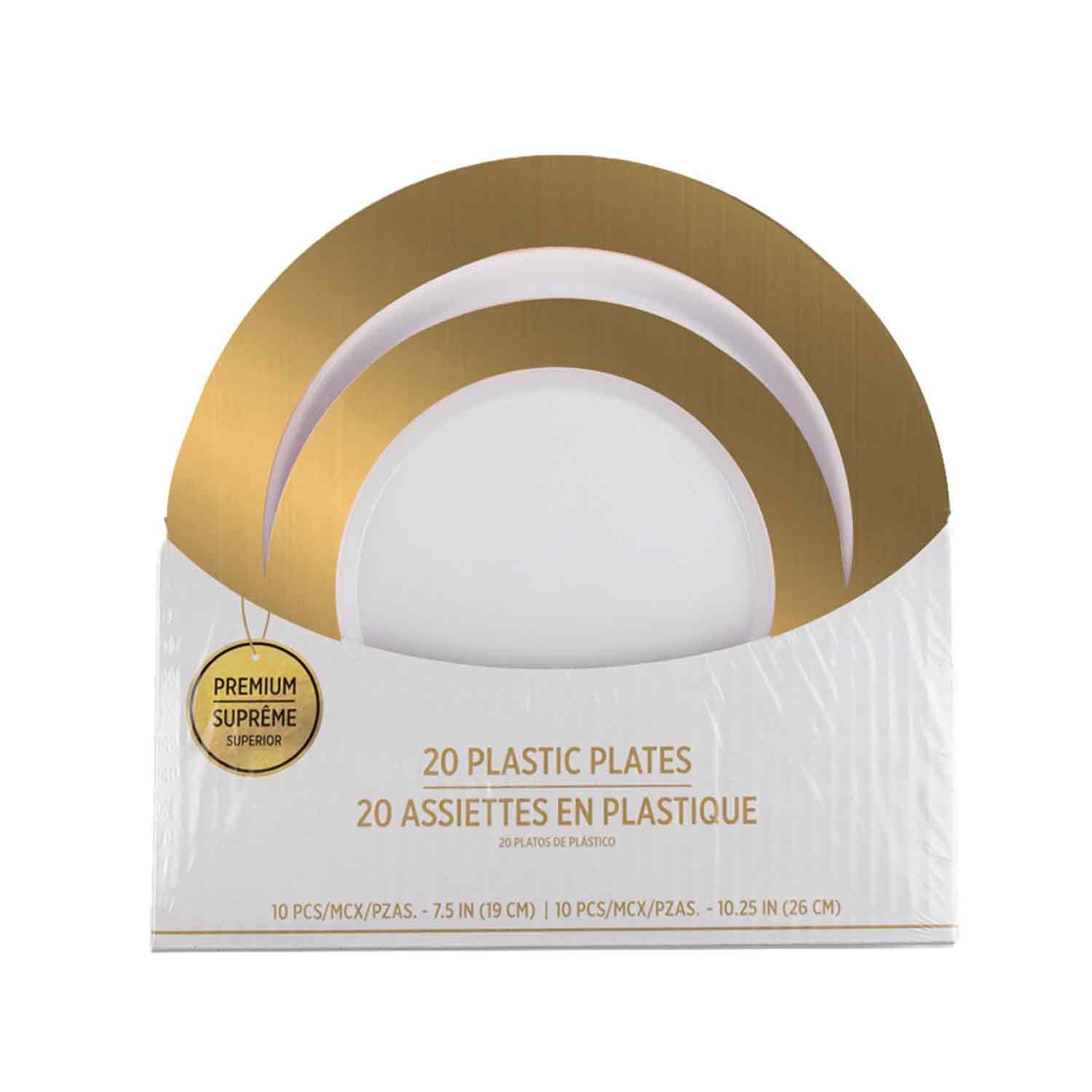
On plates the split is wider because the base material splits too. Our range includes a 9 inch gold-plated PET plate at 23.2 cm and 19.5 g, where the finish covers the whole face, and PS sets where gold is a printed border over a colour ground: 7 inch at 19 cm and 25 g, 9 inch at 26 cm and 50 g, boxed 20 pieces per set (ten of each size), 810 g per set.
The difference shows at the rim. A plated plate carries its finish to the edge, so the edge is what wears and what marks in handling; a printed border stops inside the rim, leaving plain film outside it, so the vulnerable zone is the print line. For a caterer stacking plates into a chafing setup the printed set usually survives service better; where the plate itself is the decoration, the plated face reads as metal across a room.
5. Matching the rest of the table
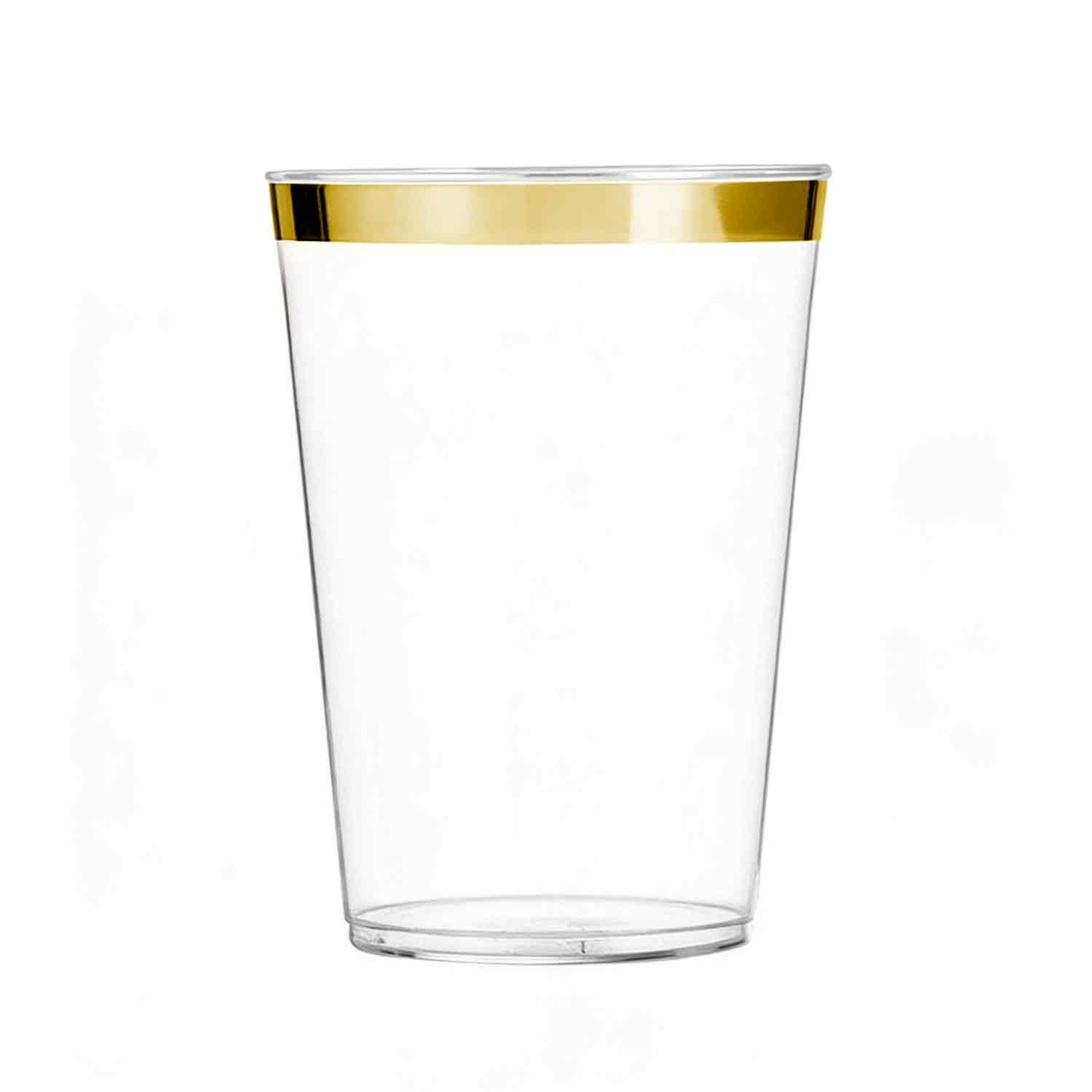
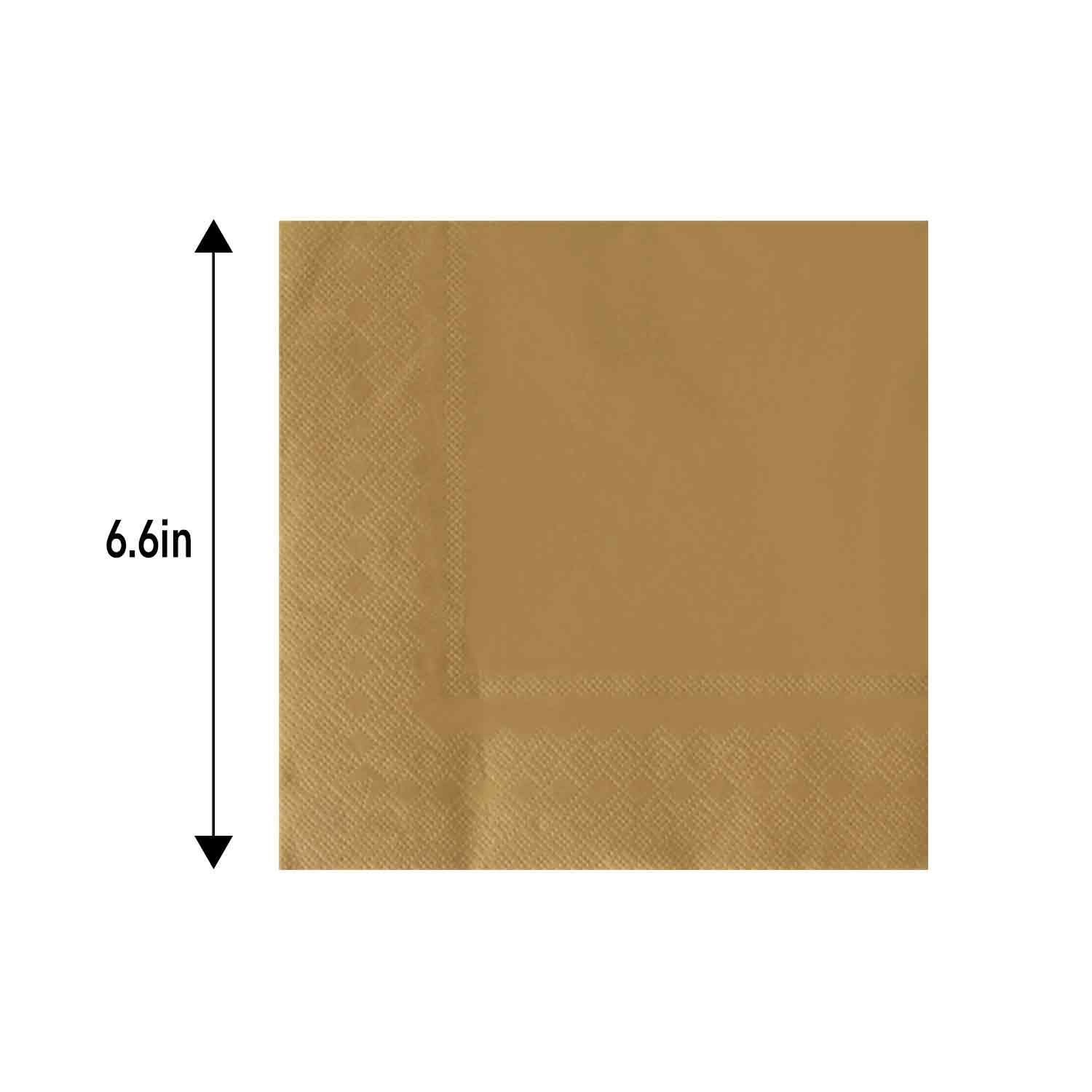
Gold only works if the pieces agree, and they come from different lines. A gold-rim 10 oz clear cup holds 300 ml at 11.5 g and measures 7.5 x 5.5 x 9.5 cm; the 24 oz gold-rim bowl runs 720 ml at 45.7 g, 14 cm across and 7 cm deep; the golden napkins are paper, 13 x 13 inch, 2-ply, printed, 50 g per pack. Put those next to a plated fork and the tone will not match by itself, because rim printing, plating and paper print land on different golds.
Two rules save a sample round. Send one physical reference that the buyer accepts as “our gold”. Then have every line hit it under both daylight and warm banquet light, because a gold that matches under 6500 K can turn orange under 2700 K tungsten. Our black and gold colour guide explains how we judge master samples and what a colour difference number measures.

6. Where the gold goes first
Heat comes first: a plated piece left on a hot plate or under a warming lamp softens the PS body enough that the metal layer can craze. Water second: no plated or printed piece survives dishwashing, and a venue rinse-and-reuse cycle dulls the finish within a few services. Acid and oil third: tomato, citrus and dressings attack print edges, and a spoon left in a dressing bowl marks at the bowl.
Mechanical wear is fourth and most visible: tine tips and knife edges on plated cutlery, the print line on bordered plates, the rim on plated plates. None of that is a defect; it is what a thin decorative layer does. It is also why “food safe” and “durable” are separate claims, and why the food-contact file for a PS or PET article is a statement about the base material. Buyers usually ask us to map to the eCFR entry for polystyrene in food-contact use, the EU plastics measure (EU) No 10/2011 and the FDA food contact substance programme; polystyrene and electroplating cover the background if the technical side is new to the team.
7. Five checks before you accept a gold sample
- Tape pull: press clear tape on a flat plated area and lift it. Metal flake or pigment dust on the tape means the surface is not ready.
- Thumb rub: twenty firm dry rubs on one spot. A plated piece should hold its tone; a printed border should not lighten.
- Hot gravy: ten minutes of hot sauce on the piece, then wipe. Staining at the print line is normal, blistering is not.
- Edge look: hold the piece against a window. A plated edge that already looks thin and grey will look grey after one service.
- Batch pair: put the new sample beside a piece from the previous order on the same table. If they read as two golds, they are two golds.
8. The order sheet, the carton and the per-piece number
A gold line item needs more fields than a clear one, because “gold” can be satisfied by three different products: finish (plated, printed, pigmented); base resin and process (PS or PET, moulded, plated or printed); piece weight and size per piece, not per set; packing with pieces per bag, bags per carton and carton dimensions; one accepted physical colour reference plus the light it was approved under; and, for sets, how many of each size, boxed or loose, with set weight.
Get those six into the enquiry and two quotes that looked 40% apart usually turn out to be two different products. At 2,500 pieces per carton the order is container arithmetic rather than shelf arithmetic, so freight per piece falls away and the plating step becomes the number that matters. That step is also why a finish change mid-order is expensive: the line is cleared between finishes, so runs group by finish, not by size. Ask for the per-finish minimum and lead time separately, then decide whether the season’s gold table is better bought as one finish across all pieces or split by course.
Splitting by course is often the better answer: plated cutlery where guests handle it, printed plates where volume dominates, pigmented pieces for a buffet line. One table, three cost levels.
Runxiang has produced PEVA and PE tablecloths, napkins, table skirts and rigid PS and PET tableware in Changzhou for over twenty years, quoting from piece weights and carton counts rather than catalogue photos. If the finish is the only open question, send the reference piece and we will match to it. Related reading: heavy duty cutlery grades and bench tests, bulk cutlery by menu and format, 7 inch and 9 inch plate sets and matching a set by colour.
Next step. Send the gold reference you want matched through our contact page, and read how we quote to see which finish, weight and packing lines a gold quotation itemises.