
A checkered plastic tablecloth looks like the easiest item in a catalogue to buy, and it is one of the easiest to get wrong. Two suppliers quote “red and white checkered”, both send a sample, and the samples are different products: one a small dense check that reads as gingham from three metres away, the other a large square that reads as a picnic flag. The buyer finds out which one the market wanted after the carton lands.
This guide covers what the grid scale changes, which colour pairs sell into which channel, how the 54 x 108 inch cut behaves on real tables, and what belongs on the sheet so batch two matches batch one.
1. Why checkered keeps selling when novelty prints do not
Character and holiday prints live and die with a calendar; a checkered cover does not. It reads as a clean table from a distance, hides creases and crumbs better than plain gloss film, and carries no licence, no trend and no date. For a wholesaler that makes it the safest place to hold depth, though these buyers are price-aware because they compare like for like across three factories in an afternoon. When the product is this comparable, the specification sheet wins the order, not the design.
2. Checkered or checkerboard: the grid scale is the product
Both words appear in our catalogue and are not interchangeable. A checkered print is a small, tight two-colour grid, the pattern buyers mean when they say gingham; a checkerboard is a larger square, the diner and picnic look. On 54 inch film the two behave differently:
- Readability. Small checks blur into a soft tint across a room, which suits pastel and wedding tables and photographs well. Large squares stay legible at ten metres.
- Ink coverage. A tight check lays more ink per square metre in the same colour pair, which changes drape, crease behaviour and how the unprinted white base reads under warm light.
- Registration. The finer the grid, the less room a print station has to drift. A half-millimetre shift disappears on a two-inch square and shows as uneven line weight on a quarter-inch check.


So the first line of a checkered enquiry is the grid, not a colour: measure ten squares and one line on the approved sample, divide by ten, write it in millimetres. If the buyer cannot measure it, the supplier chooses for them. A custom grid is a new design rather than a recolour, because the repeat has to be redrawn; see our guide to printed plastic tablecloth layout.
3. What the colour pair actually decides
The colour pair is a channel decision, not a decoration: the same grid in red and white and in black and white sells to different customers.
Red and white is the volume pair: outdoor eating, pizza and Italian menus, summer fairs. It usually sells as a mixed pack with plain red and plain white covers, because the three read as one setting. Black and white is the party pair: monochrome birthdays, graduation tables, New Year setups, and the pair most sensitive to grid scale, since a large black square reads as a bold graphic and a small check reads as tailoring.


Blue splits further than most buyers expect. A saturated blue and white check is nautical and sells into summer programmes; a light blue check reads as baby shower and spring wedding, a different buyer on a different order rhythm. Treating the two as one SKU ends in overstock of the wrong blue. Green is the garden pair and takes a clover motif where the event wants a botanical cue. Yellow is a summer accent that rarely carries a programme alone but lifts a red-and-white core.
4. Floral checkered: one step away from plain check
The third group in our range overlays a small flower motif on a checkered ground. Same process, different buyer: shabby-chic wedding decor, baby showers, tea-party tables, gift-shop displays. The specification point is that the motif sits on the grid, so the grid is locked first and the motif registered to it. A flower landing half on a square and half on a line looks like a printing fault even when the print is inside tolerance. The floral and lace prints sit in that same family, and our guide to floral and lace plastic tablecloths sets out the five stock prints and which ground colour each is printed on.


5. Sizes and drop on the tables you actually sell into
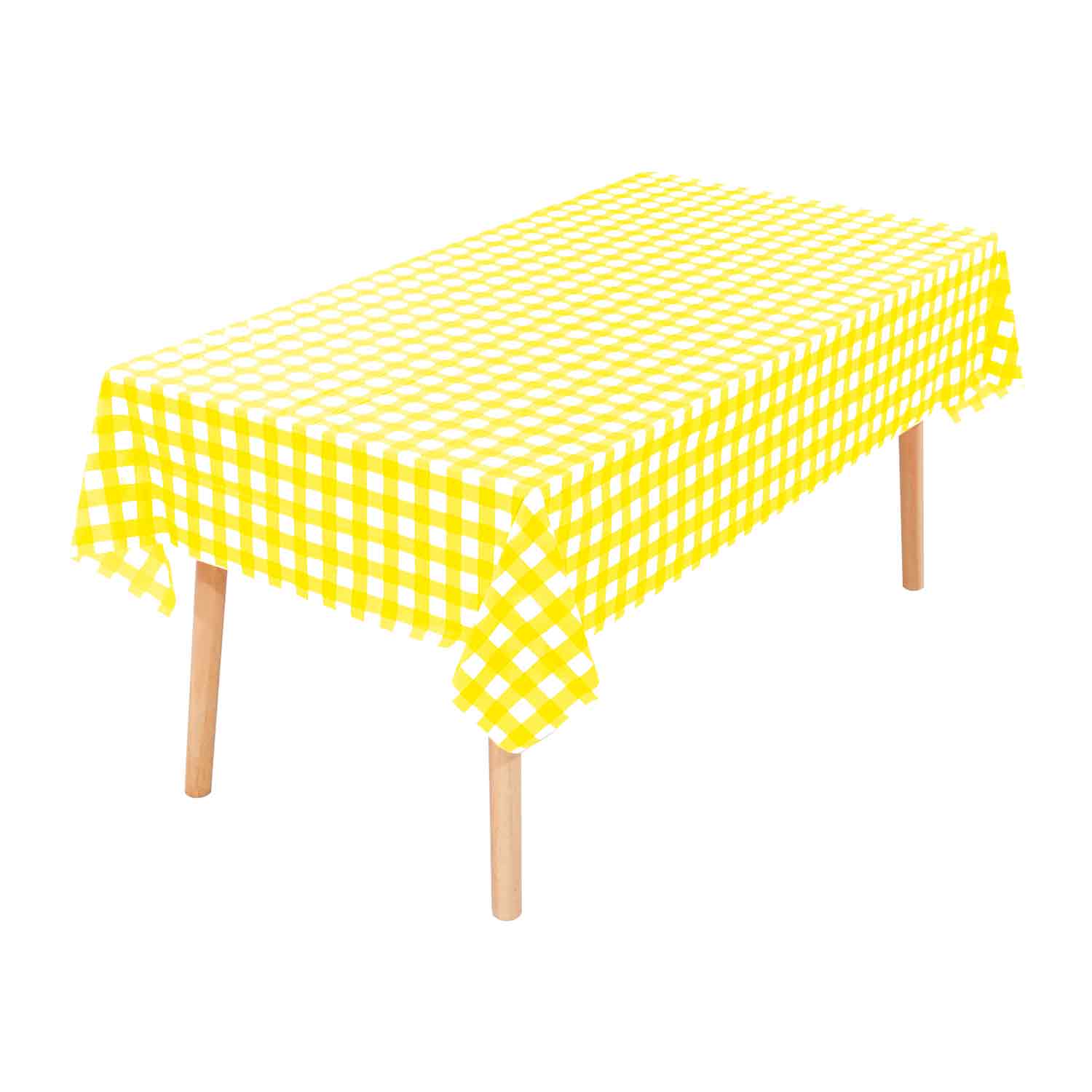
Our standard checkered cut is 54 x 108 inches, custom sizes available per order. On a 6 ft (72 inch) folding table that gives 18 inches of overhang at each end and 12 inches at each side, the classic picnic and buffet look. On an 8 ft (96 inch) table the same cloth leaves only 6 inches at each end and reads short against a 30 inch height. That is geometry, not a defect, and it is the most common complaint from retailers who sold a 54 x 108 to an 8 ft customer.
If your market sells both lengths, stock a longer cut or state the 6 ft limit on the pack. Round covers are cut parts, not slices off a roll; the maths is in our round plastic tablecloth guide and the plastic tablecloth size chart. Buyers who cut in-house should compare rolls versus pre-cut covers, and the tablecloth rolls page lists our roll widths.
6. Film, print and the specification sheet
Checkered cloths in our range are printed on PEVA film at 25 g/m² standard, print on the inner face so ink sits behind the film rather than on the food side. Gauge is quoted three ways across the industry, so keep the thickness conversion guide beside the sheet.
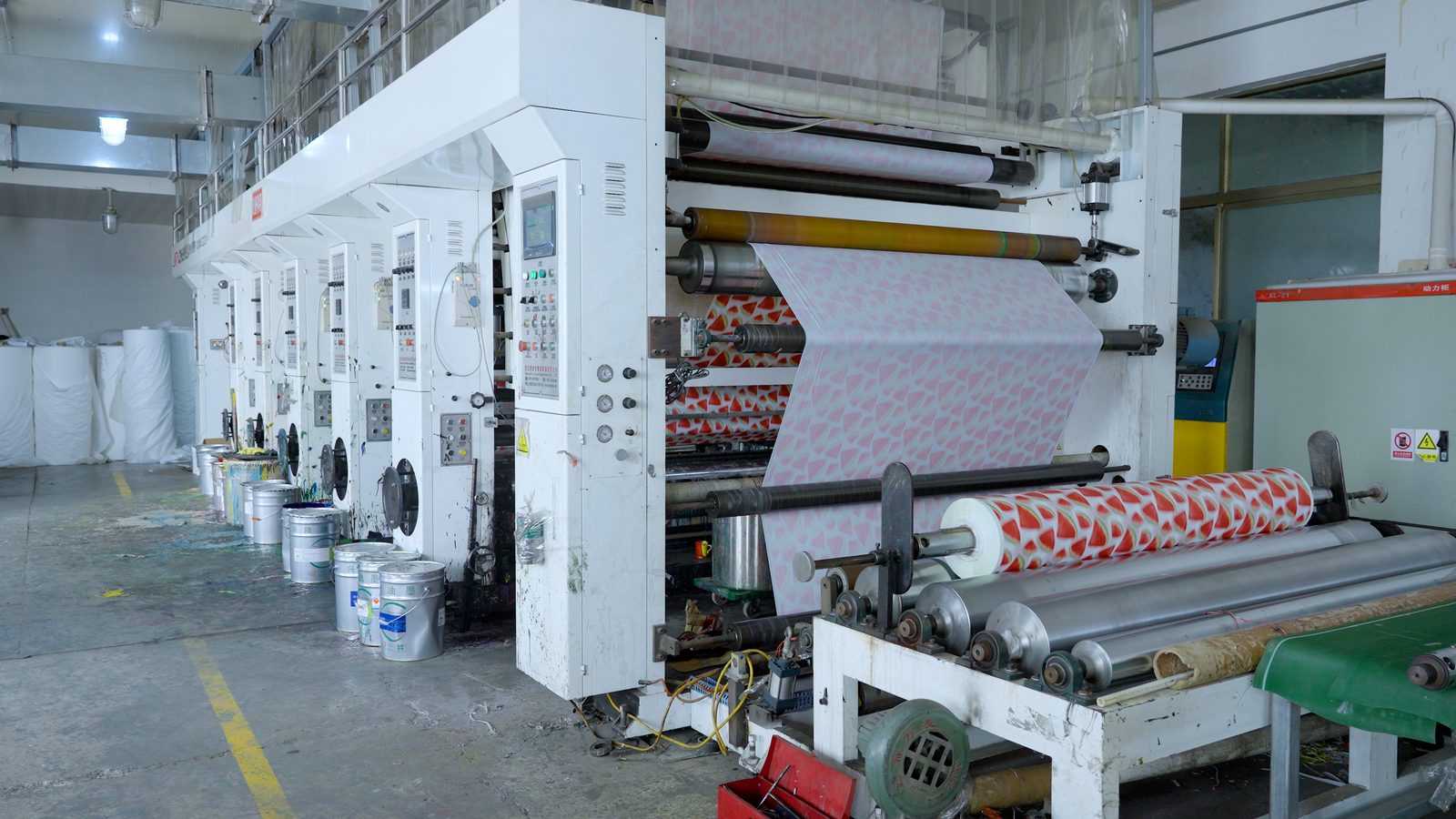
A checkered order that survives production has these fields filled in before the first drum is made:
- Grid repeat in millimetres measured off the approved sample, plus line weight as a share of the square.
- Colour pair named by reference, not adjective. Red is not a colour until it is a number on a master sample, and the white here is unprinted film rather than white ink.
- Base film and gauge in both g/m² and mm, so nobody converts in their head.
- Cut size and drop, plus whether the grid must end square at the cut edge. A check running off at three degrees along the hem looks cheap.
- Print face and ink declaration for food contact. Colorants are controlled in the US under 21 CFR 178.3297 and in the EU under the framework summarised by EFSA. Ask in writing.
- Colour tolerance against the master sample with the judging light named. The gap between two reds is a measurable colour difference, not an opinion, and the method in ASTM D2244 is the usual reference.
Note that gingham is the woven-cotton original the small check imitates; see check in pattern terminology.
7. Building a range without over-buying colour
The failure mode here is breadth without depth. Eleven colour pairs look impressive in a catalogue and then sit in a warehouse: no SKU is deep enough for a mixed container, and every colour needs its own artwork, drum and packing film.
A workable structure is three anchors and one accent: red and white, black and white and one blue carry the year-round business; a floral checkered on the same grid adds the wedding and shower channel without a new print process; green and yellow are seasonal accents bought in short runs. For schools, fairs and community events, black and white usually outperforms the rest because it matches any colour scheme the organiser brings.
Because the family shares one grid it also shares its companions: napkins, plates and cutlery in the same colour family let a retailer sell a setting instead of a single cloth. Our guides to bulk napkins and party tableware sets cover matching by colour reference. Browse the printed plastic tablecloth range and the wider plastic tablecloth category to compare pairs side by side.
8. Five checks on the first carton
The first carton decides whether the run is repeatable. Check five things:
- Grid repeat at both ends. Measure the same ten squares at head and foot; if the number drifts, the film stretched during printing or winding.
- Registration across the width. Sight along one line of squares edge to edge; a wobble mid-width means the print stations were not tracking.
- Colour against the master sample under the agreed light, not the warehouse tube.
- Cut squareness. Fold corner to corner; the grid should meet the fold evenly, not run diagonally.
- Surface defects on the unprinted white areas, where pinholes show first.
Record the results in the order file: batch two is judged against batch one.
Runxiang has made PEVA and PE tablecloths, table skirts, napkins and rigid PS tableware in Changzhou for over twenty years, printing checkered and custom grids to a buyer’s own repeat and colour reference.
Next step. Send your grid measurement and colour reference through our contact page, and read how we quote to see what a checkered quotation includes. Related reading: plastic tablecloth colour guide and plastic tablecloth buying guide.