










A round table has one dimension and no corners, which makes it the easiest table to cover well and the easiest to order badly. The number that goes on a purchase order is the cover diameter, and that figure comes from two others: the table diameter and the drop. Buyers who treat the diameter as “the size” end up with a cover that stops mid-leg, or a floor-length cover that swallows the chairs around it.
This guide is for buyers who order plastic table covers by the carton – party wholesalers, caterers, event rental companies and hospitality teams. It covers how to measure a round table, how to choose a drop, and the cover diameter the two figures produce.
Why a round table needs its own calculation
A rectangular cover is chosen from a grid, and a cover that is slightly short on one side usually goes unnoticed. A round cover hangs evenly all the way around and is photographed from every angle, so a wrong drop is wrong on all 360 degrees at once. The same 90 in cover looks generous on one table and skimpy on another, because it is the table diameter underneath that changed, not the cover.
There is a second difference, too: on a guest round the cover hangs where chairs and feet go, so the drop is also a decision about comfort.
Start with the table diameter, not the cover
Measure across the centre of the tabletop rather than estimating from the seating or the old cover. Round banquet tables cluster around four diameters:
| Table diameter | Typical seating | Where it is used |
| 36 in (3 ft) | 2 to 4 | Children’s tables, cafe corners, display tables |
| 48 in (4 ft) | 4 to 6, quoted up to 6 to 8 | Small dining tables, cake and gift tables, breakout rooms |
| 60 in (5 ft) | 8 comfortably, up to 10 | The standard banquet round for weddings, galas and restaurants |
| 72 in (6 ft) | 10 to 12 | Large banquet rounds, buffet and service stations |
Seating figures are a planning tool, not a rule. Event rental guidance puts a 60 in round at eight guests comfortably and a 48 in round at four to six, and notes that guests need roughly 38 in of clearance once chairs are pulled out (All Out Event Rental). Linen suppliers quote the wider end of the same range – six to eight on a 48 in, eight to ten on a 60 in – because that is the limit for an intimate setting (CV Linens). Either way, more seats means more plates, cutlery and napkins, not a larger cover.
Table height is the figure buyers most often leave out, and drop is measured from the tabletop edge, not the floor. A standard banquet table is about 30 in high; cocktail tables run around 42 in. A cover that reaches the floor on a highboy needs a 42 in drop rather than 30 in, which is why highboy covers are sized separately.
Choose the drop before the cover diameter
Drop is the length of cover hanging below the tabletop edge. Three bands cover most briefs:
- 6 to 8 in – casual short drop. Clears the legs and shows the table frame; common in cafes, food service and children’s parties.
- 15 in – lap or mid drop. The workhorse for guest tables: formal, above the floor, clear of chairs and feet.
- 29 to 30 in – floor length. Reaches the floor on a standard 30 in table. Photogenic, but it hides the table and is harder to clean around.
The bands are consistent across the linen trade: 8 in casual, 15 in polished, full drop to the floor (MVP Visuals), while other sizing guides describe the same three options as 6 in, 15 in and 30 in and advise reserving floor length for focal tables such as cake, registration and head tables (CV Linens). A sensible default: 15 in on every guest round, 30 in on the tables that will be photographed.
The formula, and the cover diameters it produces
One line of arithmetic turns a table into a purchase line: cover diameter = table diameter + (2 x drop). The same formula runs through the table linen trade, which is why a 60 in round and a 90 in cover are spoken about in the same breath (MVP Visuals).
| Table | 15 in lap drop | 30 in floor drop | What to expect in a typical plastic range |
| 36 in | 66 in | 96 in | 84 in is often nearest, giving a 24 in drop |
| 48 in | 78 in | 108 in | 84 in gives 18 in; 108 in reaches the floor |
| 60 in | 90 in | 120 in | 90 in is the classic lap cover; 120 in reaches the floor |
| 72 in | 102 in | 132 in | 108 in gives 18 in; 132 in is beyond most disposable ranges |
Read it as a request, not a stock list. Cover diameters are made in steps, so the exact figure from the formula may not exist as a standard size and the next diameter up simply adds length to the drop. Published charts show the same drift, moving a 48 in table through 84 in and 108 in covers depending on how far the cover should hang (YCC Linens). If a customer wants a floor drop on a 72 in round, the honest answer is that it is a 132 in cover and worth confirming as a made-to-order line.
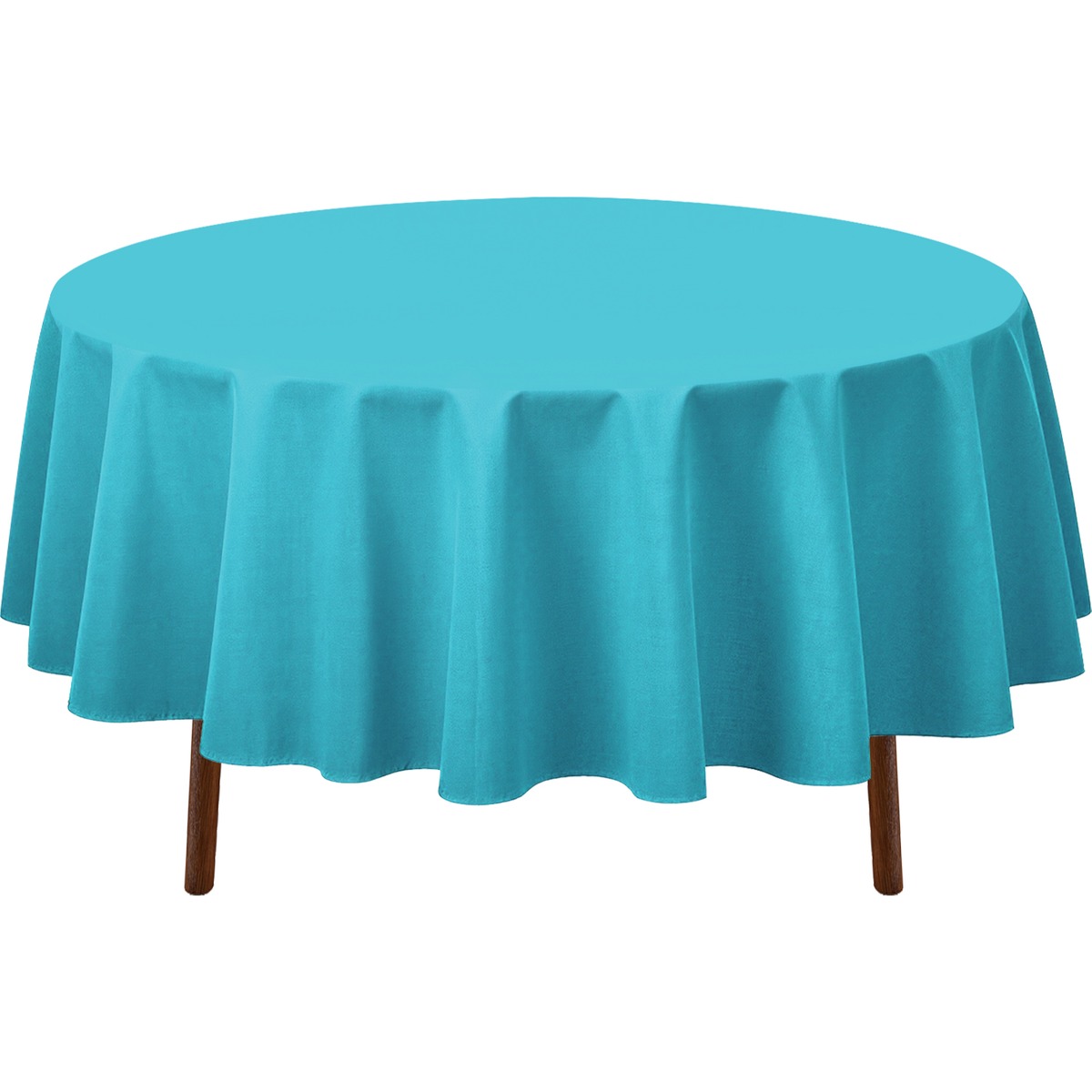
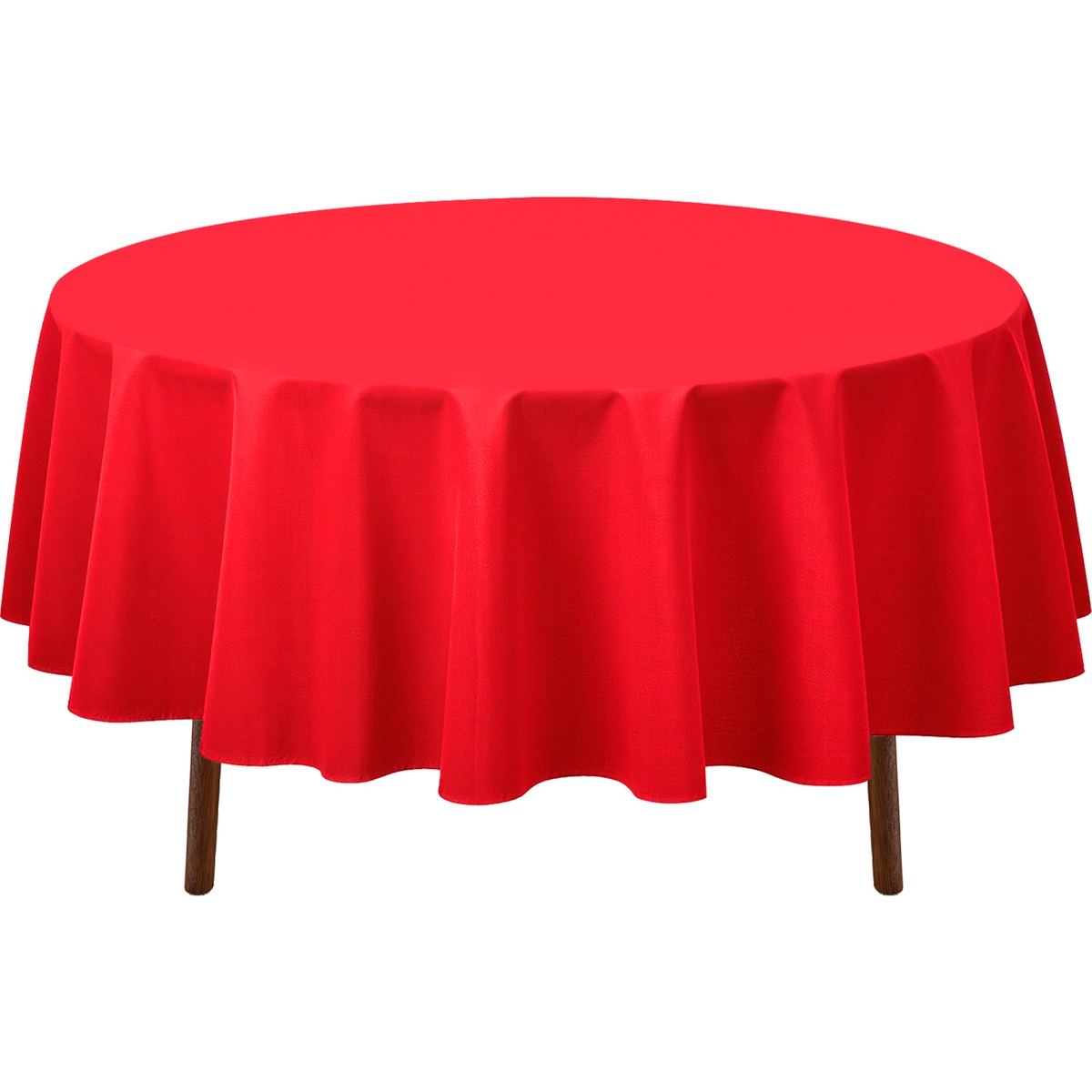
A round cover is cut, not unrolled
This is the limit that catches buyers who also order rolls: printed cover film comes in fixed roll widths, and our printed PEVA rolls run 40 in and 54 in wide. A 54 in roll cannot produce a 90 in round cover, because the circle is wider than the film. Round covers come off a separate cutting line, where film is cut to a circular pattern at the diameter on the order. In practice:
- Round covers and roll stock are separate purchase lines even when colour and material match.
- Diameters are requested per table list, so a mixed order should arrive as a size breakdown rather than one “round covers” figure.
- Where a round and a rectangular cover of the same shade are needed for one venue, say so on the enquiry – it is a cutting and packing decision.
The trade-offs between formats are set out in our guide to plastic tablecloth rolls versus pre-cut covers.
Solid shades and printed dots
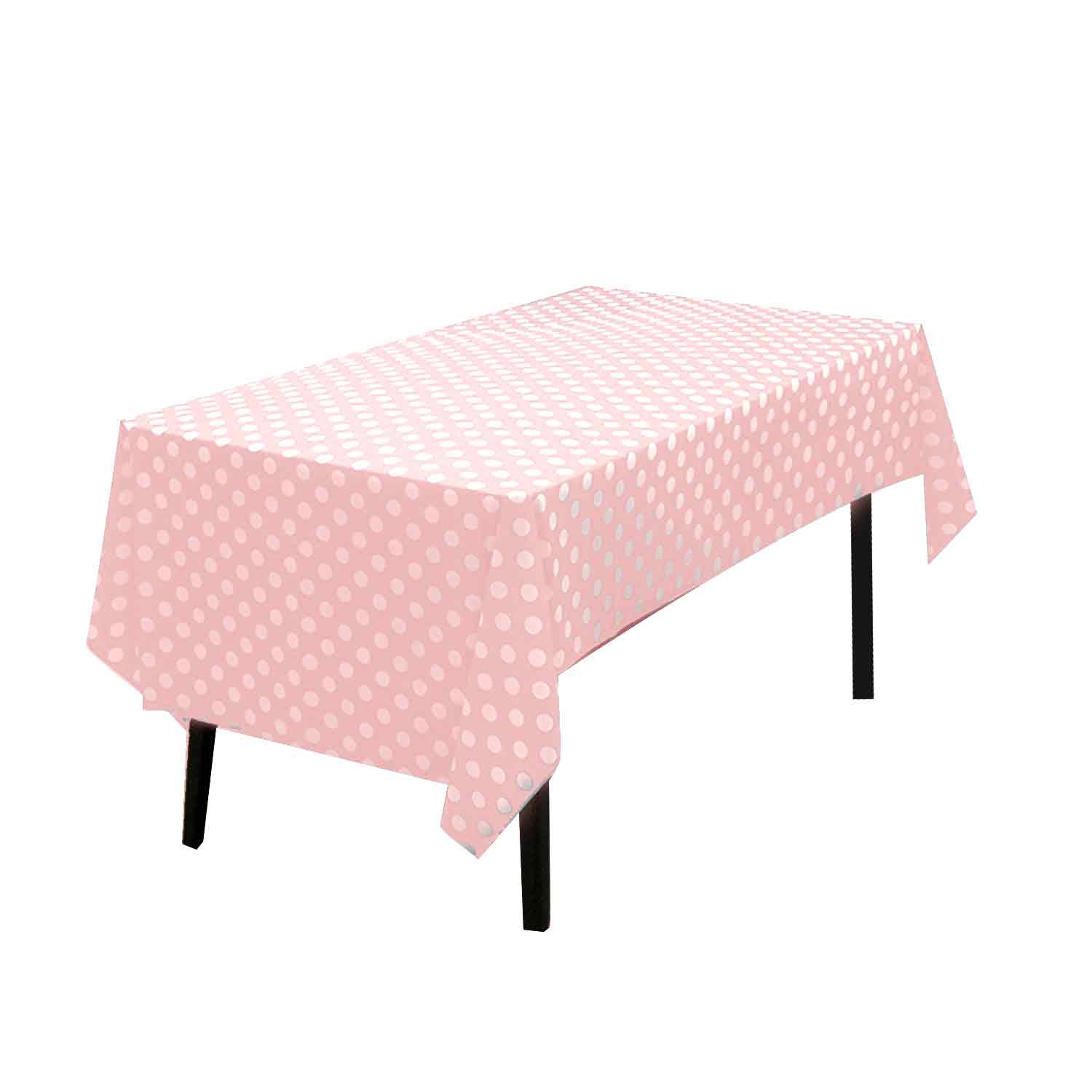
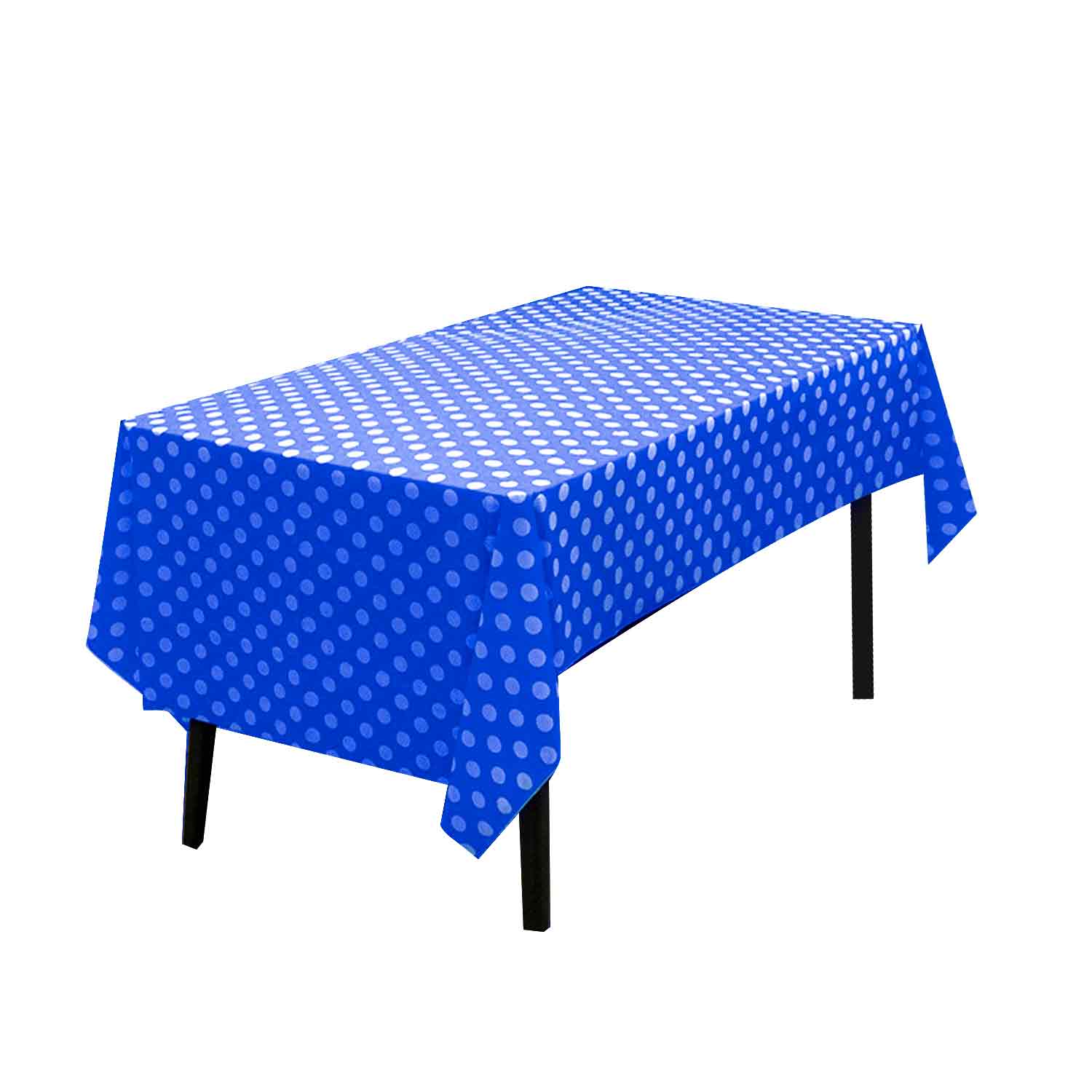
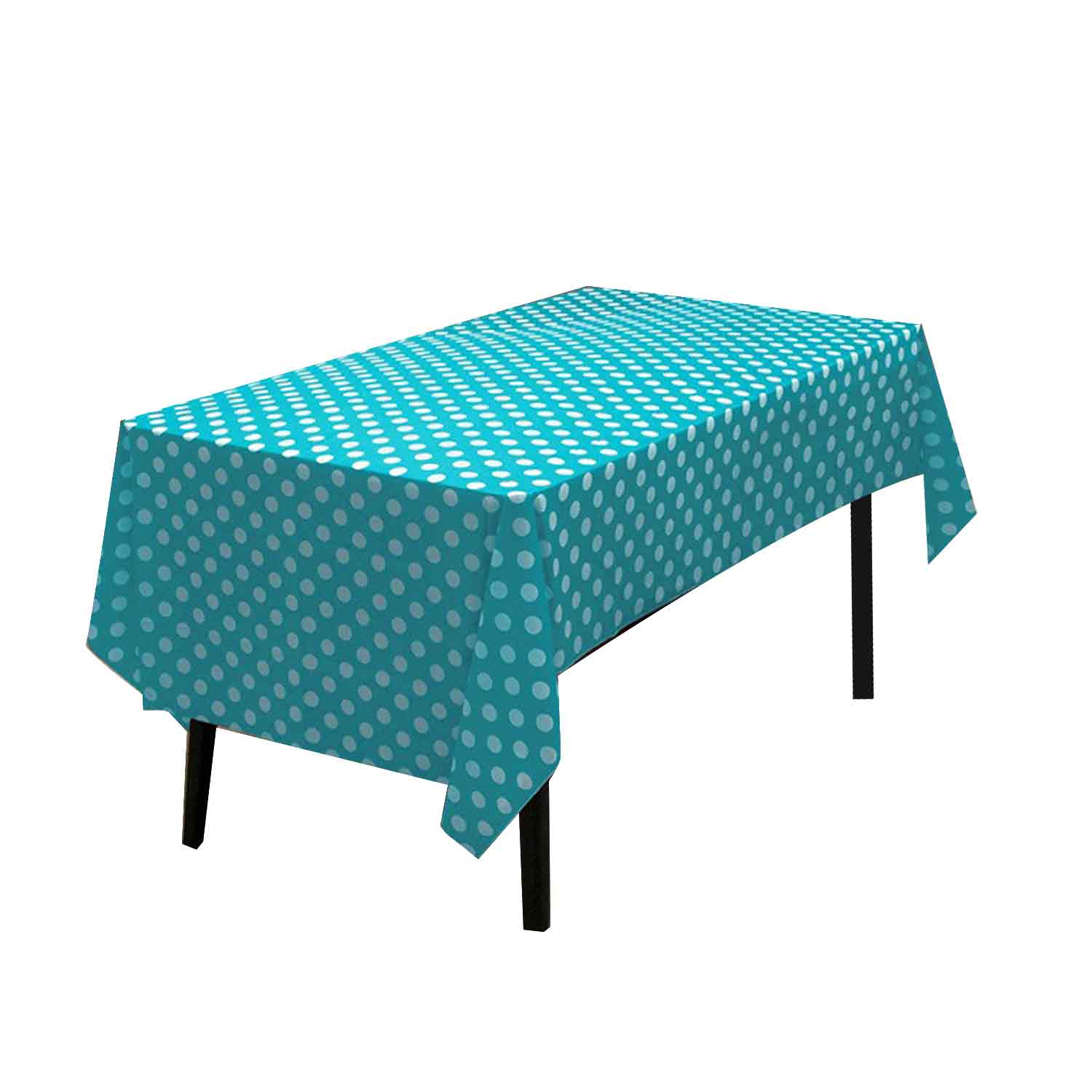
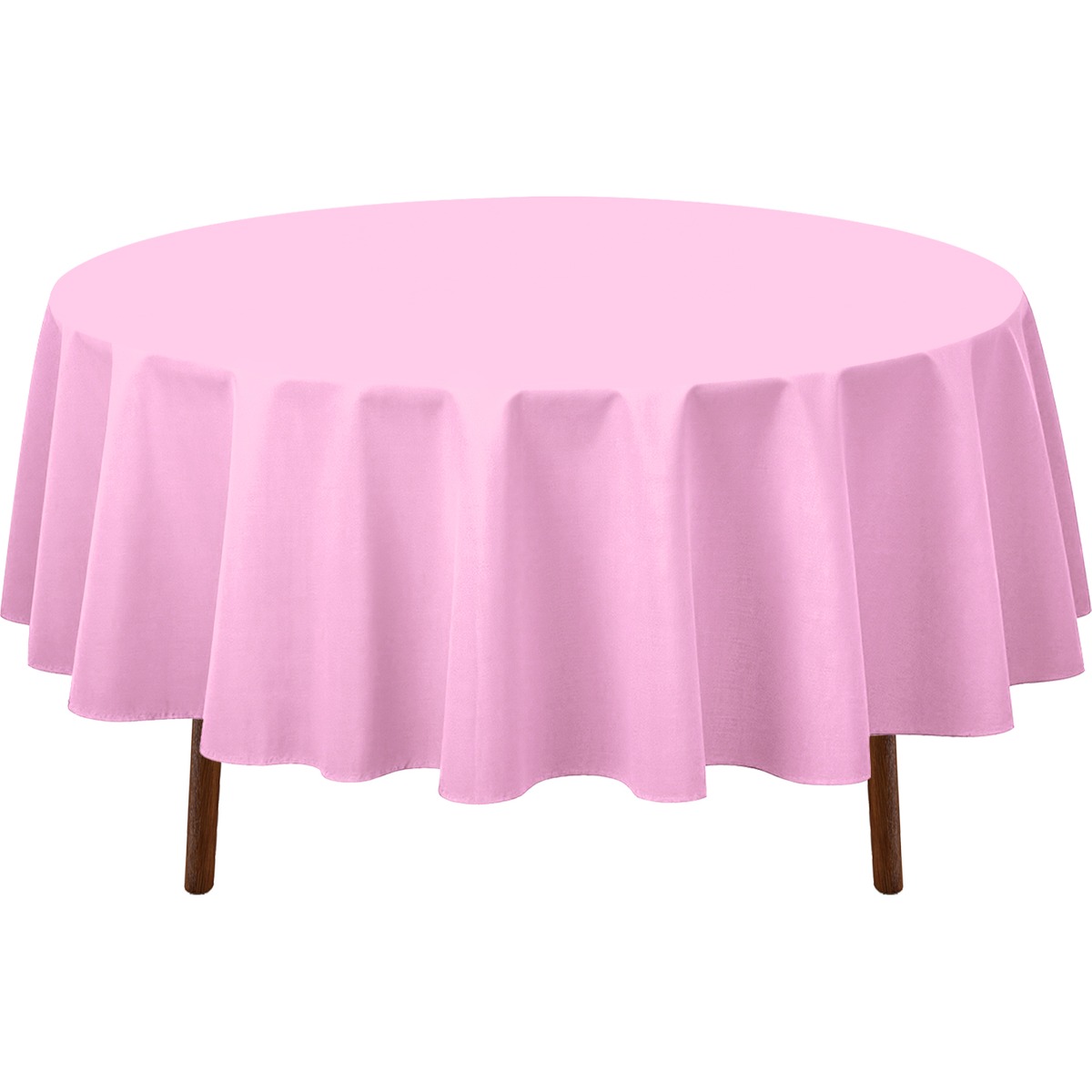
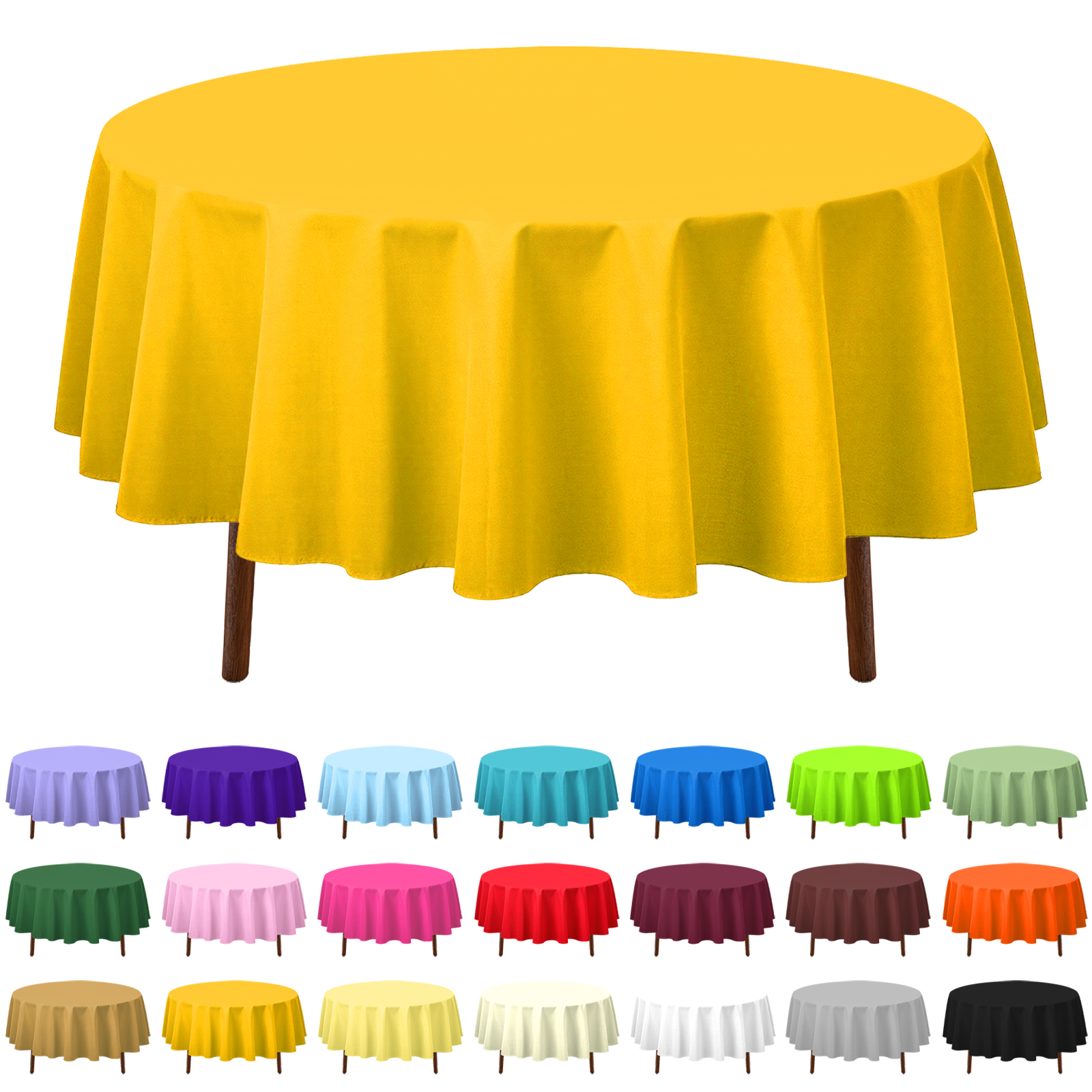
Round covers sell in two directions. The first is solid colour, in the same shade families as the rectangular range so that a buffet line and a guest round read as one scheme. The second is print, where small repeating motifs – polka dots, checks, small holiday designs – do the work, because a large border or corner motif drawn for a rectangle cannot simply be cut into a circle.
Two habits keep a colour programme consistent: ask for the round and rectangular version of a shade from the same master sample rather than matching two catalogues, and put the shade reference on the purchase order next to the diameter. Our guide to writing a tablecloth colour specification covers sample cards and light sources, and the PEVA, PVC and PE comparison explains how film choice changes the way a shade reads.
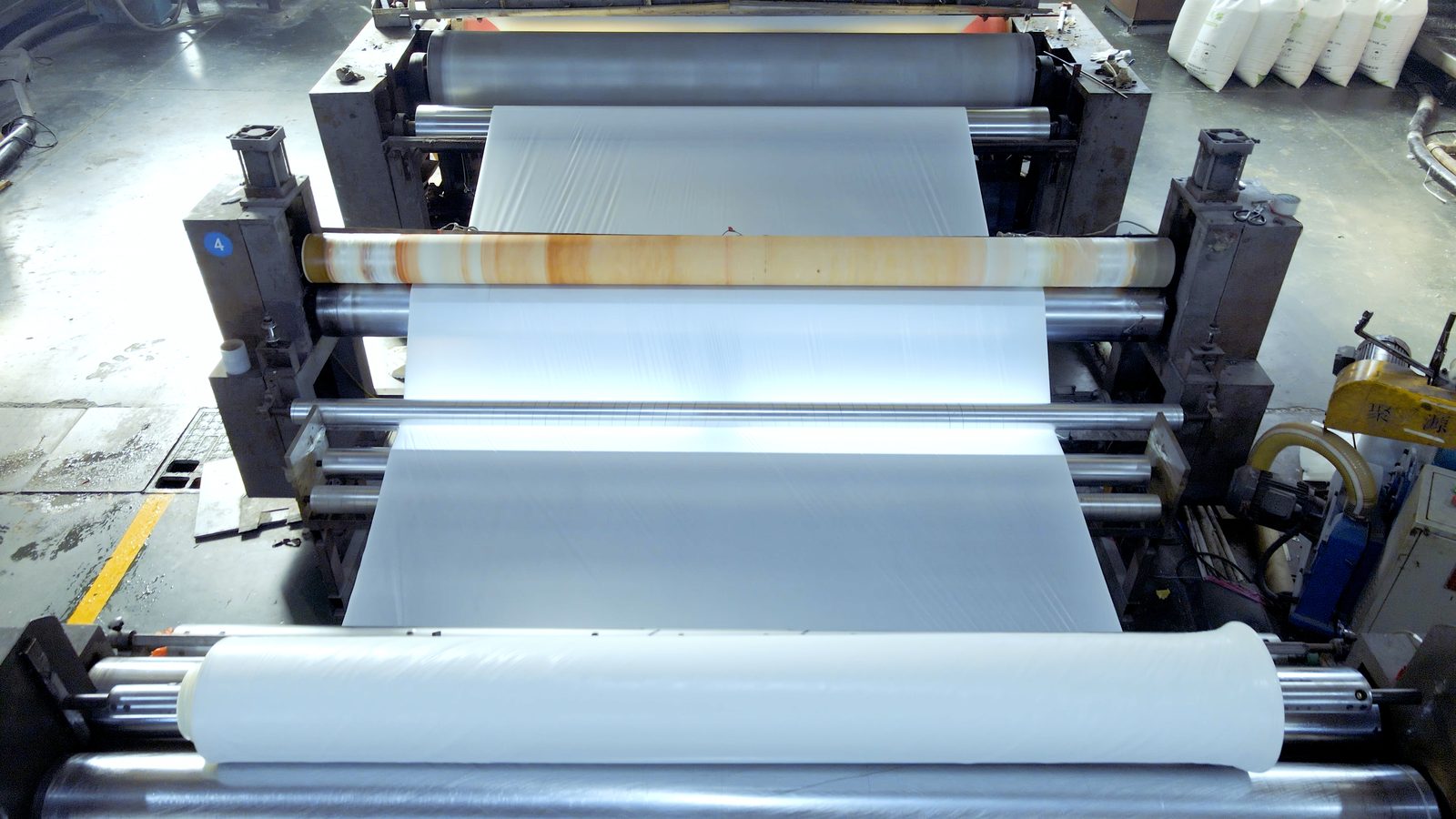

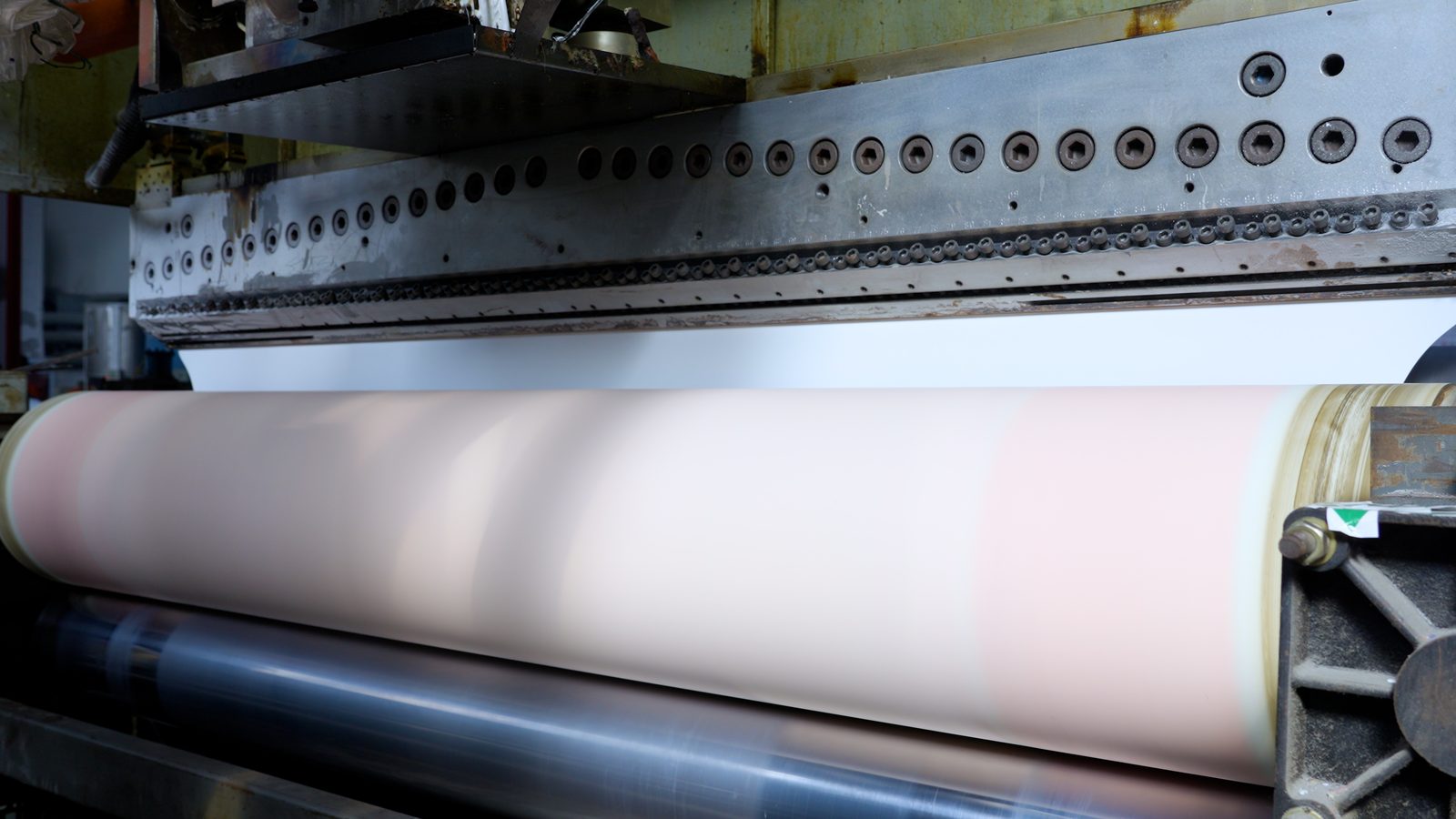
What to confirm on a round cover order
A round cover enquiry that answers these points usually quotes first time:
- Table diameter, measured across the centre, for every size in the order.
- The drop you want in inches, by table type – guest, cake, buffet or cocktail.
- Table height where floor length is requested, so a 42 in highboy is not quoted against a 30 in drop.
- Film and gauge: solid or printed PEVA, PVC or PE, and the thickness band, as set out in our mil, micron and GSM guide.
- Edge and format: plain cut, hemmed, or an elastic-edge cover, which is a different product from a loose round cover.
- Colour continuity: one shade reference per line, plus whether rounds and rectangles must match.
- Packing: bulk cartons or retail-ready packs, and how the size breakdown should be separated.
Getting a round table order right
Round covers are a little arithmetic and a lot of specification. Write the diameter, the drop and the shade on the enquiry and most of the risk disappears before the film is cut. We have made plastic table covers, rolls and matching disposable tableware in Changzhou for over 20 years, cutting round covers to your own diameter and colour list. Send your table breakdown and we will come back with a size list, or start from the plastic tablecloth range and see how we quote.
Related reading: tablecloth size chart for round and rectangular tables | 84 in round covers in bulk | elastic-edge table covers | disposable versus reusable covers | how plastic tablecloths are made | contact our team.