










Walk past a catered event and the cloth on the table is what you notice; the table itself is what the buyer would rather hide. A plastic table skirt covers the sides — legs, frames, cartons and cables underneath — while the cloth handles the top. Buyers ask for it under several names (“table skirt”, “table skirting”, “floor-length cover”), and those names describe at least three different products. This guide covers the plastic skirt we make: what a panel is, which drop you need, how many panels a table actually takes, the gauge to specify, and what belongs on the enquiry.
What a plastic table skirt is, and what we supply
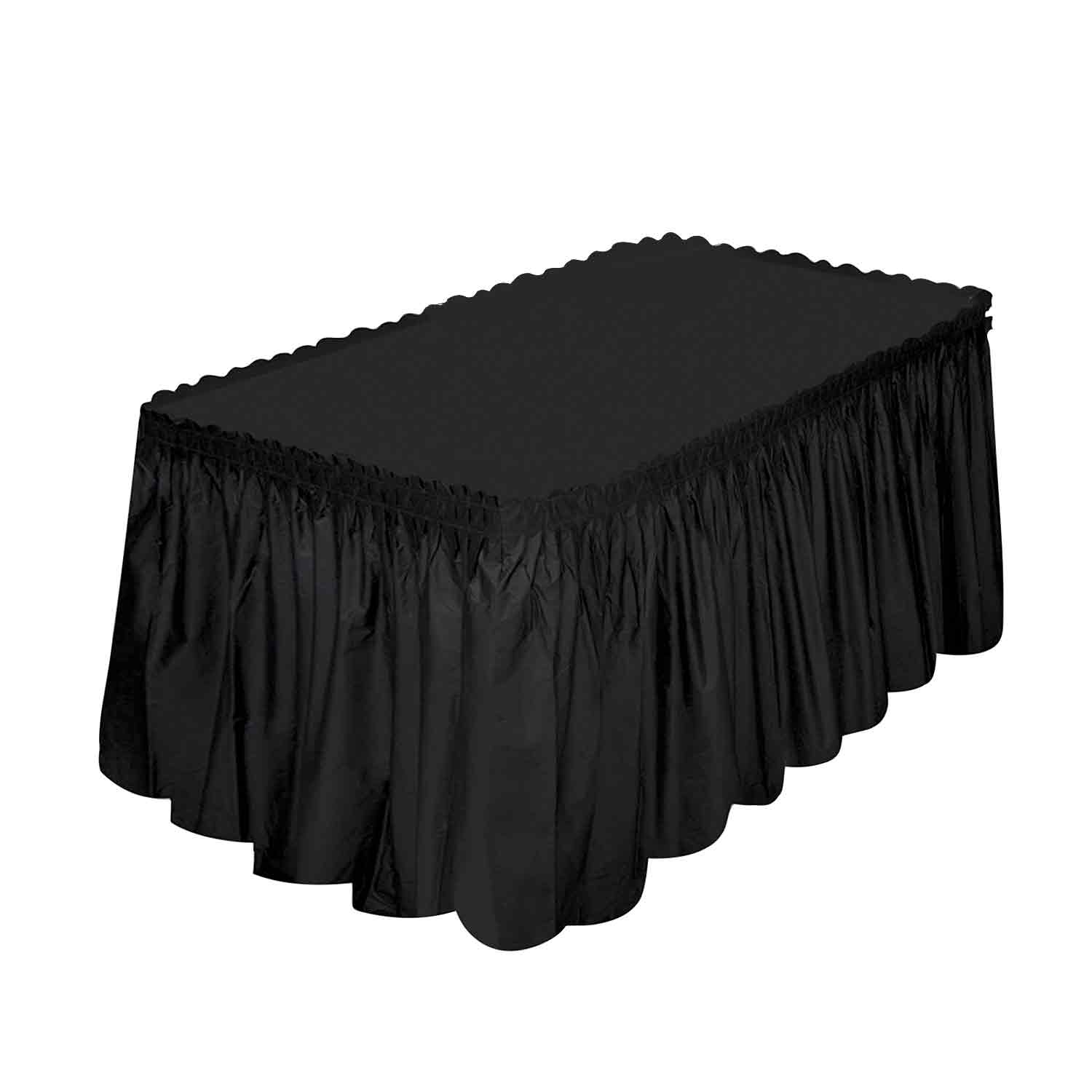
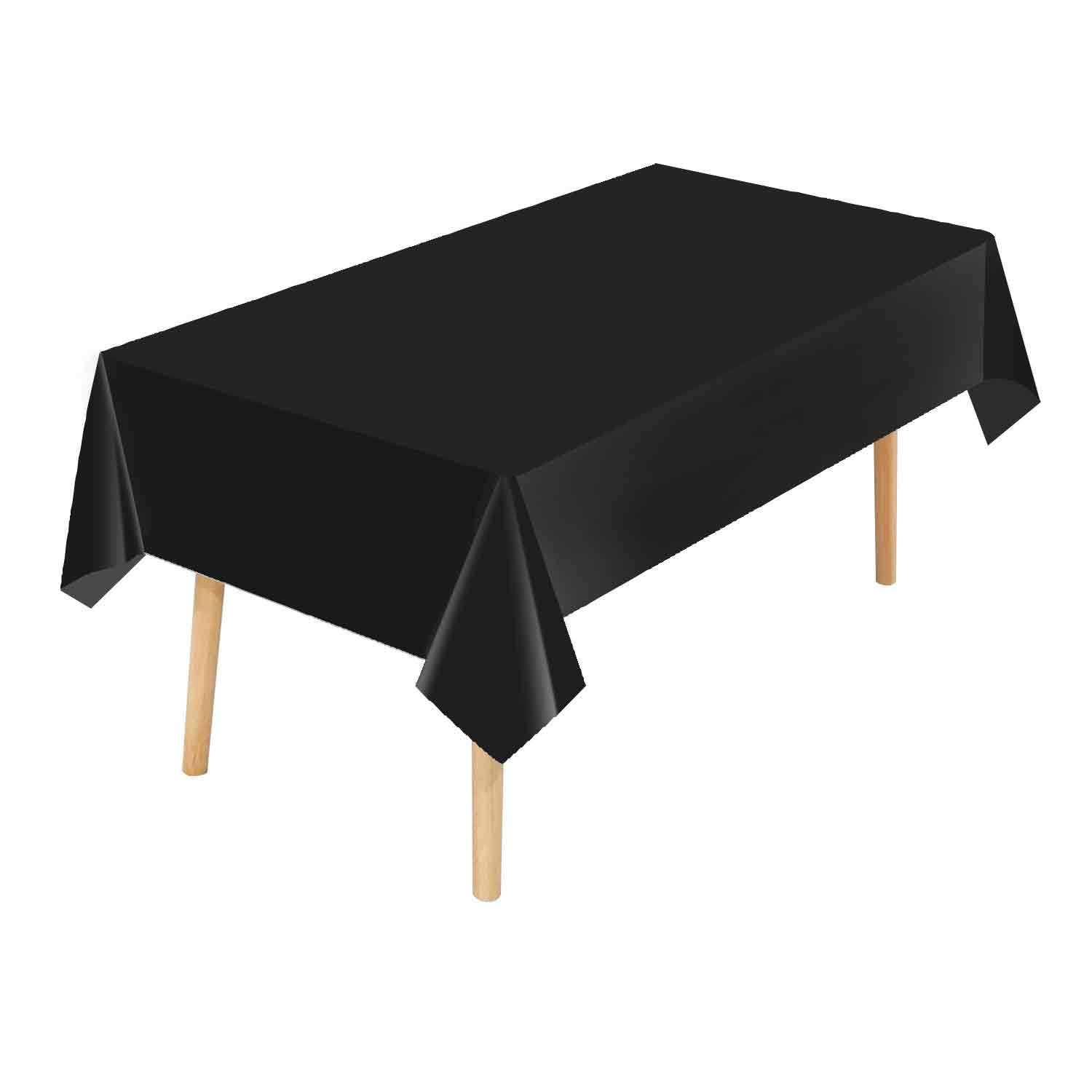
A skirt is a panel of film hung from the table edge. It is not a tablecloth that drapes on all four sides by itself: the standard build is a cloth on the top — 54×108 in for a 6 ft folding table — plus a skirt run around the sides.
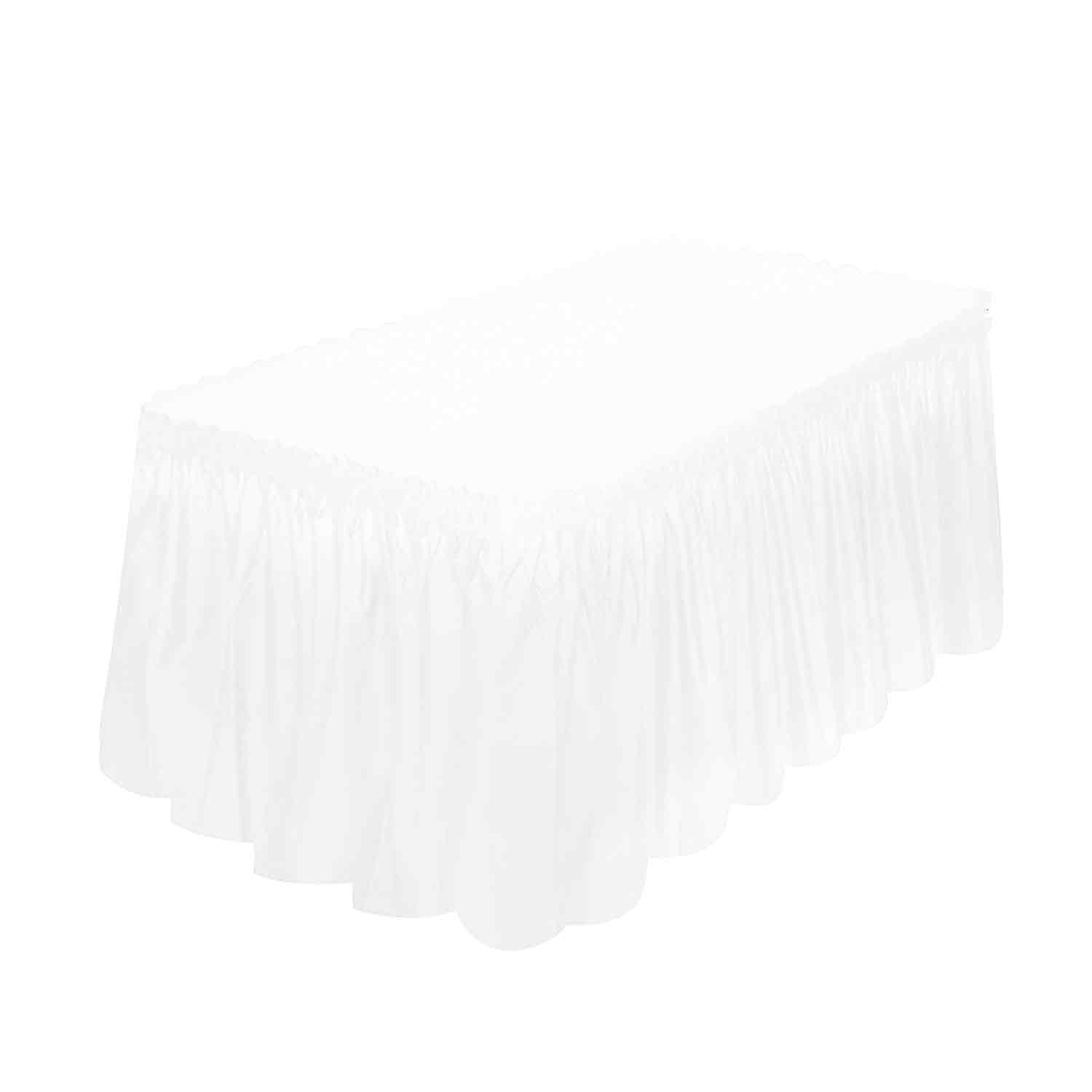
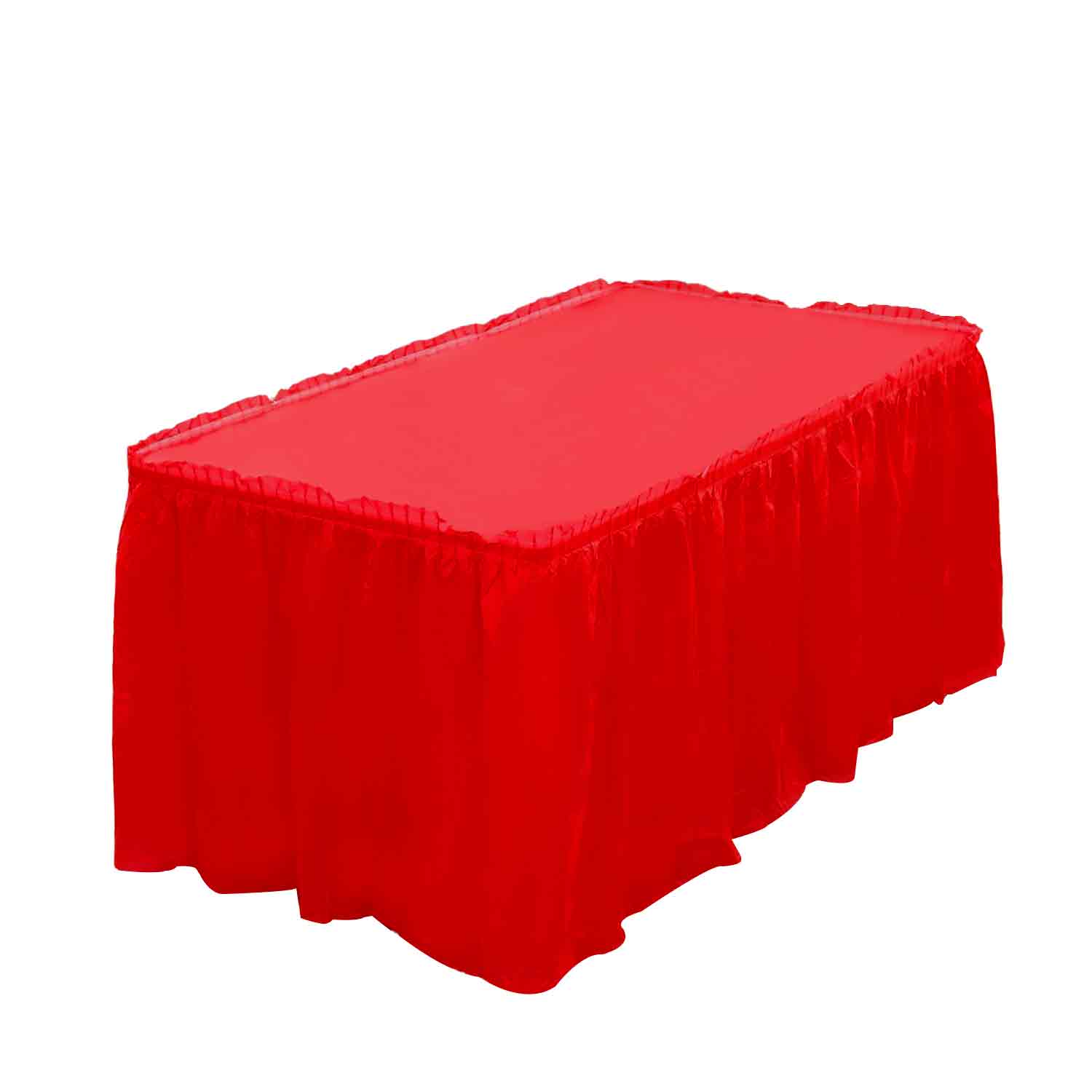
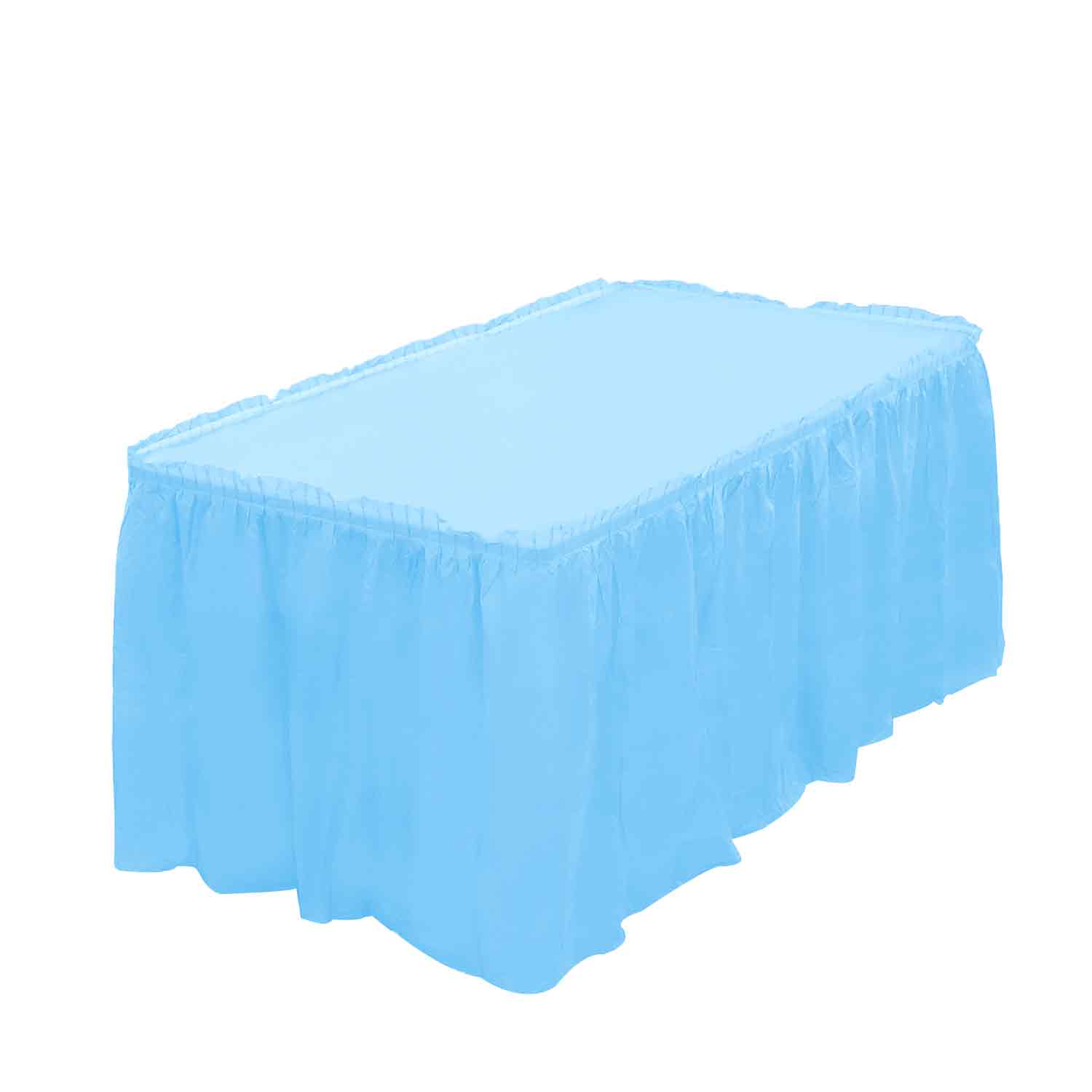
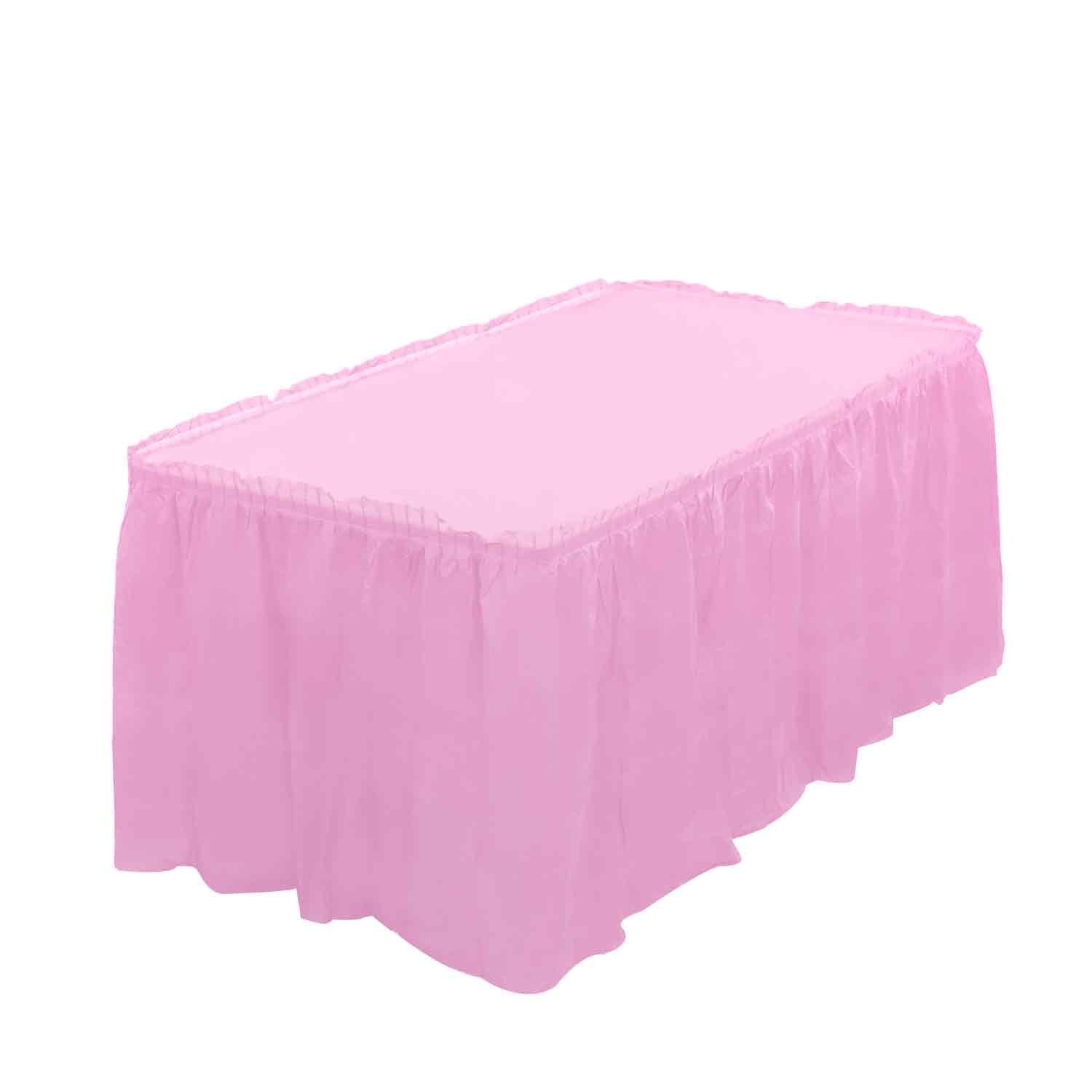
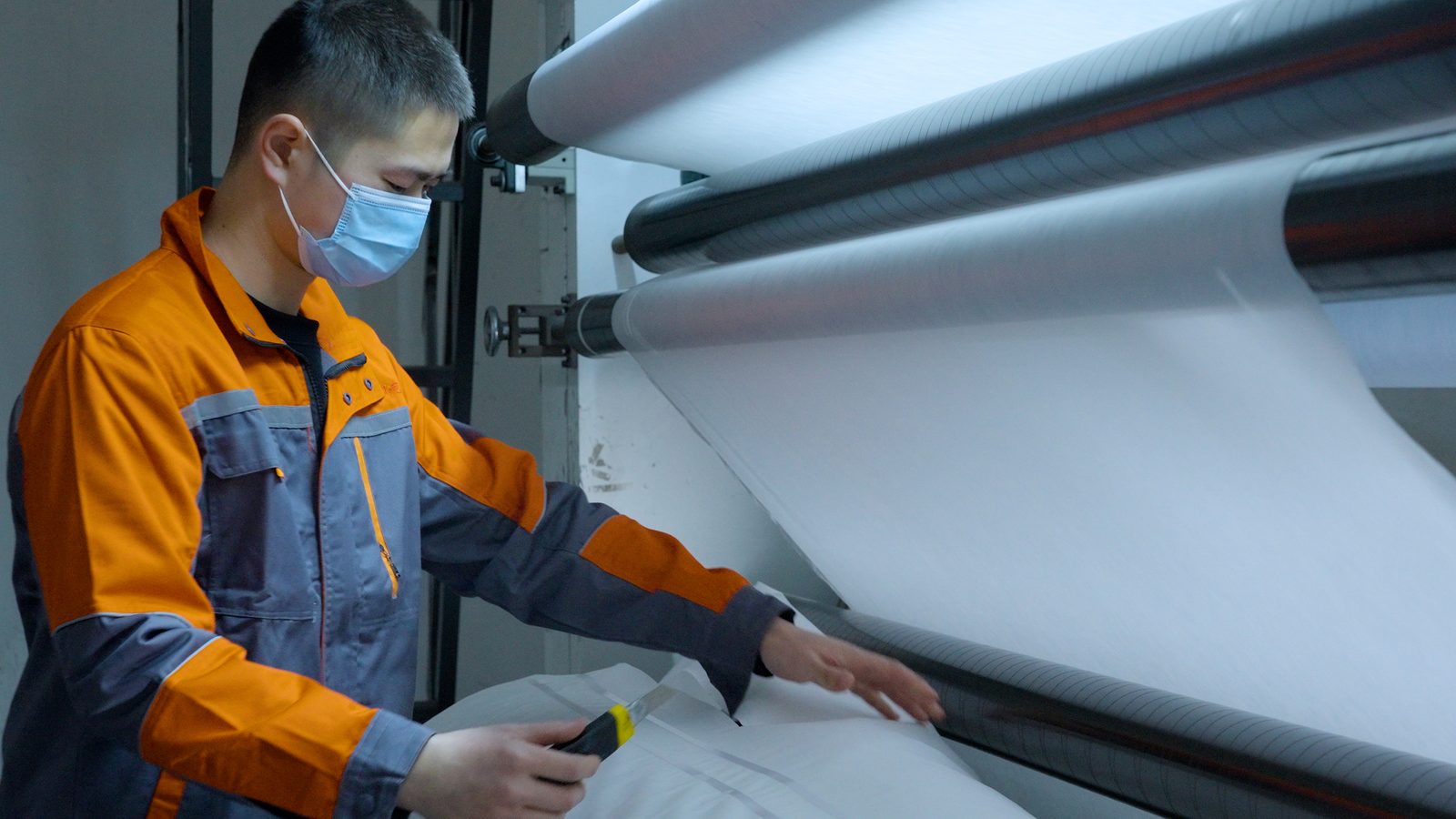
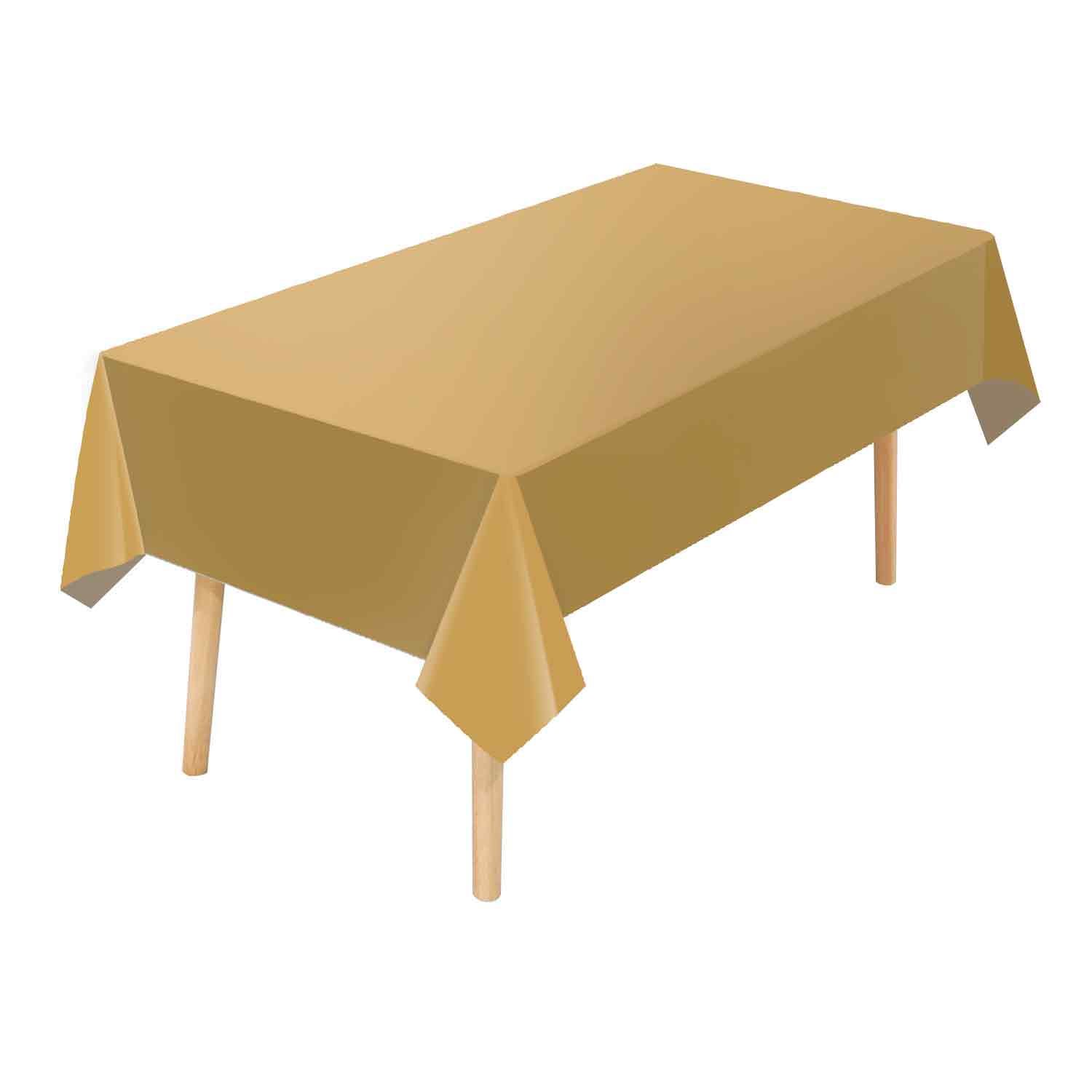
Our panel is PEVA film, made on a casting line and supplied at 54×108 in. Read the two numbers the way they are used in service: 108 in is the run along the table edge, and 54 in is the drop direction, deep enough for the tallest standard table and cut down to the height the customer actually wants. Standard gauges are 0.03 mm (roughly 87 g for the panel) and 0.05 mm (roughly 150 g). Custom sizes are available, and the stock shades in the catalogue are white, red, pink, light blue and black. Film rather than woven fabric is what makes the product work for food service: a spill wipes off, nothing goes to the laundry, and the panel can be used for one event or re-used and then thrown away (Plastic film).
Start from the drop, not from the length
Drop is the one measurement the end user can give you, and it decides what they will accept. Floor length means the skirt reaches the ground, so the finished drop equals the table height: standard folding and banquet tables are 30 in high, counter-height tables are 36 in, and bar-height tables are 42 in (Folding table; Table). A knee or lap drop of about 15–17 in suits dining and reception tables where guests sit at the sides and do not want film against their legs.
Because the panel arrives 54 in deep, one SKU covers floor length on a 30 in table and is simply cut down — provided the enquiry states the finished drop so the factory can cut and pack to size. Ask for the drop, never for “standard length”.
How much skirt a table takes
Work the perimeter, never the visible length. For rectangles P = 2 × (L + W), so a 6 ft table (72×30 in) has a 204 in perimeter and an 8 ft table (96×30 in) has 252 in. For rounds P = π × D, so a 60 in round table is about 189 in around.
Then add fullness. A flat film panel is gathered by hand, and gathering is what makes it read as a skirt rather than a bin liner: 1.5× is the working minimum, 2× looks deliberate, and box pleats need 2.5–3×. Most events skirt three sides only — the back faces a wall or stays open for service — so the run to cover is L + 2W.
| Table | 3-side run | At 1.5× fullness | Panels (108 in run each) |
|---|---|---|---|
| 6 ft × 30 in | 132 in | 198 in | 2 |
| 8 ft × 30 in | 156 in | 234 in | 3 |
| 60 in round | 189 in | 284 in | 3 |
| 72 in round | 226 in | 339 in | 4 |
Round up, and put one spare panel per event in the carton. A join in the middle of the front run is the most common fault buyers report on skirting, and it is almost always caused by ordering the perimeter exactly instead of ordering fullness plus a spare.
What holds the skirt up
Film panels have no sewn header, so fixing is a job the buyer has to plan for. In practice it is one of these: hook-and-loop tape (hook-and-loop fastener) run along the table edge; table skirt clips or bulldog clips where the table is already clothed; double-sided party tape for a single event; or a heat-sealed or sewn header if the panel will be used again.
If the market you supply expects a rental-style skirt — pre-pleated, heat-set and sold in long runs with a clip header — say so on the enquiry. Pleating is a different construction from a flat panel (Pleat) and is quoted as its own item, with its own fullness calculation.
Gauge: 0.03 mm or 0.05 mm
0.03 mm (about 87 g) is the party and one-service gauge: lighter in the carton, lower cost per table, fine when the skirt is dressed once and cleared away. 0.05 mm (about 150 g) is the gauge for repeated handling — clips, tape, transport, outdoor breeze — and it hangs straighter because there is more film weight per square unit. The two are the same product line, not two products, so a mixed order is normal: 0.05 mm for the front-of-house runs the customer will re-use, 0.03 mm for the bulk of a party season. If your customer thinks in mil or micron rather than millimetres, convert on the plastic tablecloth thickness chart before quoting.
Order the skirt and the top cloth as one specification
Colour is the most common mismatch in a skirting order: a skirt and a cloth in the same nominal colour, produced in different weeks, can arrive two shades apart, and the customer sees them together under venue lighting. Send one master swatch for the whole setting and order the skirt, the top cloth and any napkins or cutlery against it in the same enquiry. The colour guide covers how a shade is written down as a number rather than a word.
Printed skirts for booths, hotels and shows
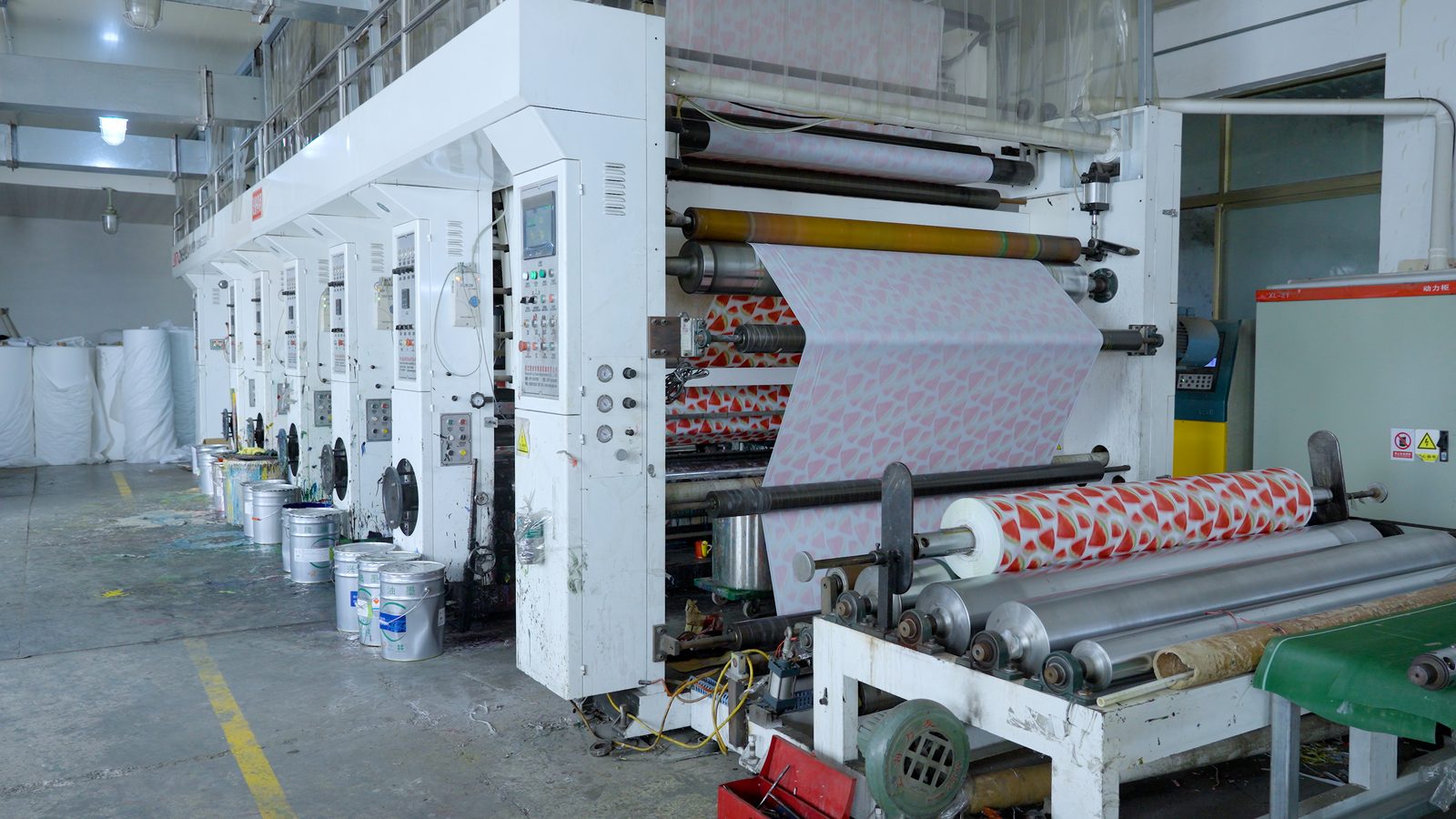
The same cast film takes print, so a skirt can carry a logo for a trade show booth, a hotel buffet or a retail counter, and it can match the print on the top cloth. Our printed film runs on rotary presses in black-and-white dots, checks and seasonal patterns. Where the artwork is screened or printed to a specific repeat, the plate and artwork approval is a separate line on the quotation — the custom printed tablecloth guide sets out what has to be approved before the run starts.
What belongs on the enquiry
Eight lines and a skirt enquiry can be quoted without a second email: table type and size (L×W×H, or diameter×height); finished drop; how many sides you are skirting; fullness (flat gathered, or pleated); gauge; panel size, 54×108 in or custom; colour, printed or plain; and packing. Add the market the order is for — a rental house and a dollar-store buyer want the same film packed two different ways.
Why buyers order skirting with Runxiang
Runxiang has been making PEVA table covers and tableware in Changzhou for over twenty years, on our own casting, printing and cutting lines, with the tablecloth, the skirt, the napkins and the cutlery for one table setting coming out of one factory and one enquiry. Send the table, the drop and the colour and we will come back with the panel count.
Related reading
- Plastic tablecloth size chart — the top cloth that goes over the skirt.
- Round plastic tablecloths: diameter and drop — the round-table maths behind the table above.
- Plastic tablecloth rolls vs pre-cut covers — when a roll beats a fixed size.
- Plastic tablecloth complaints and the spec that prevents them — the eight faults to design out.
- Plastic party tableware sets — matching the rest of the table to the skirt.
- Shop the plastic tablecloth range — skirts, cloths, rolls and runners.