










Most buyers start a glassware enquiry from the wrong end: how many glasses, what colour, what carton count. The spec that decides whether the order works in service is the pair of numbers nobody writes down — the capacity of the glass and the size of the pour going into it. Two items that both read “wine glass” on a packing list can differ by 100 ml. This guide covers how to specify disposable plastic stemware by drink, how the moulding affects breakage, and what to put on the enquiry sheet so quotes come back comparable.
Disposable stemware is not a cup with a stem
A 7.5 oz plastic wine glass and a 7 oz tumbler are not the same product with a different silhouette. A cup is specified by rim diameter and lid fitment, because the job is transport and sealing — the whole point of our cups and lids fitment guide. Stemware is specified by poured volume, bowl geometry and how the foot is joined, because the job is presentation and service. Nothing about a rim diameter tells you whether a flute will hold a 150 ml pour with headspace.
What the two share is the same buyer, table and colour story, which is why glassware sits inside our plastic cups and lids programme rather than being sold as an accessory.
Match the glass to the drink: capacity versus pour
A glass should be one size larger than the pour it receives. Capacity is what the mould holds to the rim; the pour is what the barman or caterer serves. Buy on capacity, quote on pour. This is the table we work from once a customer says what is being served.
| What is served | Typical pour | Format that fits |
|---|---|---|
| Still wine, banquet service | 150 ml (5 US fl oz), the usual restaurant pour | 7.5 oz clear wine glass, about 220 ml |
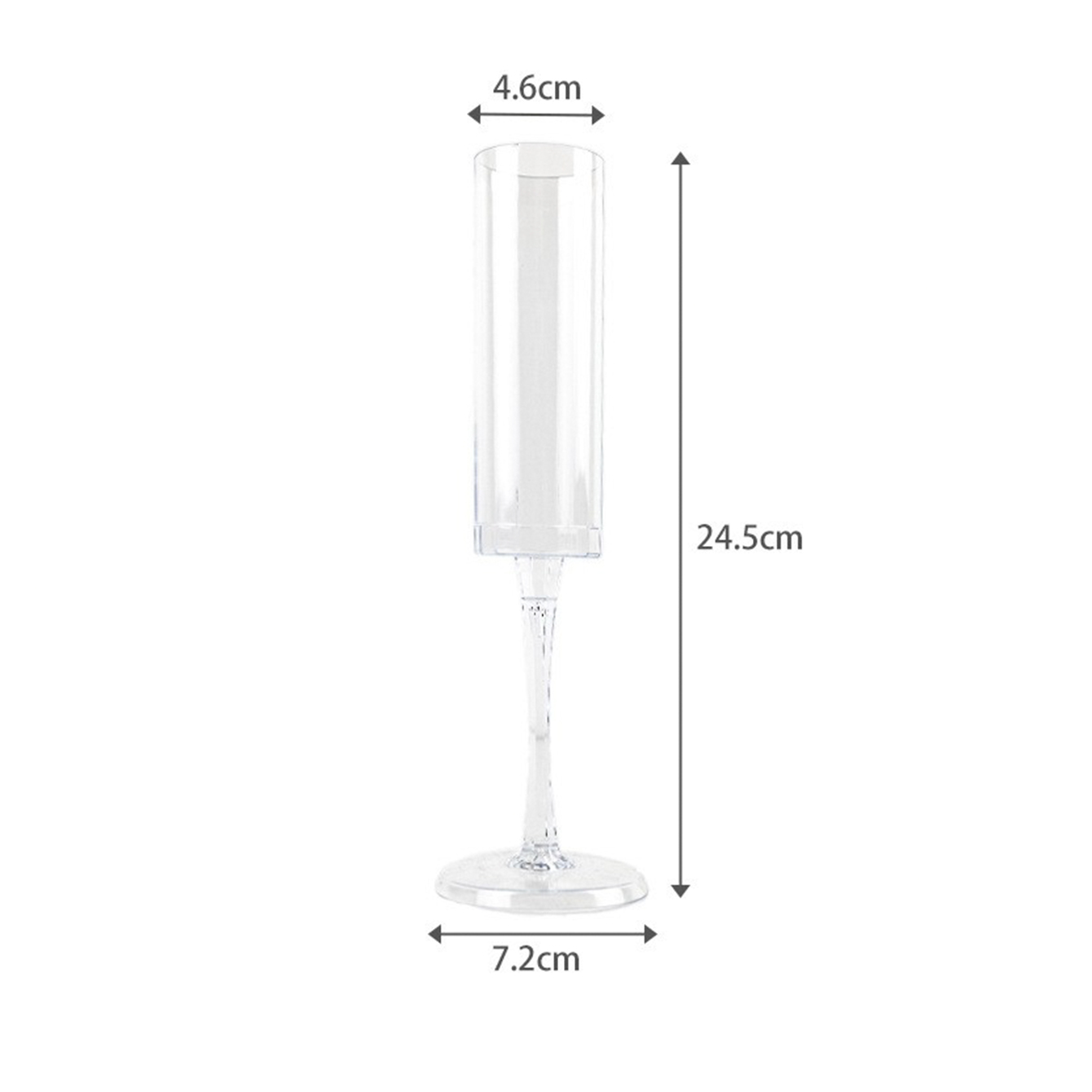
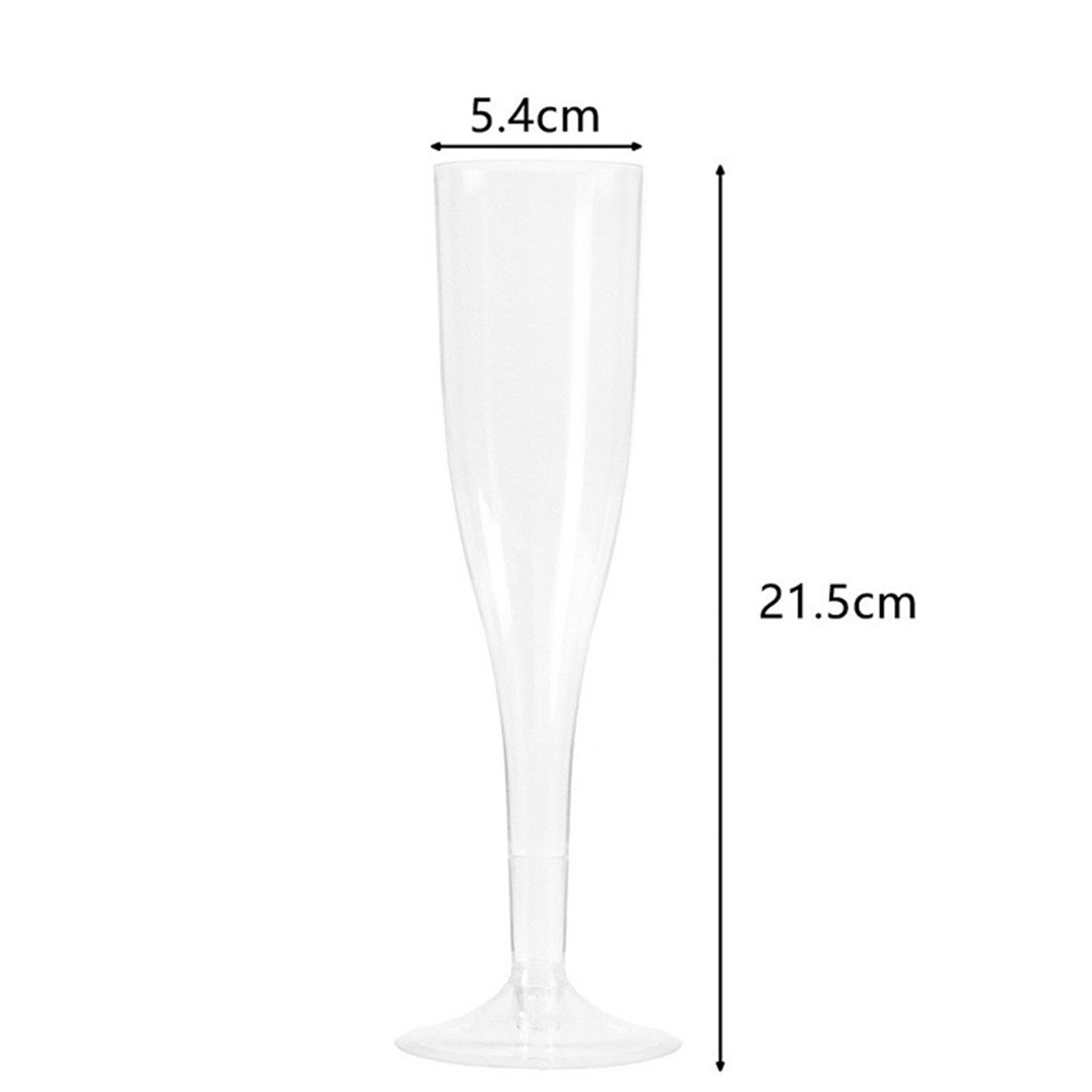
| Sparkling wine, toasts | 100–150 ml, poured down the side | 5 oz and 6.5 oz champagne flutes |
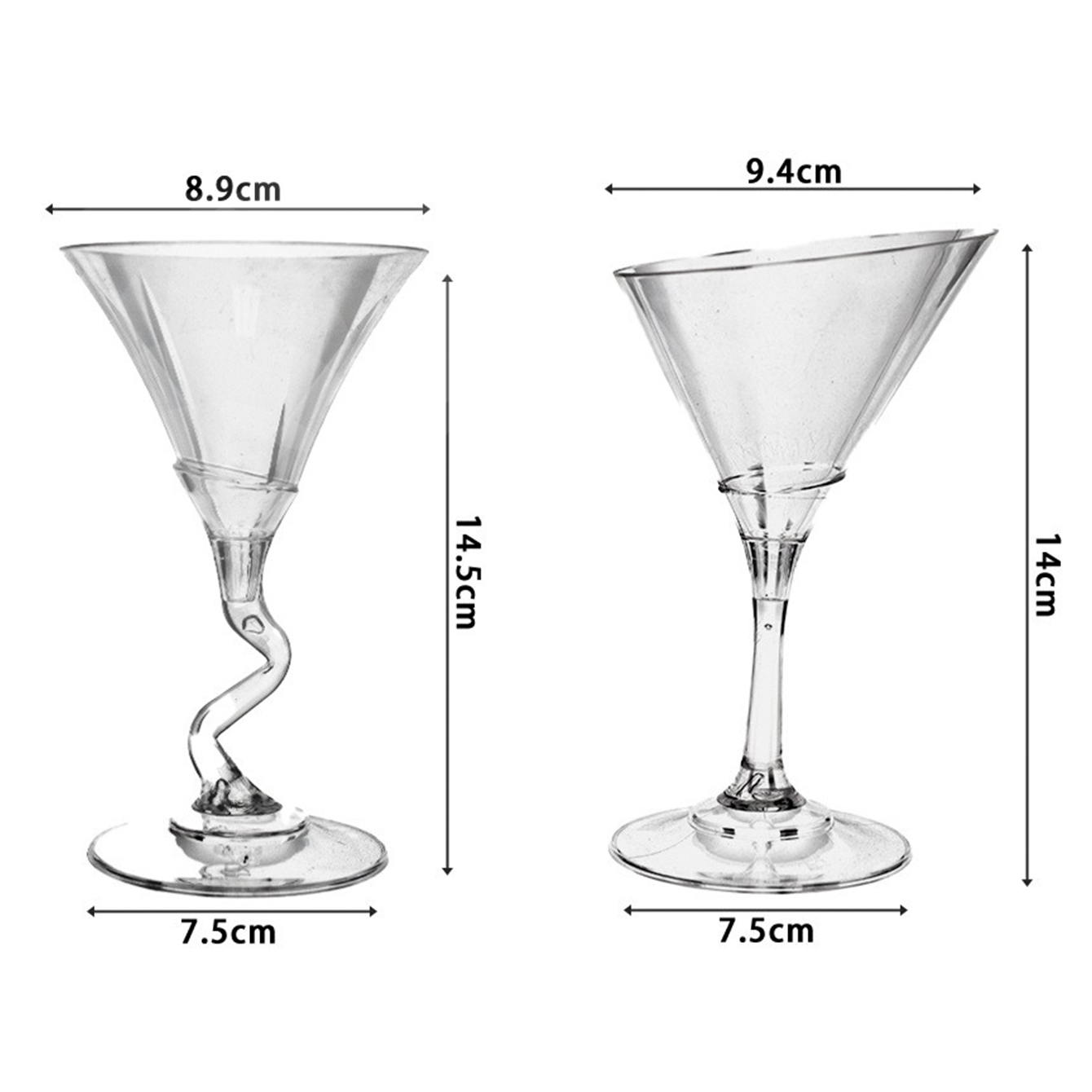
| Cocktails served “up” | 90–150 ml depending on recipe | 10 oz martini glass |
| Dessert and tasting portions | 50–90 ml | 2 oz square mini dessert cups, clear dessert cups |
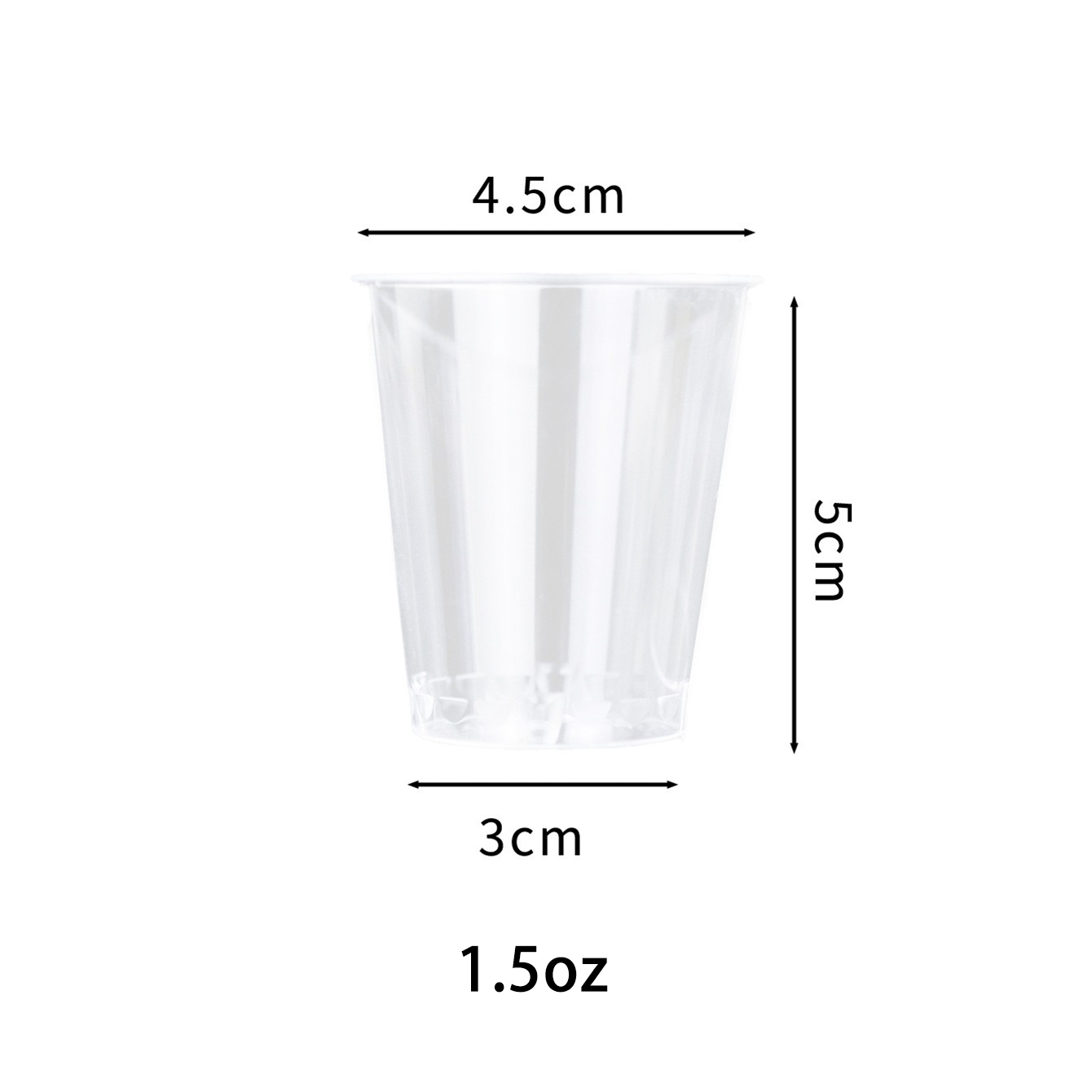
| Spirits and tasting-room samples | 1.5 US fl oz (44 ml) customary US shot | 1 oz, 1.5 oz and 2 oz shot glasses |
These pour sizes are service conventions, not rules. The US shot is conventionally read as 1.5 US fluid ounces, about 44 ml, while UK jiggers commonly measure 25 ml or 35 ml (shot glass reference). A champagne flute holds roughly 180–200 ml, with the inward taper at the lip reducing surface area so carbonation lasts longer — that geometry is why a flute is not simply a narrow wine glass (champagne glass reference). On wine, there is no legal standard pour in the US and 150 ml is the volume restaurants are generally assumed to serve, one fifth of a 750 ml bottle (wine glass reference).
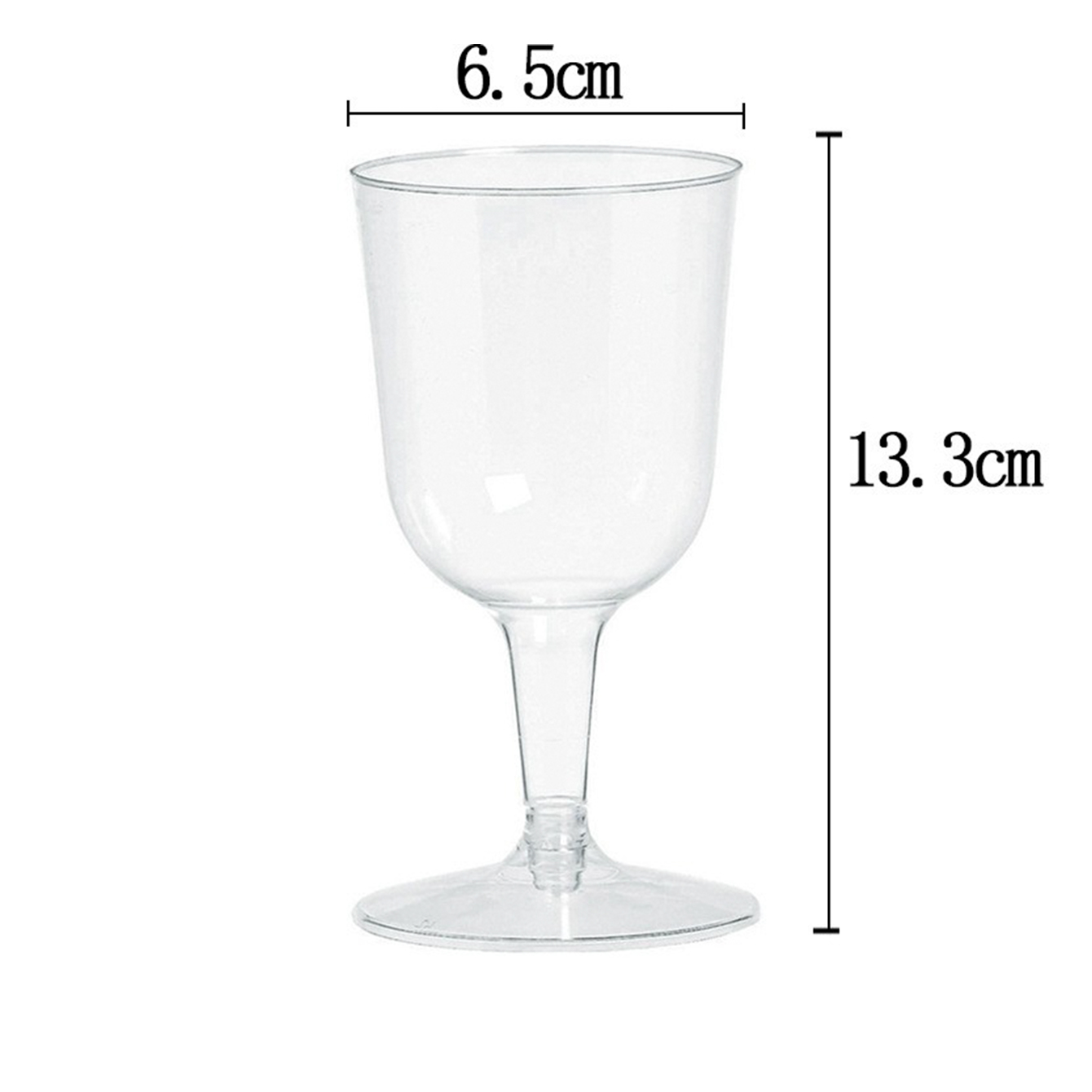
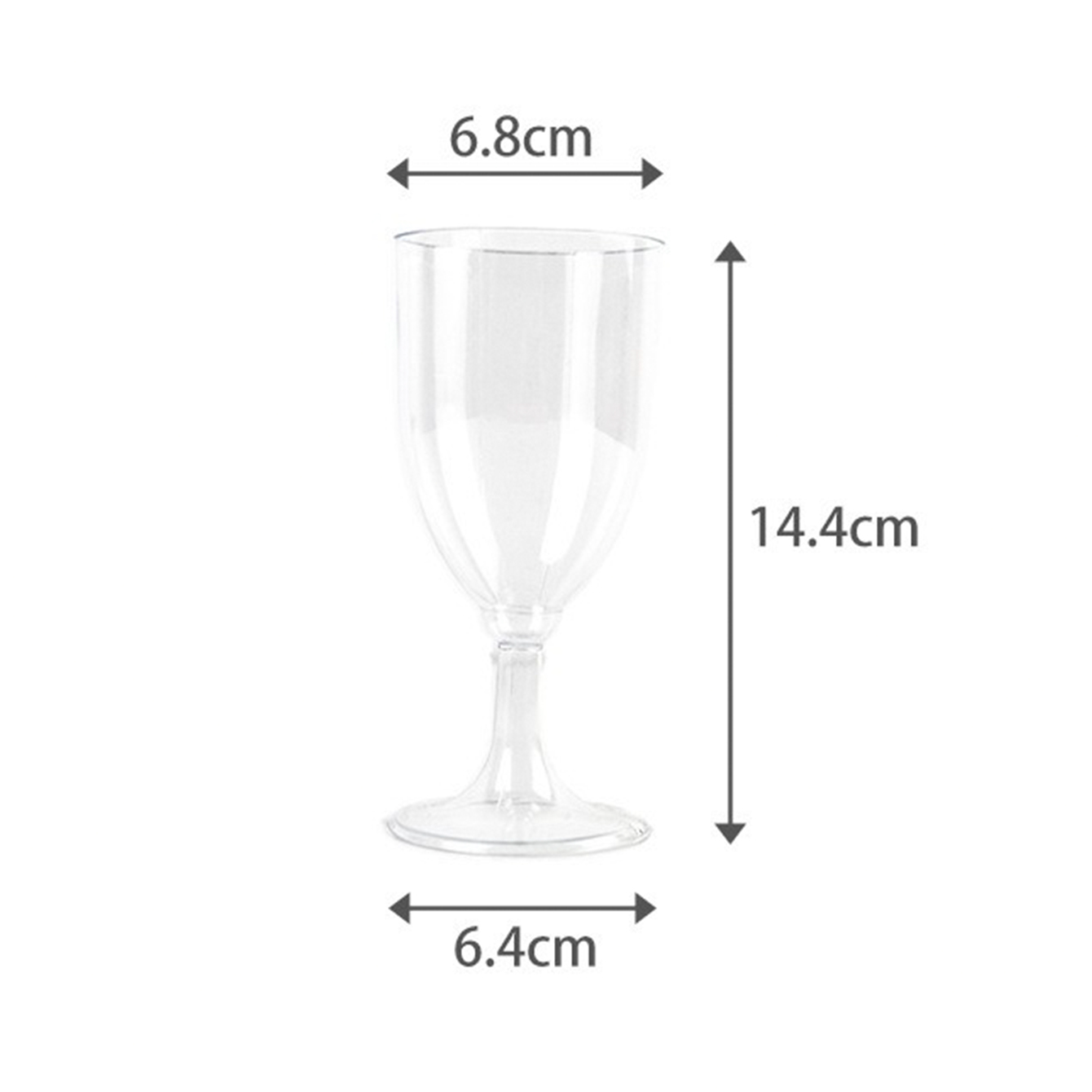
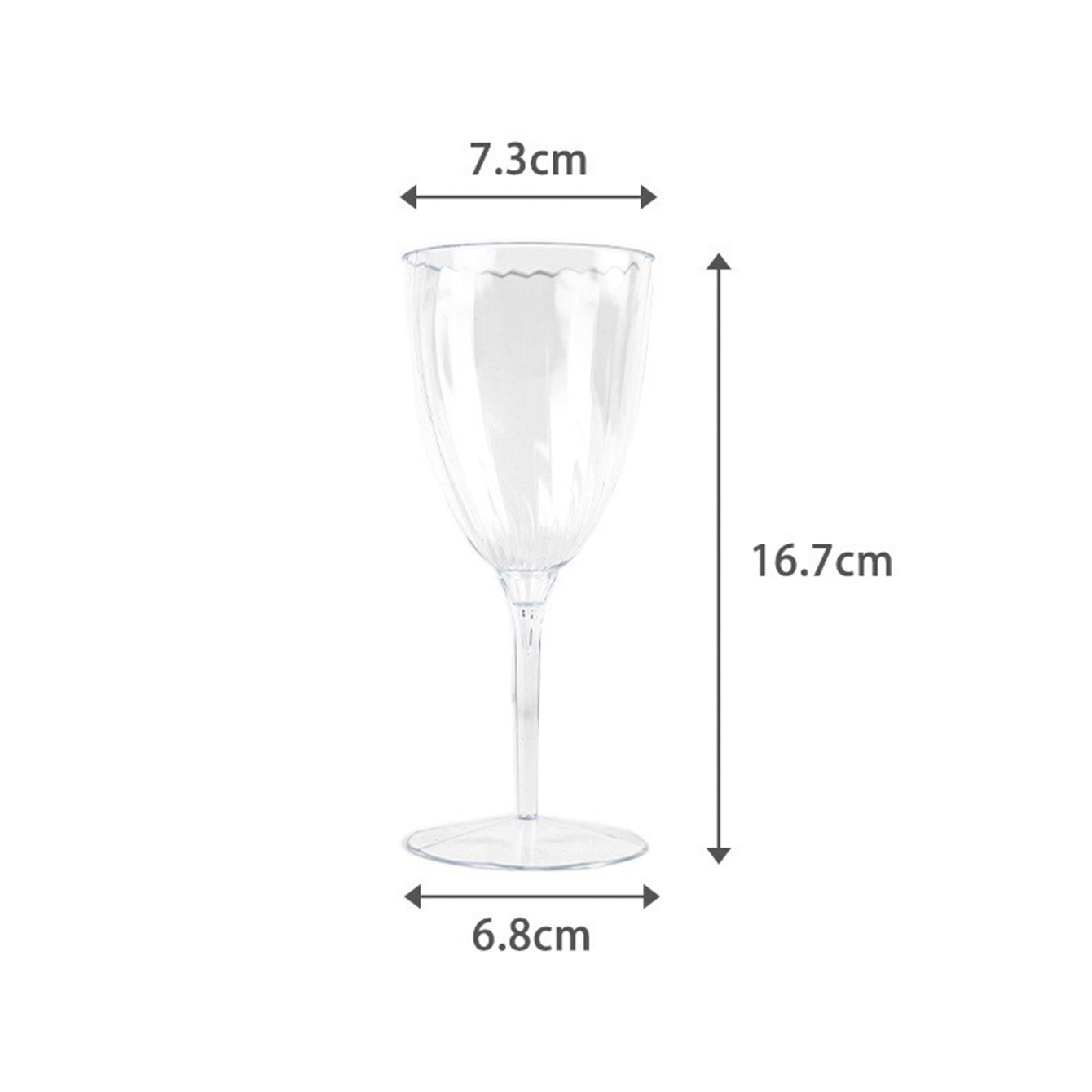
Two practical notes. A glass filled to the rim spills on a tray, and a flute filled to the top loses its head. The same 150 ml pour also looks generous in a 5 oz flute and mean in a 10 oz bowl, so if one account uses a single glass across two services, size to the smaller pour. Our drinkware range is organised so a full table can be matched in one colour story.
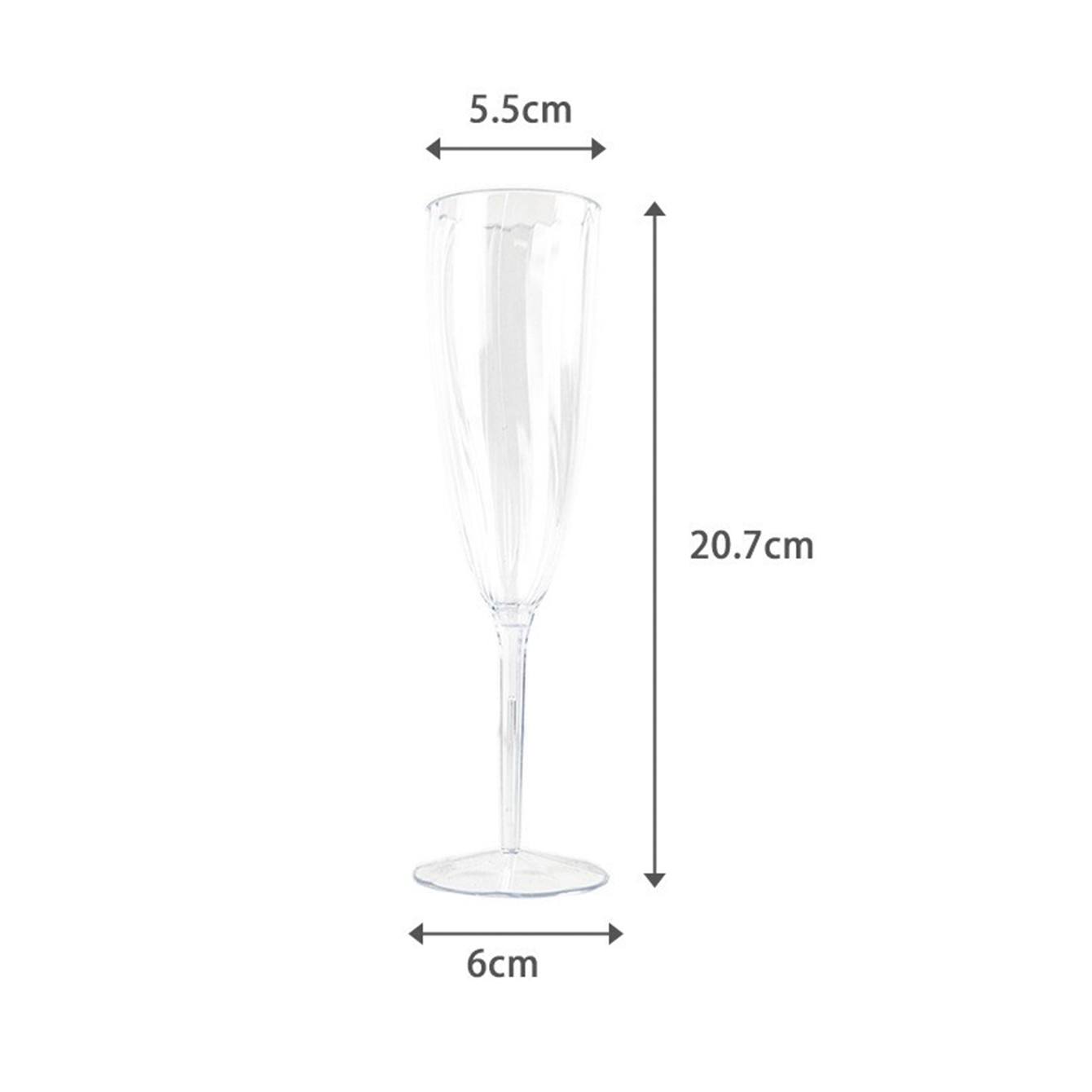
One-piece or two-piece: where stemware actually fails
There are two ways to make a plastic glass with a stem. One-piece versions are moulded in a single shot, bowl, stem and foot together, so there is no joint. Two-piece versions mould the bowl separately and snap the stem and base on afterwards — a wider choice of colours on less complex tooling, which is why many party ranges are built that way, but also the source of the most common field complaint: a base that separates.
The joint is not a defect, it is a design decision that has to be specified. Test it on the sample, not the drawing: seat the base and feel for a firm click with no rotation, then fill to the intended pour and push the bowl lightly sideways. If the foot rotates or rocks on a flat surface, the fitment tolerance is too loose. On a one-piece glass, check the rim and the foot ring instead; that is where chips and stress marks appear first.
Resin: PS, PET and the limits of each
Clear disposable stemware is normally polystyrene, resin code 6, chosen for the clarity and rigidity that make a thin stem possible; food-contact use is covered in the US by 21 CFR 177.1640 (eCFR text). PET, code 1, is the other common clear resin, appearing under 21 CFR 177.1630 (eCFR text) and familiar from cold cups rather than fine stemware. Polypropylene, code 5, is the toughness choice for hot service and lidded items, but it is translucent rather than crystal clear, so it does not sit at the top of a stemware range.
Two consequences for buyers. Stemware and hot drinks are a mismatch; specify another resin and format if the account serves coffee or tea. And resin choice is a document question as much as a performance one — imported glassware should arrive with the resin identity and the matching food-contact statement, the pattern set out on our food-contact materials page. The three resins are compared in the PP, PS and PET guide.
Small formats: dessert cups and shot glasses
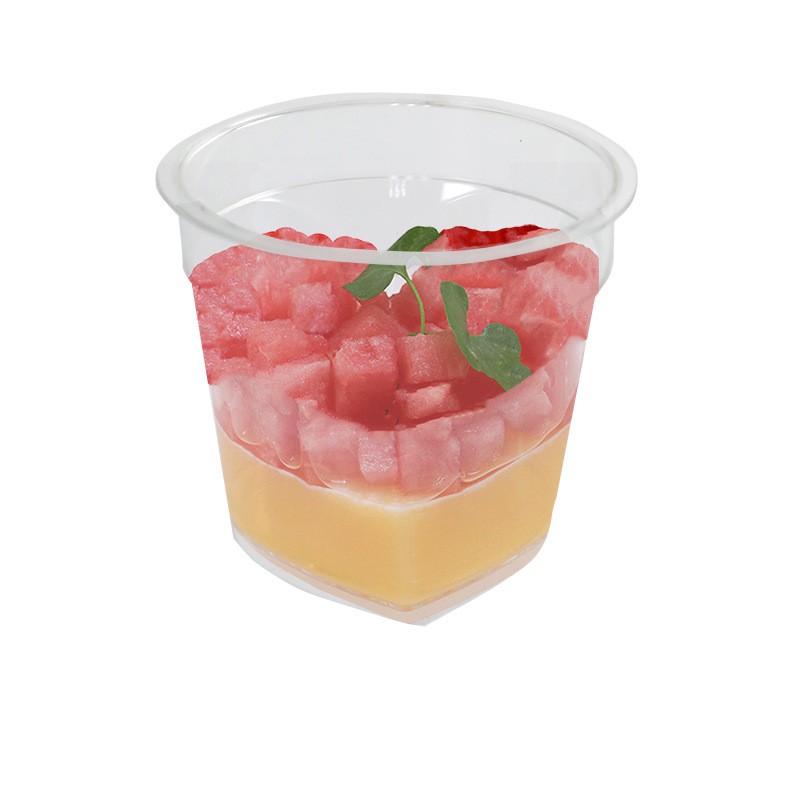
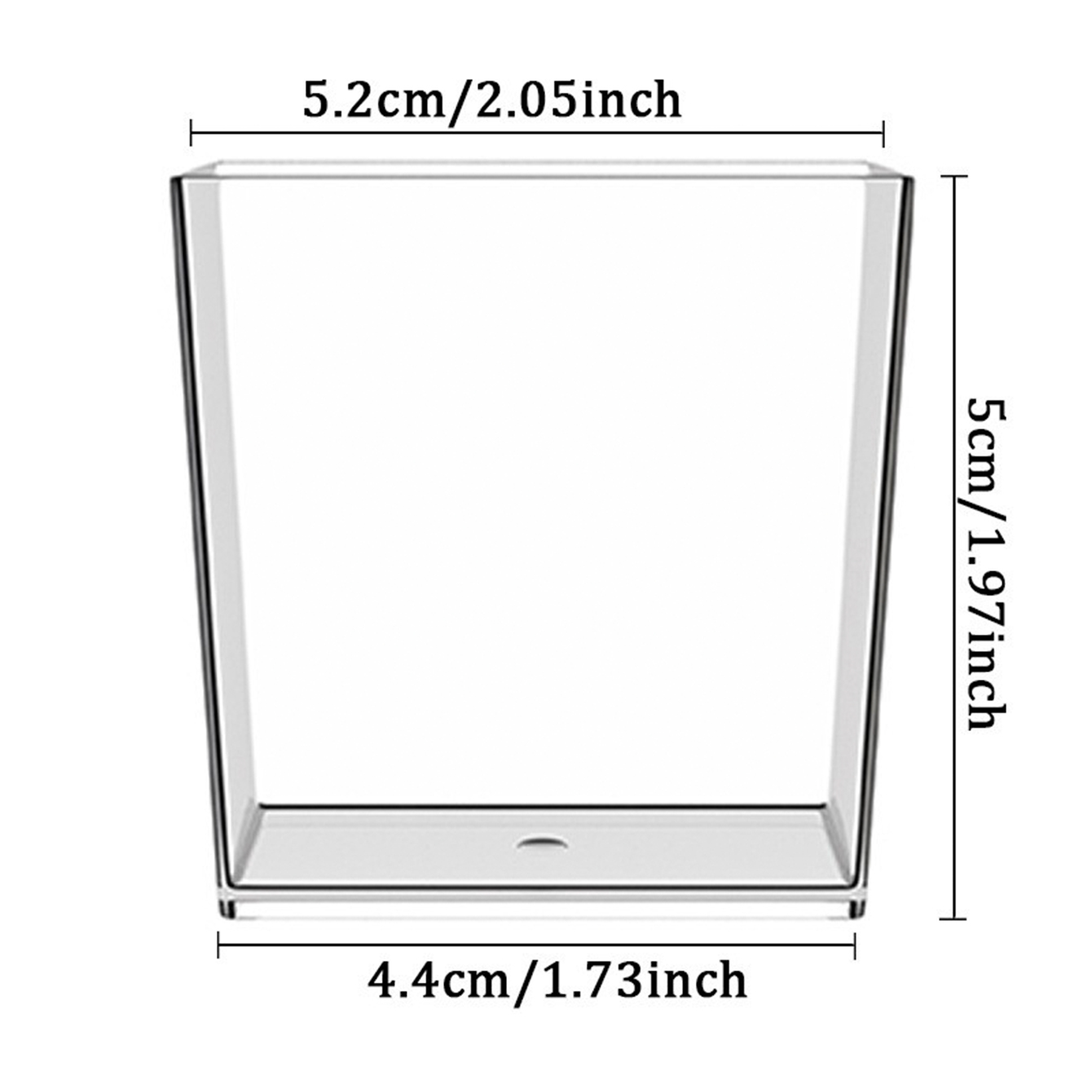
A 2 oz square mini dessert cup is what a caterer reaches for when the dessert is panna cotta, a mousse or a layered tasting portion, and the same mould doubles as a condiment or sample cup; clear round dessert cups cover the softer presentations. Shot glasses in 1 oz, 1.5 oz and 2 oz sit alongside them as the standard format for tasting rooms, bars and dessert shots.
These small items behave differently from stemware in one way that matters: they nest. Nesting sets carton dimensions and how many cartons fit a pallet, which is why they are a useful line to add to a stemware order — buyers use them to balance a container or reach a sensible mix across sizes. Product pages carry the mould reference we quote from, for example the clear dessert cup and the 7.5 oz wine glass.
Colour and finish: keep one table consistent
Clear is the default for hospitality: it reads as glass and shows the drink. Coloured and decorated items are bought to match a table programme, and that is where avoidable friction sits — a flute, a plate and a napkin are three materials, and the same nominal colour will not read the same on all three under venue lighting. Approve against a physical master sample rather than a screen, and keep one sample of each material in the same folder; the method in our tablecloth colour guide applies to glassware and dinnerware too. Where glassware is part of a party set with plates, cutlery and napkins, start from the assortment logic in our party tableware sets guide.
Packing, cartons and what to compare between quotes
Two suppliers can quote the same glass at the same unit rate and deliver very different landed economics, because the differences live in packing. Ask for units per carton, whether items nest loose or are individually wrapped, carton dimensions and gross weight, and loaded stack height. Stemware is the item most likely to arrive damaged, so ask how the top layer is protected, whether sleeve packs are used, and what breakage the shipment is planned against. A quote without those numbers cannot be compared with another. Our quoting page shows the fields we work from.
What to put on the enquiry
Eight lines turn a vague glassware enquiry into a quotable brief:
- The drink and the occasion — banquet wine service, welcome toasts, cocktail bar, dessert station, tasting room.
- The pour you actually serve, in millilitres or ounces.
- The capacity you want, and whether it may flex by one size.
- Resin, plus the food-contact statement you need attached.
- One-piece or two-piece construction, and whether base fitment is inspected.
- Colour and finish, with a physical master sample if the item must match an existing range.
- Units per carton, packing style, and the pallet or container you are filling.
- Whether you need your own branding or packaging — which moves the item into our OEM and ODM programme.
Changzhou Runxiang Plastic Products has been moulding, printing and packing plastic tableware for more than twenty years, with glassware sitting alongside tablecloths, plates, bowls, cutlery and napkins. Send the pour size and the service, and we will come back with a format that fits rather than a catalogue page that nearly does. Samples of the wine, flute, martini, dessert cup and shot ranges are available through our cups and glassware programme or the FAQ and contact form.