










Every year the same email arrives in the first week of December: a buyer wants Christmas table covers “for this season”, and every year the answer is the same. Christmas plastic tablecloths are a third-quarter buy. The production slots are booked in late summer, the containers leave in early autumn, and by the time the decorations go up in the stores the window has closed. A year-end range is also not simply a Halloween range in red: the motifs change, the palette changes, the sizes shift from buffet to dining tables, and the film gets read against a room full of lights.
Why a Christmas range is planned in late summer
Printed table covers for the year-end season follow the retail calendar, not the weather. Ranges are confirmed months before the season, production runs through the autumn, and ocean freight then adds weeks on top of that. Orders that miss the production slot either ship by air at a cost that destroys the margin, or arrive in January and sit in the warehouse until next year.
Christmas is also the single biggest season for printed covers, which means two things for a buyer. First, the print list has to be locked earlier than for any other season. Second, a stock-out in December cannot be fixed: there is no second production run. The practical rule is to place the year-end order on the same schedule as the 2027 printed plastic tablecloth programme, and to treat the Christmas part of it as the fixed block.
The prints that carry a Christmas range
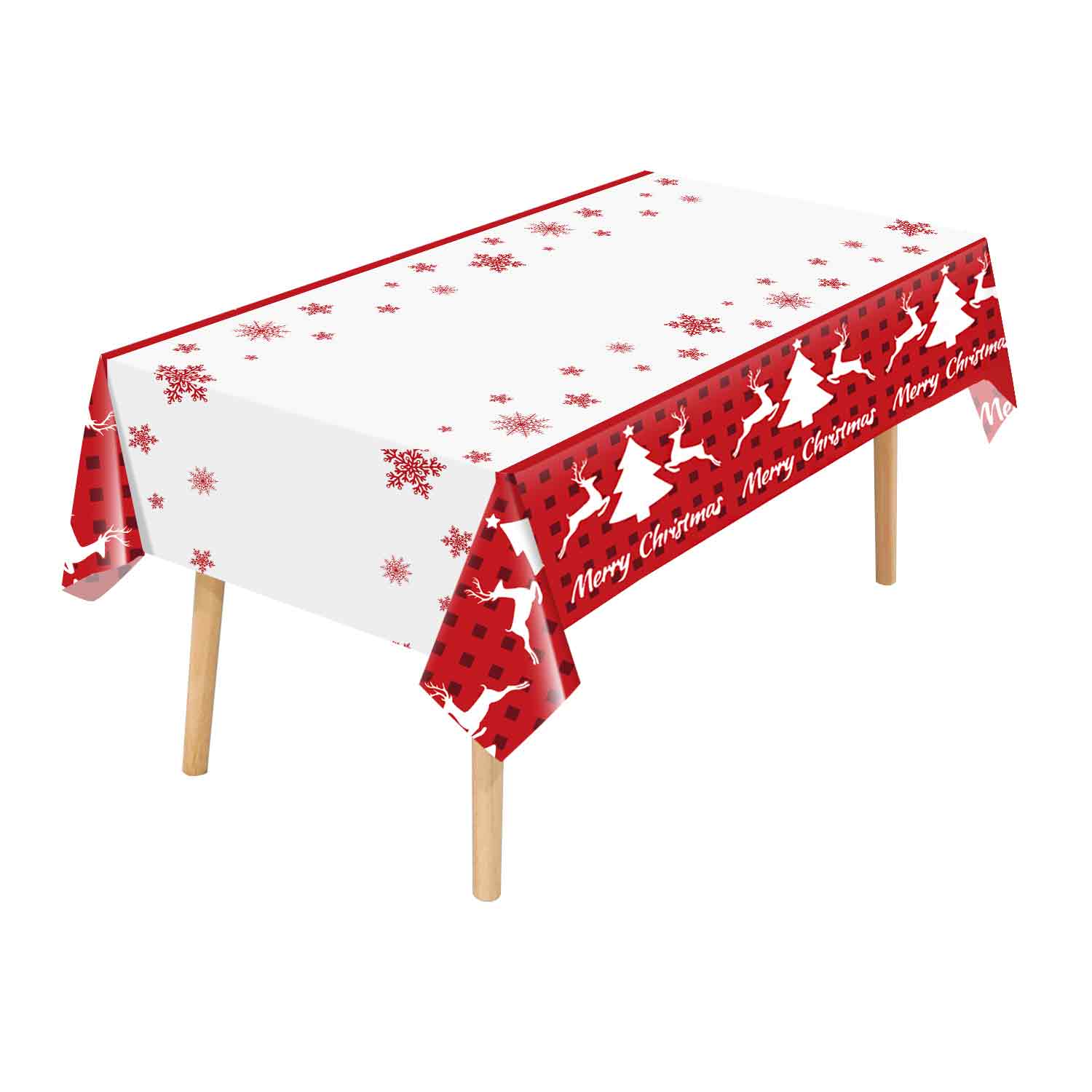
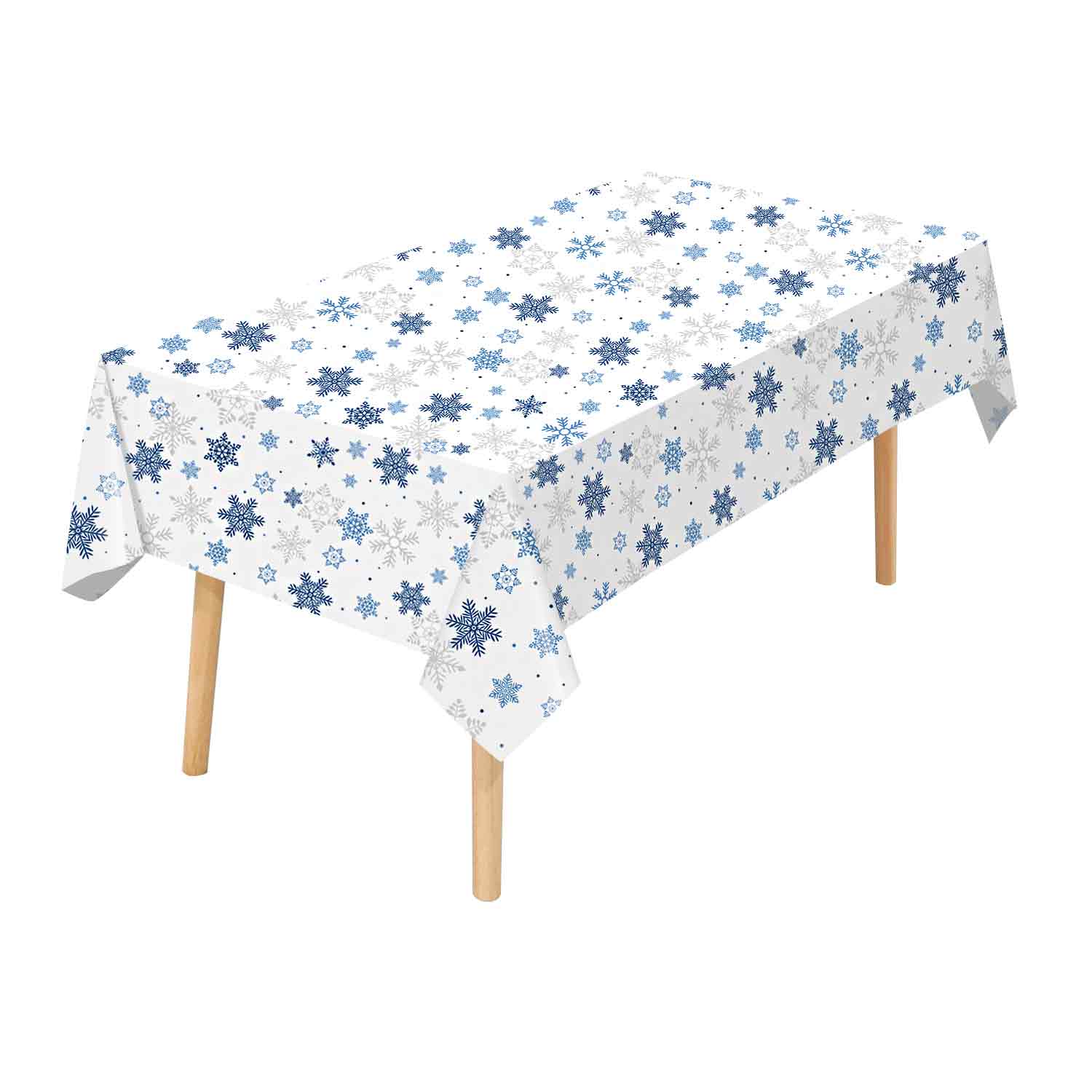
A working Christmas range usually needs five or six motifs, not fifteen. The evergreen sellers are the Christmas tree, the snowman, the snowflake, the bell and the elk — plus a neutral “winter” print such as a blue-and-white snowflake for buyers who want a cover that survives into January. We hold ready artwork and tooling for that exact set: white tree, snowman, red snowflake, red elk, bell and white-and-blue snowflake covers.
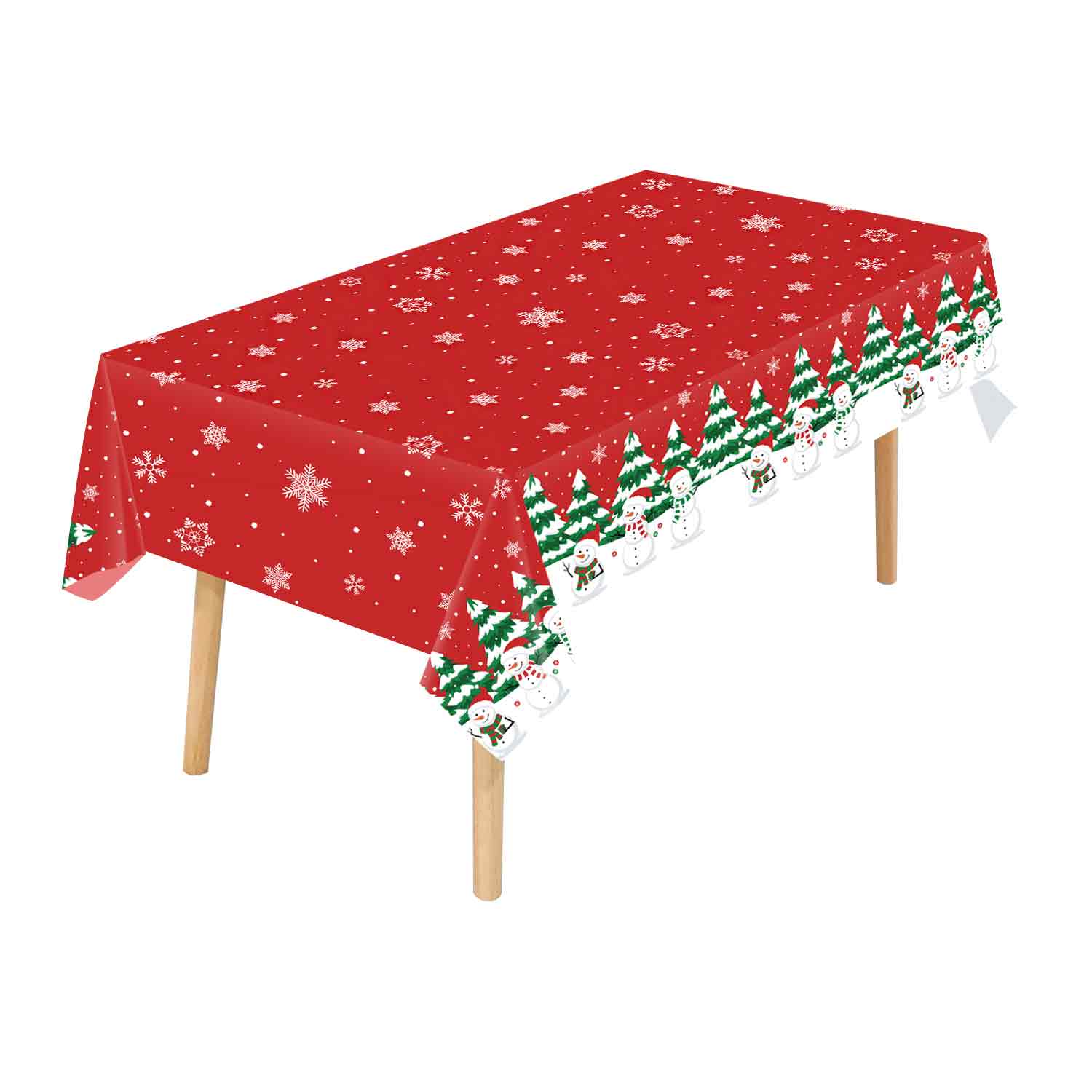
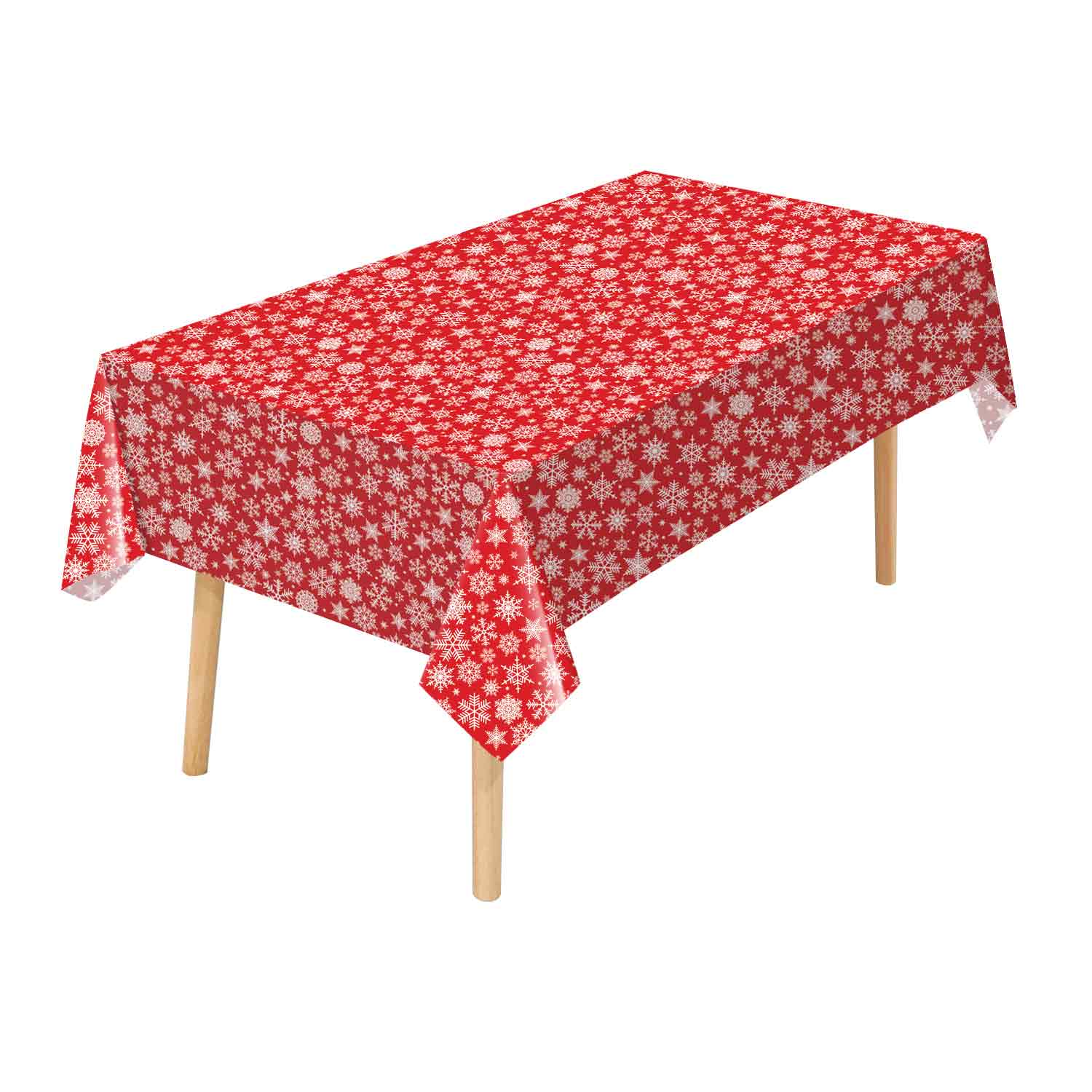
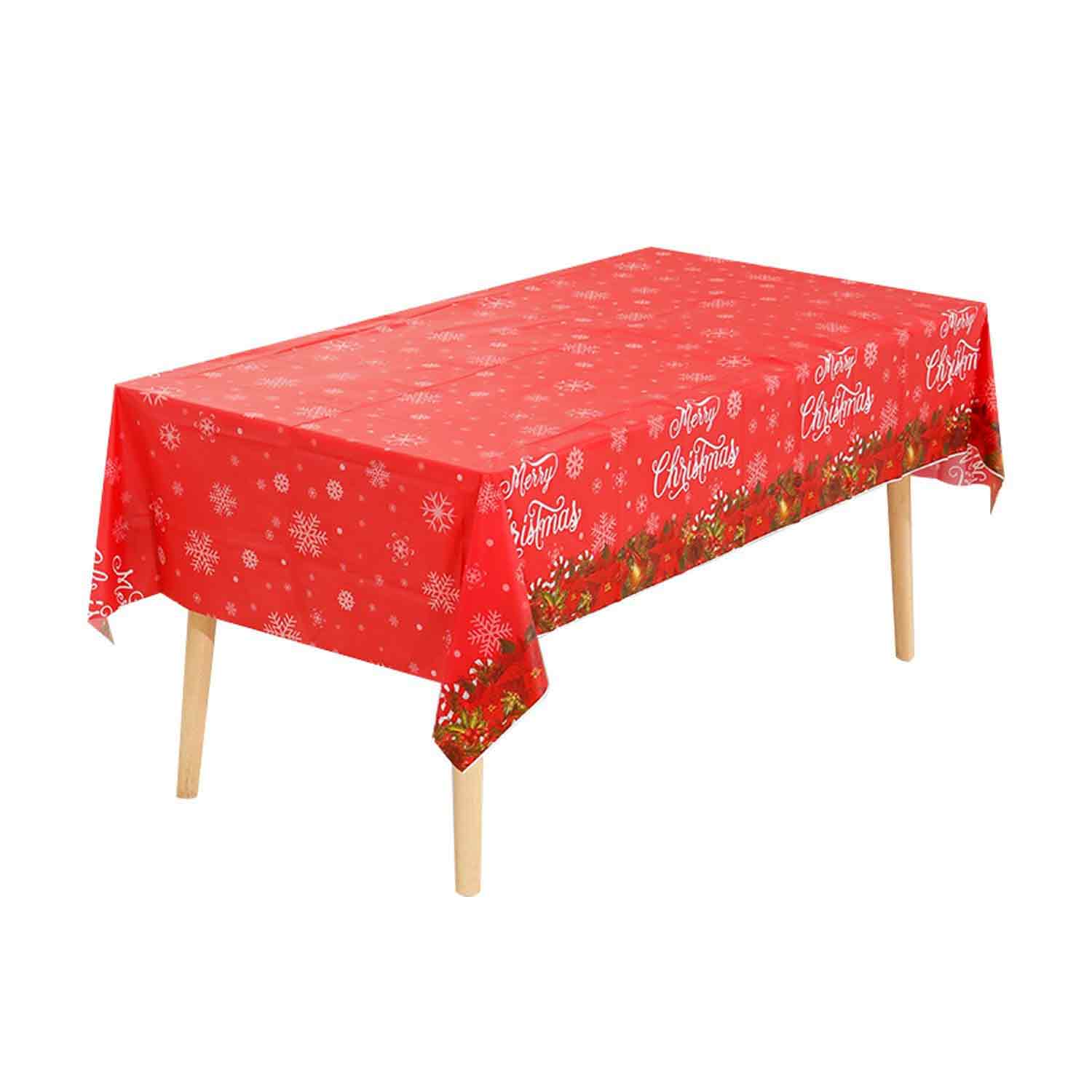
Two rules keep a range readable on the shelf. Pair one busy all-over motif with one calmer spot print, and never put two dense motifs in the same facings — they compete and both look smaller. And remember how the print is built: Christmas covers are printed on the film itself, so the white areas in a red-and-white design are usually unprinted film, not white ink. That matters when a buyer asks for “more white” in a design.
Two colour stories: traditional red and green, modern blue and white
Christmas sells in two palettes and it is a mistake to mix them carelessly. The classic story is red and green, and it still sells best with older shoppers, family restaurants and hospitality buyers who want the room to read as Christmas from the door. The modern story is blue, white and silver — colder, cleaner, and the one that sells to younger buyers, winter bars and gift retail.
Neutral white and gold covers sit underneath both and are the safest base stock, because they can be dressed up or down. If you carry only three colours, carry red, green and white: that combination covers the classic story and stands in for the modern one.
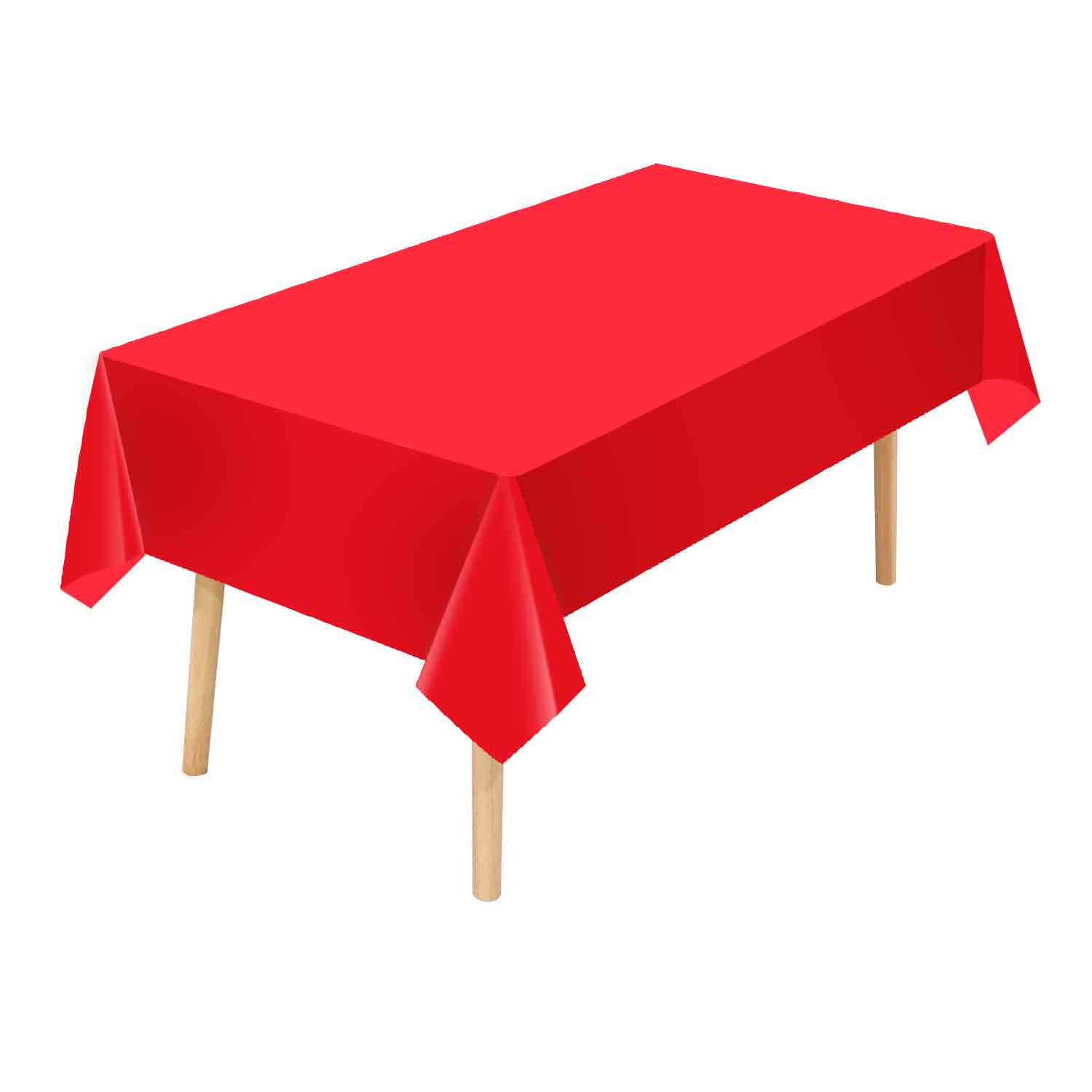
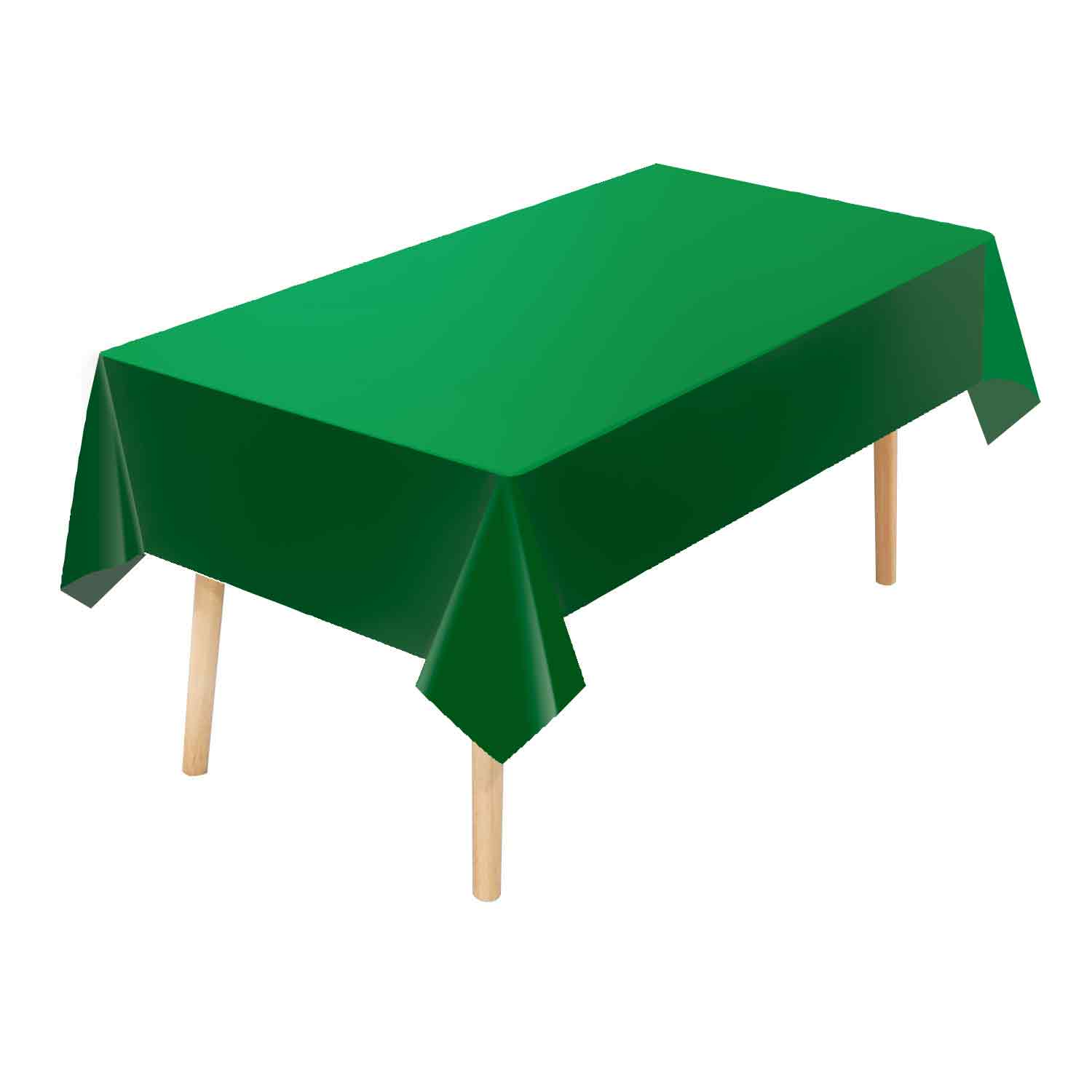
Colour is a specification, not a feeling. Send a physical master sample with the order, agree the light source under which the shade will be judged, and set a tolerance (the industry works in Delta E, the same difference metric used in colour-difference measurement). Reds are the hardest to hold batch to batch, so ask for the red to be matched on the master sample rather than approved from a phone photo. The same discipline applies across a whole festive programme — see our notes on specifying a table cover colour. For stored stock, also ask what the print does under light and where it fades first, since colour fastness decides whether next December’s remainder is still sellable.
Sizes and drops for a Christmas table
The cover size follows the table, and the drop decides whether it looks festive or short. A 54 x 108 in rectangle cover on a 6 ft banqueting table leaves roughly 18 in at each end and 12 in down the sides; on an 8 ft table the ends fall to about 6 in and the cover starts to look tight. For round tables, an 84 in cover on a 60 in round gives a 12 in drop, while a 70 in cover gives only about 5 in — fine for a cake table, too short for dining.
Work in drop classes: 15 in to the knee for casual and outdoor dining, 29–30 in to the floor for buffets, banquets and photo-ready tables. A buffet or trade-stand set-up is usually a cover plus a skirt on the front, and rolls that you cut to length are often more economical than pre-cut covers when a venue changes its table layout. Our guide to rolls versus pre-cut covers and the round table diameter and drop guide both walk through the arithmetic, and the full width and length matrix is in our plastic tablecloth size chart.
Film and finish: what the cover is printed on
Christmas covers are usually made from two films. Polyethylene (“PE”) is the volume material: light, inexpensive, waterproof, and the one most retail multipacks are made from. PEVA is the softer, quieter film with a better drape and a cleaner print surface, which is why festive and hospitality covers often use it. Our PE, PEVA and vinyl comparison covers the trade-offs in detail.
Gauge is where cost quietly lives. A 0.03 mm film is around 87 g per cover and suits a value multipack; a 0.05 mm film is around 150 g and gives the heavier hand that a floor-drop banquet cover needs. Our mil, micron and GSM guide converts between the three units buyers see on quotes.
On compliance: table covers are tabletop contact articles, not cookware. Ask for the food-contact declaration for the resin and the colorants used, with the PE grades traced to sections such as 21 CFR 177.1520 in the United States, and to the EU framework summarised by EFSA, before the range is locked.
Build the whole set, not just the cover
A Christmas table is sold as a table, not as a cloth. The buyers who get the best sell-through pair the cover with matching napkins, plates and cutlery in the same palette. We produce all four: printed and solid covers, printed and solid napkins, gold-bordered plate sets, and cutlery in clear, black, colour and metallic gold and silver finishes.
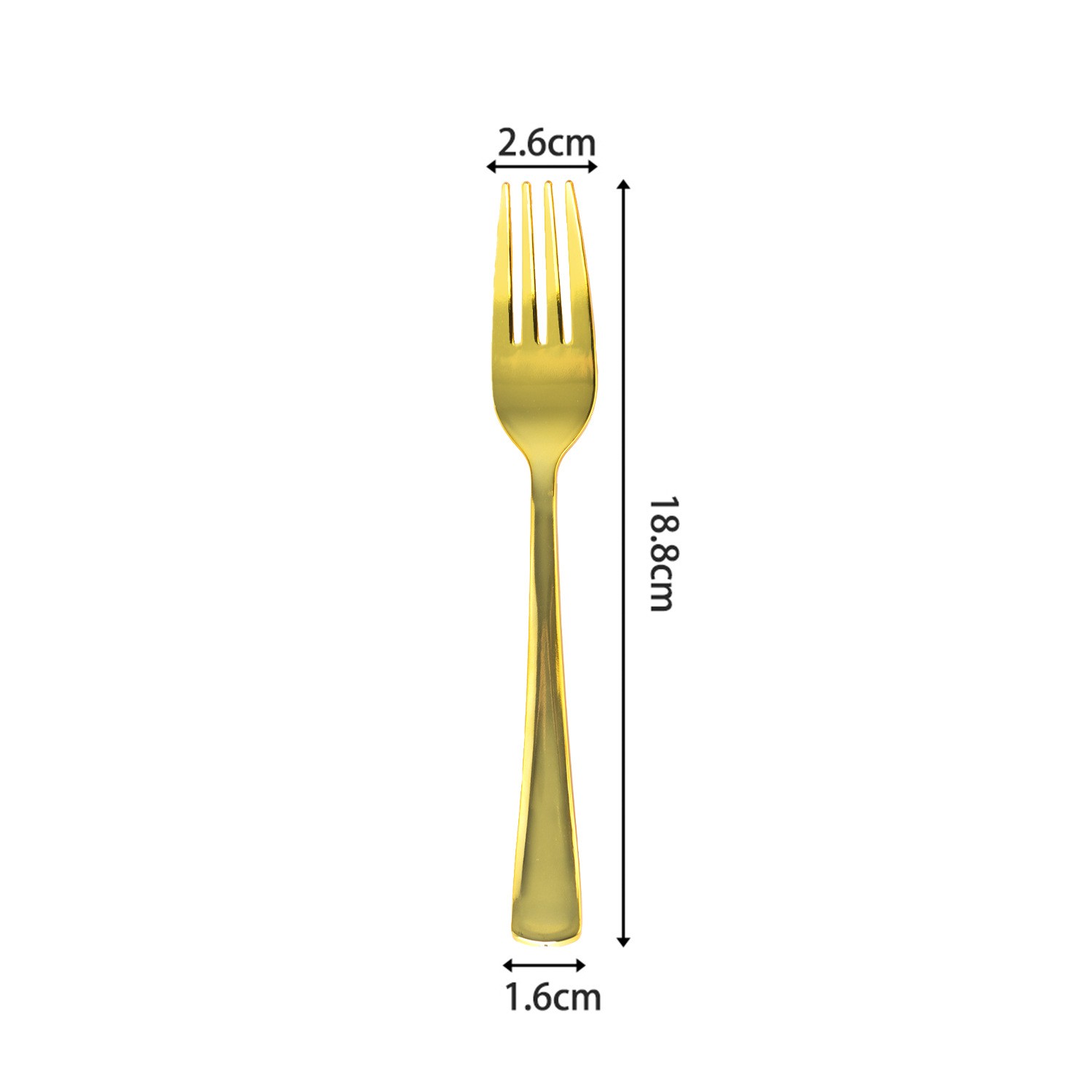
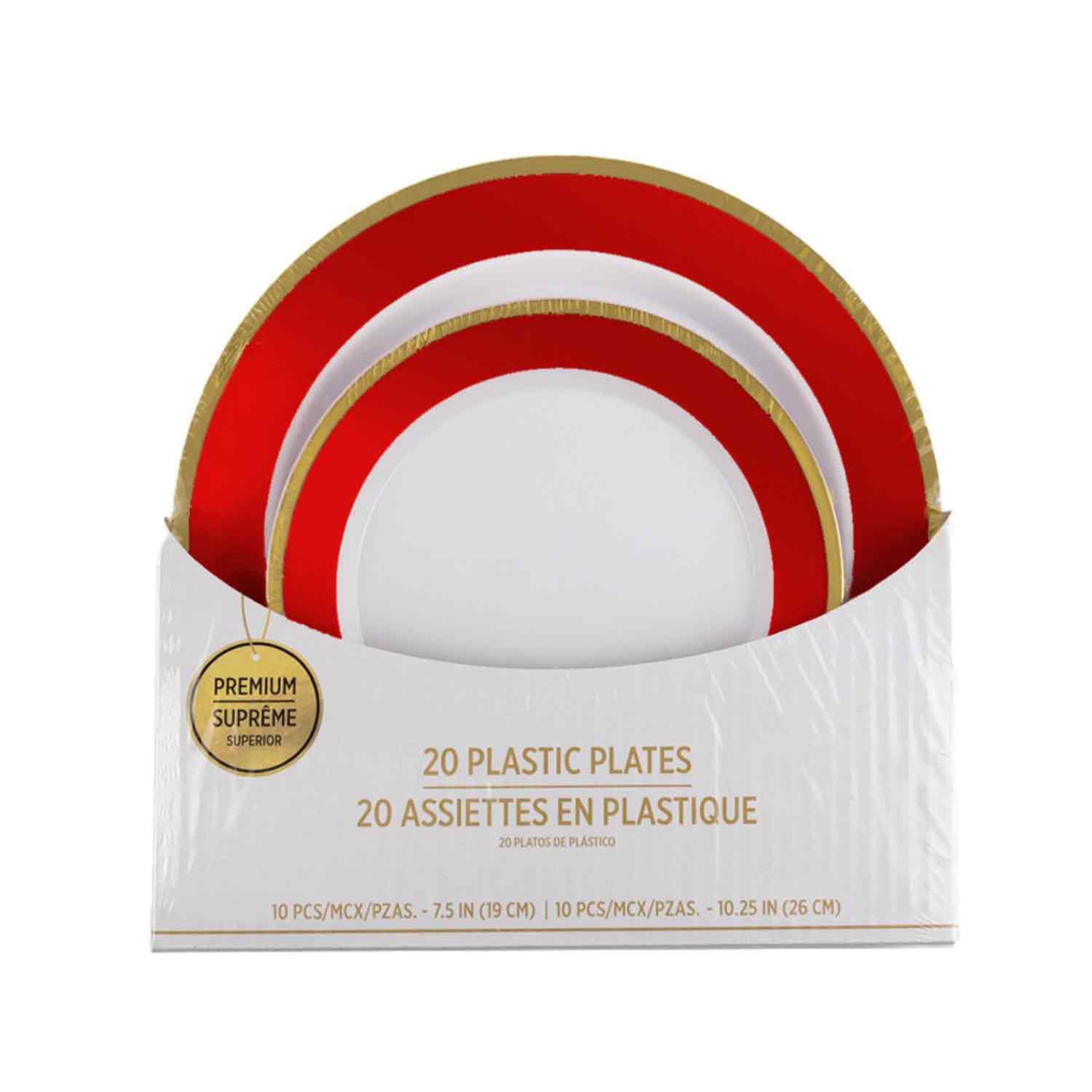
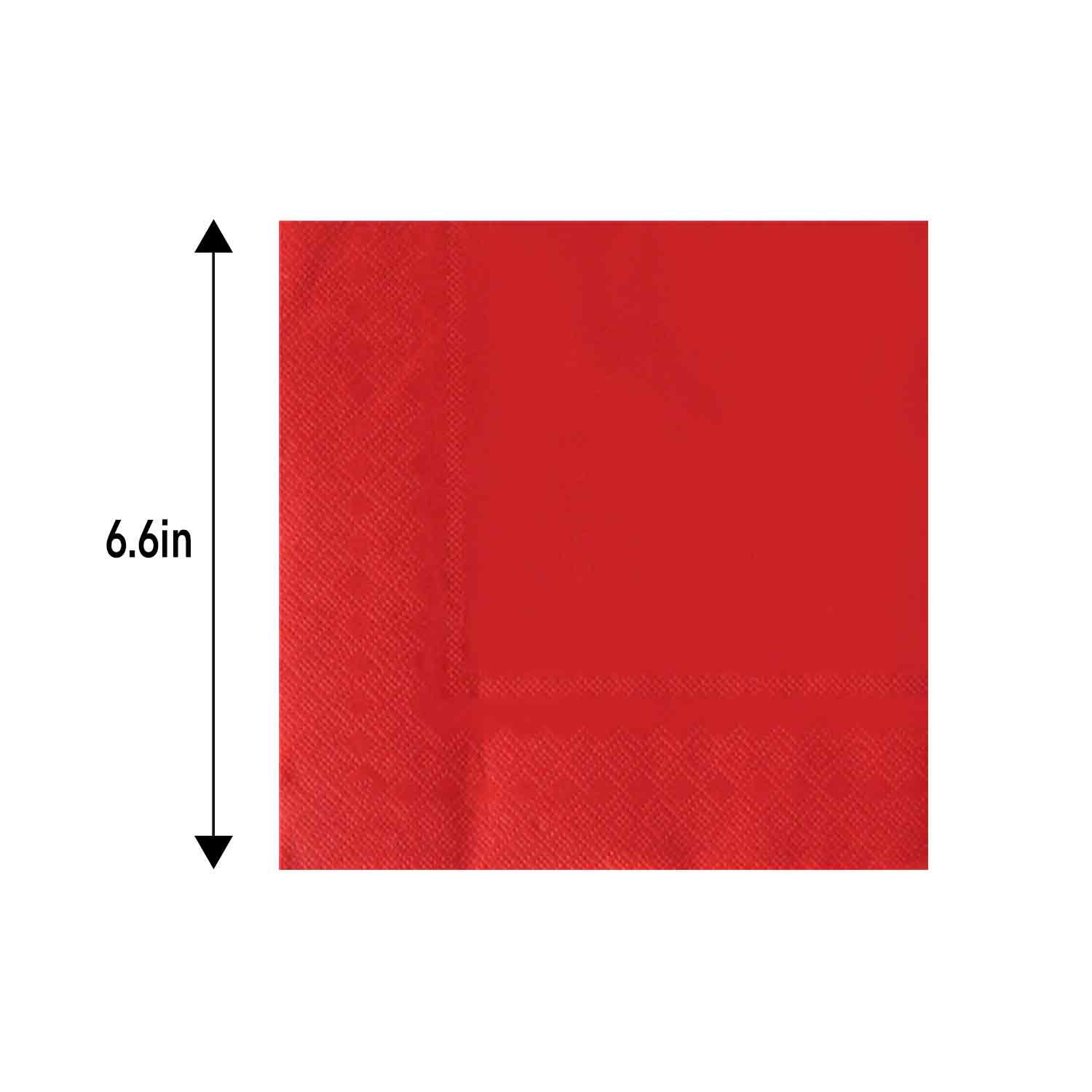
Match the colours on the master sample, not by eye across different materials: ink on film, dye on paper and moulded plastic never read the same under shop lighting, and a cover that looked right on paper can go green next to a red napkin. If the cover is printed, the whole job starts from artwork — the plate and artwork approval process is described in our article on custom printed covers and artwork approval, and napkin sizes and ply are covered in the bulk napkins buying guide.
A Christmas cover spec checklist
Before the order goes to the production slot, confirm all eight lines:
- Motif and colour story — and which of the two palettes each SKU belongs to.
- Print reference: existing artwork or a new design, with a reference photo of the intended look.
- Film and gauge — PE or PEVA, and the micron/GSM that matches the drop.
- Size and drop per table type, including round and banqueting tables.
- Master sample plus agreed Delta E tolerance and the judging light source.
- Retail packaging: hang or header card, and how many covers per consumer pack.
- Carton count and market labelling, including the barcode the retailer needs.
- Production slot and sailing date — the one line that cannot be moved later.
Christmas is also the season where a reuse angle helps: promotional covers held back for January and February can be sold as winter prints rather than cleared as Christmas stock, which is why the blue-and-white designs earn their place in the range.
Why buyers build the year-end range with Runxiang
Runxiang has been producing plastic table covers and disposable tableware for wholesale and OEM customers for over two decades, from PE and PEVA film in flat, round, elastic-edge and roll formats through printed napkins, plates and cutlery in matching palettes. If you are planning a Christmas or winter range, send the table sizes, the motif direction and the market, and we will come back with a size and film recommendation plus samples to judge the colour in your own light. See the full printed range under printed plastic tablecloths, or start the conversation through our OEM and ODM manufacturing guide.