










Halloween 2026 falls on Saturday, 31 October, and the retail aisle is set weeks before the first trick-or-treater rings a bell. For a buyer, the question is not whether a pumpkin-and-ghost print looks nice in a catalogue. It is whether the motif reads from across a room in low light, and whether the size drops far enough on the table the host actually owns. This guide covers the Halloween prints we run, the two film gauges behind them, the sizes that fit a treat table, and what changes when you print your own theme.
What a Printed Halloween Cover Has to Do That a Plain Cover Does Not
A plain white cover is judged on specs. A Halloween cover is judged as a costume. Three things decide whether it reads as one. Motif scale: a fine illustration that looks crisp on screen disappears under a string of warm bulbs, so Halloween artwork has to be large, repeated and high-contrast. Ground colour: one dominant ground plus one motif family beats a mixed pack of leftover birthday prints, and black remains the safest single ground because it hides scuffs, crumbs and creases until the table is cleared. Recognisability: a spider web, a jack-o-lantern and a ghost read at a glance.
Five Halloween Prints, and the Ground Colour That Carries Each One
Our Halloween programme is built on two motif families across three ground colours, which gives a buyer a five-SKU range without five separate artwork approvals:
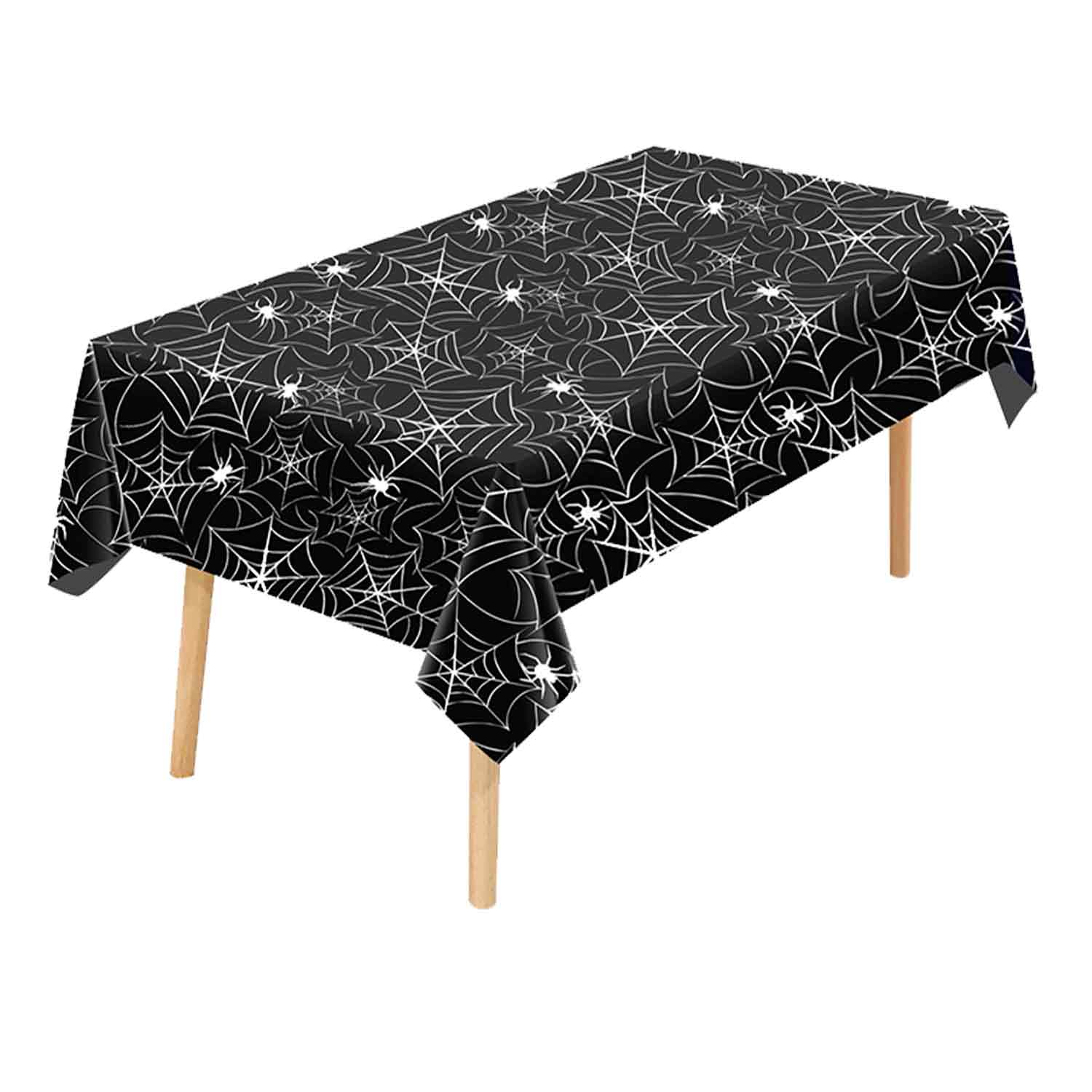
Black spider web. A white web and spiders over a solid black ground — the classic Halloween cover, and the widest-selling single print in most markets. Black spider web plastic tablecloth.
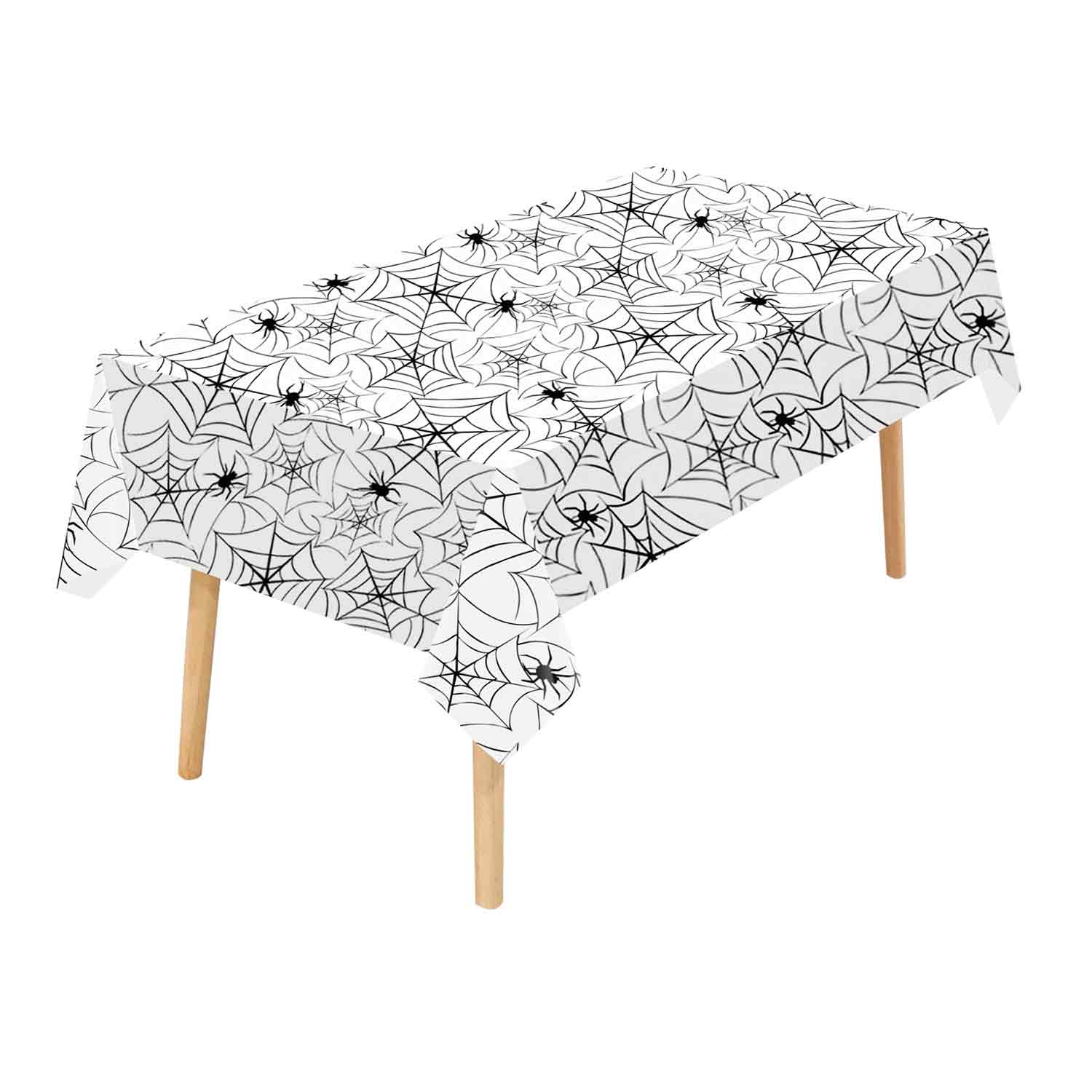
White spider web. The same web reversed onto a white ground. It suits hosts who want a Halloween table that still looks light, and it shows handling marks most clearly, so gauge matters here more than anywhere else. White spider web plastic tablecloth.
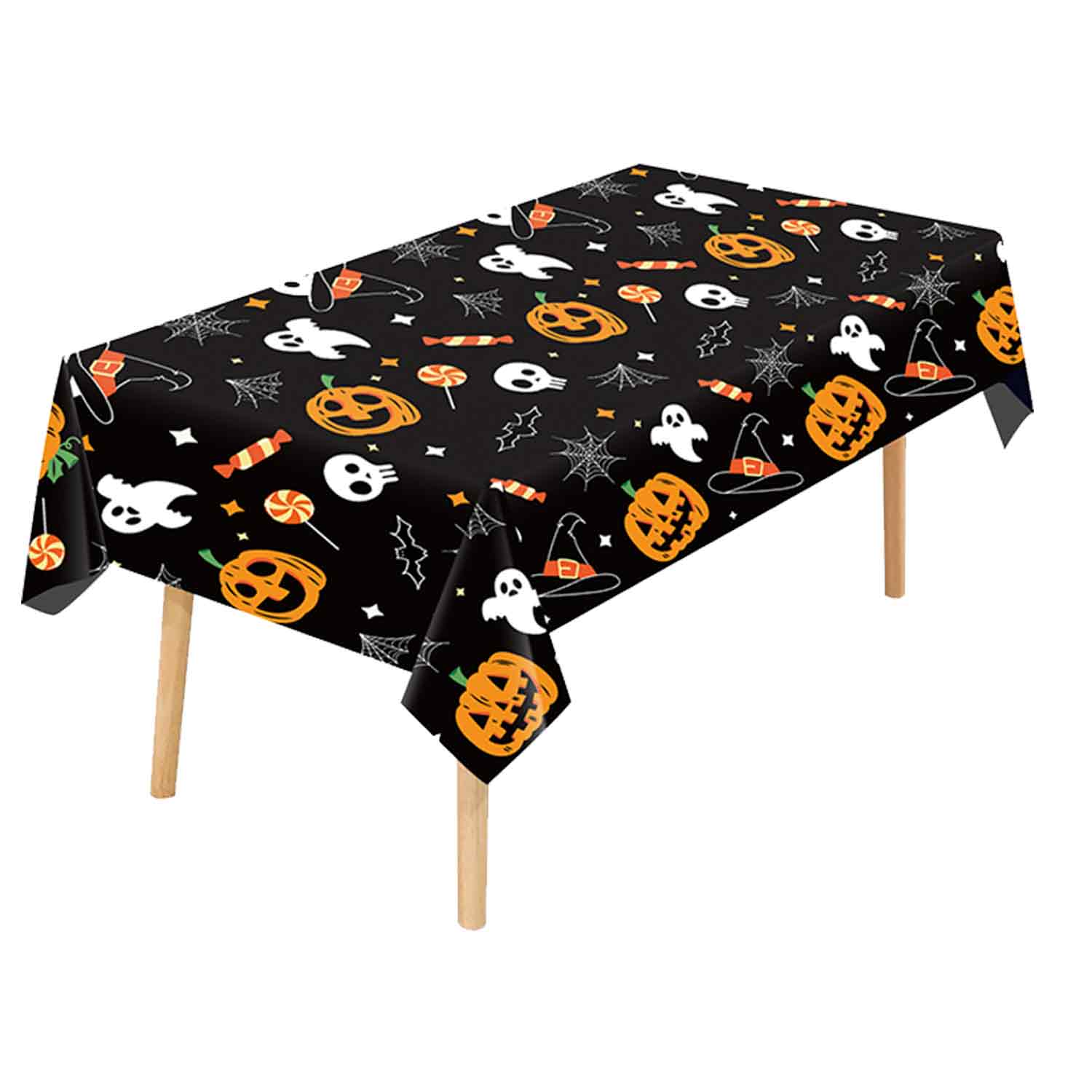
Black pumpkin and ghost. Pumpkins, ghosts, candy and bats in orange and white on black. This is the print that works across every age group, and the easiest of the five to sell as a multipack. Pumpkin and ghost plastic tablecloth.
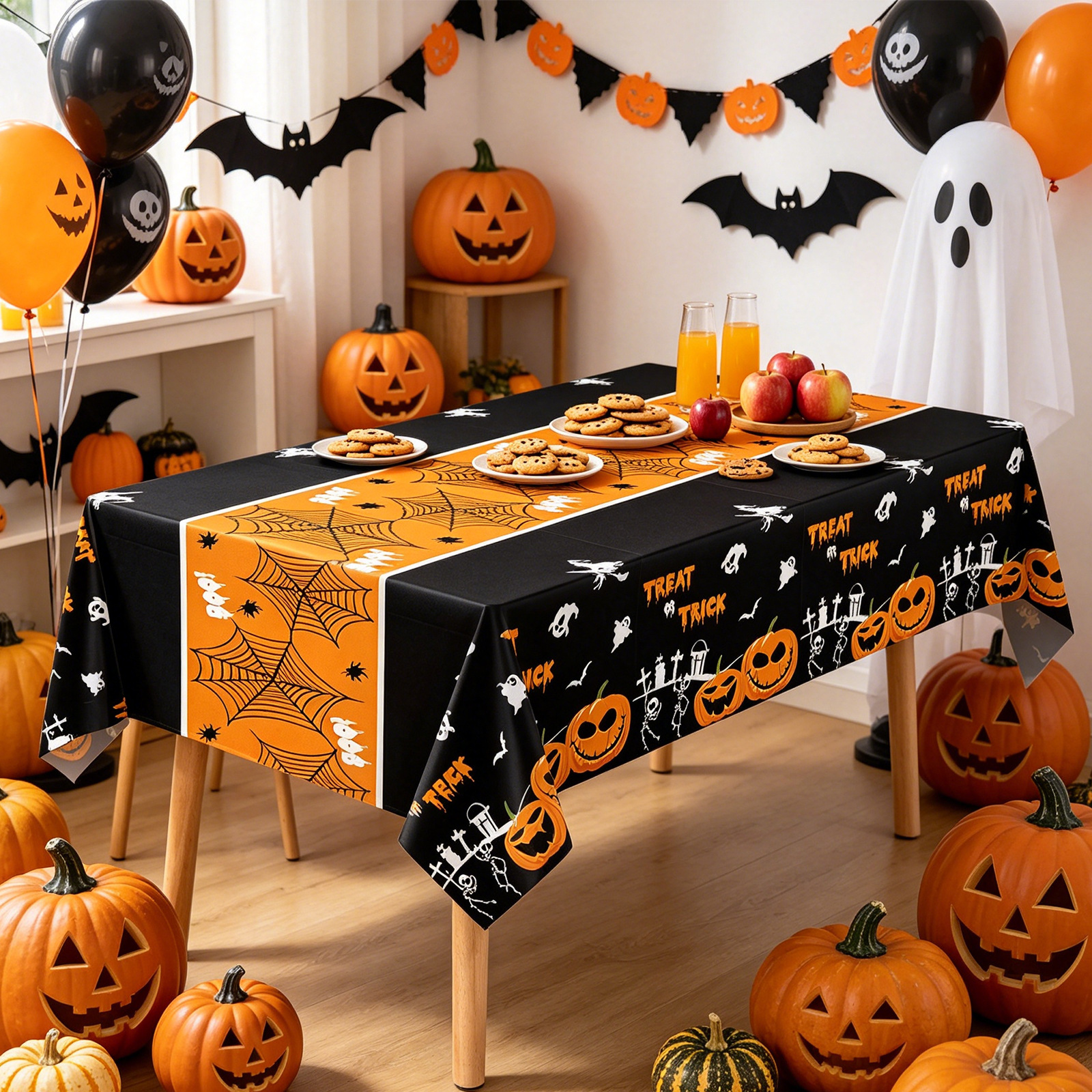
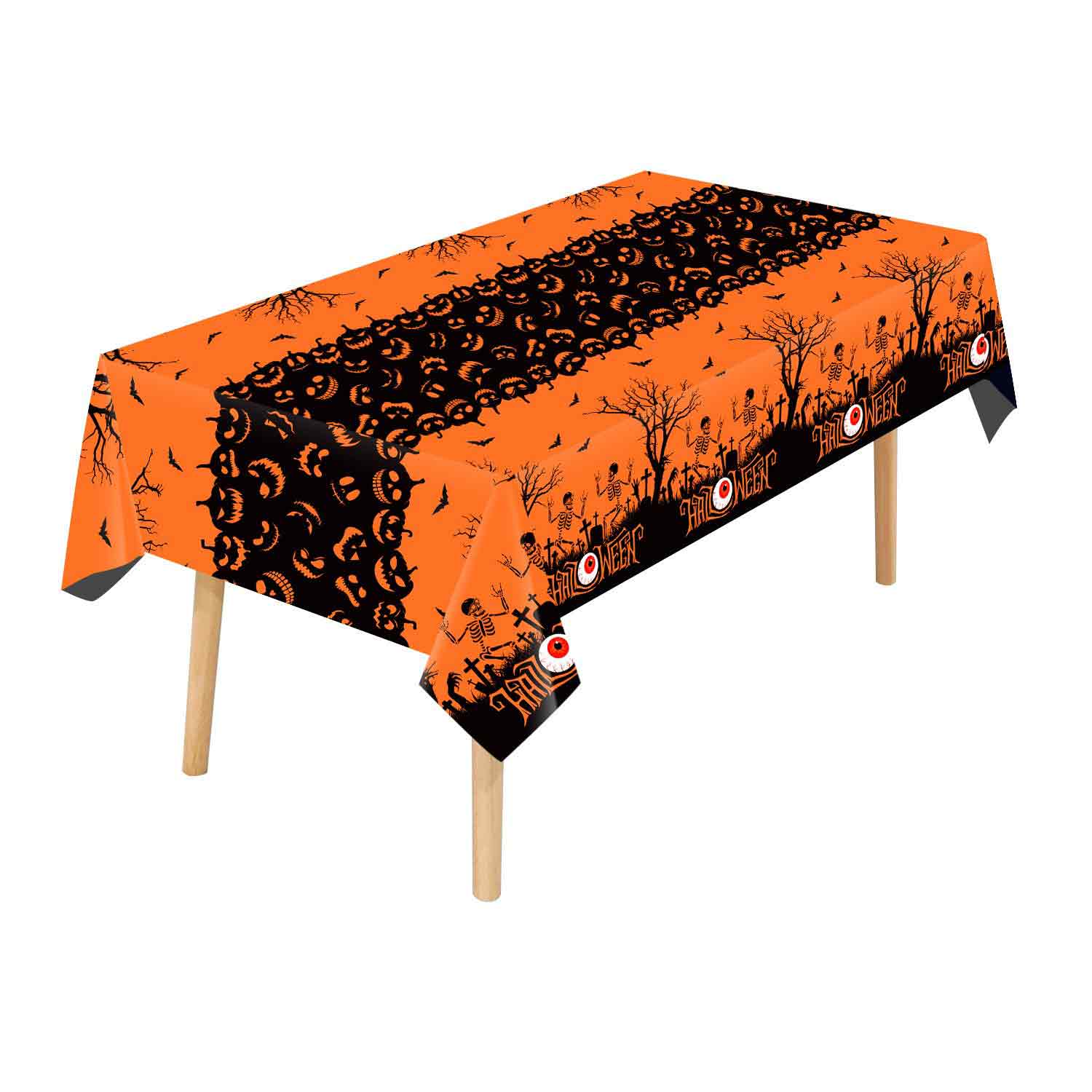
Orange pumpkin and ghost. An orange ground with a black graveyard band, bats and lit pumpkins — warmer and more family-facing than the black grounds, and the print that photographs best in daylight. Orange pumpkin and ghost plastic tablecloth.
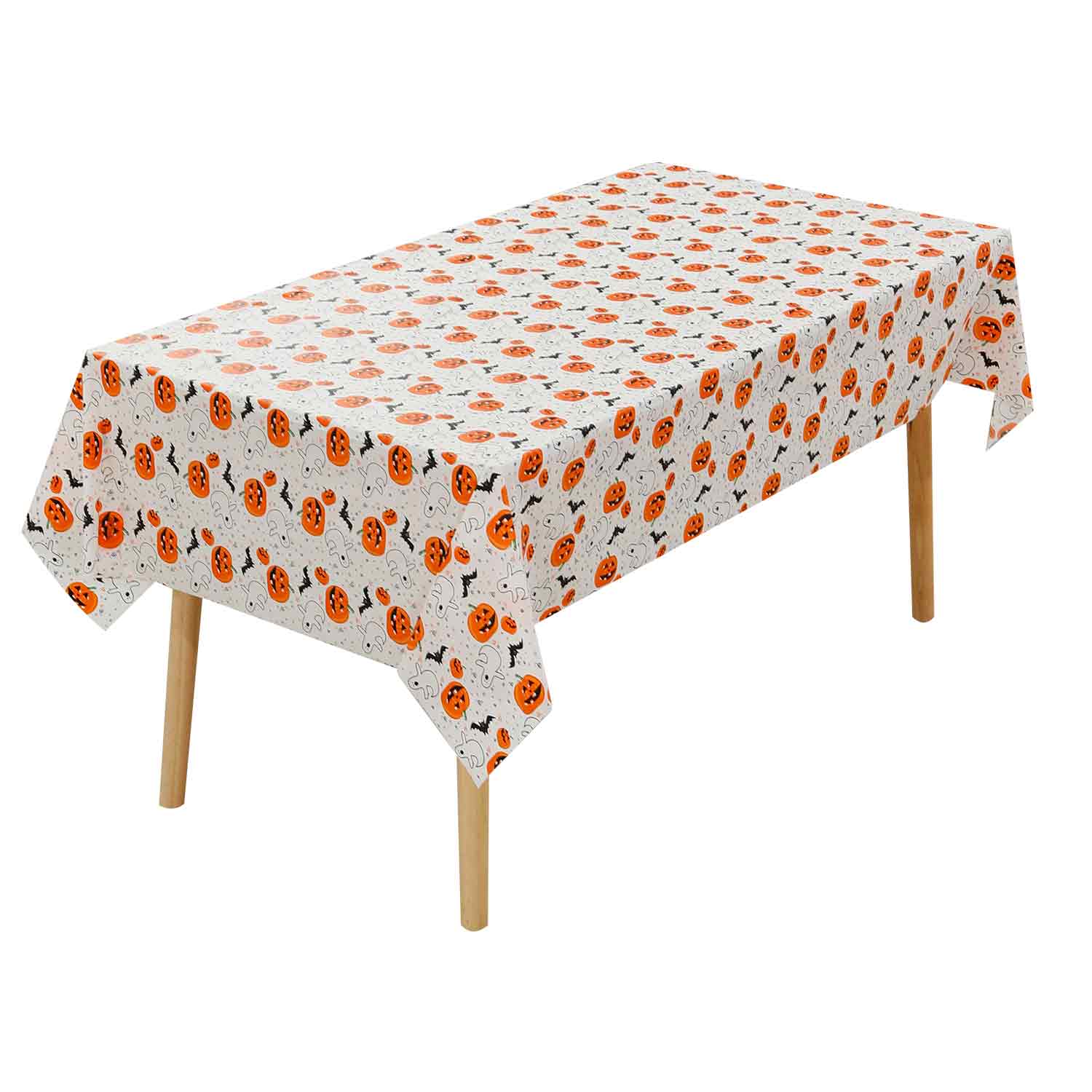
White pumpkin. Pumpkin motifs on a white ground, for hosts who want the theme without a dark table. White pumpkin plastic tablecloth.
A first Halloween programme does not need all five: one web plus one pumpkin print covers the theme, and the rest follow once the season shows which ground your market buys.
Sizes and Drop on a Halloween Table
Our Halloween covers are cut 54 × 108 in, the format that fits the tables Halloween actually uses: a 6 ft folding table for treats, a buffet trestle, or a 6- to 8-seat dining table pushed against a wall.
Drop behaves differently on each of those tables. On a 6 ft (72 in) table, 108 in leaves about 18 in hanging at each end, while the 54 in width leaves roughly 12 in at each side on a 30 in-high table — a full drop that looks deliberate. Put the same cover on an 8 ft (96 in) table and only about 6 in hangs at the ends, the short drop that makes a cover look undersized. For 8 ft tables the honest answer is a longer format or a roll cut to length.
Round tables need different logic: the motif lands on a curved drop and the repeat shows. The measurement method is in our round plastic tablecloth diameter and drop guide, and the full size matrix for rectangular, square and round tables is in the plastic tablecloth size chart.
Two Gauges Behind Every Print: 0.03 mm and 0.05 mm
Each Halloween print is available in two film specifications: 0.03 mm at about 87 g, and 0.05 mm at about 150 g per cover in the 54 × 108 in size. The artwork is identical; what changes is how much abuse the cover survives.
At 0.03 mm the cover is a one-night disposable — the price-led entry SKU, and a reasonable choice under a black ground, because black hides creases and light handling marks. At 0.05 mm it survives being wiped, re-folded and used a second time, which is what makes it the right spec for a retail multipack or a host who decorates early and leaves the table out for a week.
White grounds are where gauge becomes visible: a white cover shows every fold line and finger mark, and in a black-and-white print the white areas are usually the unprinted film itself rather than white ink. Stepping a white-ground print down a gauge to save cost is the easiest way to make a Halloween range look cheap. The mil, micron and gsm换算 is set out in our plastic tablecloth thickness guide.
What the Ground Colour Actually Is, and Why It Matters for Compliance
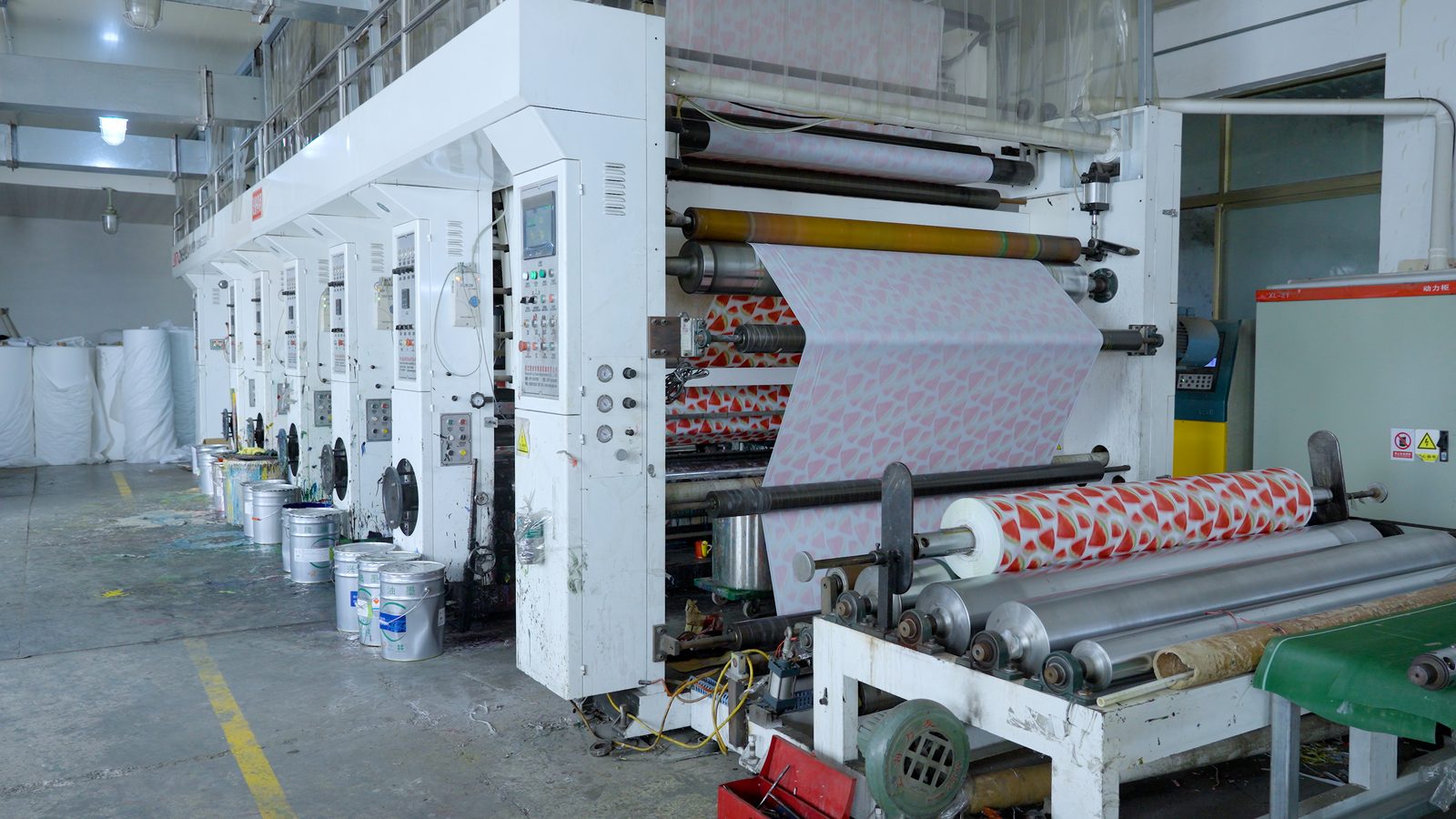
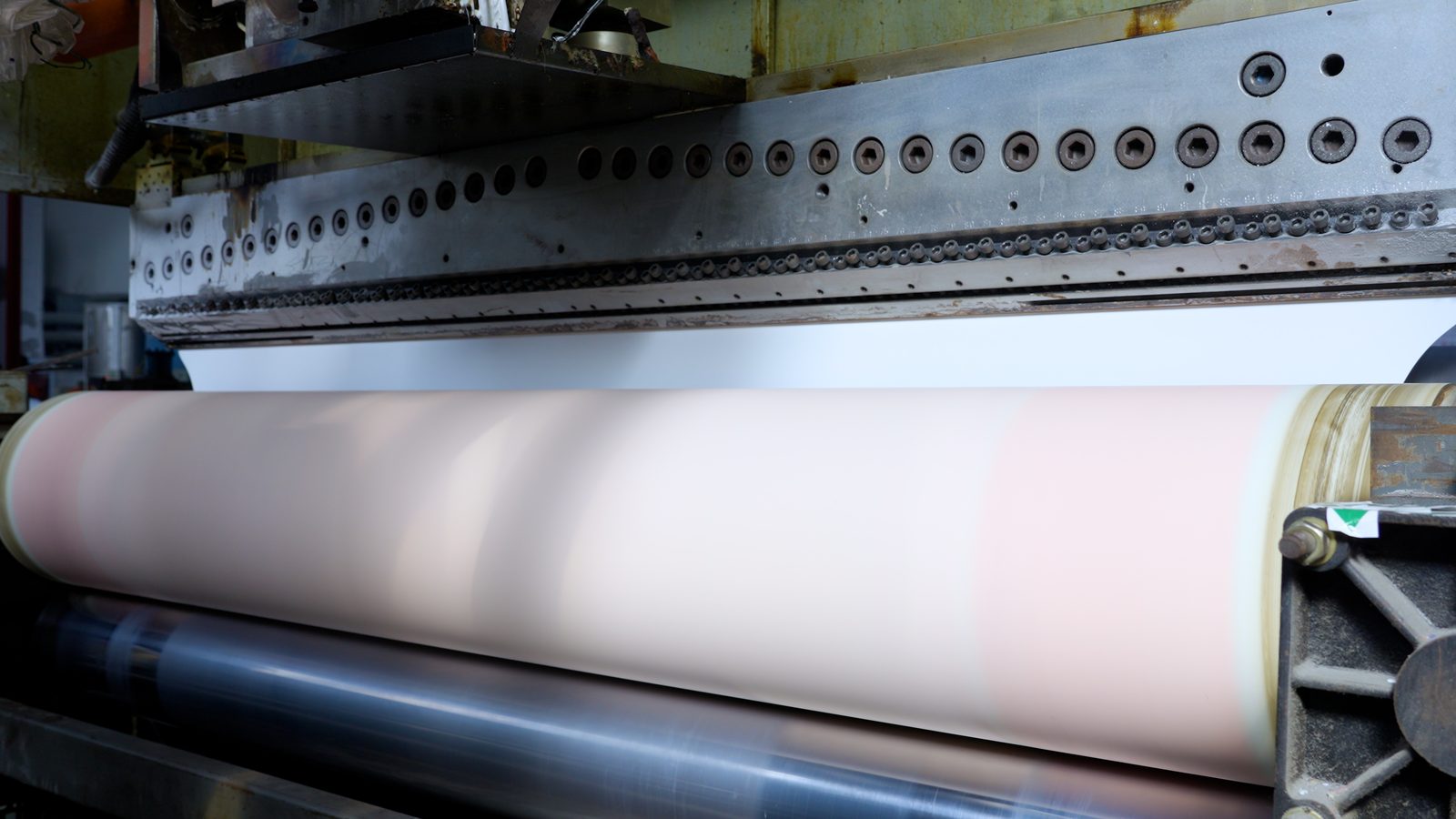
Halloween covers are cast PE film printed by rotogravure, which is why the same five designs can be re-run at the start of every season with consistent registration. The white in a black spider-web print is normally the film showing through, not printed ink — the reason a design built on negative space costs less to run than one that lays ink across the whole surface. Film types compared: PVC, PEVA and vinyl plastic tablecloths.
A Halloween cover sits under food and drink, so the film has to sit inside the food-contact story your customers ask about. In the United States, the olefin polymers permitted for food-contact use are defined in 21 CFR 177.1520. Ask for the document pack with the quotation rather than after the order — the classification side is covered in our note on plastic tableware HS codes.
Printing Your Own Halloween Theme: Repeat, Registration and Light
If the season is going to be yours rather than ours, the artwork side has its own rules. Decide first whether the design is all-over or a border band: an all-over web has to be drawn as a seamless repeat so no seam reads across the finished cover, while a banded design needs stated margins at the hem and a stated drop position, or the band lands at a different height on every table.
Then fix the colour the way a factory can hold it: send a physical master sample, agree a numeric Delta-E tolerance, and name the light source the shade is judged under — two samples that match under warm indoor light can drift apart in daylight, the practical meaning of a just-noticeable difference in colour science. Plate work, artwork files and approval sequence are in custom printed plastic tablecloths: plate fees, artwork and colour approval, with the shade reasoning in the plastic tablecloth colour guide. For covers that will sit in direct sun, add light fastness to the spec list rather than discovering it as fading — the test logic is described in this overview of colour fastness testing.

Packing the Range, and the Order Window
Halloween sells as a themed purchase, so the cover has to survive the journey from a flat-folded bale to a hook. Printed covers are folded flat, bagged and header-carded so they can hang in an aisle, and carton counts are set at order so a mixed range can ship on one pallet. What each line of that packing spec means on a quotation is decoded in the plastic tablecloth quotation checklist, and the holiday formats are compared in printed plastic tablecloths for the holiday season and PEVA printed tablecloths for the holiday season.
Halloween 2026 lands on Saturday 31 October, retail sets the aisle in early September, and importers ship from Asia in the weeks before that, so a Halloween cover ordered after the shelf date is a cover for next year. The month-by-month sequence sits in our Halloween and Thanksgiving 2026 restock guide; if you are printing your own theme, move artwork approval to the front of that calendar, because plates and colour approval are the two steps that cannot be compressed at the factory end.
Runxiang has printed plastic table covers in Foshan for more than 20 years, running cast PE film in 0.03 mm and 0.05 mm, 54 × 108 in as standard and custom sizes on request, with five Halloween prints held in stock and OEM/ODM artwork developed from a buyer’s own design. For samples of the spider web and pumpkin prints, or a shade agreed against your own master sample before the season is booked, send us the artwork brief and we will come back with plate and gauge options. The full range is listed in our plastic tablecloth category.