










Cutlery is usually the last item a buyer specifies and the first one a guest notices. A fork whose tines bend on the first bite of cake, a spoon too shallow for soup, a knife that will not get through a burger — none of that shows up on a quote sheet, but it comes back as returns and reorders. Plastic cutlery looks almost identical in a catalog photo, which is why the specification matters more than the picture.
This guide covers how to specify plastic cutlery in bulk by what the menu needs, then by pack format, colour, counts and the food-service rules that decide what may go in the box at all.
Start from the menu, not the price list
The piece you order is decided by the dish. A tasting counter needs small spoons with a deep bowl; a burger stand needs a serrated knife; a dessert buffet needs forks with short tines.
| Piece | Where it does the work | What to check before ordering |
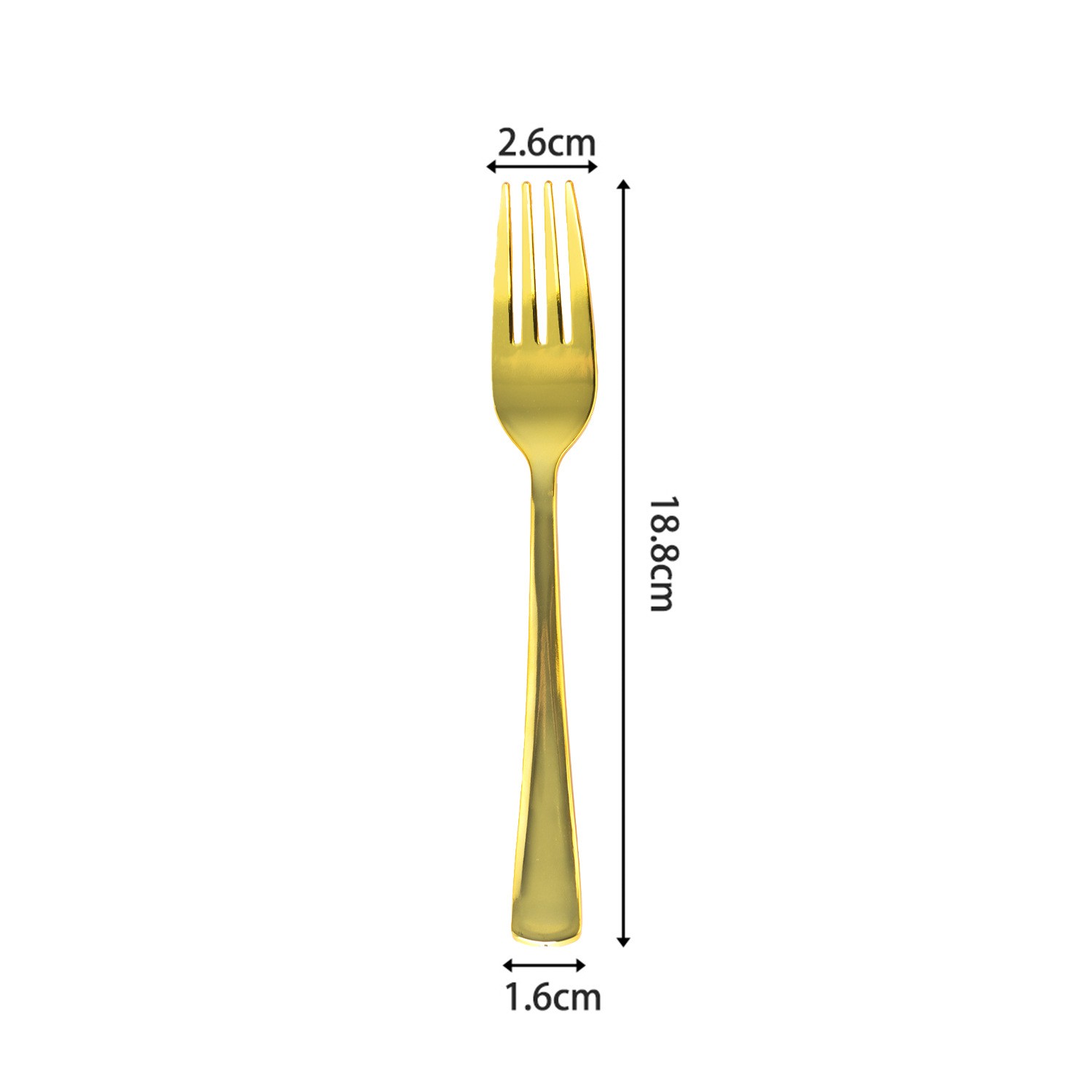
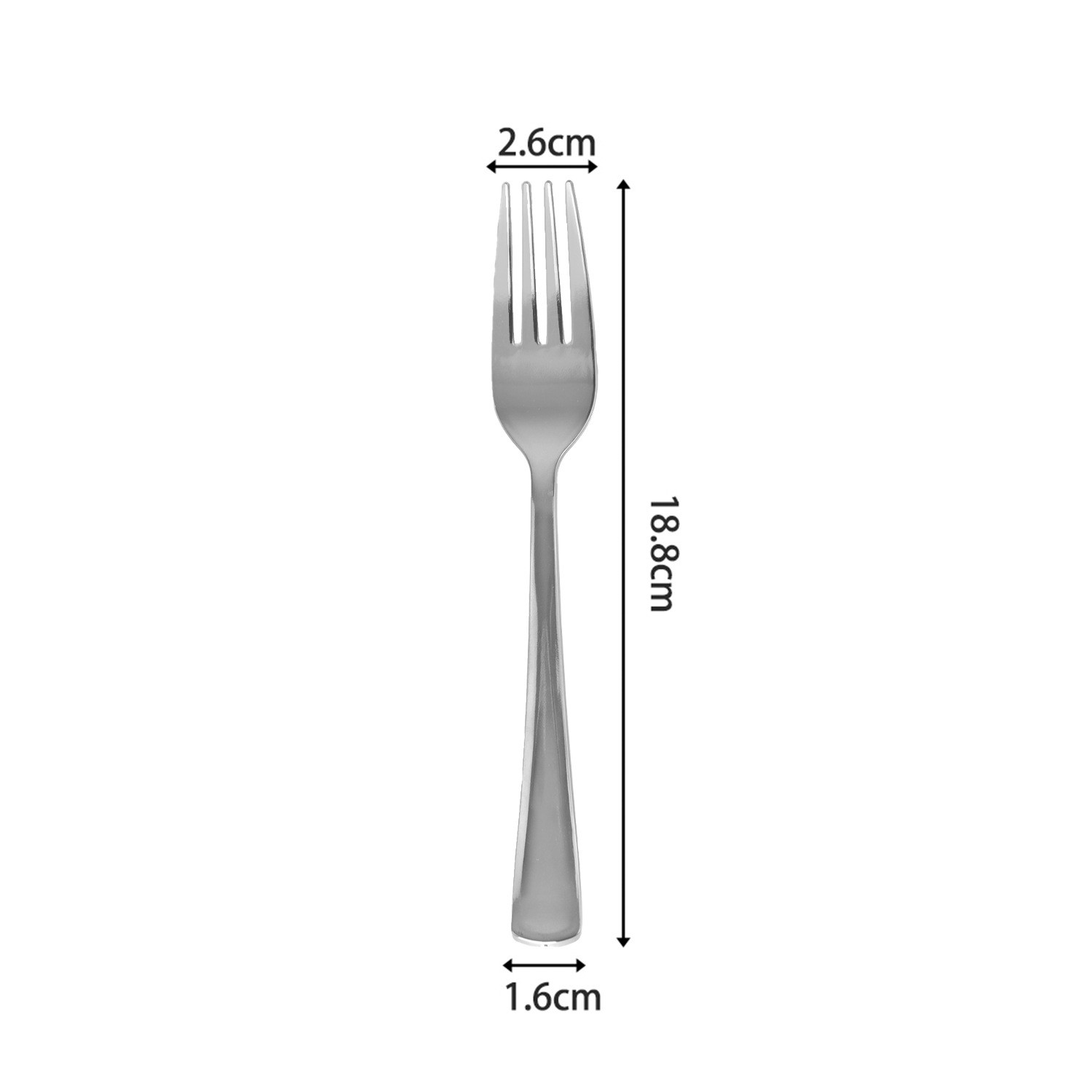
| Dinner fork, 4 tines | Main course, salads, pasta | Tine length and fork length against plate diameter |
| Dessert or cake fork, 3 tines | Cake, pastry, fruit | Shorter tines, narrower head |
| Teaspoon, about 5 mL | Coffee, tea, dessert, stirring | Bowl depth and handle length |
| Tablespoon, about 15 mL | Serving, soup, cereal | Bowl volume and a handle that reaches a pot |
| Dinner knife | Cutting on the plate, spreading | Edge type and the material behind the neck |
Forks: tine count and what bends first
A four-tine fork with full-length tines is a dinner fork; a three-tine fork with a wider head is a cake or pastry fork. When a plastic fork fails it is rarely the handle — it is a tine tip flexing, or the shoulder where the tines meet the head. That is geometry: tine length, the radius at the base of each tine, and how much material sits under the head. A fork that suits green salad is not automatically right for dense cake, so say which your menu runs to.
Spoons: bowl volume beats handle length
“Teaspoon” and “tablespoon” describe volume, not plastic: roughly 5 mL and 15 mL under the US convention, with the dessert spoon between them. For tasting, ice cream and condiment service, bowl depth and lip shape matter more than a long handle; for soup and cereal, bowl volume is the whole specification. For tasting-counter spoons, sample each size and weigh what the bowl holds.
Knives: a moulded edge is a compromise
A plastic knife is not a steak knife, and pretending otherwise is how complaints start. What moulded plastic does well is a shallow serrated edge for bread, soft pastry and sandwich fillings, or a blunt table-knife profile that spreads without cutting the plate. Serration depth, edge angle and the material behind the neck decide which of those jobs your knife can do.
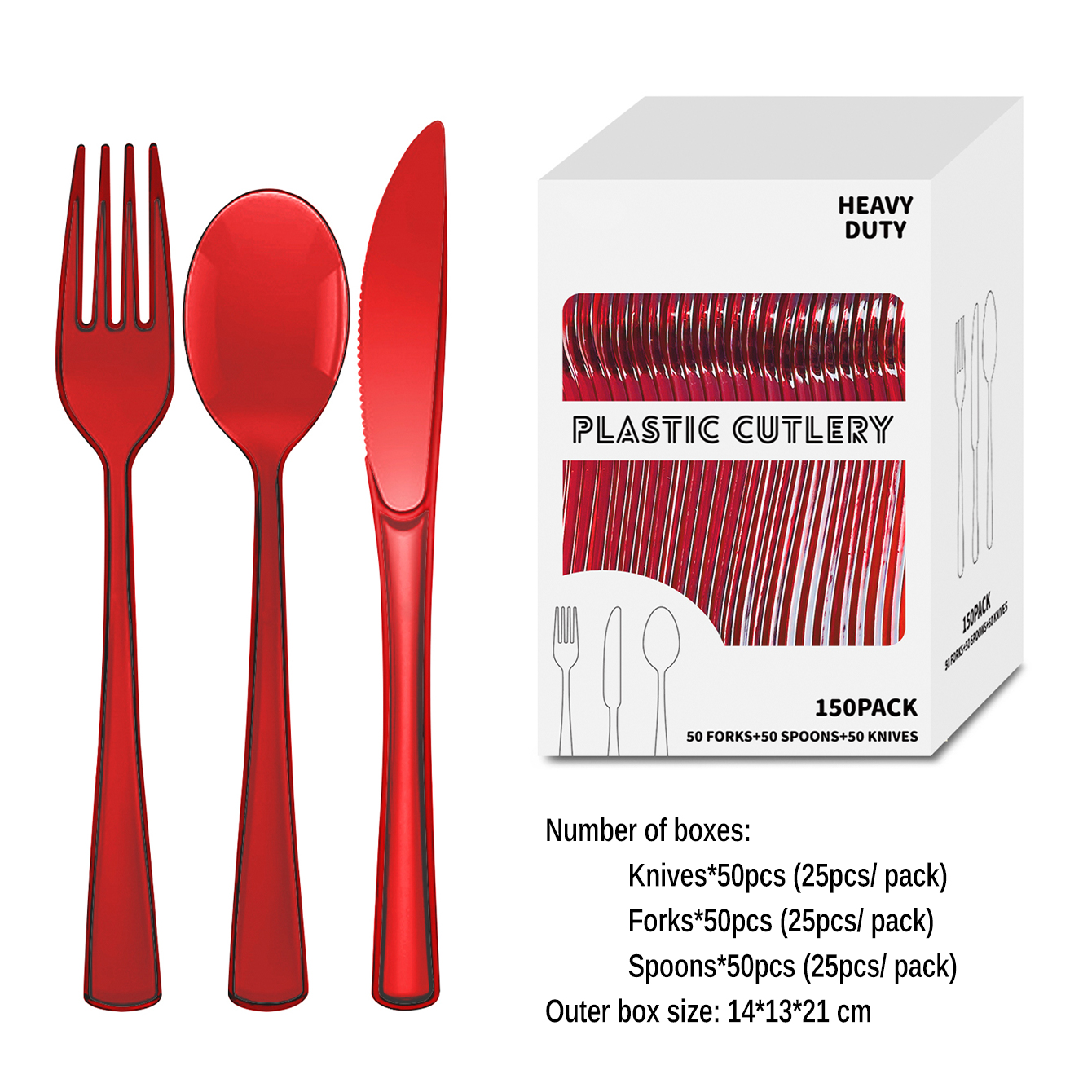
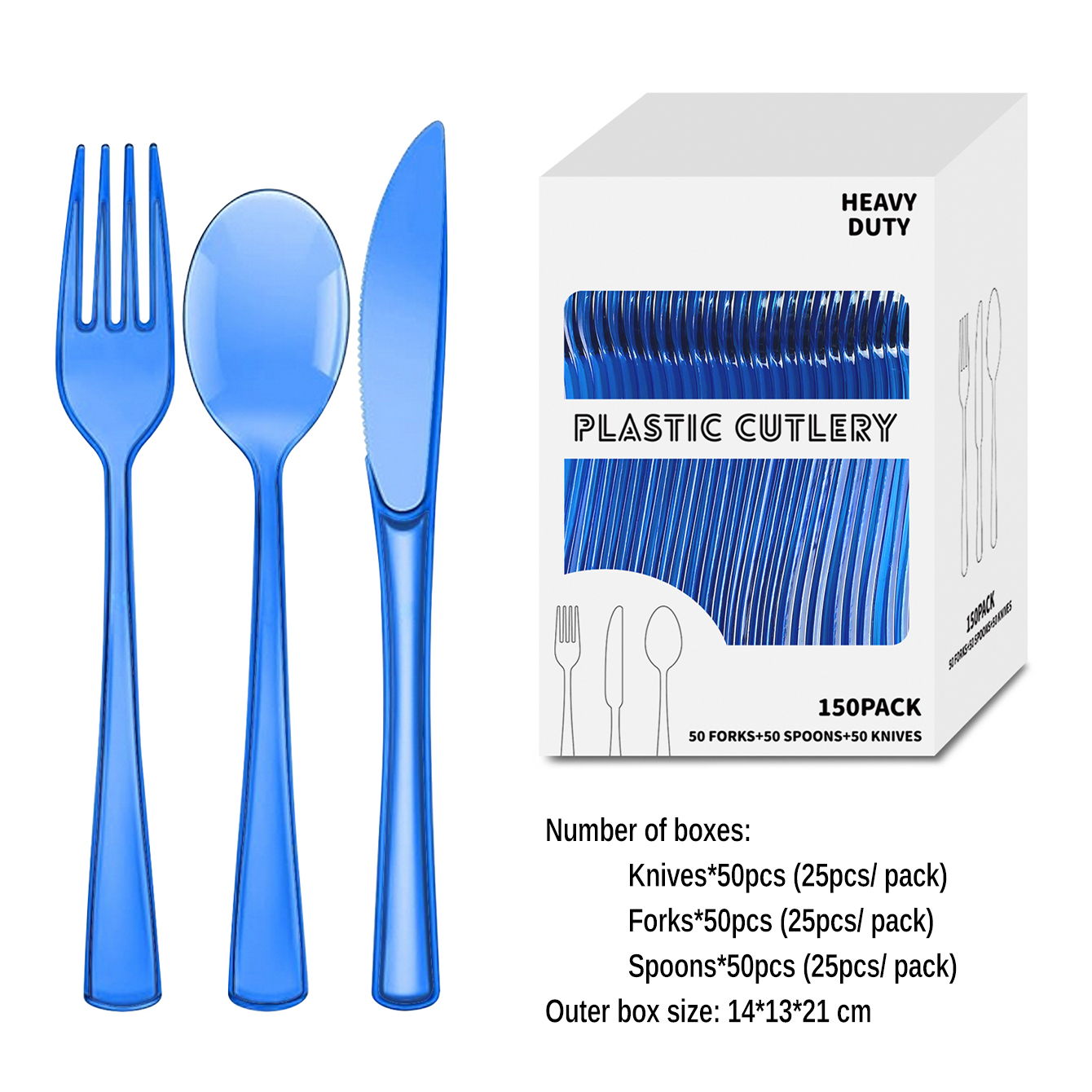
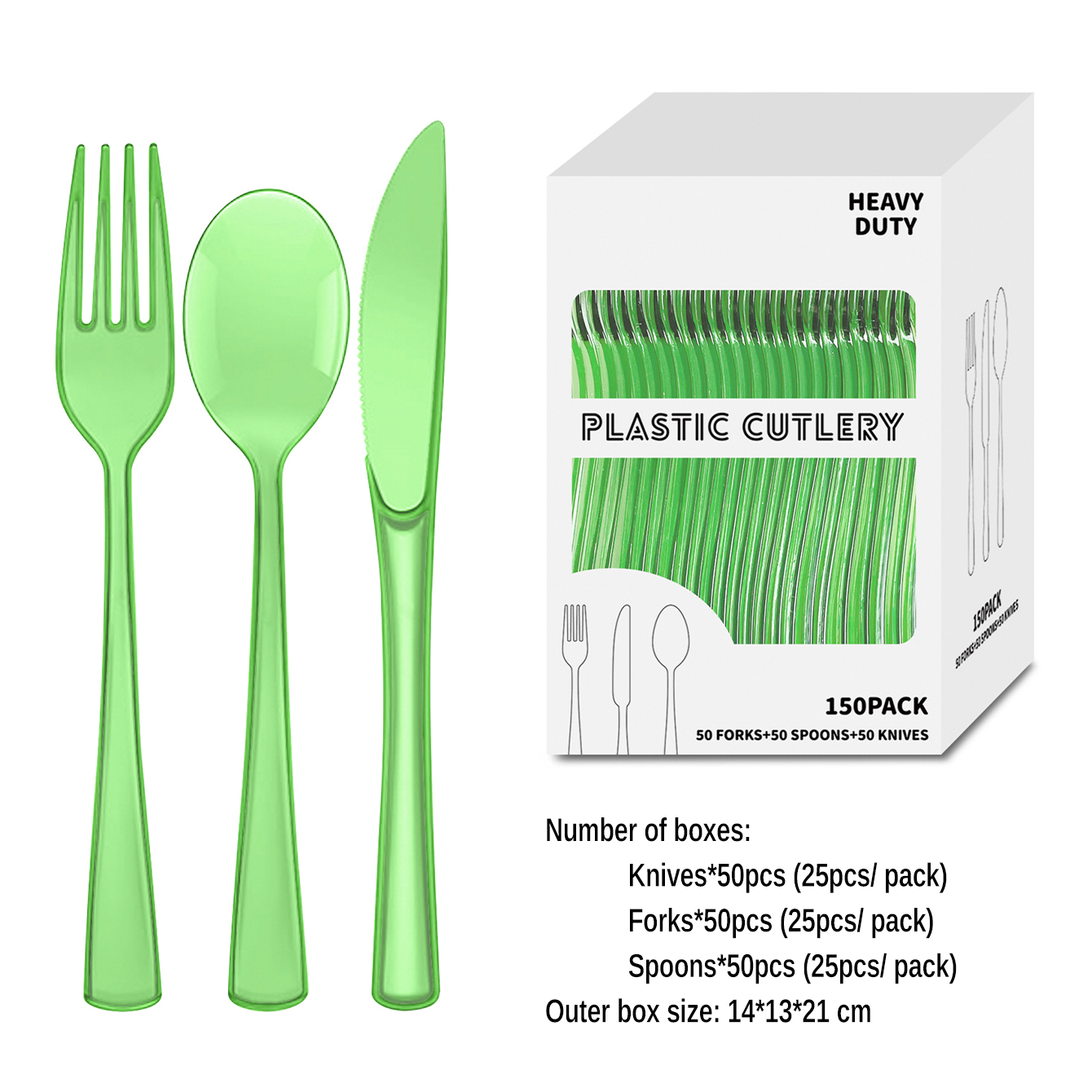
What “heavy duty” means in cutlery
Heavy duty is a marketing word until two numbers are attached to it: the resin and the weight per 1,000 pieces. The two resins carrying most of the market behave differently at the table. Polypropylene (PP, resin code 5) handles hot food and hot drinks and flexes rather than shatters, which is what you want in a knife pressed against a plate; our PP pieces are made to the food-contact conditions for polypropylene in 21 CFR 177.1520. Polystyrene (PS, resin code 6) gives the hard, glass-look clarity cold dessert and buffet service is built on, under 21 CFR 177.1640. Neither resin is automatically stronger: a thick PS piece can beat a thin PP one and the reverse is just as true.
The same logic applies one product line down. A 9-inch disposable plate can run from 19.5 g to 48.5 g depending on resin and rim, so weight alone decides nothing — see heavy duty disposable plates by grams per piece and rim. For a fuller comparison of PP, PS and PET as dinnerware materials, see PP vs PS vs PET disposable dinnerware.
Three pack formats: loose bulk, single-serve kits, retail boxes
Loose bulk means counted bags inside a carton — a fork carton, a spoon carton, a knife carton. Caterers, event rental and quick-service kitchens use it because pieces are handled once, in bulk, at setup; specify pieces per bag, bags per carton and the fork-to-spoon-to-knife ratio on the pallet.
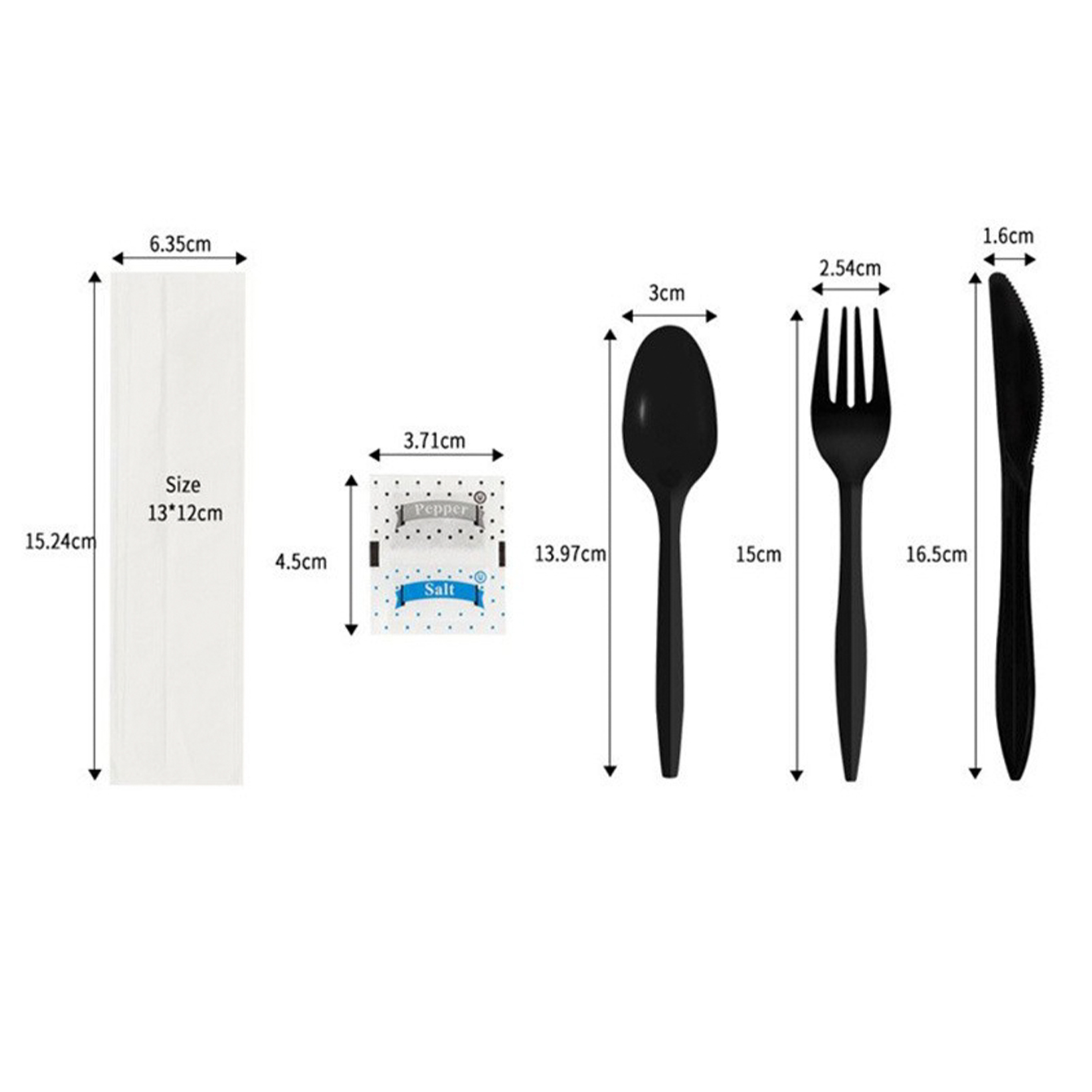
Single-serve kits seal a fork, knife and spoon with a napkin, sometimes with a salt and pepper shaker, as in our plastic cutlery range. This is the format for delivery, hotel room service and institutional catering, and it is a hygiene and labour decision as much as a product one. Decide the kit contents first, then the wrapping.
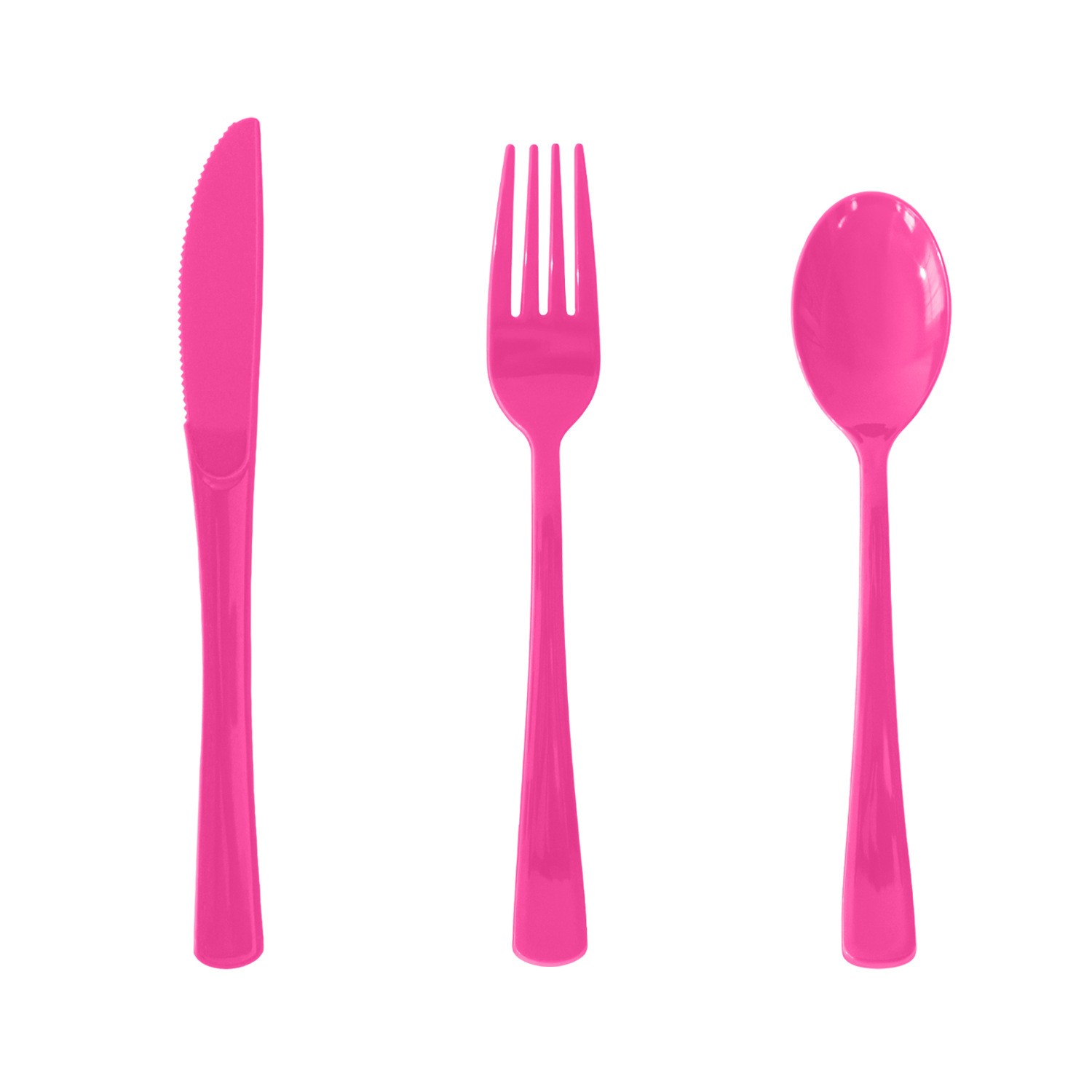
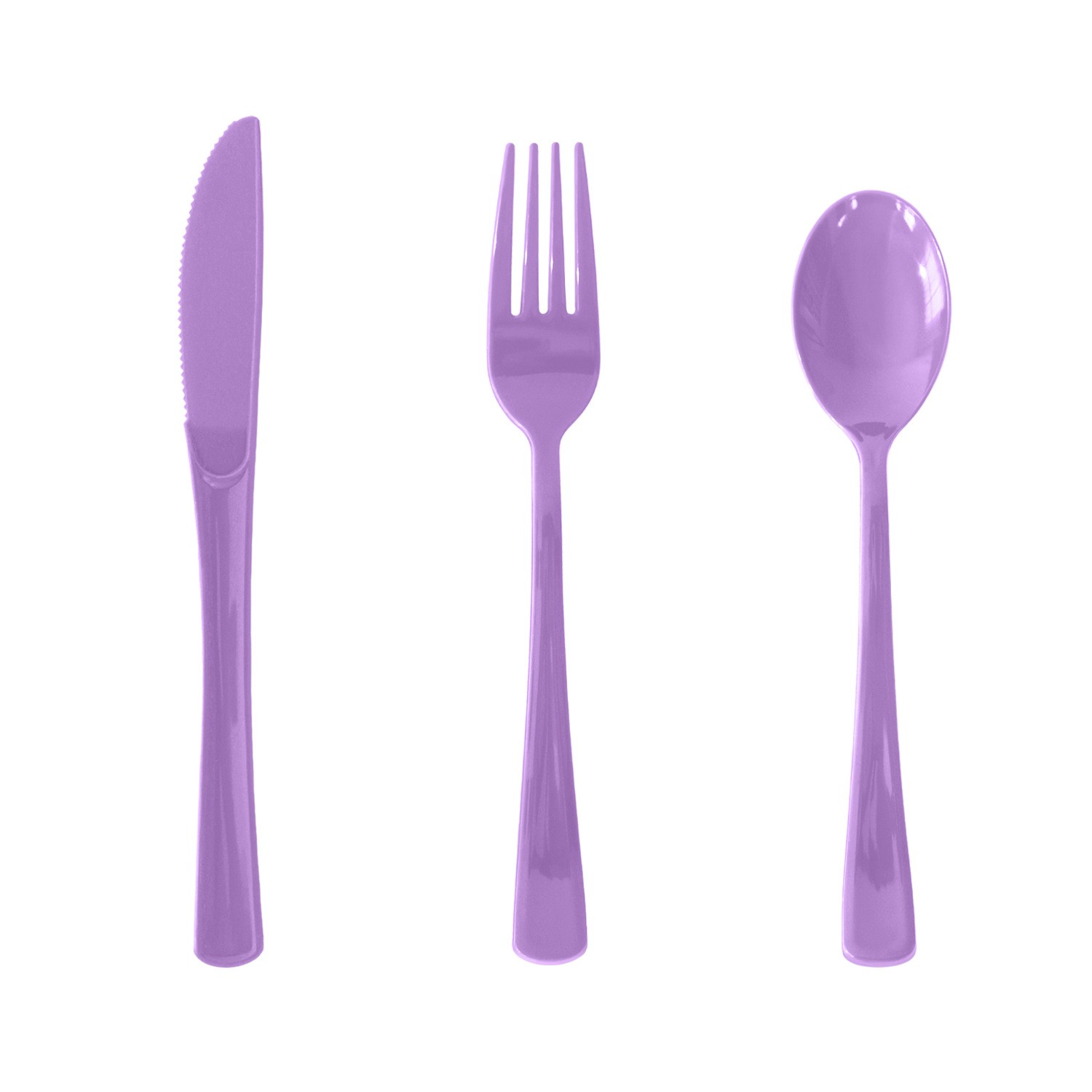
Retail boxed sets put colour-matched knife, fork and spoon in a printed carton for party stores and seasonal aisles. Here the box, the printed piece count and the barcode are part of the product — see how the same logic runs through party tableware sets and colour matching and wholesale disposable tableware buying.
Colour and finish are specifications too
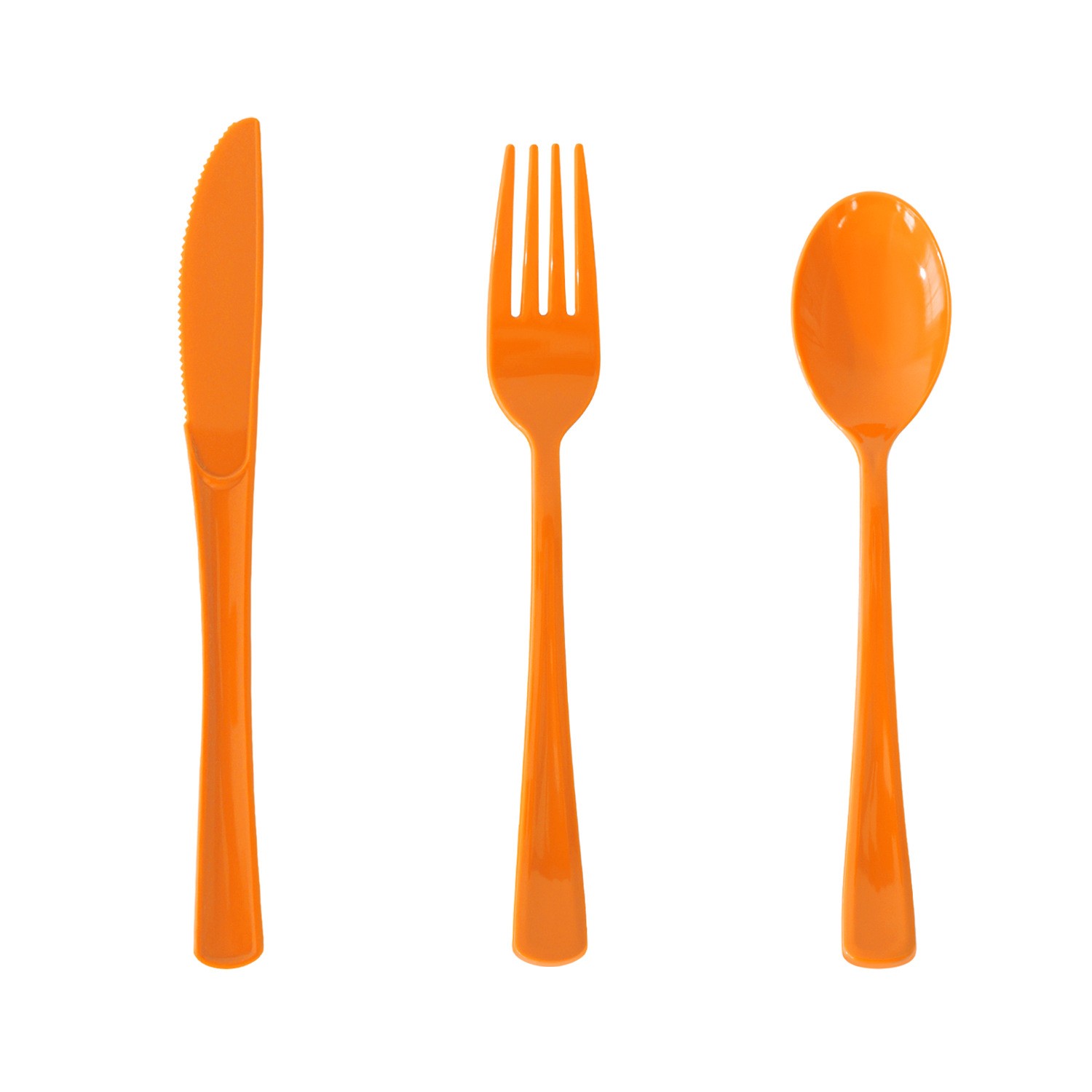
Two pieces can come out of the same mould and still be different products. Clear plastic is moulded without pigment; opaque colour comes from a masterbatch in the resin. Clear shows scratches, fingerprints and wall-thickness variation, and looks tired after a few uses on a buffet line. Opaque colour hides all of that, which is why party retail buys it by the case. Metallic gold and silver are a third category: a finish applied to the moulded piece rather than a pigment, so ask on any food-contact order whether the food side keeps the natural resin surface.
A colour has to survive across the whole setting, too. A knife, fork and spoon in one party colour works only if all three come from a single colour standard, and the same applies once the buyer is matching a plate and a cup to the theme — the approach we set out for specifying a tablecloth shade. If you are building a range rather than a single order, ask for one master sample and judge every batch against it under the same light.
Counts, case mixes and spares
Counting is simple once the menu is fixed: one piece per guest for each course that needs one, plus a spare allowance for drops, re-serves and staff meals. That allowance is a working judgment, not a rule — a plated dinner wastes almost nothing, a self-serve buffet with children does. The same per-guest thinking we used for plates and bowls by size, bulk napkins and cups and lids applies here.
Two things get forgotten on the purchase order. The case mix matters: a dessert-heavy menu burns spoons faster than forks, so a one-to-one-to-one ratio leaves you short of the piece you use most. Freight matters too — cutlery is small but not weightless, and gross weight and carton size have to line up with the tariff code you import under: our plastic tableware HS codes guide explains how tableware is grouped and why that affects landed cost.
The rules that change what goes in the box
Two regulatory facts should shape the enquiry before anything is quoted. In the United States, California’s AB 1276 requires retail food facilities and delivery platforms to hand out single-use accessories — forks, knives, spoons, sporks, chopsticks, straws and stirrers among them — only when the customer asks, and other jurisdictions have followed with similar rules. That pushes buyers toward wrapped kits and fewer accessory types, not more.
In the European Union, single-use plastic cutlery, plates, straws, stirrers and chopsticks have been off the market since July 2021 under the Single-Use Plastics Directive. That is a market-scope question rather than a design problem: the same moulded PP and PS lines stay in demand for party retail and food service across the Americas, the Gulf and much of Asia, while EU programmes need a different substrate from the start. Knowing the destination market is the first question worth answering.
What to put on the enquiry
A cutlery enquiry that can be quoted the same day carries eight lines: the piece and its length; the resin; the colour or finish; weight per 1,000 pieces; the pack format; pieces per carton and cartons per pallet; destination market and port; and any artwork for a printed kit or box. With those on the table, our quotation becomes a calculation instead of a round of questions.
Runxiang has been moulding plastic tableware and table covers for more than 20 years, supplying importers, distributors and party-retail brands from Changzhou, China. Cutlery sits alongside our tablecloths, plates, bowls, cups and napkins, so a mixed container is one conversation. For a colour range, a wrapped kit or a retail set with your own artwork, send the specification through our OEM and ODM guide or contact the team with the market you sell into, and we will come back with samples and a specification sheet.
Pieces per kilo: cutlery is bought by piece and quoted by weight. Divide 1,000 g by the per-piece weight to get pieces per kilo — a 3 g spoon works out at about 330 pieces per kilo, a 5 g heavy serving spoon at about 200. Use the gram weight printed on your quotation for the order in front of you.