
A flag print and two solids is not a range. Buyers who treat the patriotic season as one SKU end up with a shelf that works for one weekend, while importers who plan three routes — a flag print, a red-white-blue solid palette and a gingham check — cover Memorial Day, the Fourth of July, Labor Day and the graduation and navy events between them. Most problems with a patriotic line are decided at the print layout stage, not at the film stage.


A patriotic range is three products, not one
The flag print is the hero item. It sells to event decorators, school and municipal programmes and chains that want one recognisable image for a short window. The solid palette carries the volume: red, white and navy are bought by caterers, hotels and rental companies for events that are patriotic in tone rather than literal — navy gowns at graduation, a company picnic, a summer wedding with a red accent. The check is the retail item, because a red and white or blue and white check reads as picnic and tabletop décor and survives past the holiday into general summer merchandising.
The flag print is a layout decision before it is artwork
A US flag has thirteen horizontal stripes, seven red and six white, with a union covering about 40 percent of the flag length and seven thirteenths of its height, proportions defined in the US flag specification. That geometry works on a flat rectangle and creates a cropping problem on a table cover, because the cover is larger than the tabletop it dresses. A 54 × 108 inch cover on a 6 ft folding table shows 72 × 30 inches on top and hangs 18 inches at each end and 12 inches at each side — so if the flag runs across the whole sheet, the visible tabletop becomes the middle band and the union, the part that makes the design read as a flag, can end up facing the floor.
Three answers work, and the one you choose decides the purchase order:
- Union on the top. Place the canton inside the 72 × 30 inch window of a 6 ft table. It reads from standing height, but an 8 ft table shows a different crop.
- Flag on the drop. The front drop carries the design and the tabletop stays white film. This photographs well for retail and survives any table length.
- Panel repeat instead of one flag. Repeating stripes and star blocks avoid the crop problem and hide registration drift better than a single large motif.
Print direction has to be fixed against the roll, not the finished cover: a design that is correct along the 108 inch direction is sideways when cut from a 54 inch roll. The mechanics of repeats, borders and panels are covered in our tablecloth print layout guide.
Red, white and blue are three shade decisions
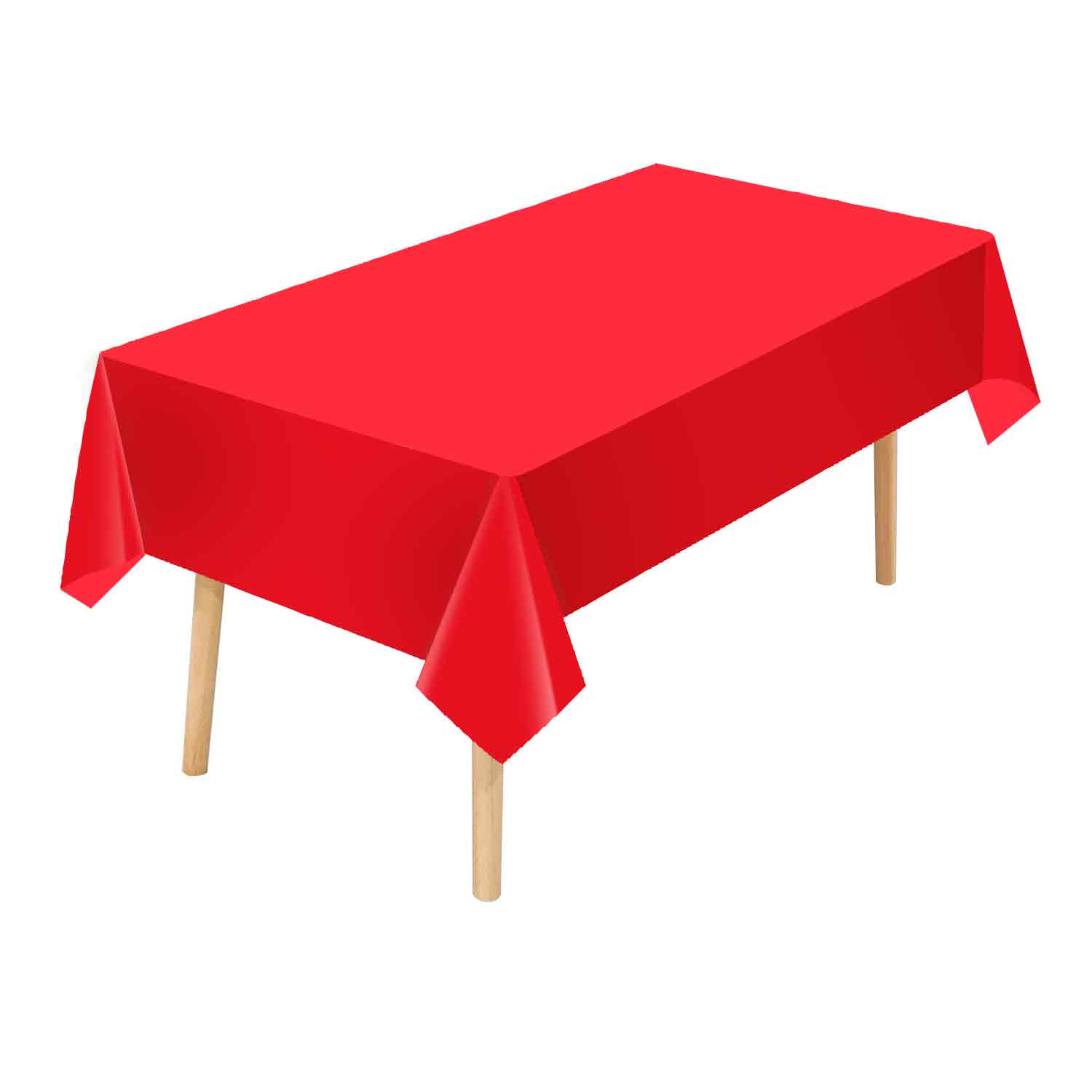
“Red” is not a specification. Our range carries red alongside wine red and fuchsia, and a flag print next to a wine red cover looks like a mistake even though both are nominally red. Blue fails the same way: navy and royal blue are both “blue” and do not sit together.
- Nominate one master sample per colour and quote every SKU against it — film, check and print ink. Keep a physical cover from the approved lot, not only a numbered chip.
- Judge under a stated light source. Red shifts more than any other colour between daylight, cool white store lighting and warm LED. Measure to a stated tolerance and record the illuminant.
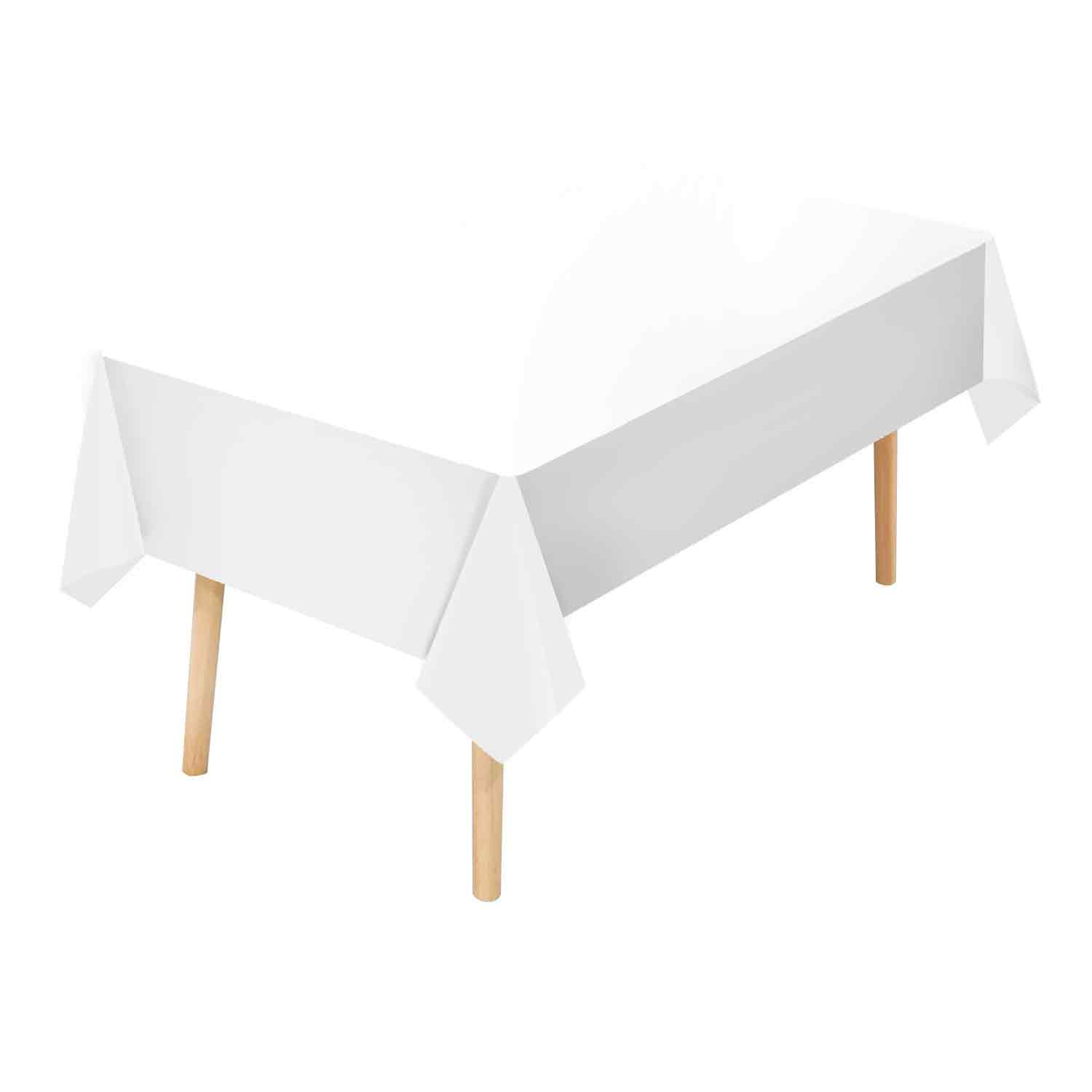
- White is unprinted film. The white stripes of a flag and the white of a check are the film base showing through, not white ink. A warm or grey base shifts every white element and no ink adjustment fixes it.
The measurement method and tolerance language worth putting in a purchase order are in our guide to specifying tablecloth colours.
Sizes and drop: where the flag actually lands
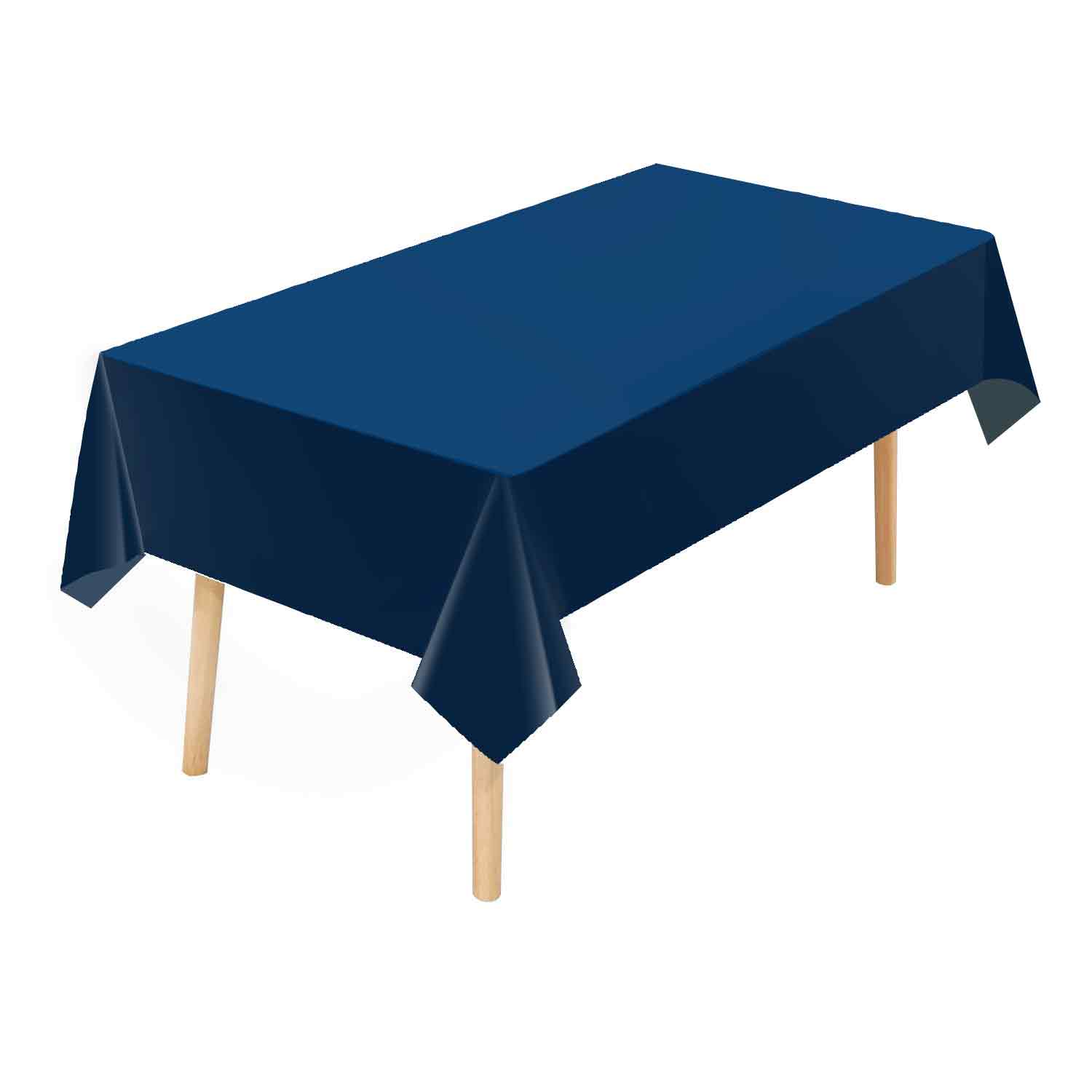
Drop per side is half the cover dimension minus the table dimension, so the same 54 × 108 inch cover gives 18 inches at each end on a 6 ft table and 6 inches at each end on an 8 ft table. A union placed in the end drop is clipped on one table and fully visible on the other, which a sample photo will not reveal. Round covers need a separate decision: an 84 inch round on a 60 inch table gives a 12 inch drop all round, and the flag must be centred by angle because a circle has no front unless you place one. The maths for rounds is in our round tablecloth guide, and the full size and drop table in the plastic tablecloth size chart.
For long buffet runs, 40 inch and 54 inch rolls let the run be cut on site instead of committing to a fixed cover count; the stock trade-off is set out in rolls versus pre-cut covers and the PEVA roll range.
Film, gauge and the reuse question
Our standard covers are PEVA at 25 g/m² nominal, confirmed against the quotation, in 54 × 108 inch with custom sizes available. At that weight a 54 × 108 inch cover carries roughly 3.8 square metres of film, so film cost tracks area. A 25 g/m² cover is a single-service item: it drapes and prints well and is right where the cover is thrown away after the event. Buyers who intend to wipe and reuse a cover for a season, or who are dressing an outdoor table, need a heavier film and should ask for it explicitly, because “same design, heavier” is a different film run. The relationship between g/m², micron and mil is explained in our tablecloth thickness guide.
What goes on the spec sheet
Patriotic orders are small enough that buyers send a photo instead of a specification, which is how the wrong crop gets produced. Six lines remove most of the risk:
| Line | What to state | Why it matters |
|---|---|---|
| Flag, panel repeat, check or solid; artwork reference and version | A photo cannot define crop or repeat | |
| Print side | Surface or reverse print, and which face is food-facing | Decides ink system and the food-contact statement |
| Colour | Master sample reference, measured tolerance, judging illuminant | Stops red drift between lots |
| Size | 54 × 108 in, 84 in round, or roll width and cut length | Sets the drop and therefore the crop |
| Film | PEVA, nominal g/m², single-service or reuse intent | Determines drape, print behaviour and cost |
| Packing | Unit pack, header card or sleeve, barcode and carton marking | Retail-ready versus bulk changes the line |
Food contact deserves one line on the same sheet. Polyethylene is covered by 21 CFR 177.1520 and polymer colourants by 21 CFR 178.3297, and because PEVA is a blend, ask for a written resin declaration naming the exact section rather than accepting “FDA approved”. If the print sits on the food-facing side, the ink system needs its own statement. The failures that appear after shipment — blush, blocked rolls, ink rub, shrinkage — are collected in our tablecloth complaints and spec fixes article.
Assortment and the order window
A workable starter ratio is three prints to four solids: flag, red and white check and blue check on the print side, with red, white, navy and a lighter blue as solids. Checks are the flexible half of the range and are worth specifying properly, because the same nominal “red and white check” reads as a picnic table or a carnival stall depending on check size, whether the white is film or ink, and whether it is a true checkerboard or a flower check; our checkered tablecloth specification guide covers the options.
Timing is the binding constraint. Artwork sign-off, proofs and a print pass sit on a longer clock than plain film, and retail programmes that buy patriotic covers commit early in the year for a summer season. Locking artwork in the first quarter leaves room for a proof round; leaving it until spring means the first shipment is also the only one.

Why buyers place these orders with Runxiang
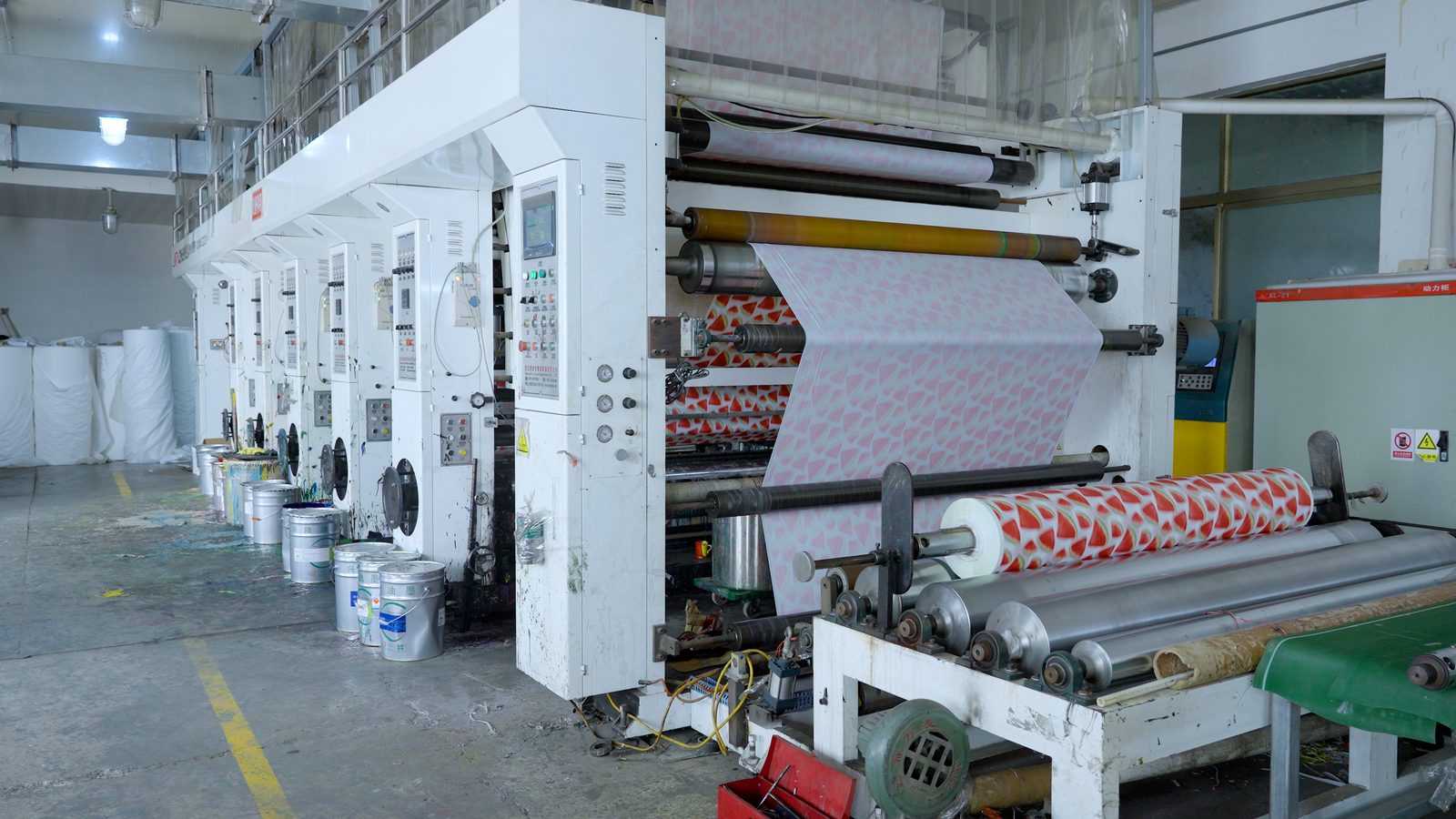
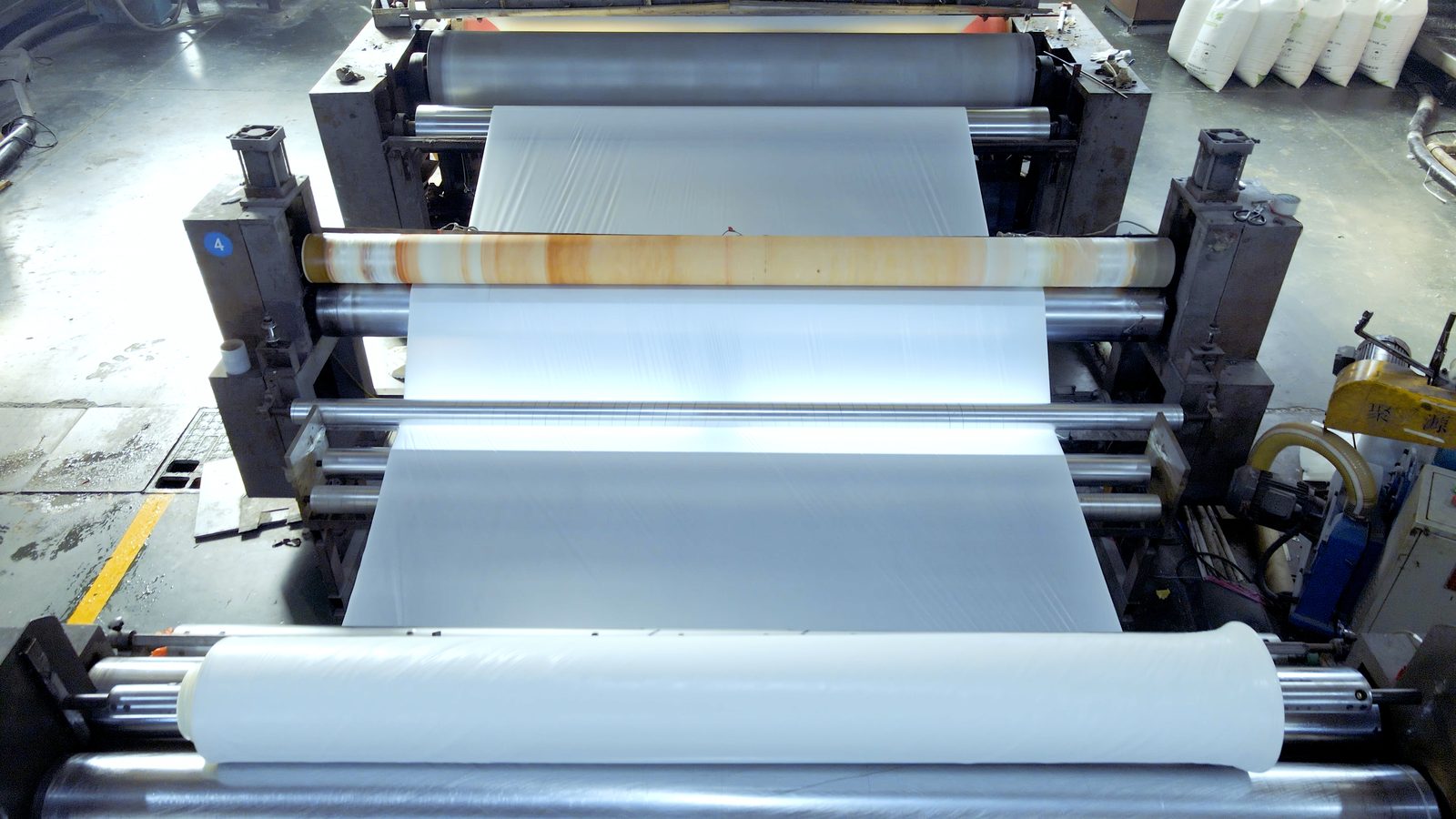
We have made PEVA tablecloths in Changzhou for over twenty years, with film blowing, printing and cutting in one plant, so a colour shift is tested on the line. The range covers more than fifty solids plus flag, check, dot and seasonal prints in 54 × 108 covers, 84 inch rounds and 40 or 54 inch rolls, with OEM packaging and custom artwork. Send your table sizes and print reference and we will come back with a quotation structure and a sample plan; the factory page shows the lines the work runs on and the plastic tablecloth category lists what is in production.
Next step. Send your table sizes, print reference and target pack format through our contact form, and read how we quote before comparing two suppliers on price alone. Related reading: disposable plastic tablecloths wholesale.