
Almost every carton of disposable cutlery sold into catering carries the words heavy duty somewhere on the label, and nothing behind that phrase is regulated. Two forks can both be called heavy duty, both measure 18.4 cm, and still differ by forty percent in mass — and mass is the part a guest feels when a tine folds under a slice of cake.
This guide is for the buyer comparing quotations, not cartons: what actually changes the grade of a plastic fork, spoon or knife, how to test a sample in five minutes at your own desk, and the fields that make two quotes comparable.
There is no standard behind “heavy duty”
Food-contact regulation governs what a piece is made of, not how strong it is. In the United States, polystyrene and polypropylene are cleared for food contact under 21 CFR 177.1640 and 21 CFR 177.1520, while the colourants used to tint them sit under 21 CFR 178.3297. None of those sections mentions mass, thickness or a duty class. In Europe, Directive (EU) 2019/904 decides whether single-use cutlery may be placed on the market at all — again by material and item type, not by grade.
So “heavy duty” is a commercial description. It becomes useful only when the supplier attaches numbers to it: grams per piece at a stated length, the mould that produced the piece, and the resin. Ask for those three and the phrase stops mattering. Packing — bagged, kit or set — is covered in our guide to plastic cutlery in bulk.
The four numbers that separate one grade from another
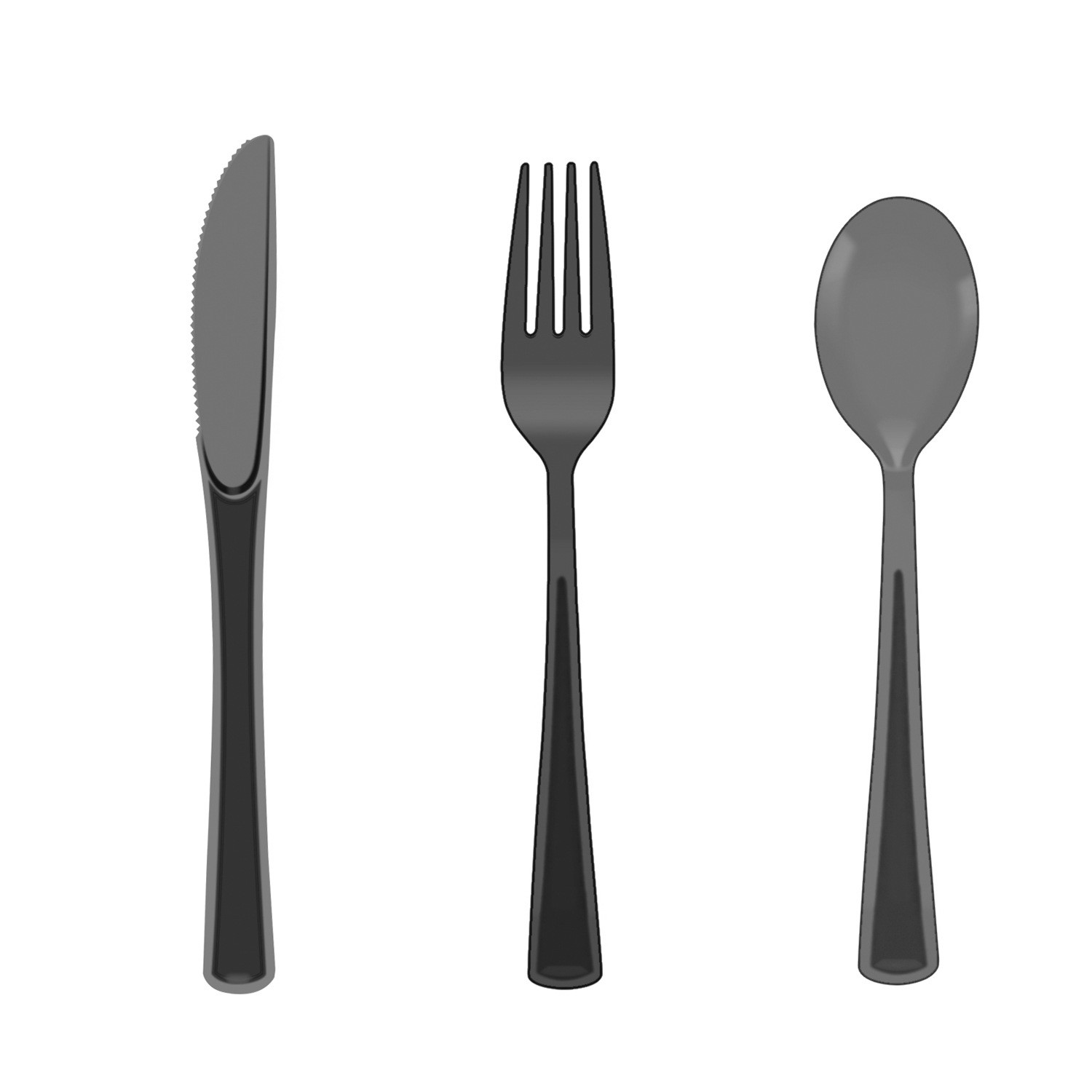
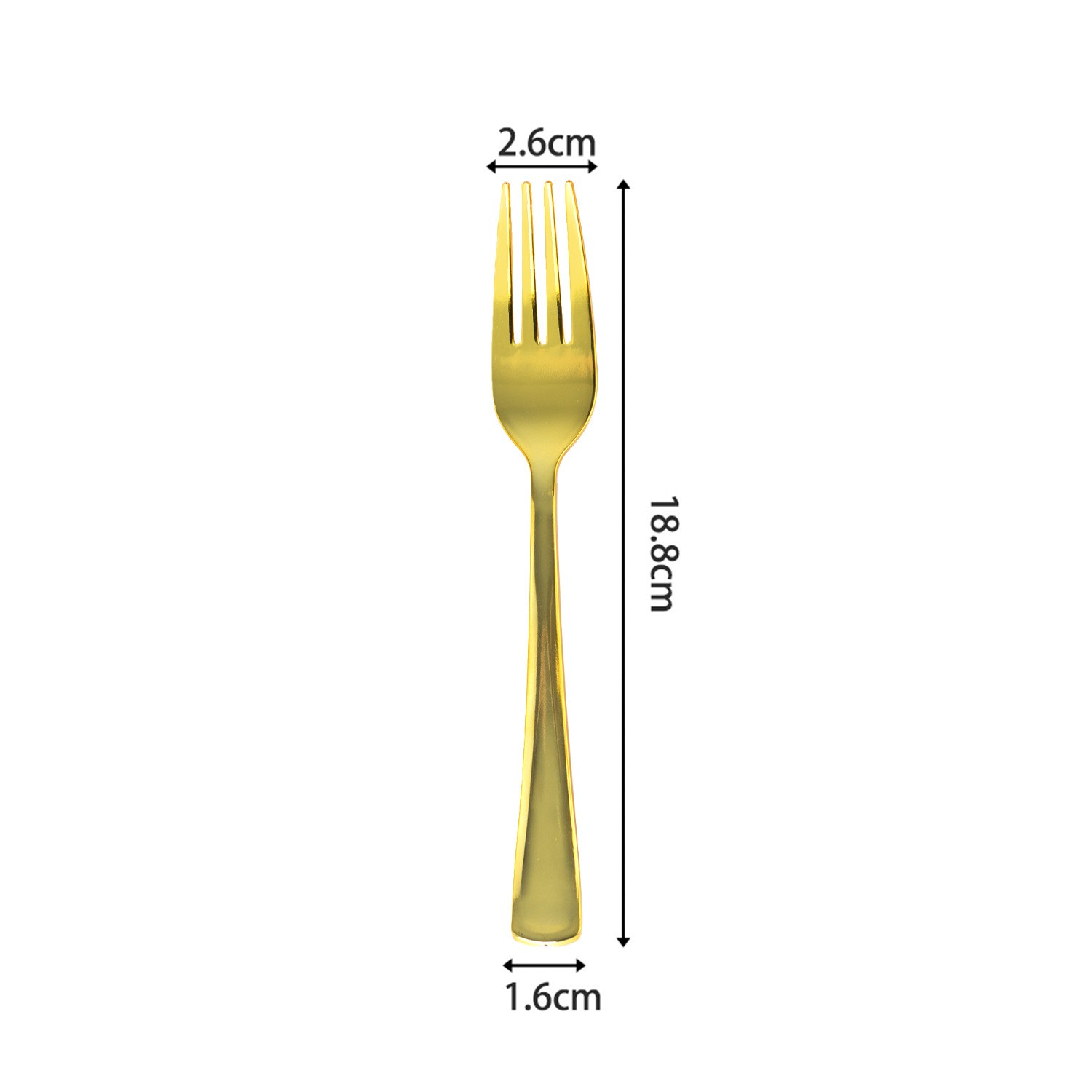
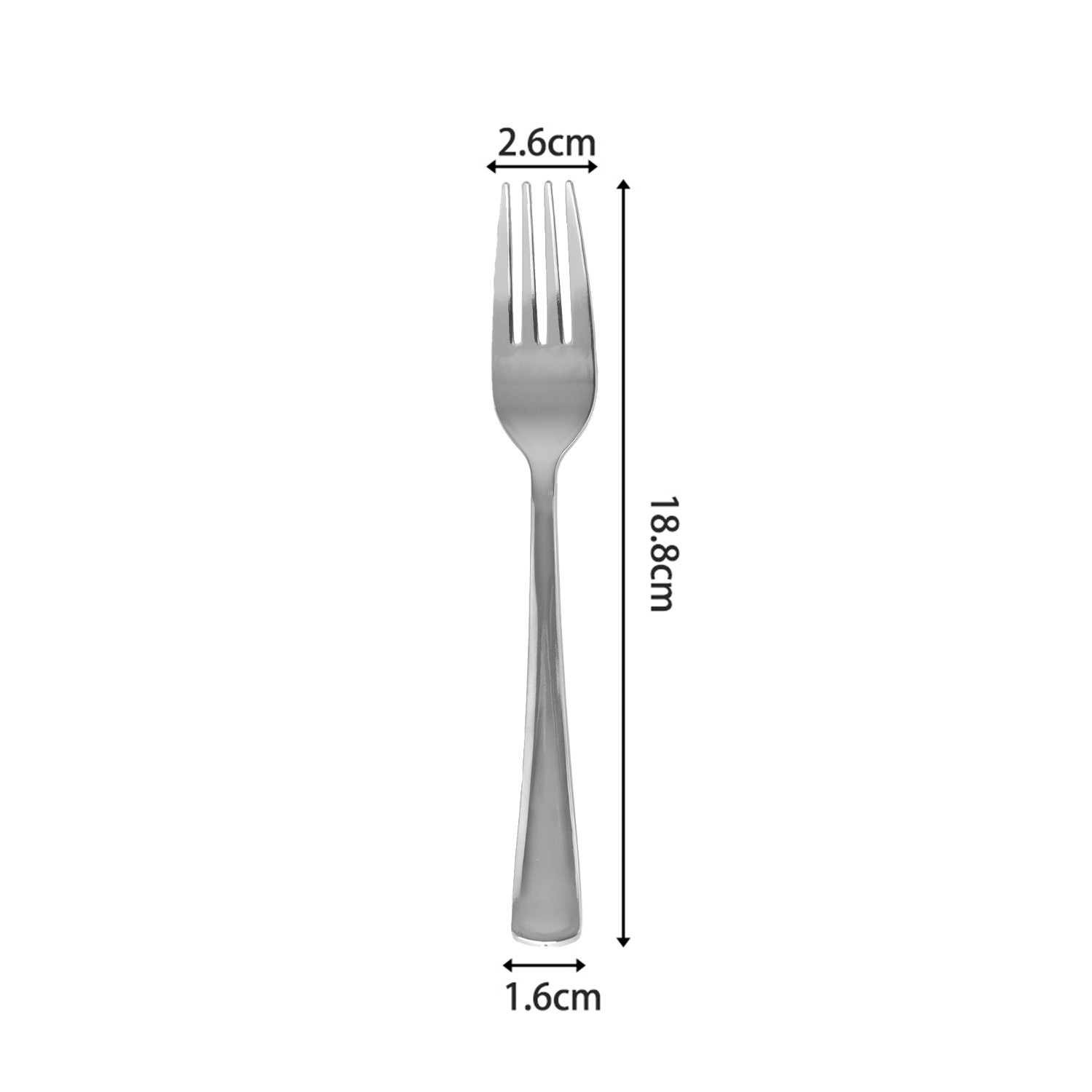
Grams per piece, at a stated length. Mass is the cheapest proxy for section thickness. Our standard injection-moulded PS line runs a knife of 19.6 cm (7.75 in) at 5 g, a fork of 18.4 cm (7.25 in) at 5 g and a spoon of 17.2 cm (6.8 in) at 6.8 g. A heavier piece at the same length is not a packing decision; it comes out of a different mould, and that is why a quote can only be compared like for like when both quotes state the mass.
Where the piece actually fails. Cutlery almost never breaks in the middle of the handle. It fails at the tine root, at the junction where the bowl meets the handle, and along the serration of a knife. Those three zones carry the whole load, so a design that thickens only the handle adds weight without adding strength.
Resin and process. Two pieces can share a shape and behave differently because one is polystyrene and the other polypropylene.
Geometry. Ribs under the bowl, the taper of the handle, tine count and tine length, and the depth of the spoon bowl all change how a piece feels in the hand before any material is added.
PS, PP and the reusable-look trap
Polystyrene is the resin behind most clear and brightly coloured cutlery. It is stiff, it reads as glass-clear when unpigmented, and it snaps rather than bends, which suits a buffet and not a freezer. Polypropylene is softer, tolerates hot food and repeated flexing, and is the right choice wherever a piece has to give instead of crack.
The trap is the metal-look and heavyweight-handle ranges. A gold or silver finish and a thick handle make a piece look reusable, but unless the resin and the wall section support it, it is still a single-use item. What kills these pieces is not one meal — it is hot water, detergent and the dish rack. If your customer intends to wash and reuse, that has to be specified at the mould, not implied by the colour.
Colour is also a compliance question rather than a cosmetic one. Masterbatch has to come from a permitted list when the piece touches food, which is why a shade match should be quoted against a retained master sample rather than a photograph. The same discipline applies across a whole table setting, and it is the subject of our party tableware colour matching guide.
Five bench tests you can run on a sample
All five take about five minutes. Run them on the exact grade you are quoted, not on a retail pack bought locally.
1. Tine bend. Press one outer tine back about thirty degrees and release. Clean return means the section is adequate. A white stress mark means you are at the limit. A snap means the grade is wrong for the job.
2. Handle flex. Hold the handle at the far end and press the tines or bowl against the edge of a table. Watch the junction, not the handle.
3. Bowl load. Fill the spoon with water or coins and lift. If the bowl twists on the handle, the junction is too thin for soup or ice cream service.
4. Hot food. Leave a piece in food at serving temperature for twenty minutes. Polystyrene softens and the tines splay; polypropylene holds its shape.
5. Cut and drop. Take a knife through a cooked chicken breast or a vacuum-packed film, then drop a fork from table height onto a tiled floor. Serrations that flatten on the first cut, or tines that break on the first drop, will not survive a delivery route.
Match the grade to the service, not to the word
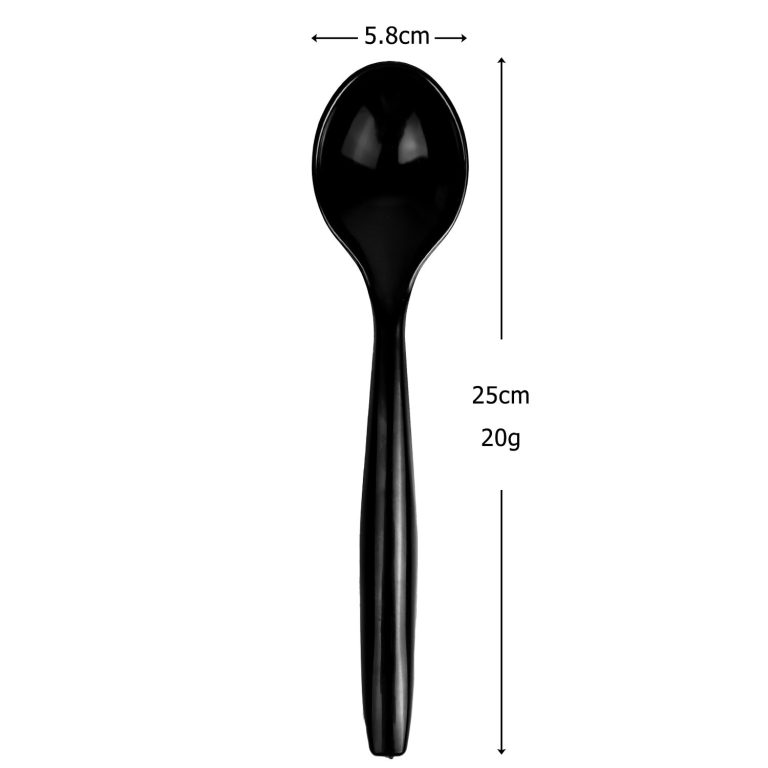
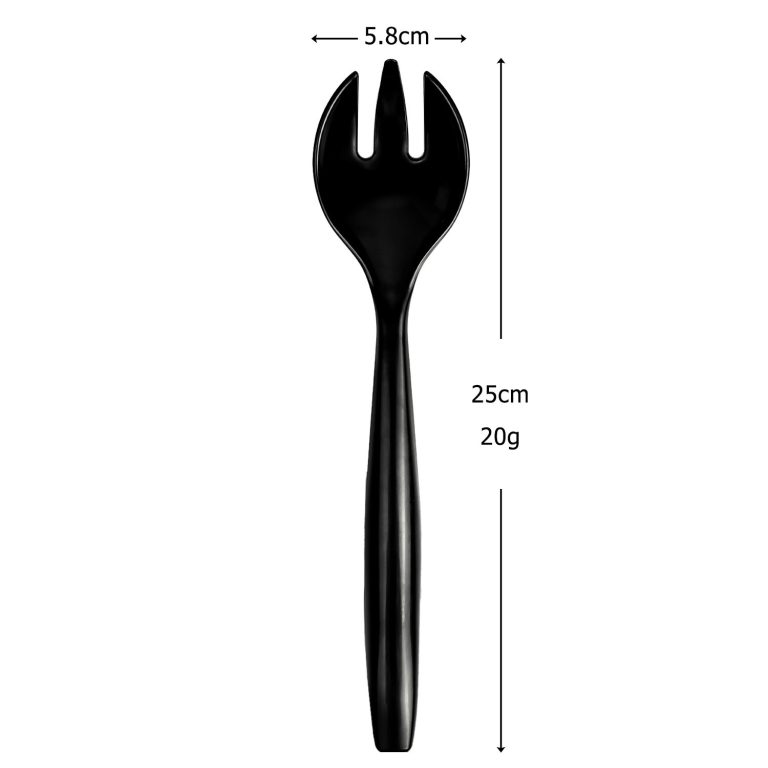
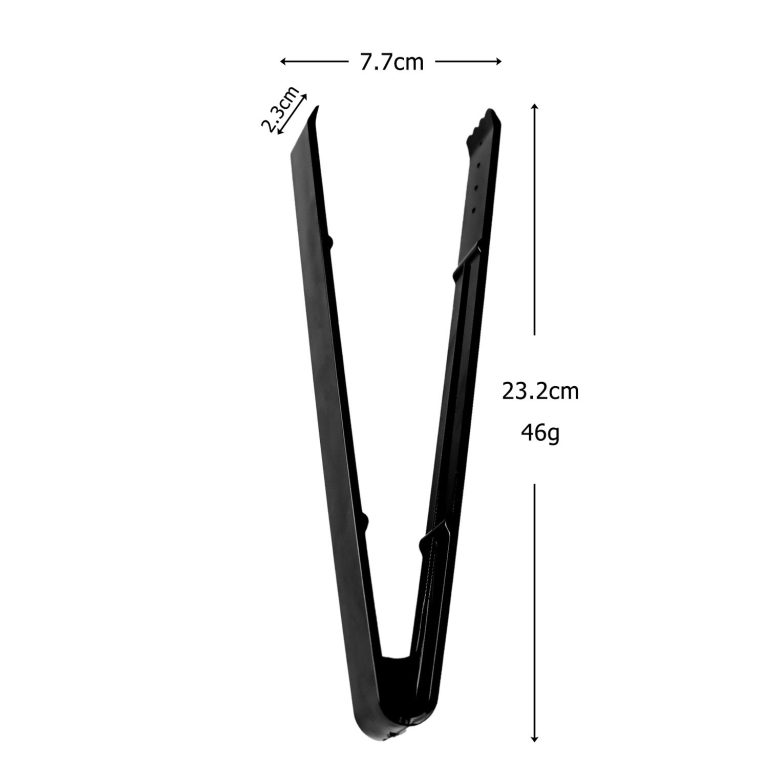
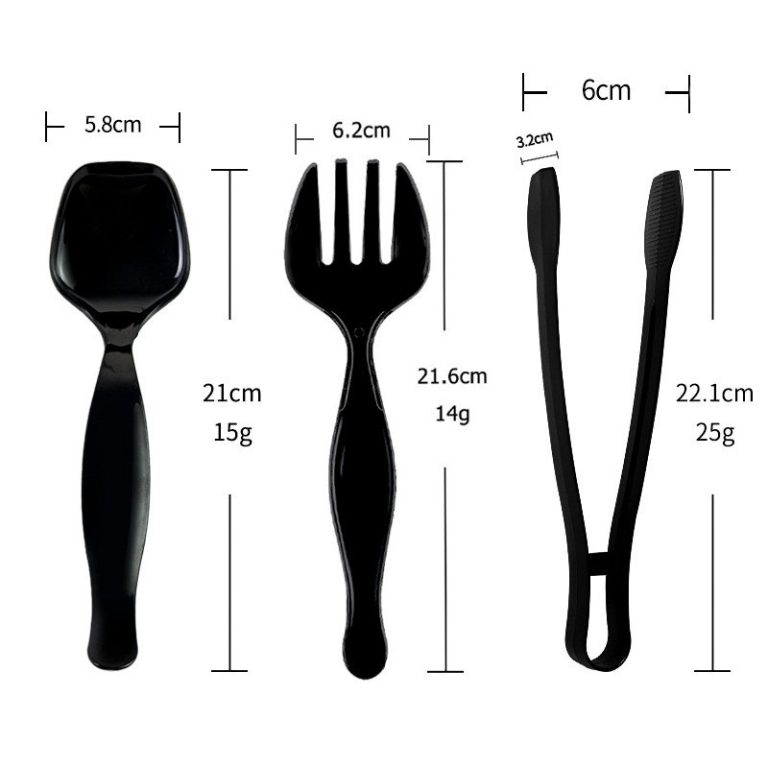
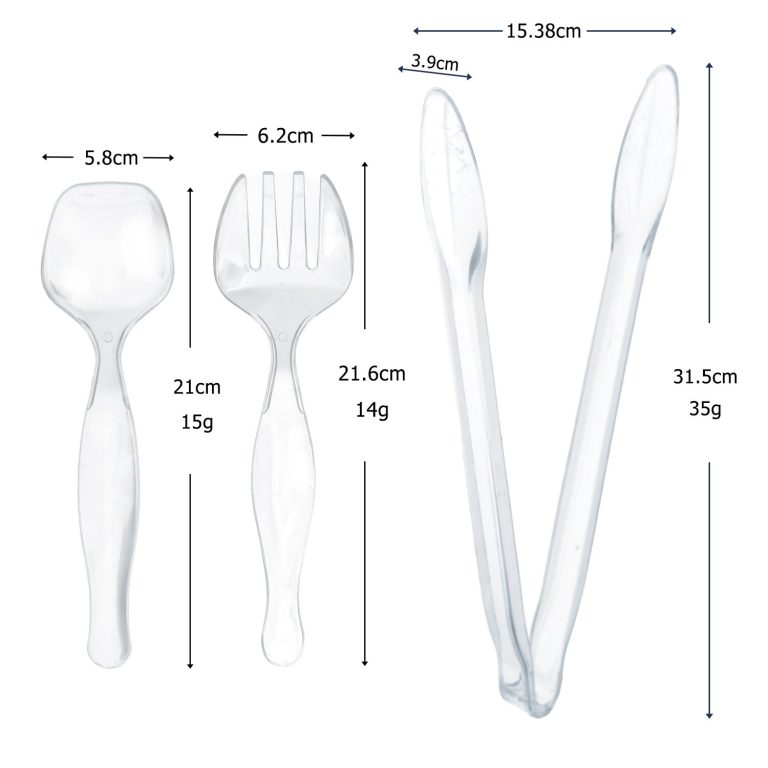
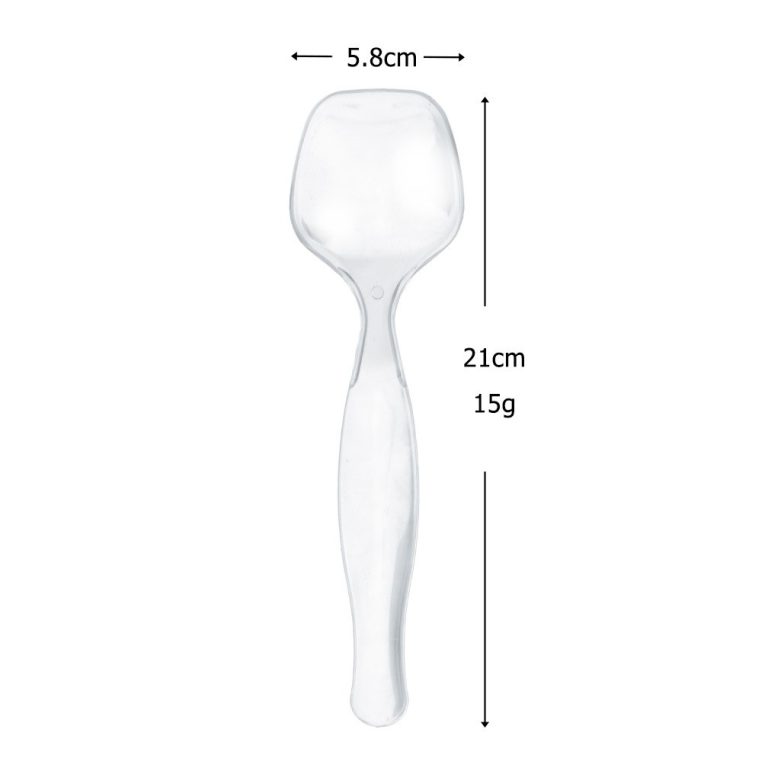
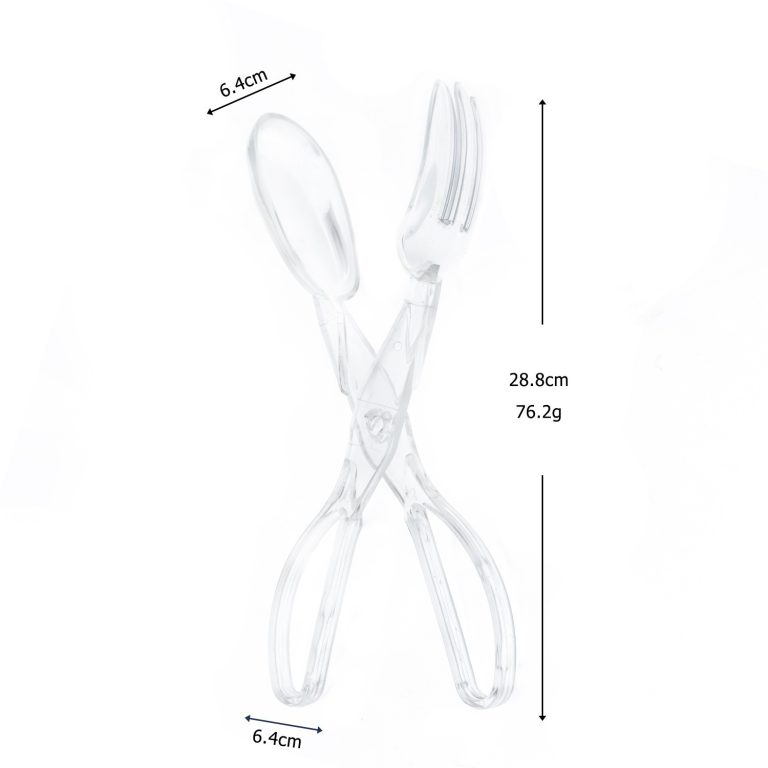
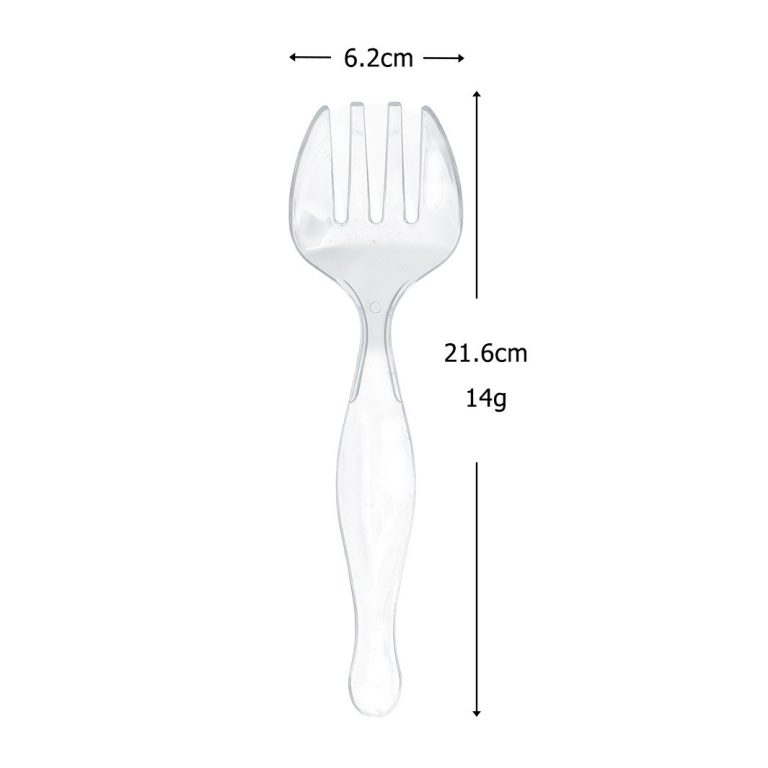
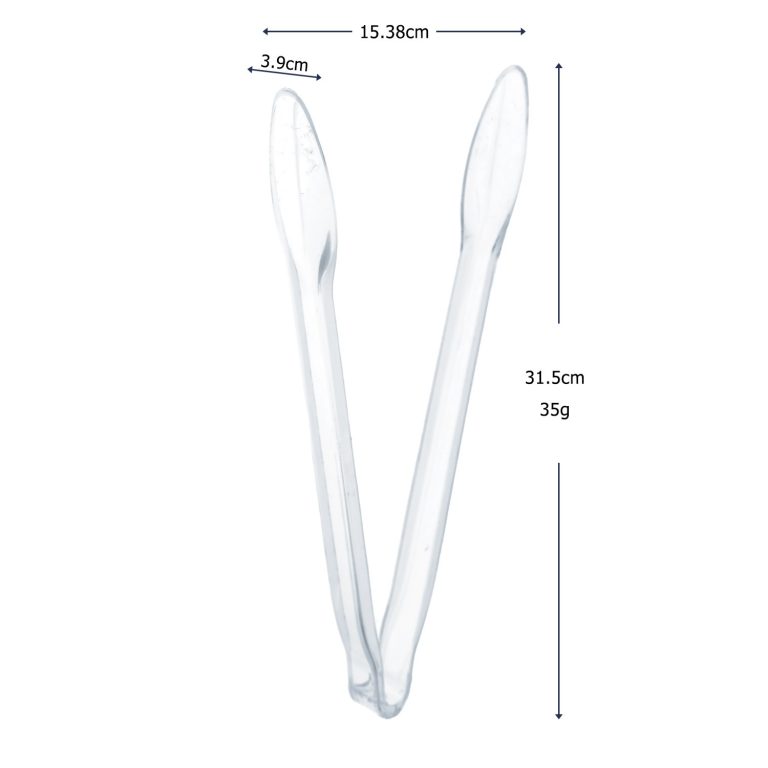
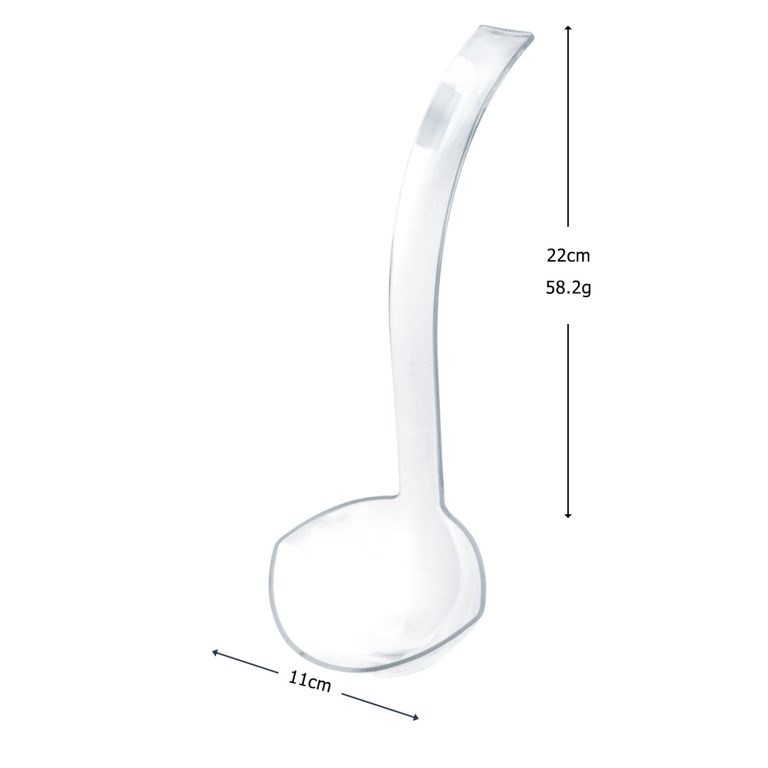
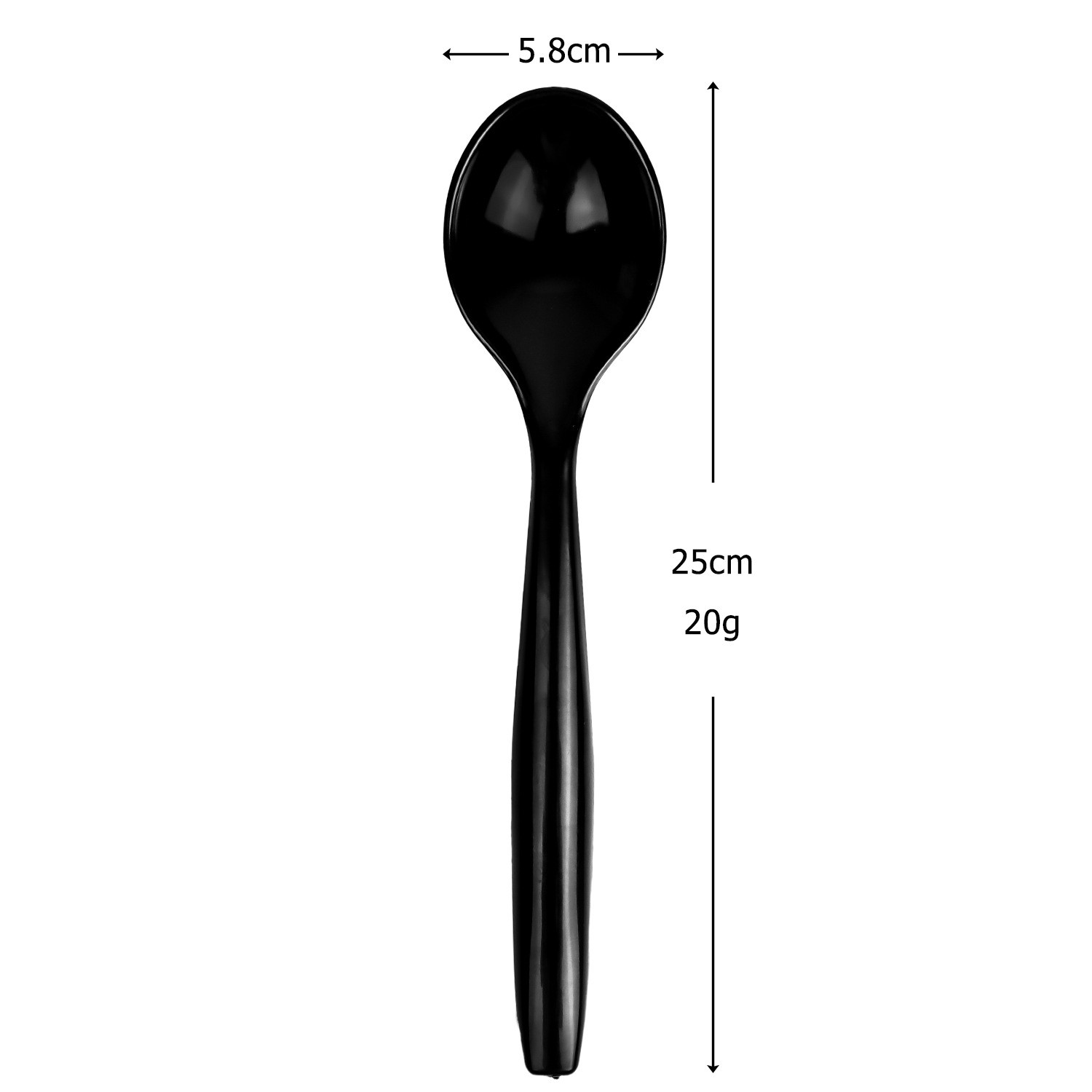
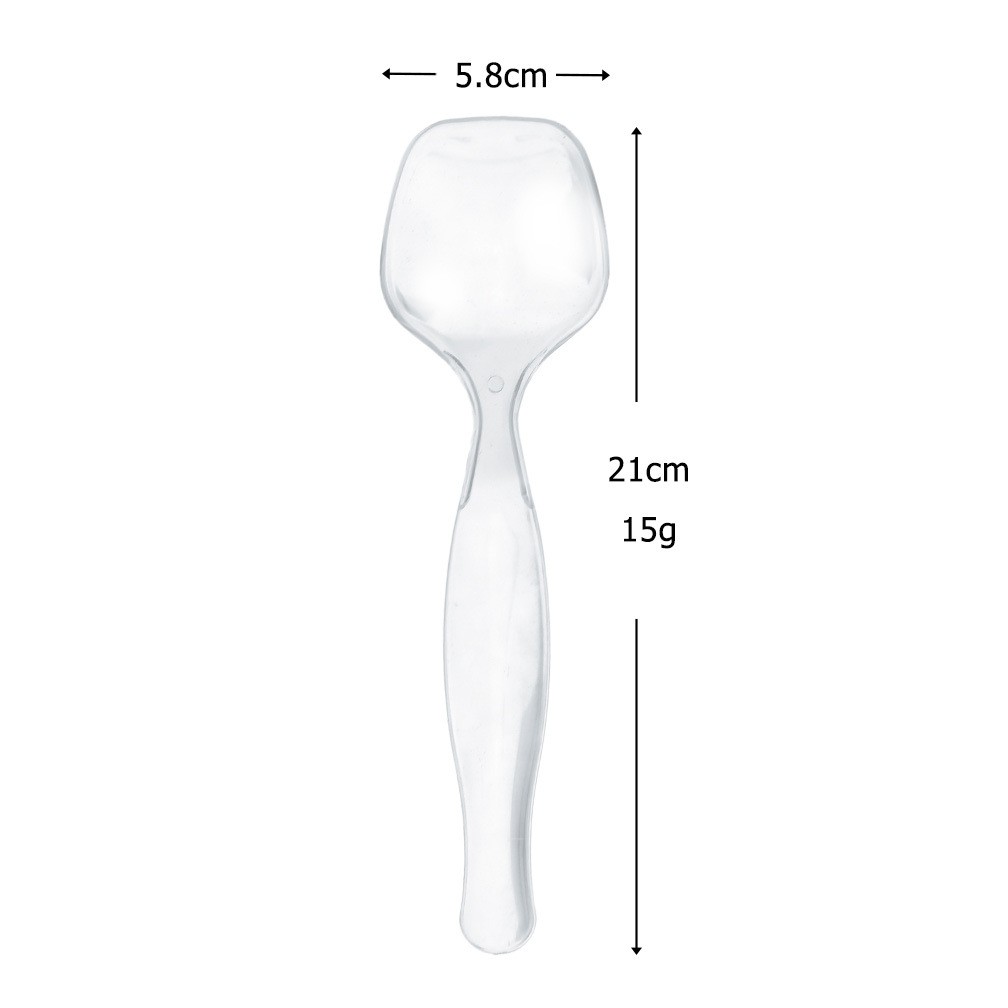
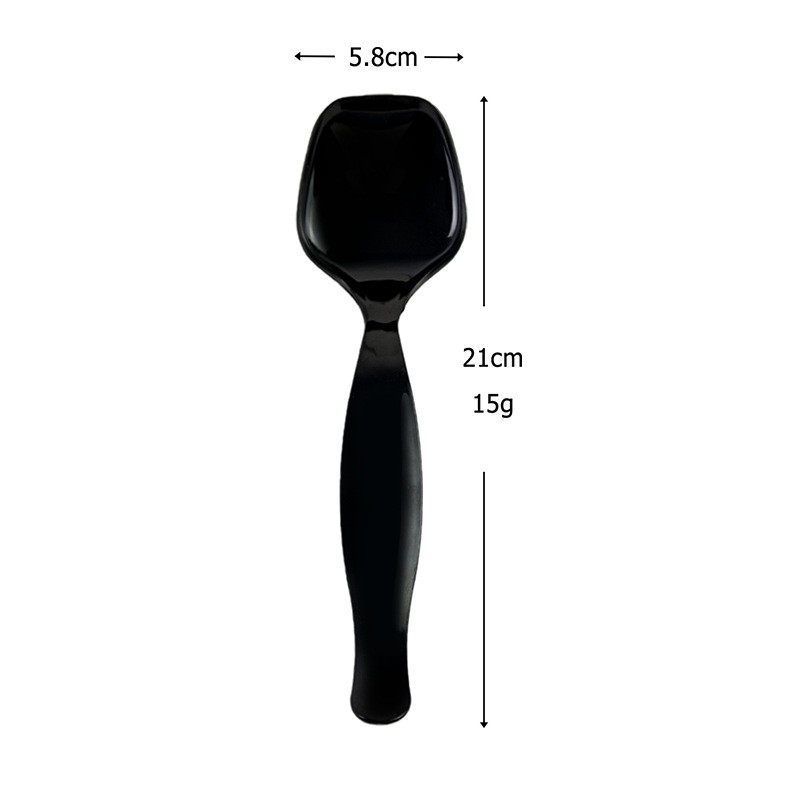
Buffet and catering. The load is a full serving, not a bite. Serving spoons and forks are a separate grade: our serving spoons run around 20 g, several times a standard teaspoon, because they lift a full portion out of a chafing dish. Read the serving utensil specification guide before you try to solve buffet service with dinner forks.
Takeaway and delivery. The piece has to survive a closed box, a scooter ride and a sauce. Heat and steam are the enemies, so polypropylene usually wins here regardless of what the carton says.
Dessert and ice cream. Bowl volume and cold brittleness matter more than tine strength. A spoon that is perfect with hot soup can arrive at the table in pieces from a freezer.
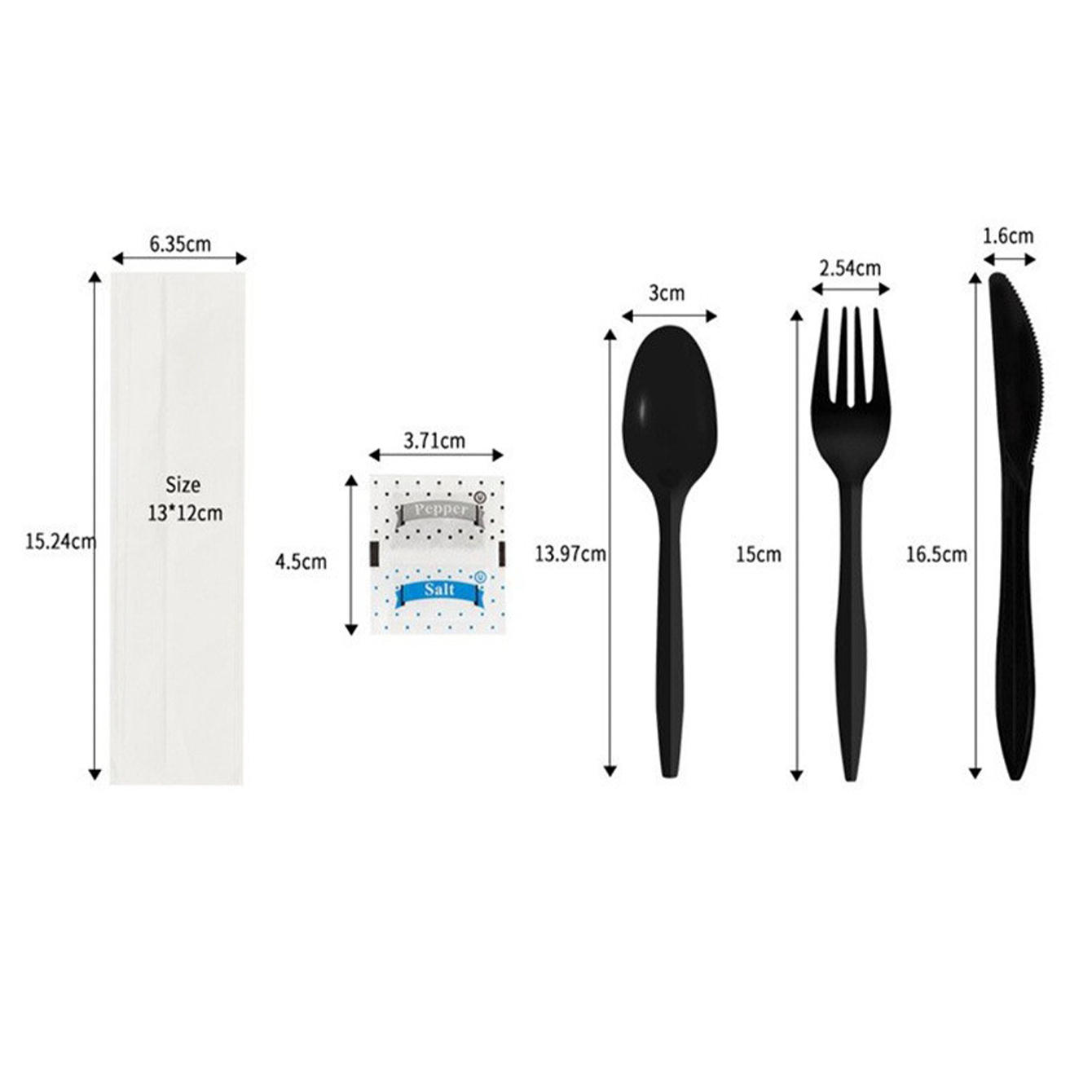
Hotels and banquet halls. The unit of purchase is often the kit, not the piece: cutlery plus napkin, sometimes with salt and pepper. Our hotel programme guide sets out how the three service points differ.
Cafés, schools and community events. Here volume and replacement rate dominate, and a mid grade with spares usually beats a premium grade bought once. The first-order checklist for small foodservice is the place to start.
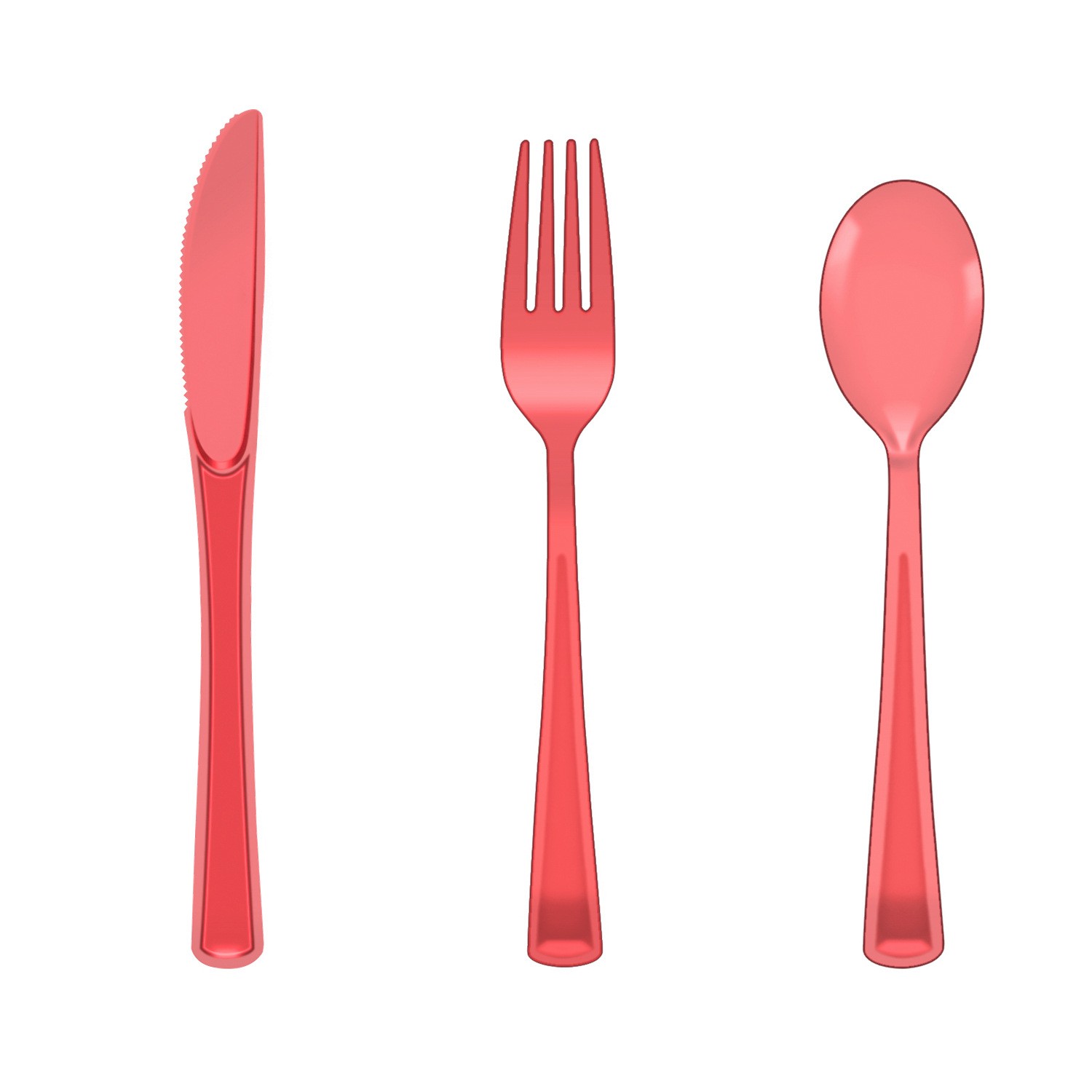
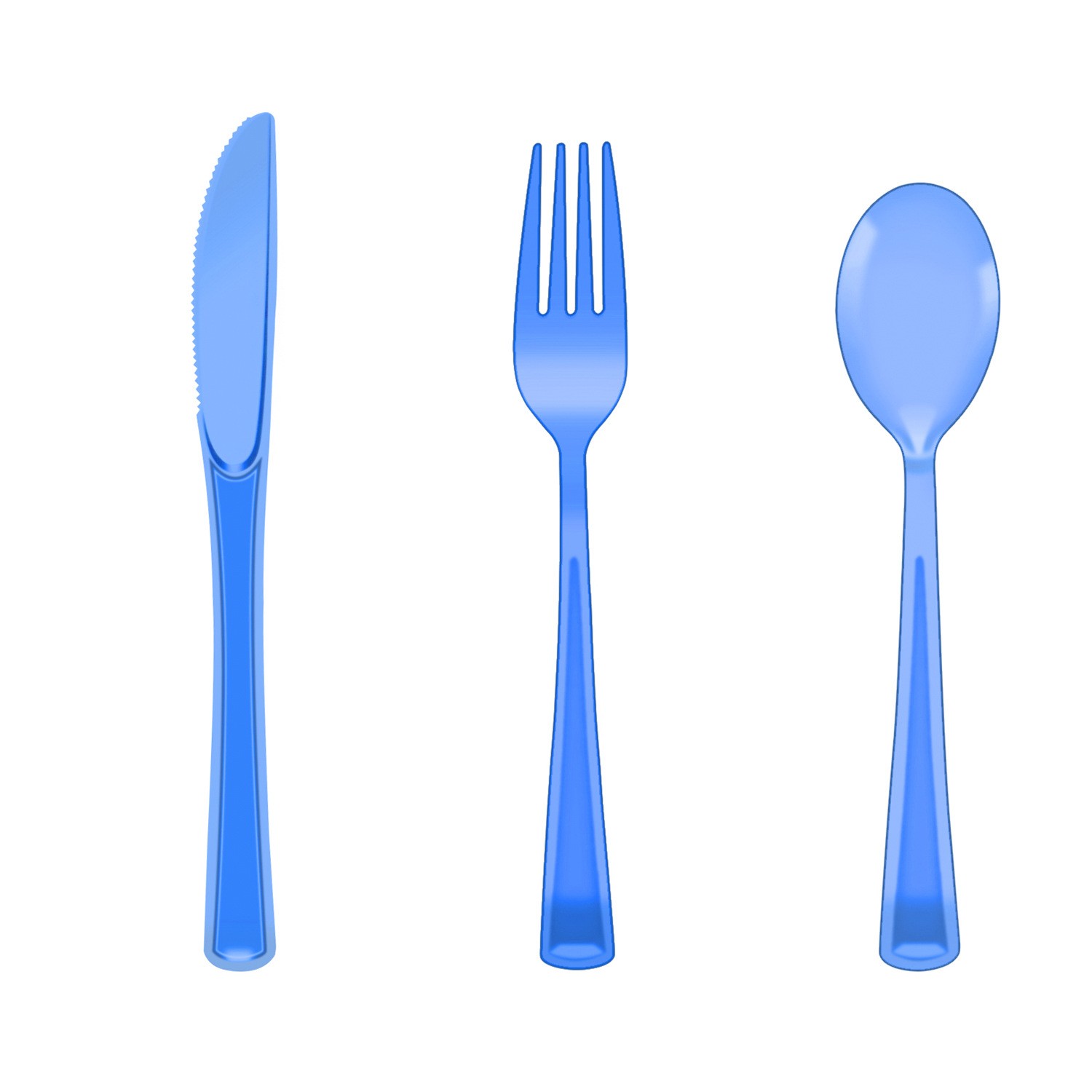
Colour coding. Transparent red, blue, green and black sets are not decoration: they let a kitchen separate stations or allergen lines without changing the item number.
What a heavier grade costs in freight
Mass multiplies. A thousand forks at 5 g is 5 kg of resin; at 7 g it is 7 kg, and the cartons, the pallet and the container follow. Because a container is limited by volume as much as by weight, a heavier piece quietly reduces the pieces per shipment and pushes cost per piece up even when the quoted unit price is unchanged.
That is why the grade has to be fixed before packing is designed. Pack count, carton weight for manual handling and the number of cartons per pallet are all downstream of grams per piece.
What belongs on the purchase order
Eight lines turn a grade conversation into a specification that a factory can hold to:
1. Item and length in millimetres and inches.
2. Resin, named as PS or PP, not as “food grade plastic”.
3. Grams per piece, with a tolerance.
4. Colour, matched to a retained master sample.
5. Packing: bulk bagged, kit or set; pieces per bag, bags per carton.
6. Labelling and barcode, if the carton goes to retail.
7. Food-contact declaration and the test report behind it — our food contact materials page lists what we can supply.
8. An approved golden sample, retained by both sides, with the test results written on the bag.
Line three is the one buyers leave out most often, and it is the only line that makes “heavy duty” enforceable.
Send the service, and we will propose the grade
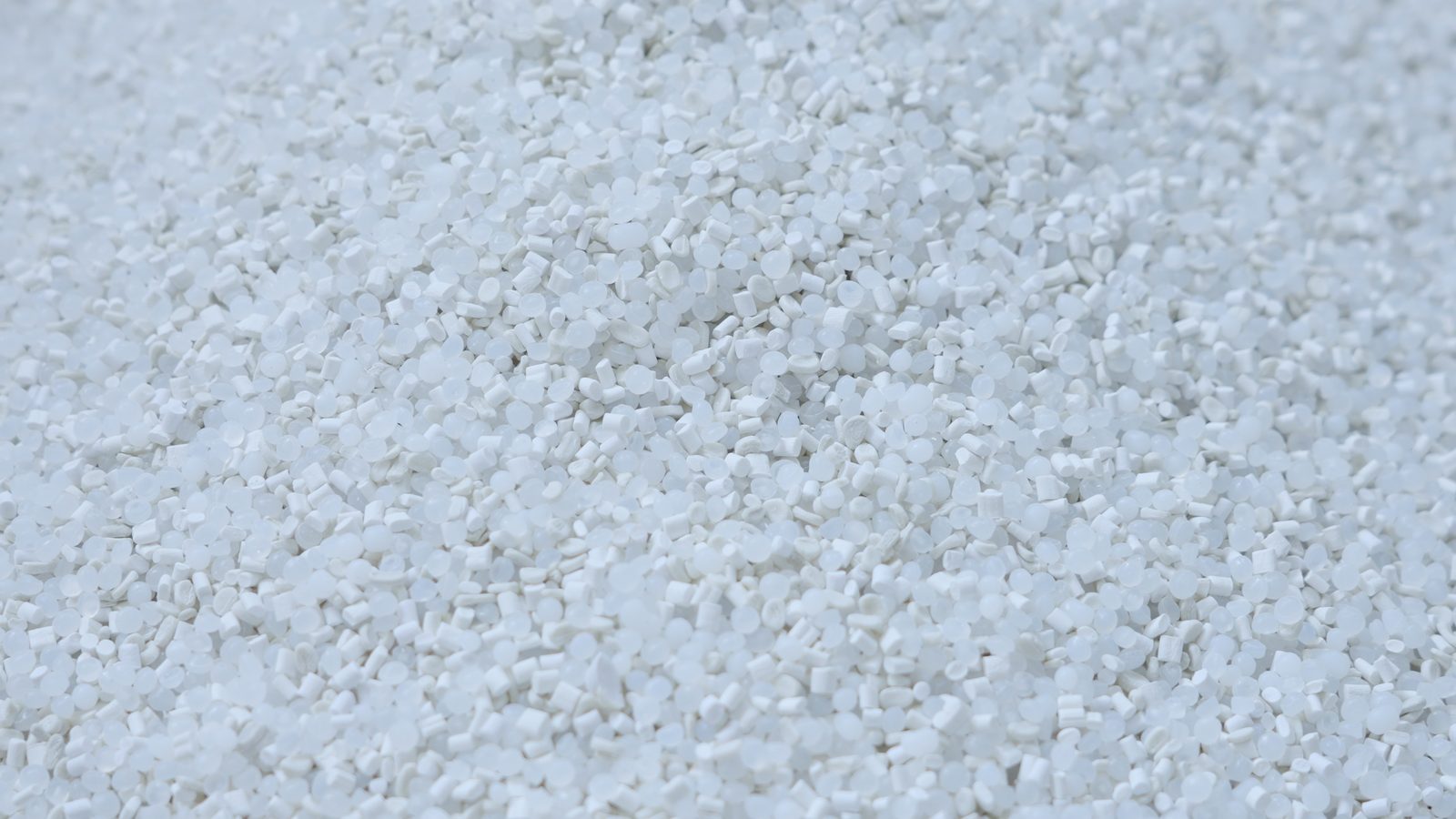
Runxiang has been injection moulding disposable tableware for more than twenty years, in polystyrene and polypropylene, and we match colours across cutlery, plates, napkins and table covers so a setting reads as one set rather than four purchases. Tell us what the piece has to survive — hot food, a delivery route, a freezer, a banquet line — plus the length and pack count you want, and we will come back with a grade rather than an adjective. Our quotation process explains what we need to price it, and the full range sits in the plastic cutlery category.
Related reading: Disposable tableware for schools, churches and community events · Heavy duty disposable plates: grams per piece and rim style · Plastic party tableware sets: parts and colour matching · Party tableware sets
Next step. Send your specification for a quotation: request a quote, or read how we quote MOQ, lead time and payment terms. Related reading: how gram weight and rim style set the grade on heavy duty plates.