










A café’s first disposable tableware order is usually assembled from a catalogue: a few sizes of cup, a box of cutlery, napkins in the house colour. Six weeks later the 12 oz cups are in stock but the lids that fit them are not, the forks bend under a salad, and the napkins are too small for anyone eating at a table. The order was priced by the case; it should have been built from the menu.
This checklist follows the order a new café actually makes them — drinks, food, the table, storage — and names the spec that settles each one.
1. Build the first order from the menu, not the catalogue
Write the menu down as service moments: iced drinks, hot drinks, plated food, takeaway, condiments. Each moment implies an item, a size and a material. Eight iced drinks and one 12 oz cup means the serve size is already chosen for the customer.
| Service moment | Item needed | Spec that actually decides it |
|---|---|---|
| Iced latte, iced tea | 12–16 oz clear cold cup + lid | Rim diameter and lid family, not the ounce count |
| Espresso, tea service | 8–10 oz hot cup | Wall and trim finish; lid availability per item |
| Plated main | 9 in plate | Grams per piece and usable well diameter |
| Takeaway salad | 32 oz container + lid | Footprint (one of two in our range) and lid sharing |
| Sit-down service | Napkin + fork, knife, spoon | Folded size, ply, and grams per piece of cutlery |
2. Cups: cold sizes, hot sizes, and the lids that go with them
Cold cups in our range run at 7, 12 and 16 oz, and the rim steps up with the size — roughly 7.1 cm at 7 oz to 8.5 cm at 16 oz. That explains most lid complaints: a lid is matched to a cup family, not to an ounce count. Ask for the rim diameter measured across the lip and the lid code that goes with it, with a tolerance of about ±0.5 mm. The fitment rules are in our cups and lids rim diameter guide; the short version is that the 90 mm lid which covers 12 and 16 oz paper cups does not automatically fit injection-moulded cold cups.
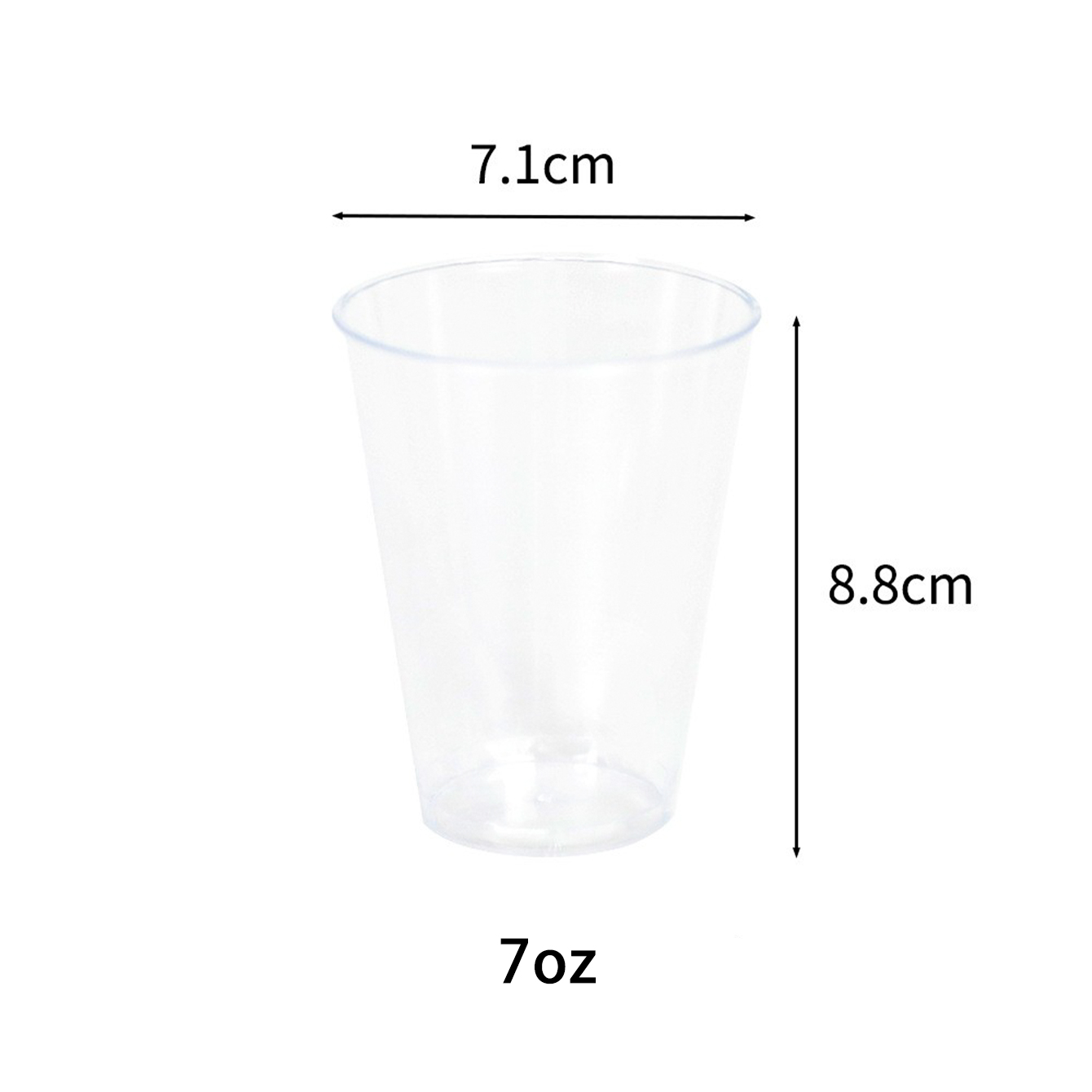
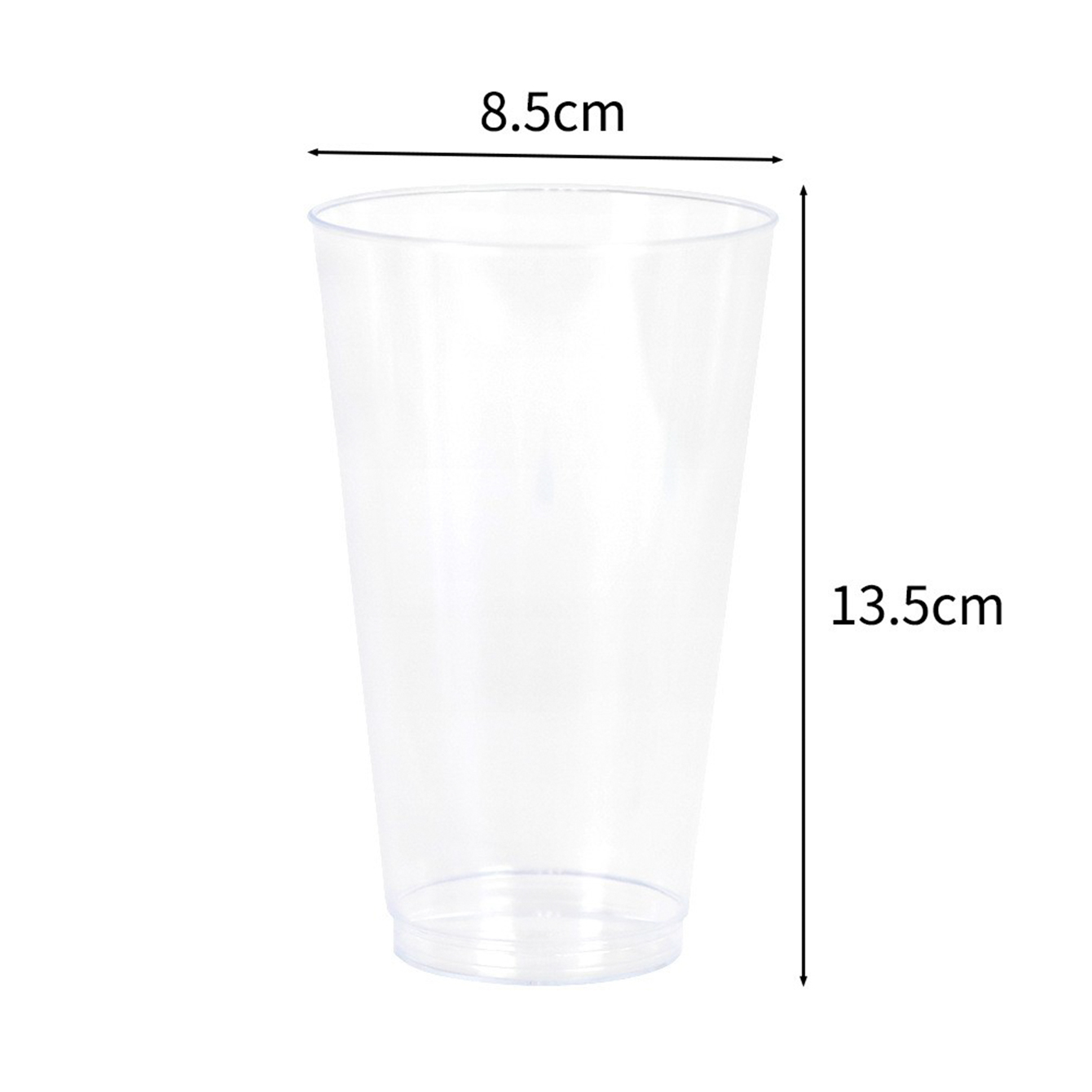
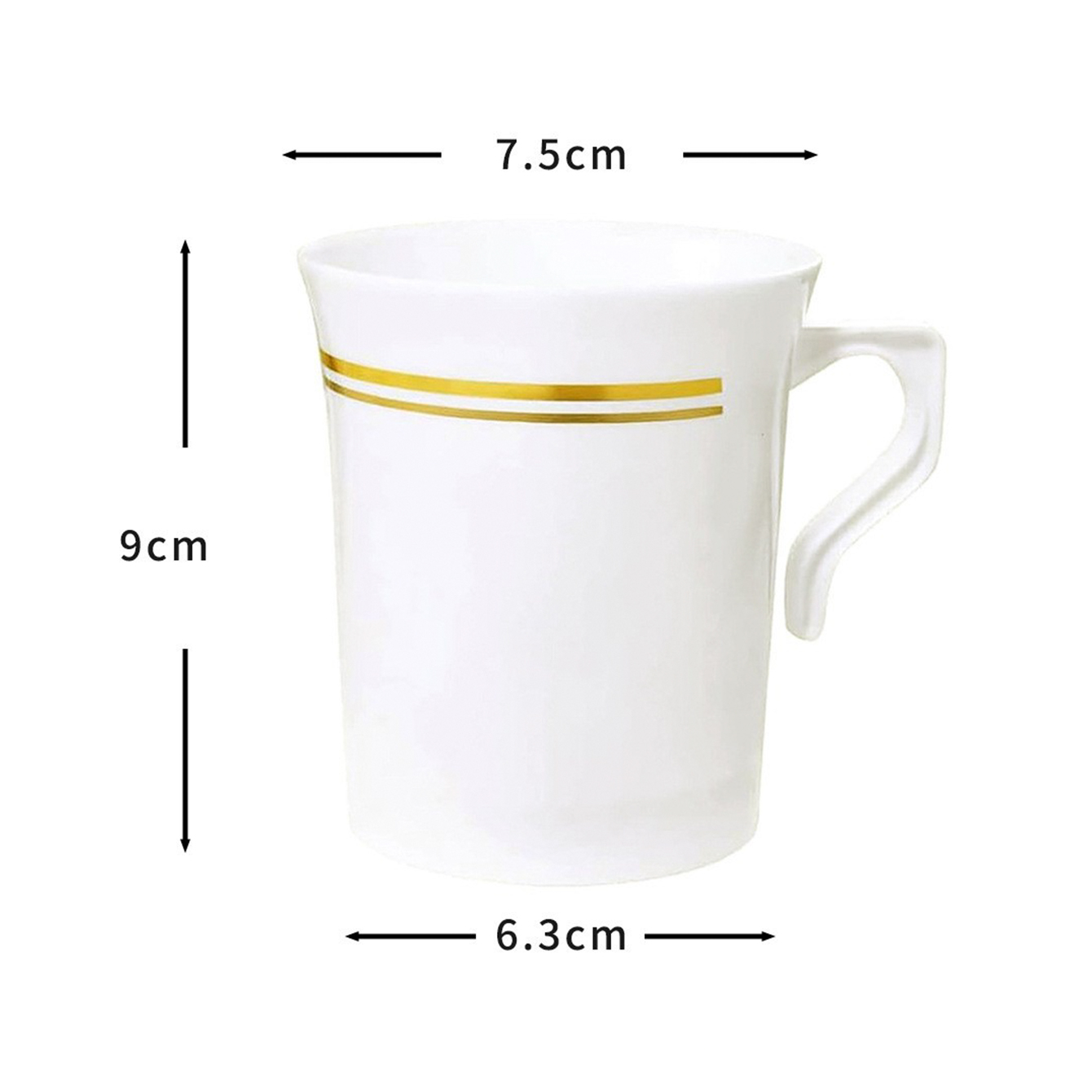
Hot cups are a separate purchase. Ours are 8, 9 and 10 oz in creamy white with a gold or silver trim on the lip — enough decoration for front-of-house espresso or tea service without turning the cup into a party item. Because the trim sits on the lip, check that the stacking height still works in your dispenser and that a lid exists for that item; a hot cup that cannot be lidded is a dine-in cup, which changes how many you need. Size backwards from the drink: 7 oz is a small flat white or a water, 12 oz most iced drinks with ice, 16 oz the large iced latte. Buy the middle size deepest. The range is on cups and lids and in the drinkware category.
3. Cutlery: bulk, kits, or colour-coded sets
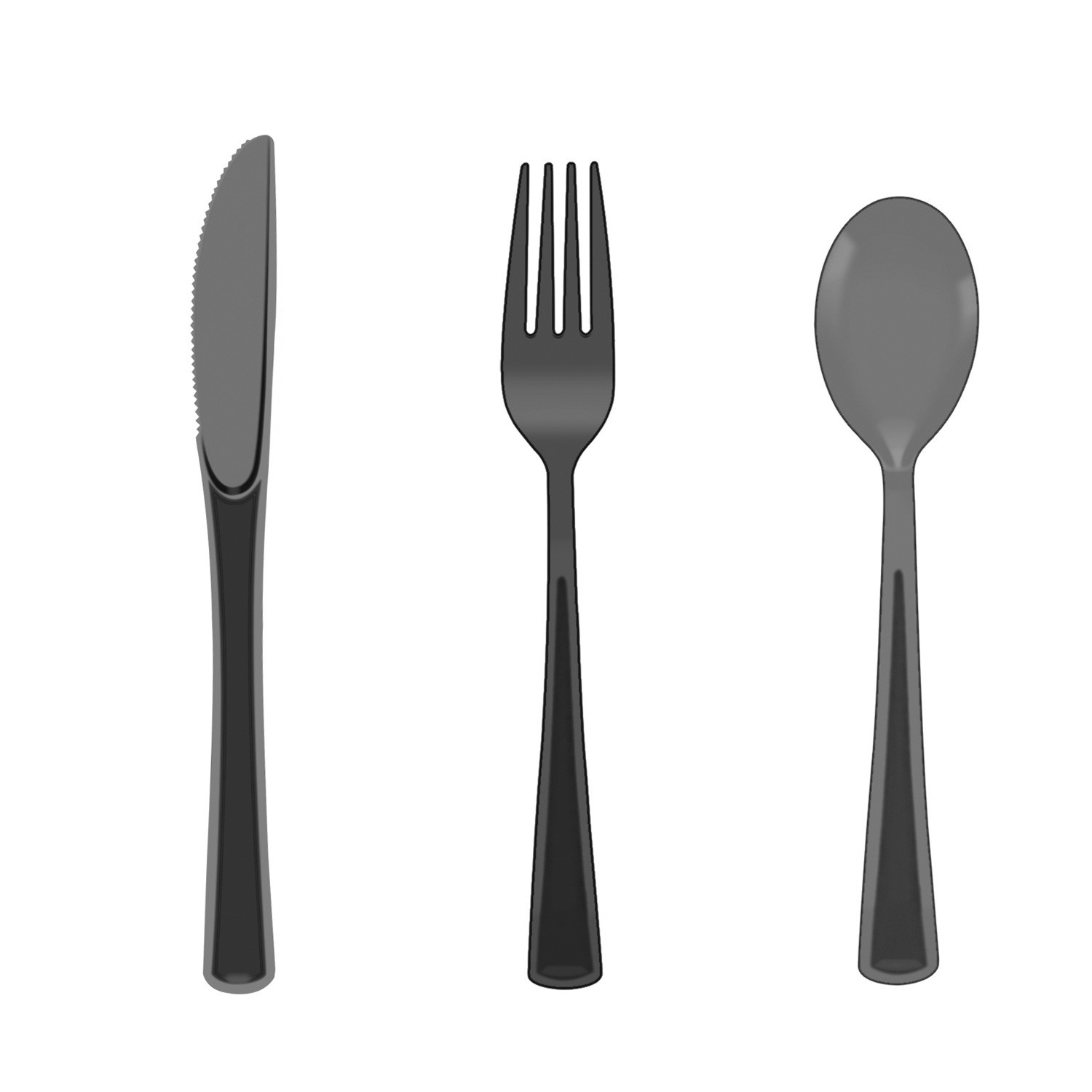
Bulk and kits solve different problems. Bulk bagged pieces suit table service and back-of-house restocking, because staff take what the table needs; pre-wrapped kits with a napkin suit takeaway and delivery, because the customer gets a complete set without the counter thinking about it. Most small operators need both in a ratio that follows their takeaway share.
Then decide by menu: a salad needs a fork that does not flex at the tines, a soup needs a spoon with bowl volume rather than a teaspoon, a dessert menu needs a small spoon that is not the soup spoon. A 2 g fork and a 4 g fork look identical in a photo, so ask for grams per piece and tine count, and test with the actual dish. Colour coding is free discipline: black for the dining room, one accent colour for the bar. Geometry is covered in the cutlery bulk guide; the range is on plastic cutlery.
4. Napkins: ply and folded size follow the service style
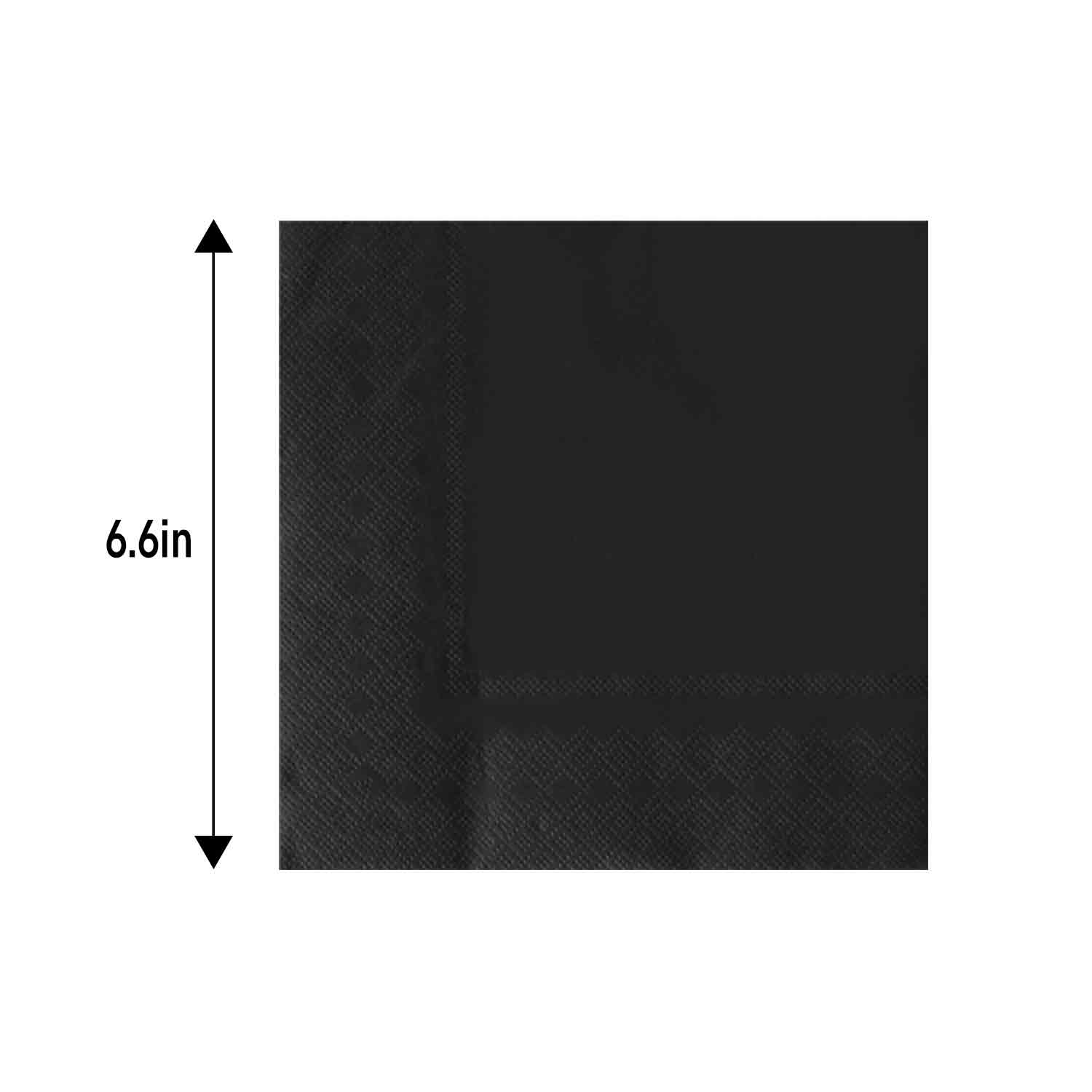
Napkins are specified by folded size and ply, not colour alone. A 5×5 in cocktail napkin belongs beside a bar or a counter dispenser; 6.5×6.5 in is the luncheon size for casual table service; 13×13 in is dinner service, where the napkin sits on a lap rather than under a glass. One ply is a wipe, two plies behave like cloth for a single course. Buying dinner-size napkins for counter service wastes money on every cover.
If the napkin is printed, the artwork needs a plate and an approval cycle, and the colour has to be judged against the table cover in the light the room actually uses — a gold print on white reads warm under tungsten and almost neutral in daylight. Solid colours are the easier first order. Ply and colour matching are covered in the napkin buying guide; stock colours are in the napkins category.
5. Containers and takeaway: buy by footprint, not by ounce
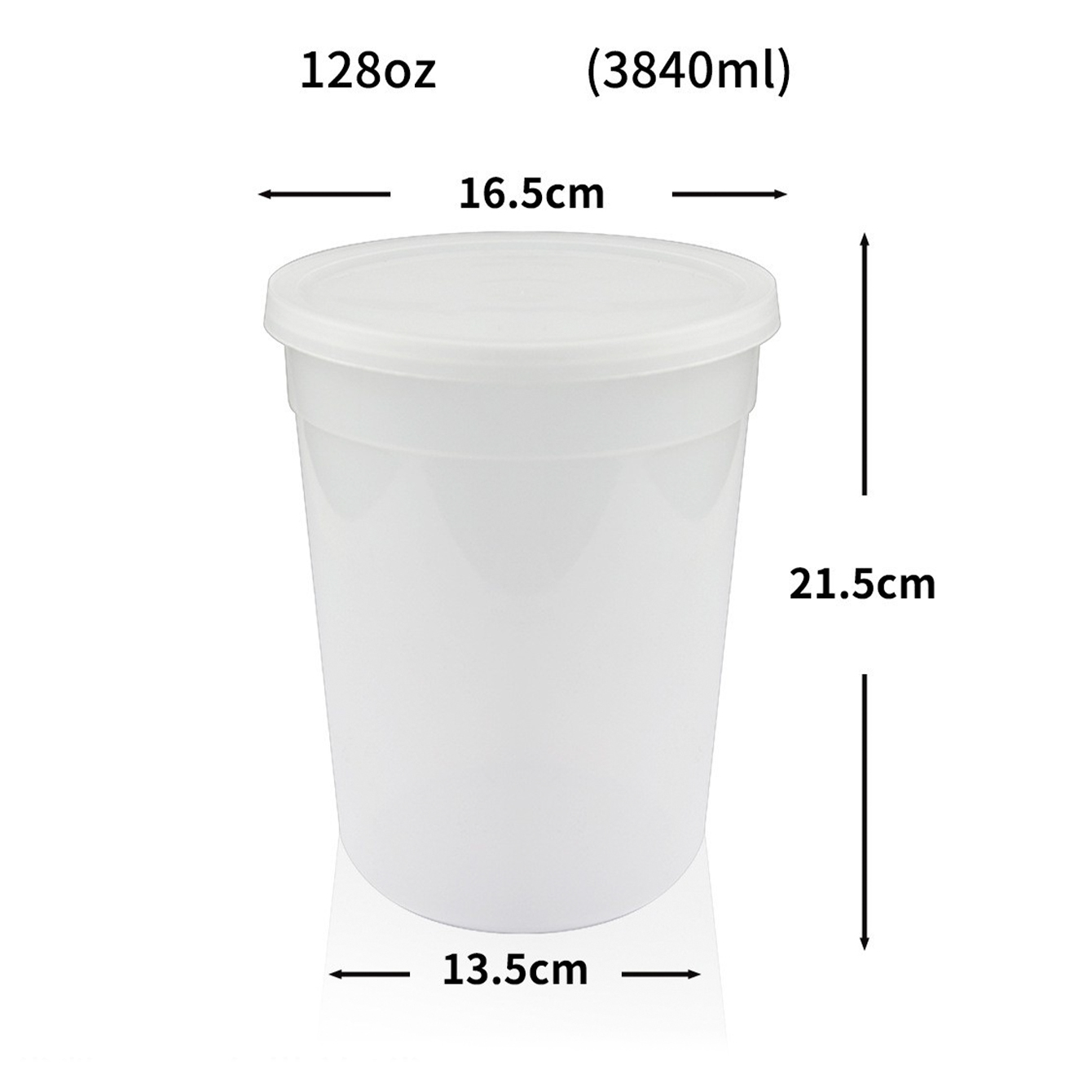
Deli containers are sold by ounce but stocked by footprint. Our range splits into two: 8, 16 and 32 oz share one footprint, and 64, 86 and 128 oz share a larger one. One lid fits each family, so a kitchen stocking both stocks two lid SKUs, not six. Match the container to the job: 8 oz for sauces and sides, 16 oz for prep, 32 oz for entrée salads, 64 oz and up for batch prep. Check stack height and shelf depth before committing to a pallet.
6. Plates and bowls: diameter, rim and grams per piece
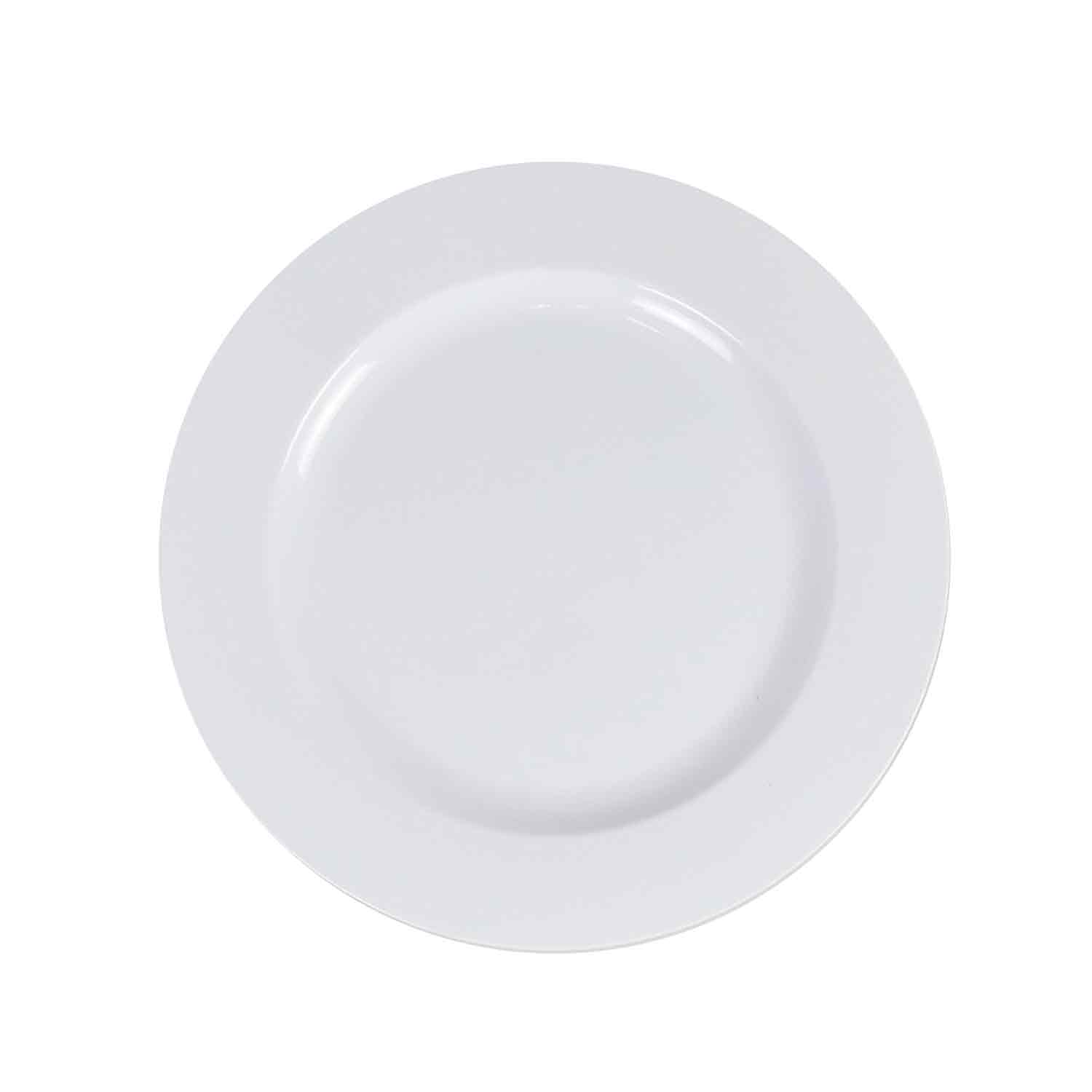
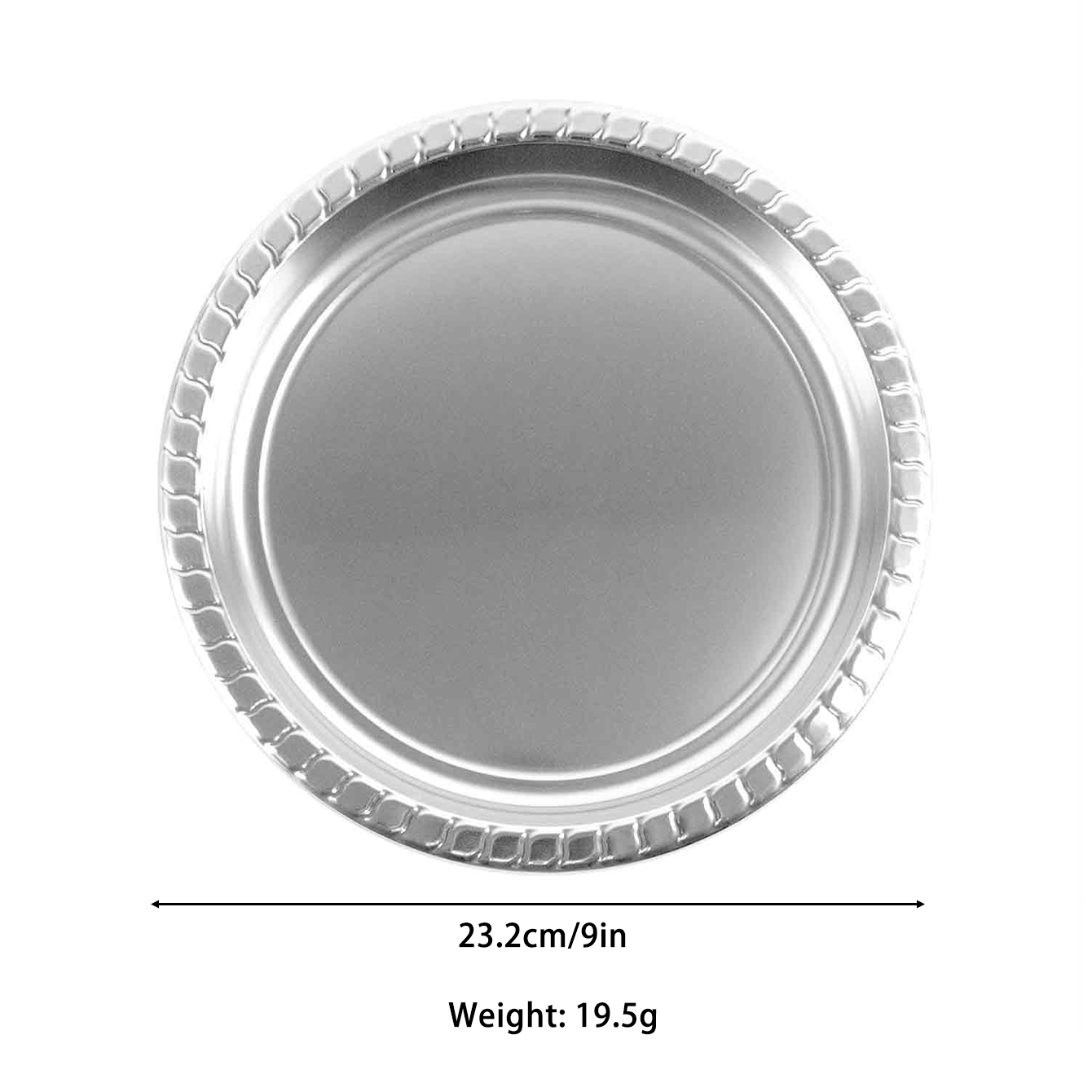
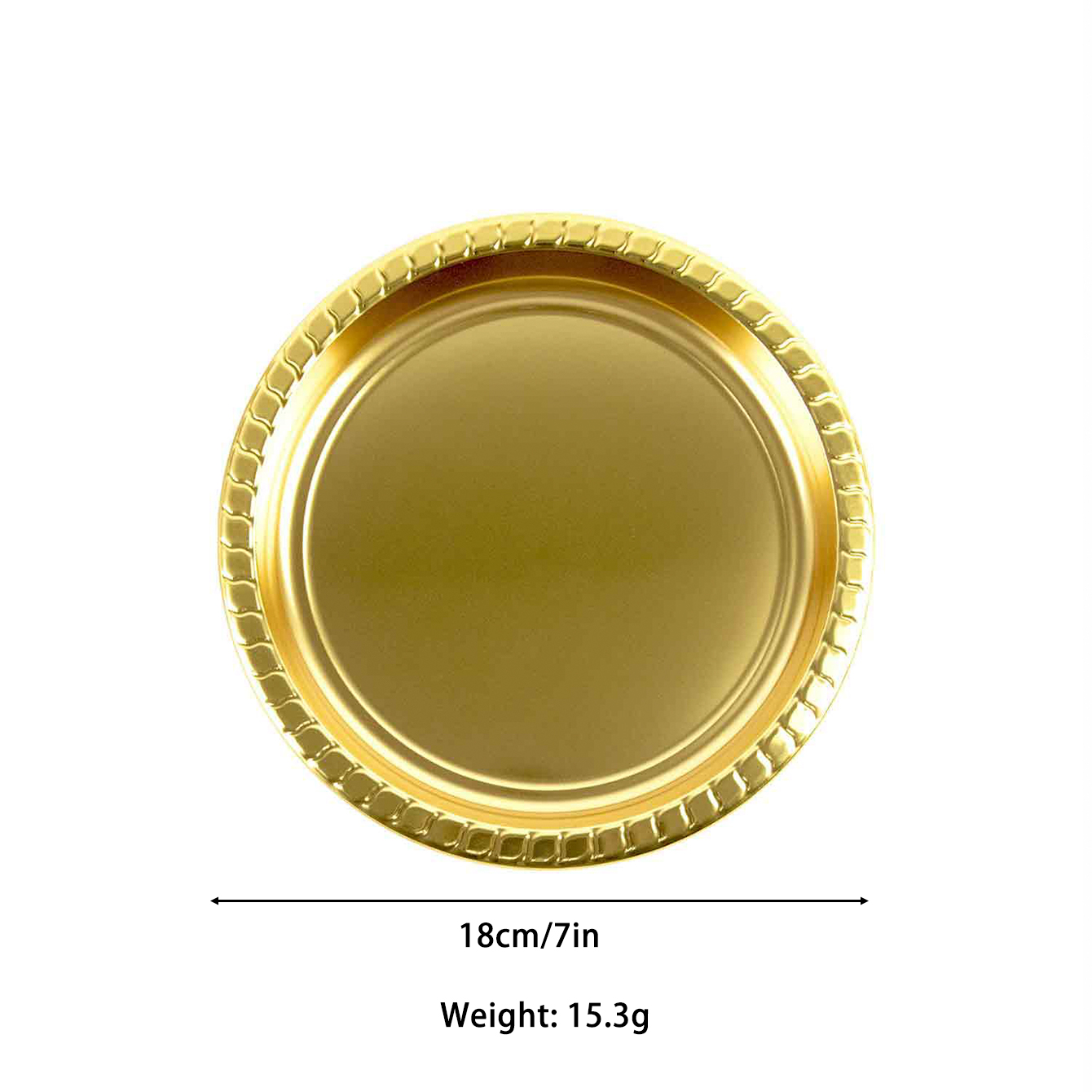
Diameter follows the course: 7 in for sides, salads and dessert; 9 in for a main; 12 in for shared plates and platters. Rim style changes capacity more than diameter does — a 9 in rimmed plate has a smaller usable well than a 9 in plain plate, so measure the flat centre before assuming the portion fits.
Grams per piece is the specification most first orders leave out. In our own range a 9 in glossy PET plate is about 19.5 g, a 9 in PS plate with a gold rim about 48.5 g, and a 12 in wide-rim plate about 75 g. Heavier is not automatically better: it changes stack height, freight and how the plate behaves under a hot, wet portion. Clear and glossy reads catered; PS gives the rigidity and rim finish a plated main wants but is a cold and warm-service material, not a hot-fill or microwave one. Bowls are bought by capacity rather than diameter. See the plates and bowls size guide, the grams-per-piece guide and the plastic plates range.
7. Table covers for the dining room and the patio
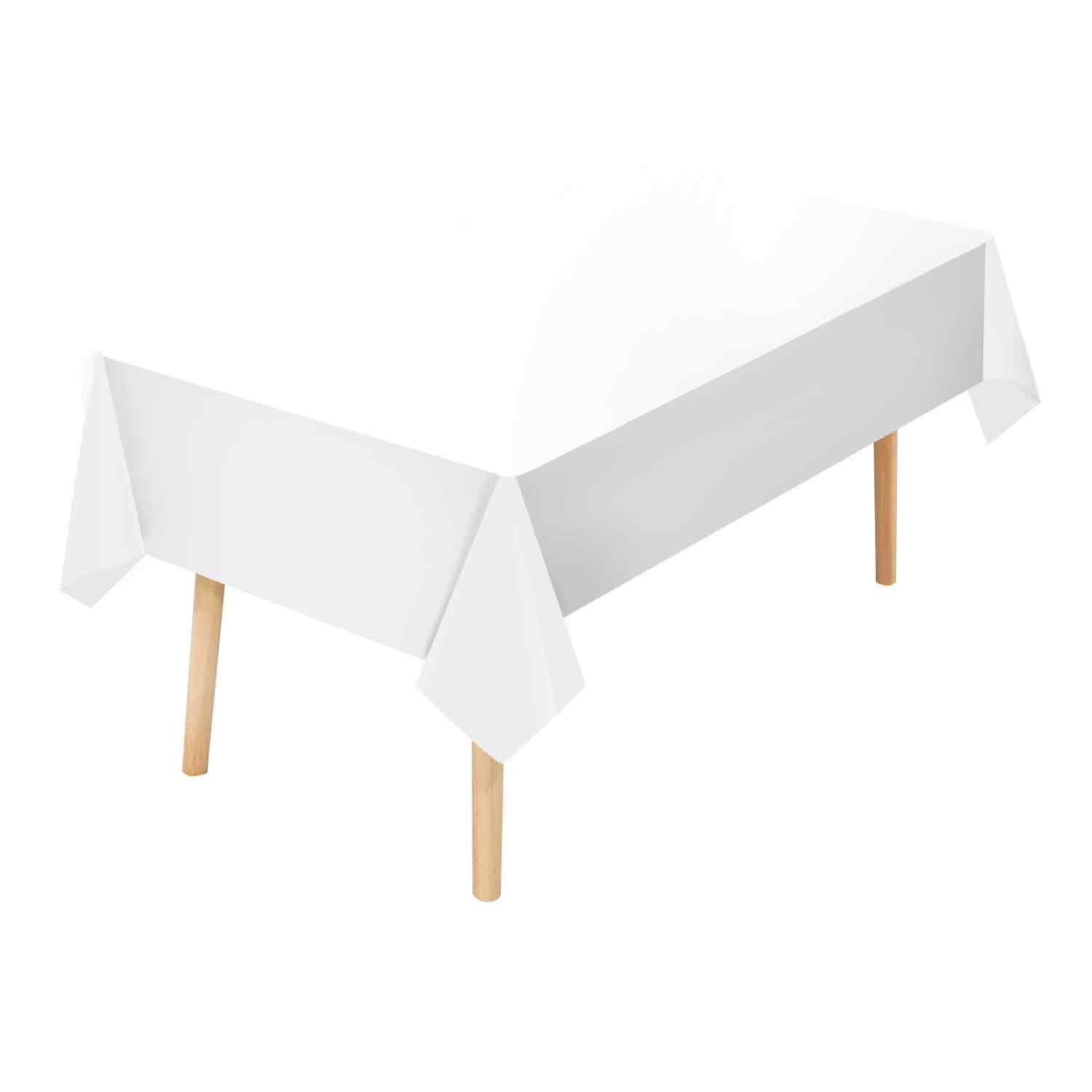
Two questions decide the table cover: table size and how many turns the table does in a shift. A 54×108 in pre-cut cover handles a 6 ft or 8 ft folding table with a proper drop at both ends; for long communal tables and patio runs, rolls let you cut to length instead of overlapping two covers and taping the seam. Our rolls run 40 in and 54 in wide, so a round cover wider than 54 in is a cut part rather than a slice of roll. The trade-offs are in rolls versus pre-cut covers.
Colour is a service decision as much as a design one. Black hides wine, coffee and sauce between turns; white reads clean but shows every drip. Covers are in the tablecloth category.
8. Case packs, storage and the reorder worksheet
Once items and sizes are fixed, convert weekly usage into cases and check the master carton against the shelf before ordering a pallet. Set a par level in weeks of cover: usage during the lead time plus a buffer for the week you did not plan for. Split the first order 80/20 — four-fifths core items in proven sizes, one-fifth a test of a print, a colour or a larger plate — so a wrong guess costs one case, not a pallet.
| Item | Menu use | Size / spec | Weekly usage | Case pack | Par level |
|---|---|---|---|---|---|
| Cold cup | Iced drinks | 12 oz, rim + lid code | |||
| Hot cup | Espresso, tea | 9 oz, gold trim | |||
| Plate | Mains | 9 in, grams per piece | |||
| Container | Takeaway | 32 oz, 11.7 cm footprint | |||
| Napkin | Table service | 6.5×6.5 in, 2-ply |
Finally, ask for the food-contact declaration by resin and keep it with the specification sheet: polypropylene and polyethylene under 21 CFR 177.1520, polystyrene under 21 CFR 177.1640, and colourants under 21 CFR 178.3297.
Runxiang has made disposable tableware for twenty years, from film and print through to plates, cups and cutlery. Send your menu, covers per day and table sizes, and we will map them to sizes, case packs and a reorder level that fits your shelf. Prints, colours and private-label packing are available as OEM/ODM work; the process is in our OEM/ODM guide.