
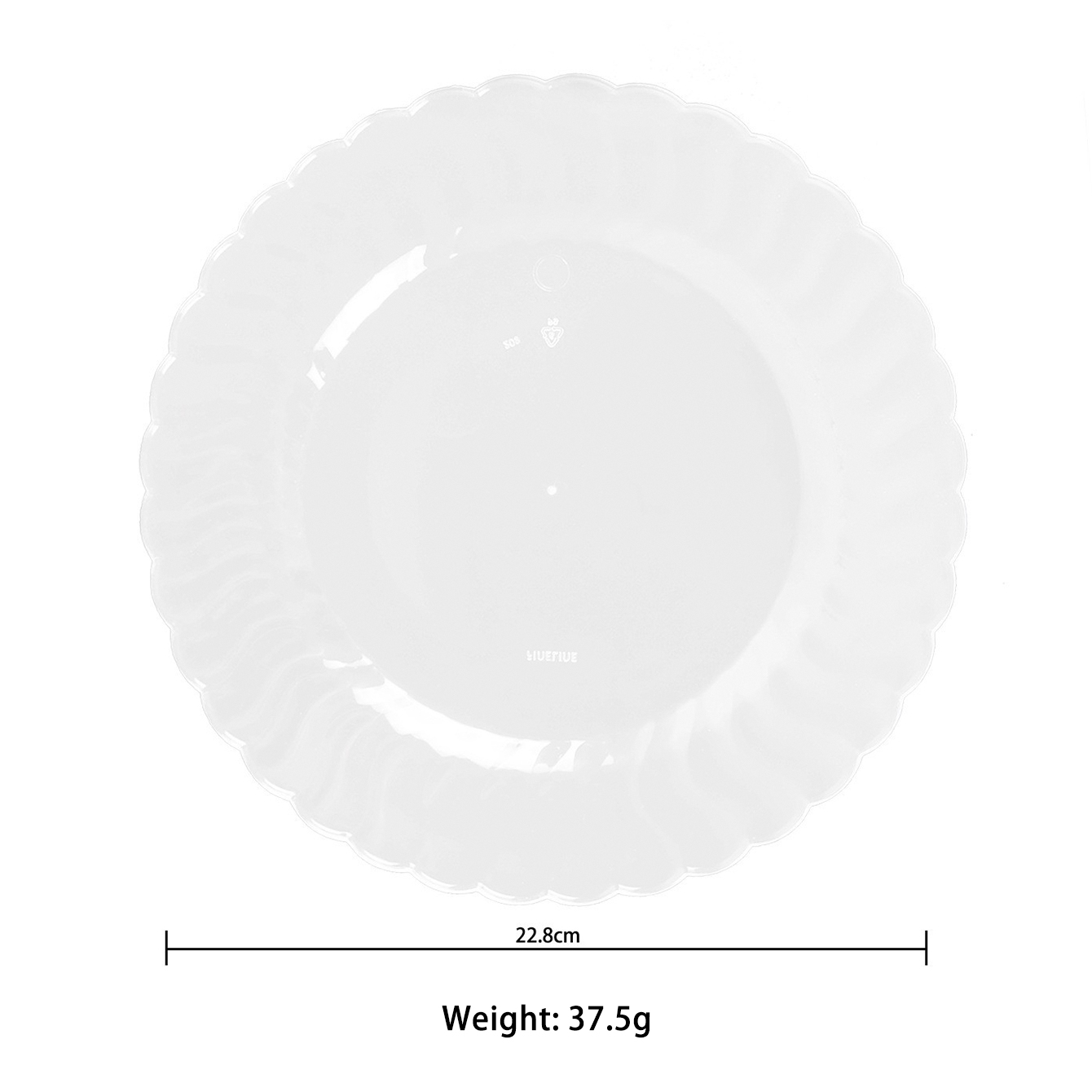
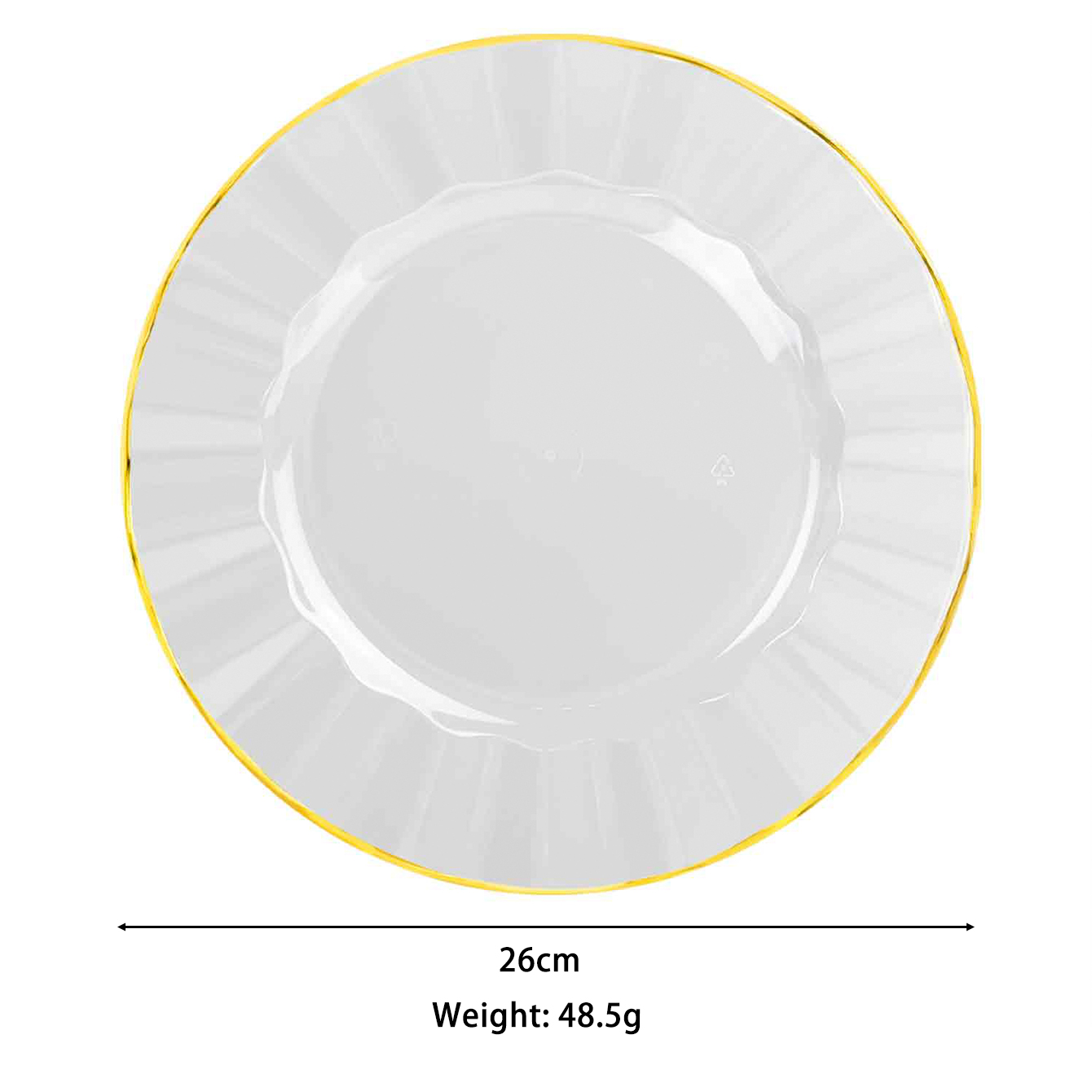
A buyer asks three factories for a “9 inch clear plastic plate” and receives a 22.8 cm plate at 37.5 g from one, a 26 cm plate at 48.5 g from another, and a third that quotes from a photograph. All three are 9 inch clear plates. The samples look right, the order goes in, and somewhere in the first pallet the plates that felt crisp on the sample table start flexing under a loaded plate of food. Clear plates sit where appearance and strength pull against each other, so the specification has to be written down rather than described.
This guide covers the clear side of our polystyrene plate range: what “clear” actually covers, how crystal PS behaves next to the white plates it is usually ordered with, which measurements decide whether two factories are quoting the same product, and what belongs on the spec sheet.
What a buyer means by “clear plastic plate”
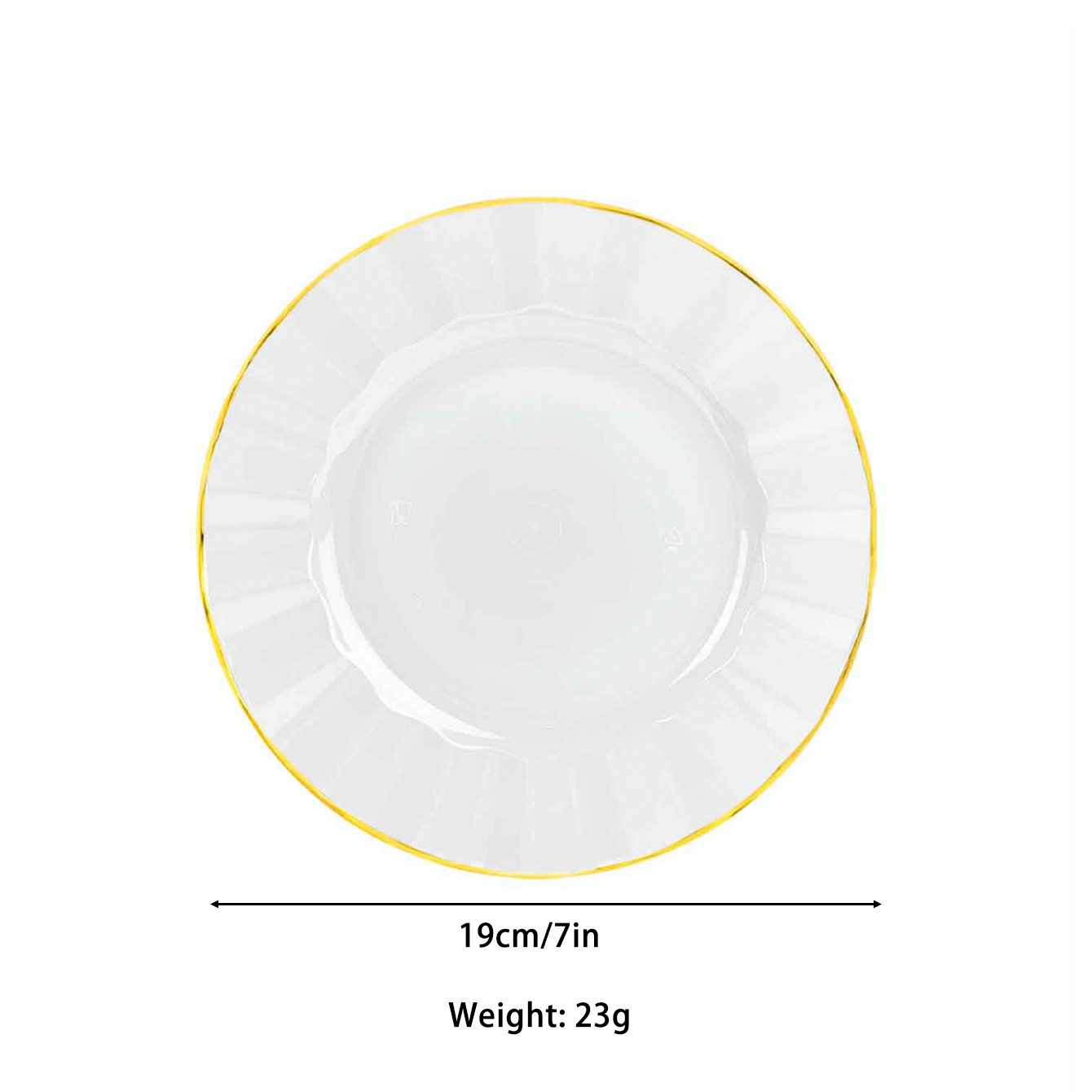
Three products are sold under that phrase and they are not interchangeable. First, crystal clear rigid plates moulded from general-purpose polystyrene: transparent, glassy, faintly hazy where the wall thins at the rim. Second, translucent plates, the same resin with a light texture or frosted finish that hides scuffs and reads as ice on a dessert table. Third, clear plates finished with a metallic band around the edge.
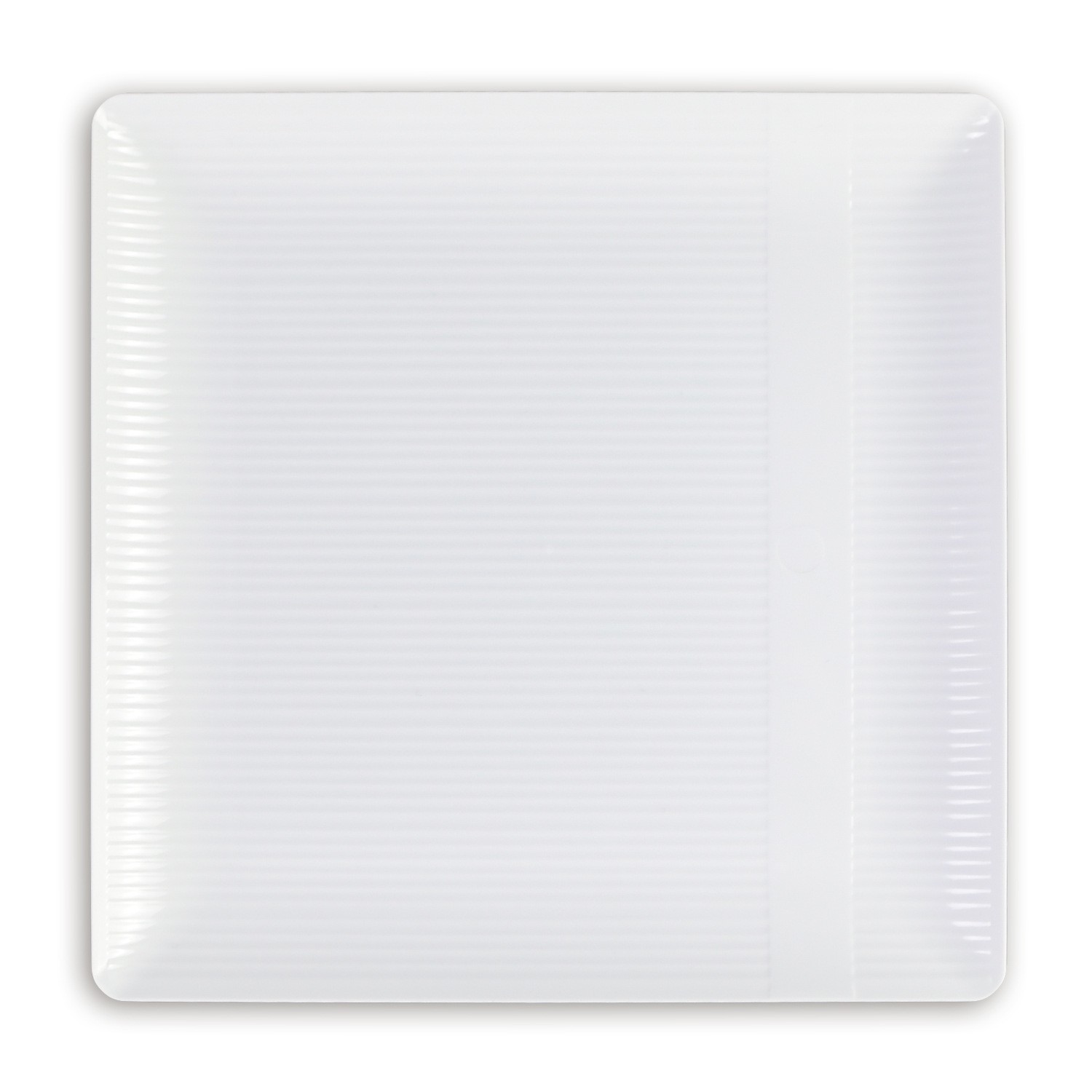
Our clear line covers all three in injection-moulded PS: the clear party plate at 22.8 cm with a scalloped rim, the 7 inch clear and gold plate, the 9 inch clear and gold plate, and the square party plate in 16, 19 and 23 cm. They share the resin family; mould, rim geometry and weight are what separate them, and those are where orders go wrong.
Crystal PS versus high-impact PS: what clarity costs
Polystyrene is sold in two forms that behave differently. General-purpose polystyrene, called crystal or GPPS, is transparent and rigid and is the grade behind every genuinely clear plate. High-impact polystyrene, HIPS, has rubber added to the polymer: opaque, tougher, far more forgiving when a plate is dropped or overloaded, but it cannot be made clear. The chemistry is summarised on the polystyrene reference page, and our PP versus PS versus PET comparison covers the three families for food service.
So clarity costs impact strength. A clear GPPS plate dropped edge-first onto a hard floor cracks where the same weight in white HIPS would bounce. That is the material, not a defect, and the service decides the order.
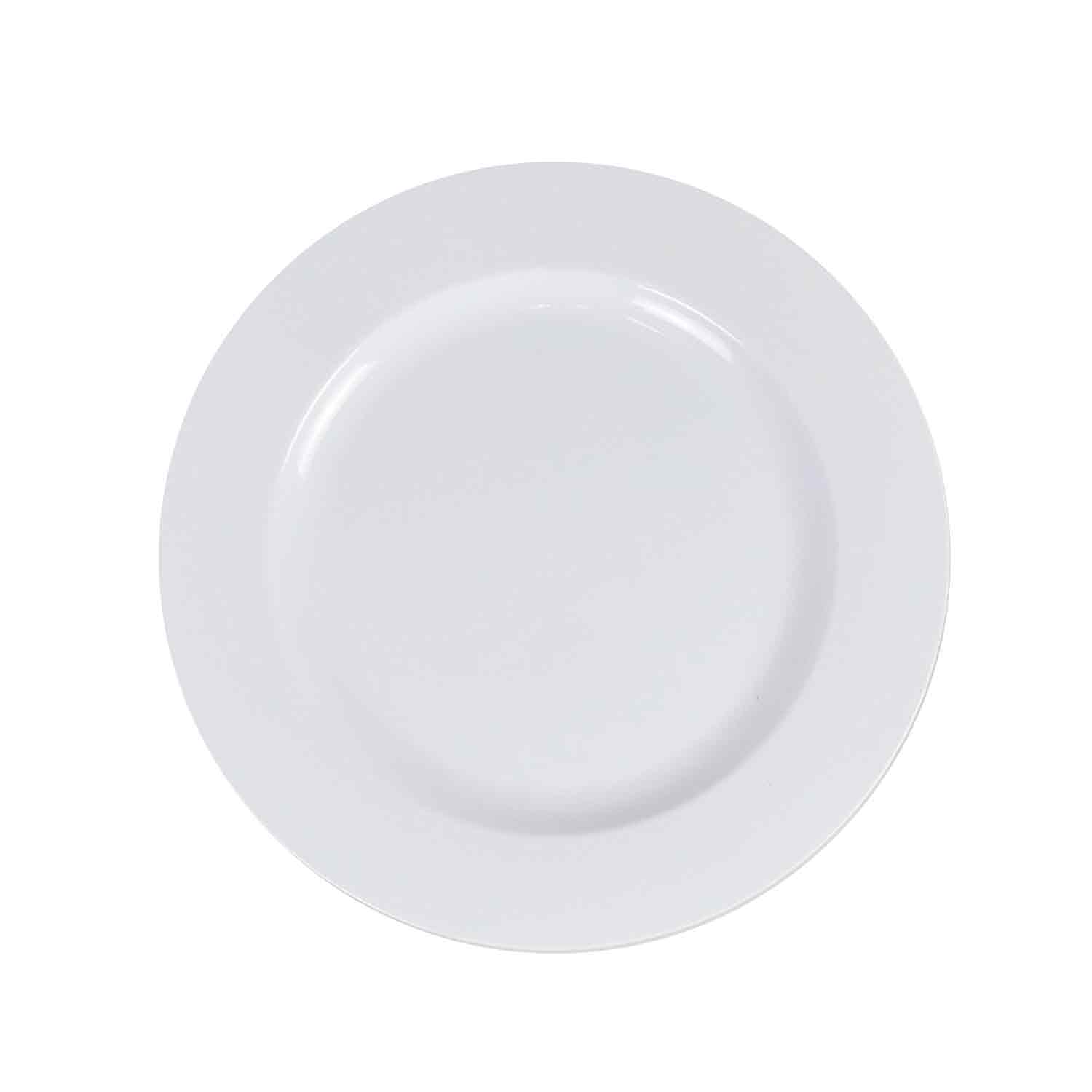
Clear plates earn their place on dessert tables, cheese boards, salads, sushi and cold buffets, anywhere the linen or the food should show through. White plates take the hot, saucy, heavy side of catering. If one order must cover both, split the sizes — 22.8 cm clear for cold courses, 23 cm white for hot — and keep the rim profile consistent. The white dinner plate is the direct counterpart to the clear 9 inch.
Measure in centimetres and grams, not inches
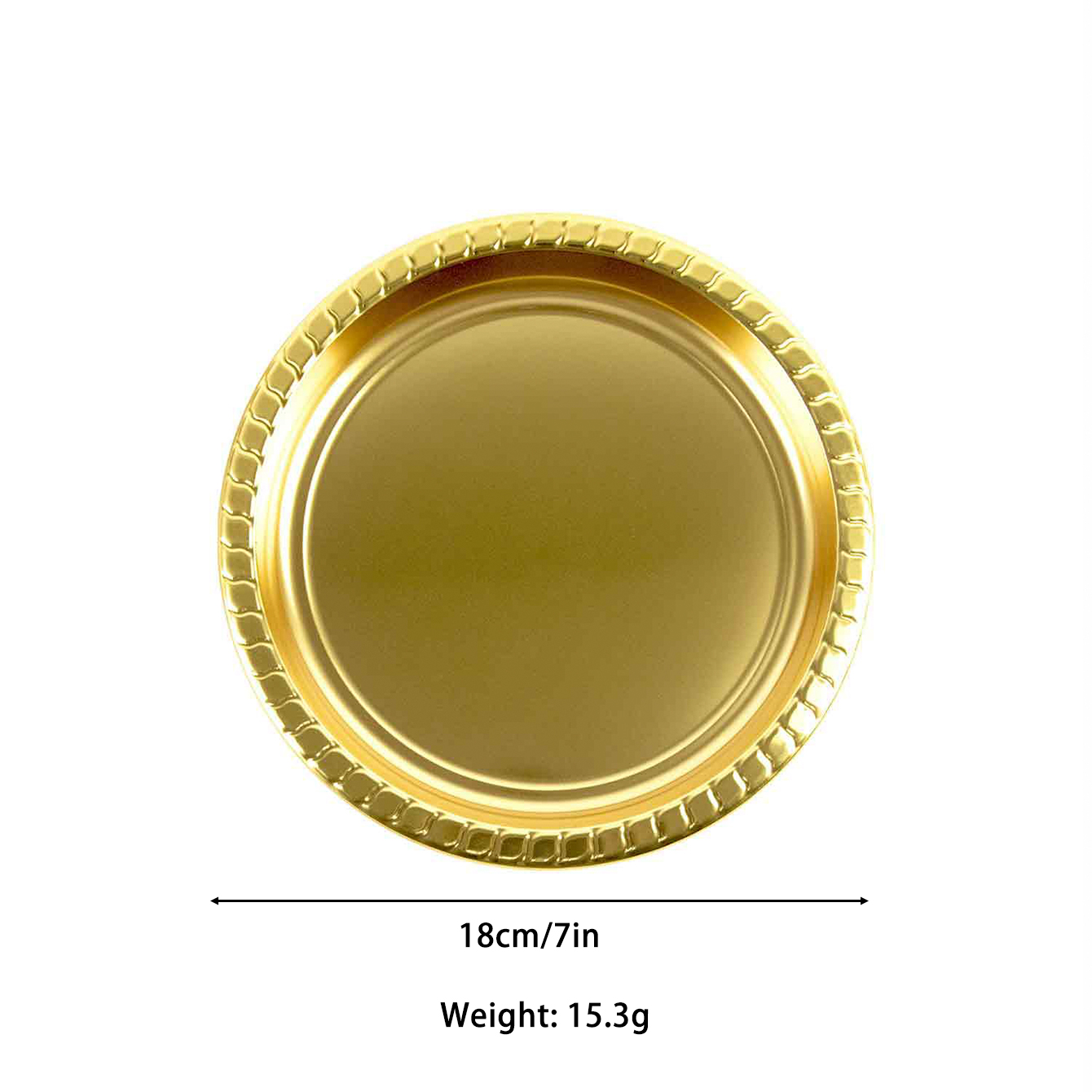
The inch on a plate is a trade name, as it is on a cup. Our range shows the gap: the scalloped clear plate sold as 9 inch measures 22.8 cm and 37.5 g, the gold-rim plate also sold as 9 inch measures 26 cm and 48.5 g. Three centimetres and eleven grams apart, same words on the enquiry sheet. The 7 inch gold-rim plate is 19 cm, and that same 7 inch mould has been recorded at 23 g on one sheet and 25.5 g on another across revisions.
None of those numbers is wrong; they are different plates. A quotation built on inches alone can be met honestly by a plate that will not stack with the last shipment, so lock these on the spec sheet: outer diameter across the rim, well diameter, well depth, rim width, gram weight per piece, and the stack height of 25 pieces. If a supplier cannot give stack height, they have not measured the mould recently. Sizing by what fits on the plate, as our plate and bowl size and portion guide does, is safer, and the grams-per-piece and rim guide explains why weight predicts survival better than diameter.
Rim design is where the strength is built
A plate is a shallow shell and almost all of its stiffness comes from the rim. The scalloped edge on the 22.8 cm clear plate is a series of folds; each fold acts as a small rib and stops the plate flexing when carried one-handed. The fluted sunburst rim on the clear and gold plates does the same work while catching light differently, which is why it reads as glass across a table.
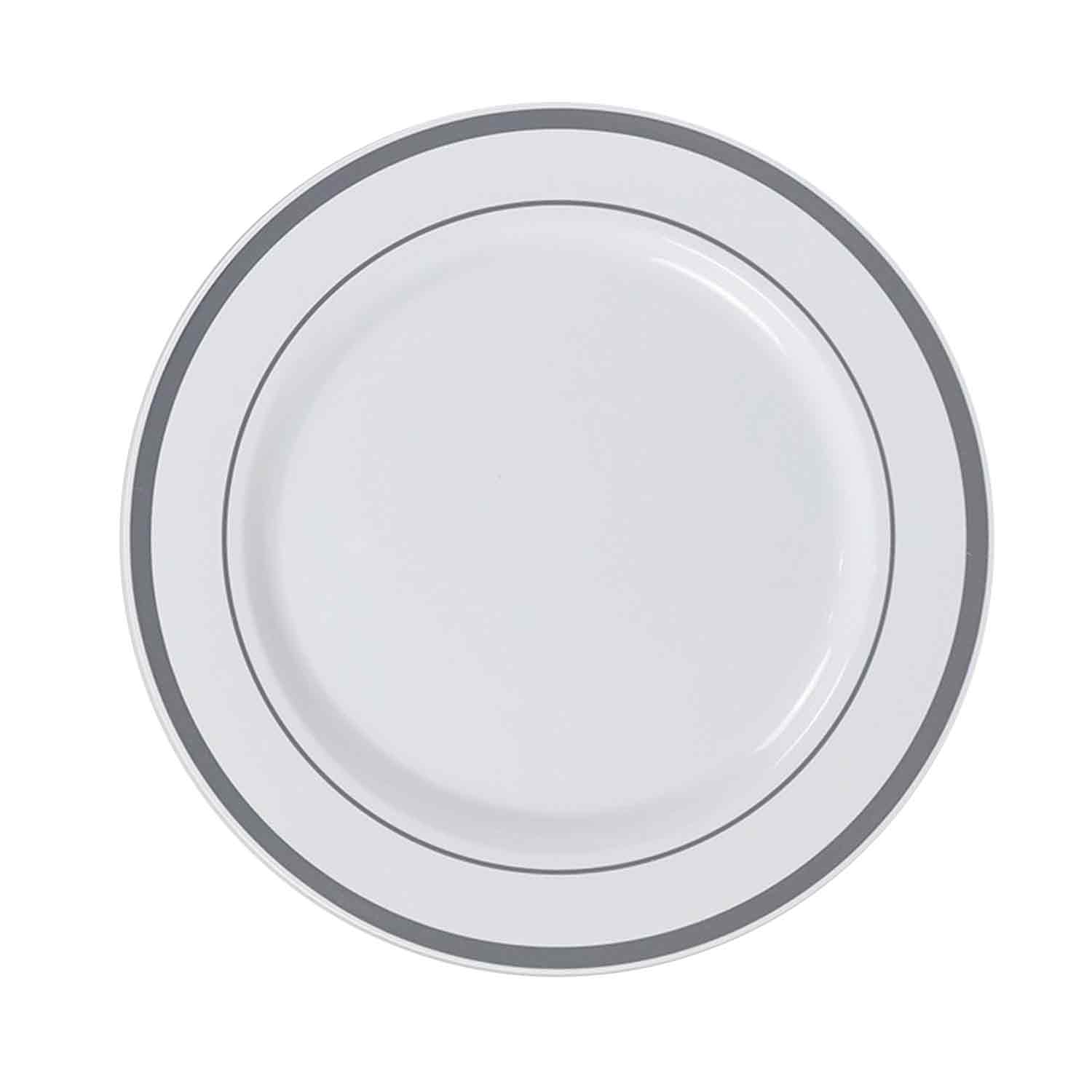
The gold rim is a finishing step, not a strength feature. It is applied to the rim edge, scuffs first in a badly handled carton, and carries most of the price difference over a plain clear plate. Two rules come with it: keep rimmed plates out of dishwashers and hot holding cabinets, and hand them out of the carton rather than sliding them from a stack, since abrasion shows first at the contact ring. For a cooler tone the same plate is moulded with a silver rim, as in the white and silver plate set.
Heat, food contact and where polystyrene stops
Polystyrene is a cold and warm service material: it holds shape through a buffet line and holds chilled food indefinitely, then distorts once past its softening range, with the glass transition near 100 °C and moulded plates losing shape earlier under load. That rules out microwaves, ovens, bain-maries and commercial dishwashers, where 60-70 °C water plus detergent warps a stack. Hot soup, gravy and roasting juices belong in PP.
On compliance, clear plates are treated exactly like white ones. In the US the resin is covered by 21 CFR 177.1640 for polystyrene and rubber-modified polystyrene in food contact; in the EU the framework is Regulation (EU) No 10/2011, with an overall migration limit of 10 mg/dm². The plate carries resin identification code 6. Ask for the declaration of compliance and the migration report with the sample, not after the order.
Stacking, cartons, and the air you pay for
Disposable plates are mostly air, and freight is billed on air. A 26 cm plate with a deep rim nests taller than a 22.8 cm plate with a shallow one, so the same pieces fill a bigger carton and fewer cartons fit a pallet. On a container order that moves landed cost per piece more than a small change in unit price, which is why stack height belongs in the enquiry, not the follow-up email.
Ask for carton dimensions, pieces per carton, cartons per pallet and the loading pattern for the container you intend to book, then check the arithmetic against box volume. On mixed orders, confirm whether the factory will mix sizes in one container, and at what ratio, before you plan around it.
An eight-field checklist before the first production run
1. Sample from the production mould, not from a polished presentation sample. 2. Signed spec sheet: outer diameter in cm, gram weight, well diameter and depth, rim width, stack height of 25 pieces. 3. Clarity level written down: crystal, light texture or frosted. 4. Rim finish and metallic colour, with a physical reference plate held by both sides. 5. Drop and overload test agreed and recorded. 6. Rim warpage checked at three points after a stack sits under load. 7. Food-contact documents: declaration of compliance, migration report, resin grade. 8. Packing: sleeve or shrink count, carton printing, shipping marks. 9. For retail, the sleeve artwork and barcode position.
Building a set that looks like one order
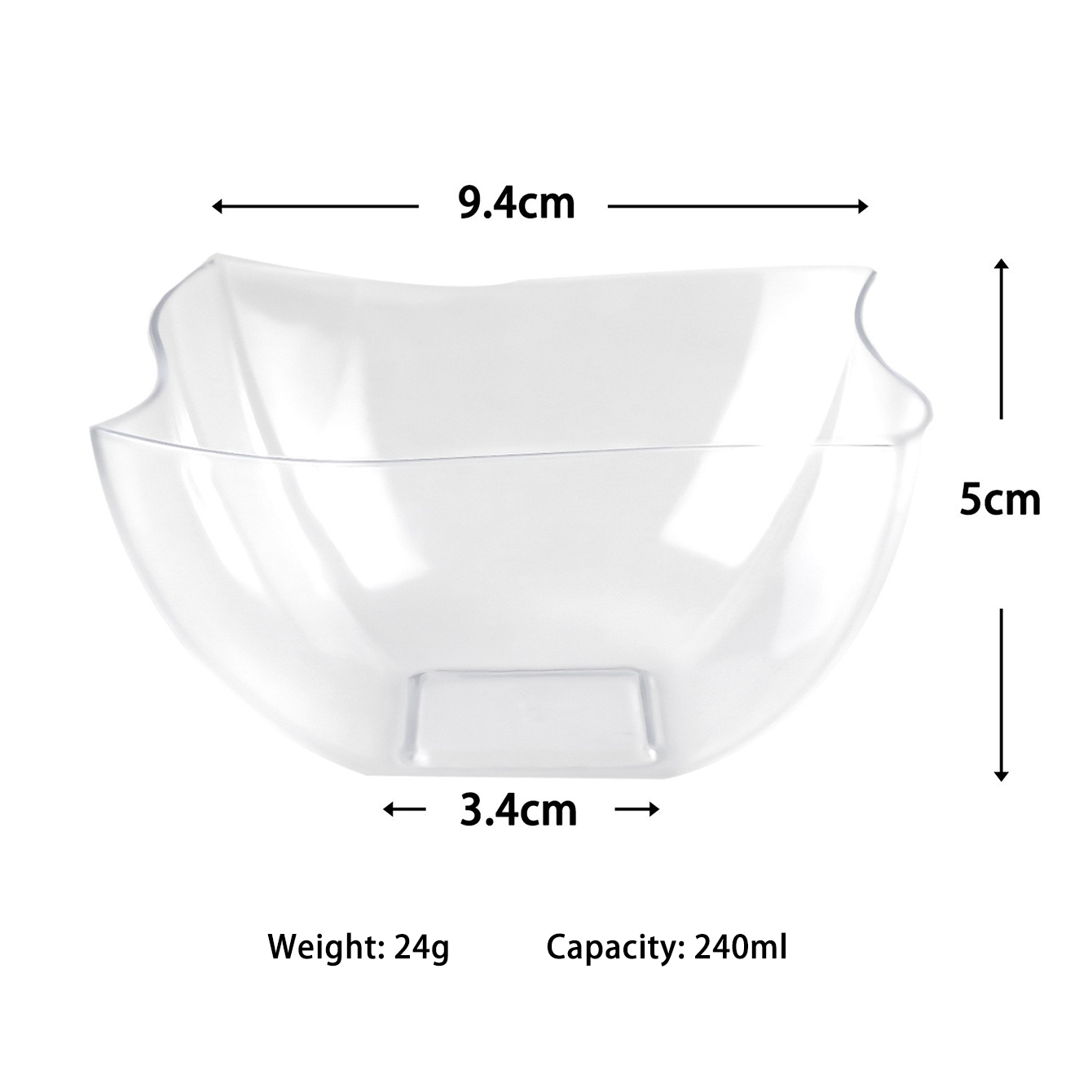
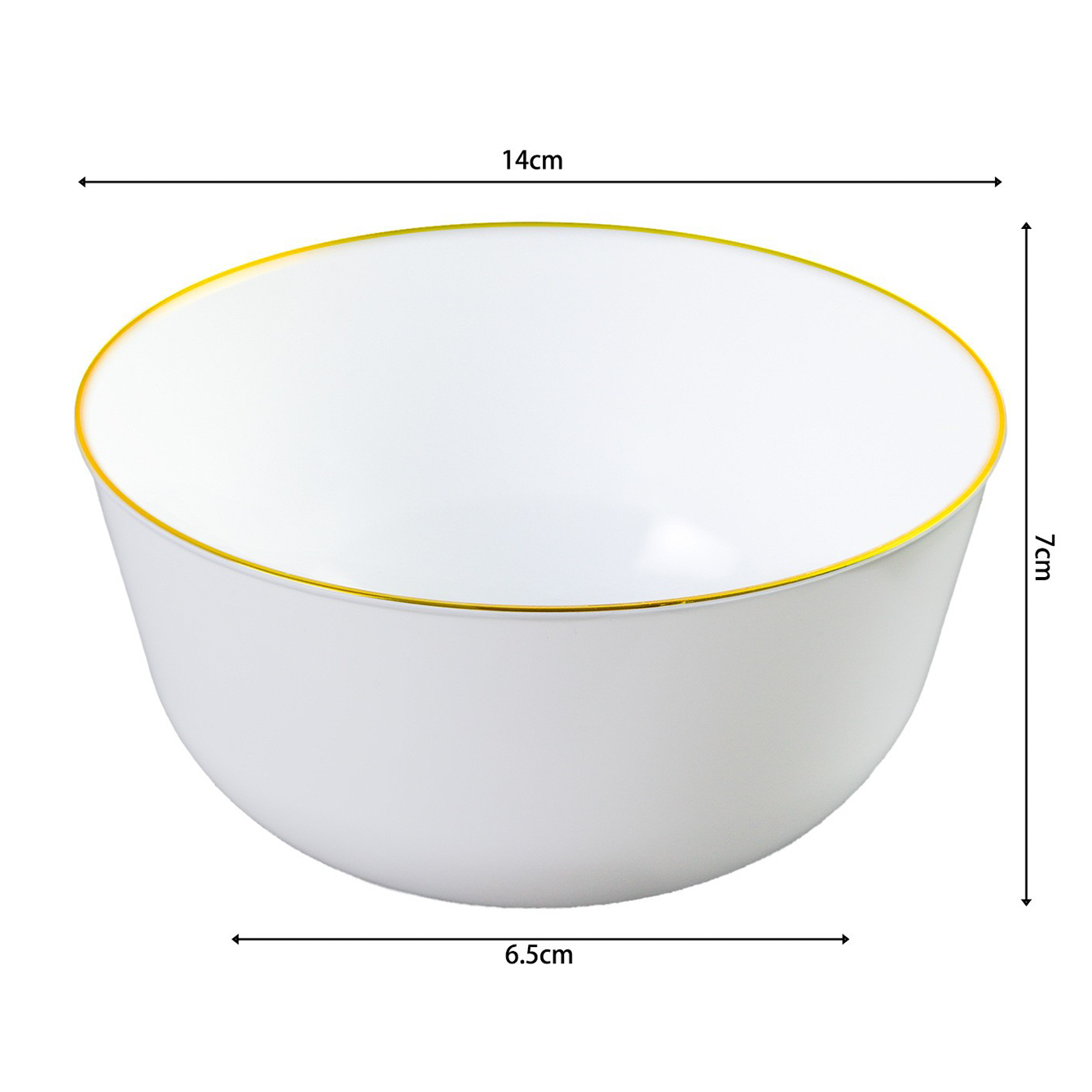
Clear plates rarely ship alone: a dessert table needs a plate, a bowl and a cup that read as one family, and the fastest way to guarantee that is one factory. The 8 oz clear serving bowl shares the clear resin of the plates, the 24 oz gold rim bowl carries the same gold, cups are matched on rim diameter in our cups and lids fitment guide and cutlery on grade in the bulk cutlery guide. Where the set sits on cloth, the plastic tablecloth range is made in the same plant, so cloth, plate and bowl can be approved in one round of samples.
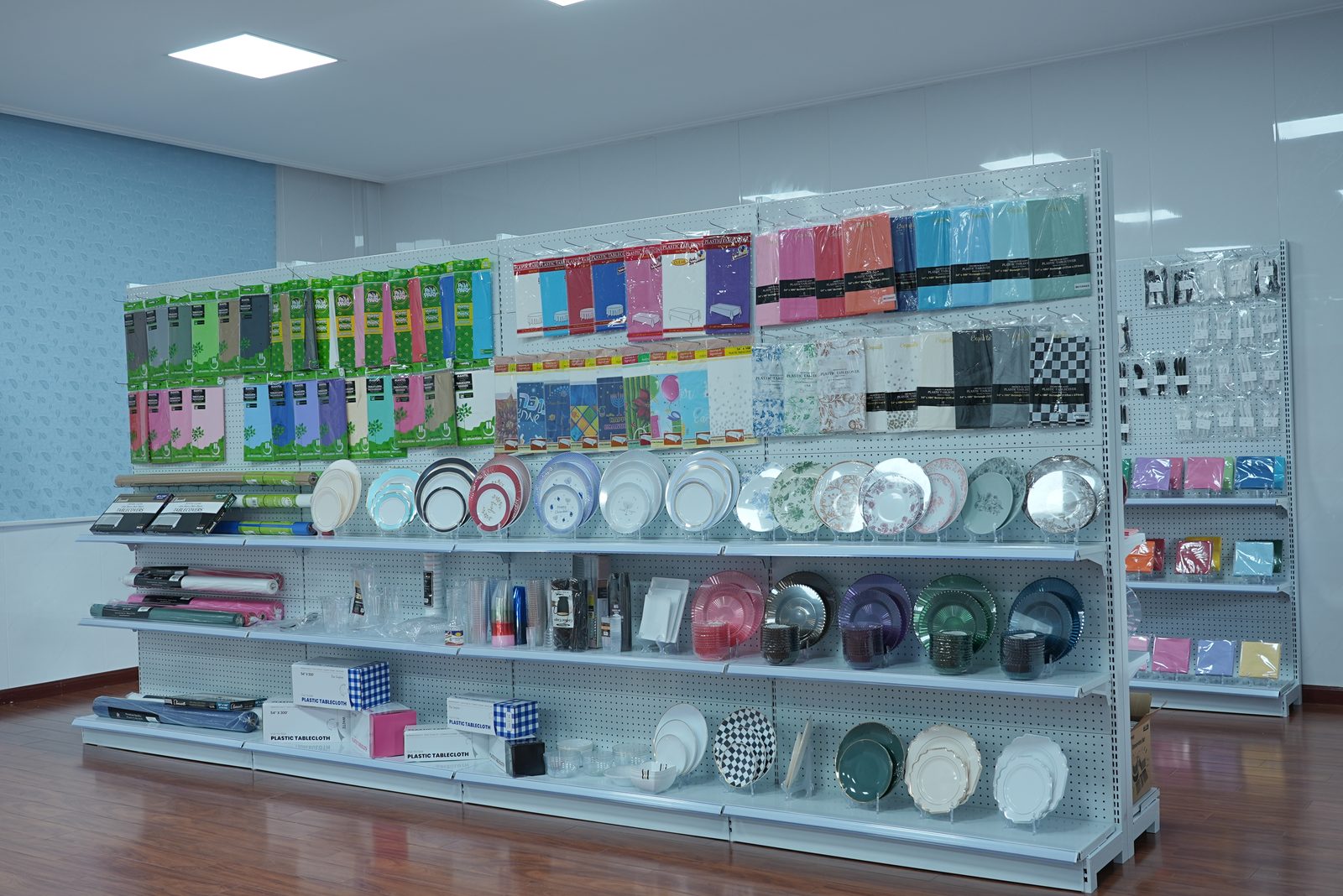
Runxiang has been moulding disposable tableware and printing tablecloths in Changzhou for more than twenty years, and the clear plate line rewards a conversation about moulds, grams and rim profiles rather than adjectives. Send the fields above, or a plate you already buy with its measurements, and we will come back with a matched specification and a sample from the mould that will run your order.
Next step. Send your plate spec, target market and annual volume through our contact page, and see how each line of a tableware quotation is built in how we quote. Related reading: the full plastic plate range and the 7 and 9 inch plate set guide.