
A “party cup” order usually starts with a colour story and ends with a complaint: the shade is right, then the lids do not fit, or the gold rim will not survive a warm kitchen, or the 9 oz cup holds 270 ml when the plan assumed a full pour plus ice. None of that is about colour. It is about which build sits behind the word “cup”.
Four builds hide behind the words “party cup”
Catalogues and RFQs all say “plastic party cup”, but the moulds behind the phrase are different products with different resins, wall sections and decoration routes. A disposable cup is not one object, and the trade names hide it:
| Family | Nominal size | Measured capacity | Unit weight | Resin | Typical use |
|---|---|---|---|---|---|
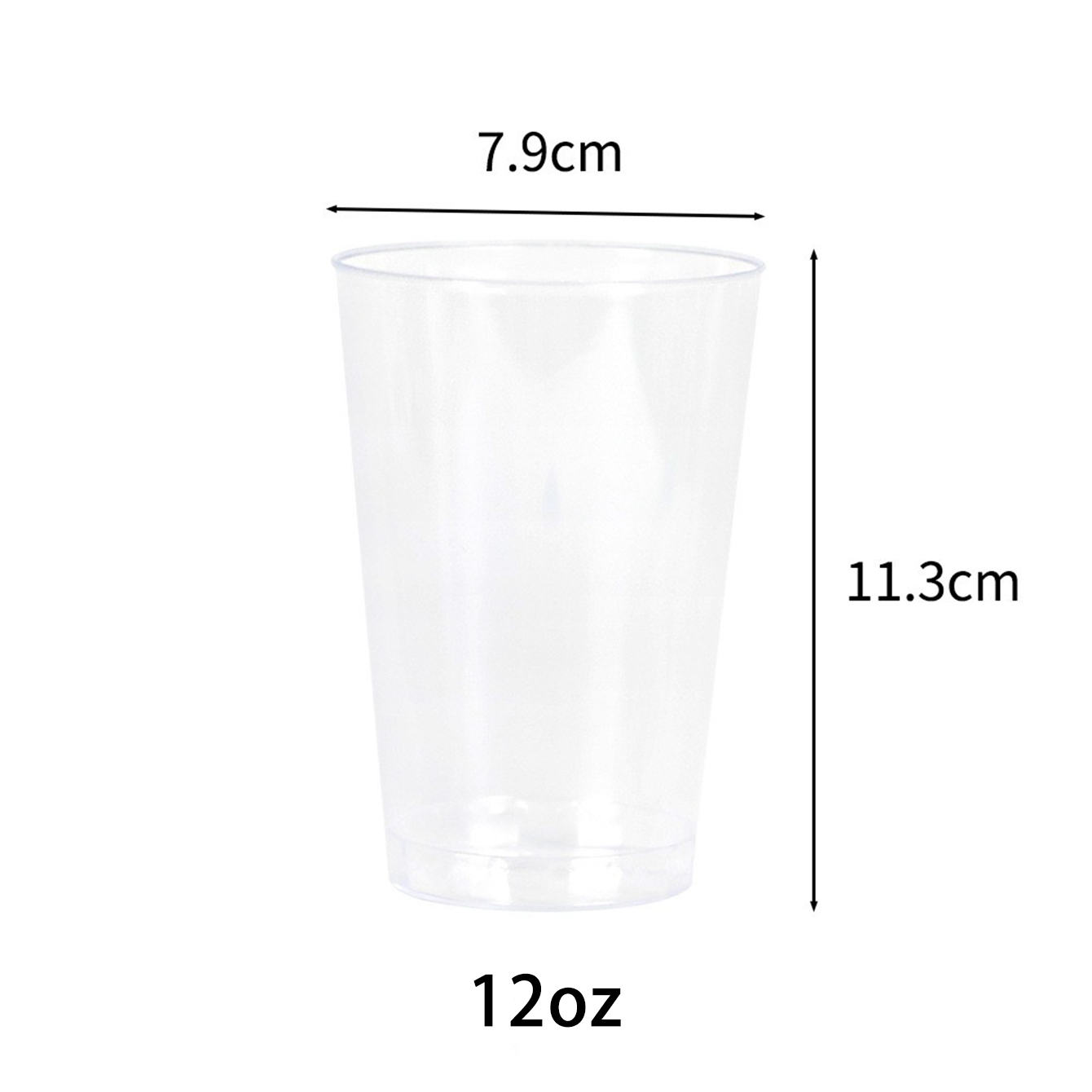
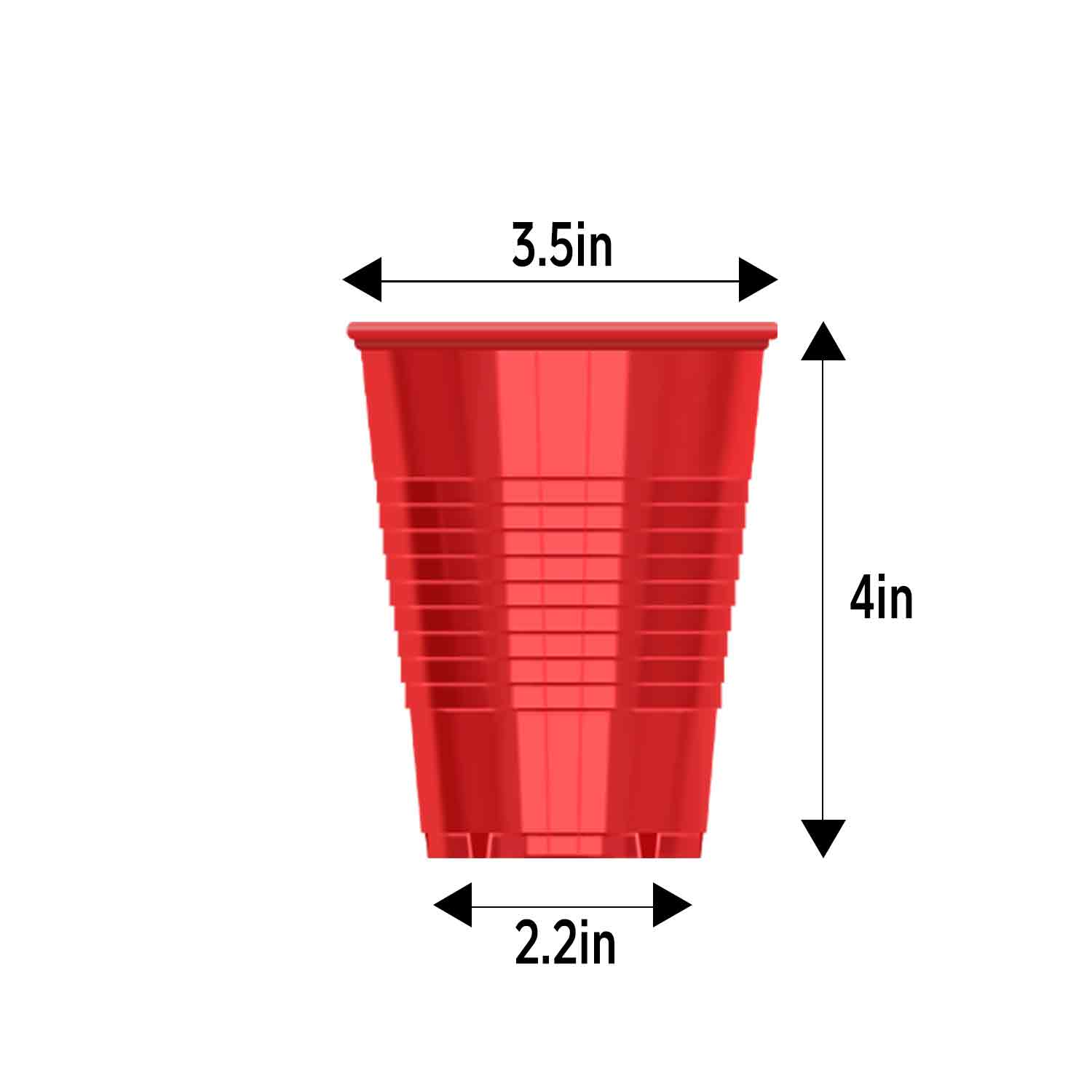
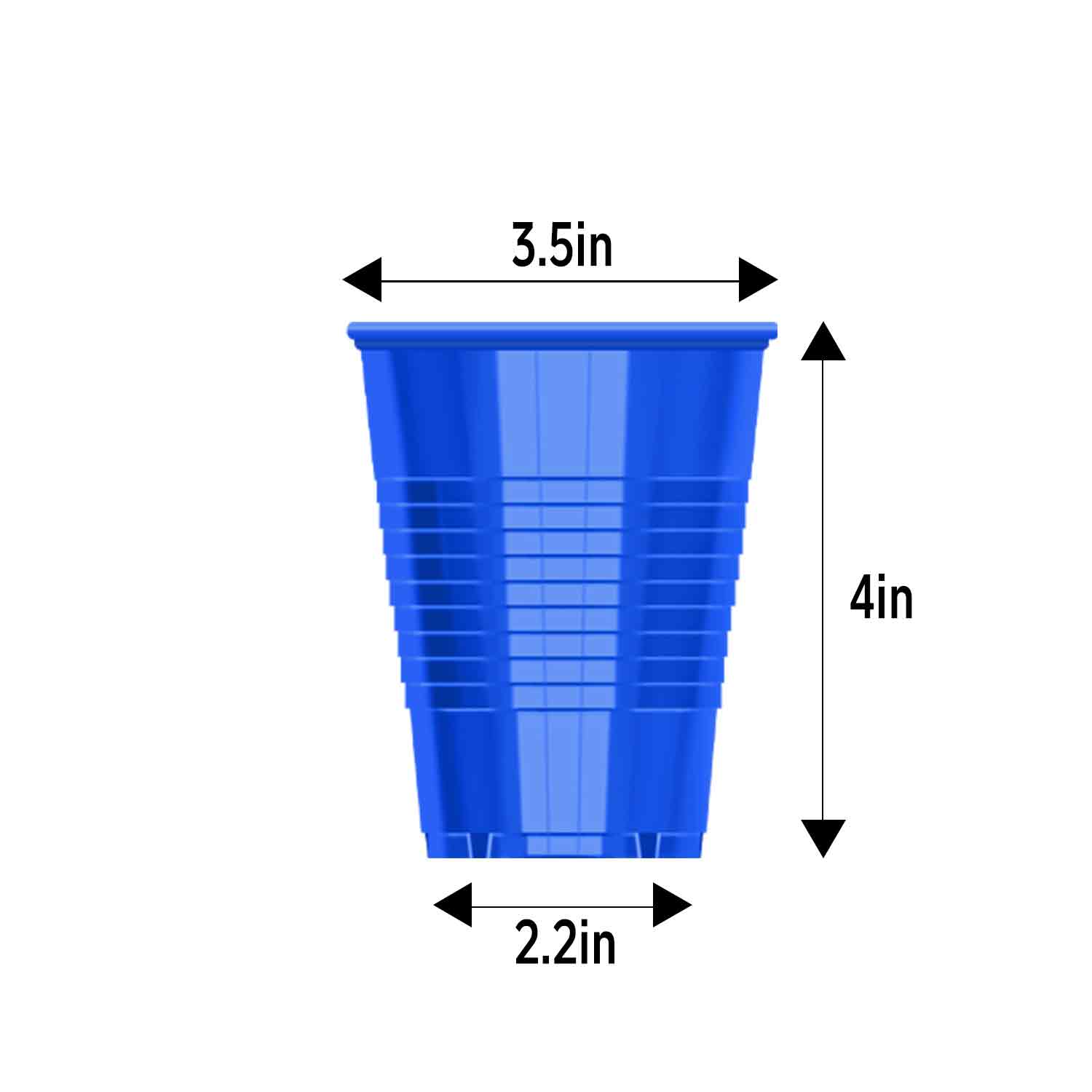
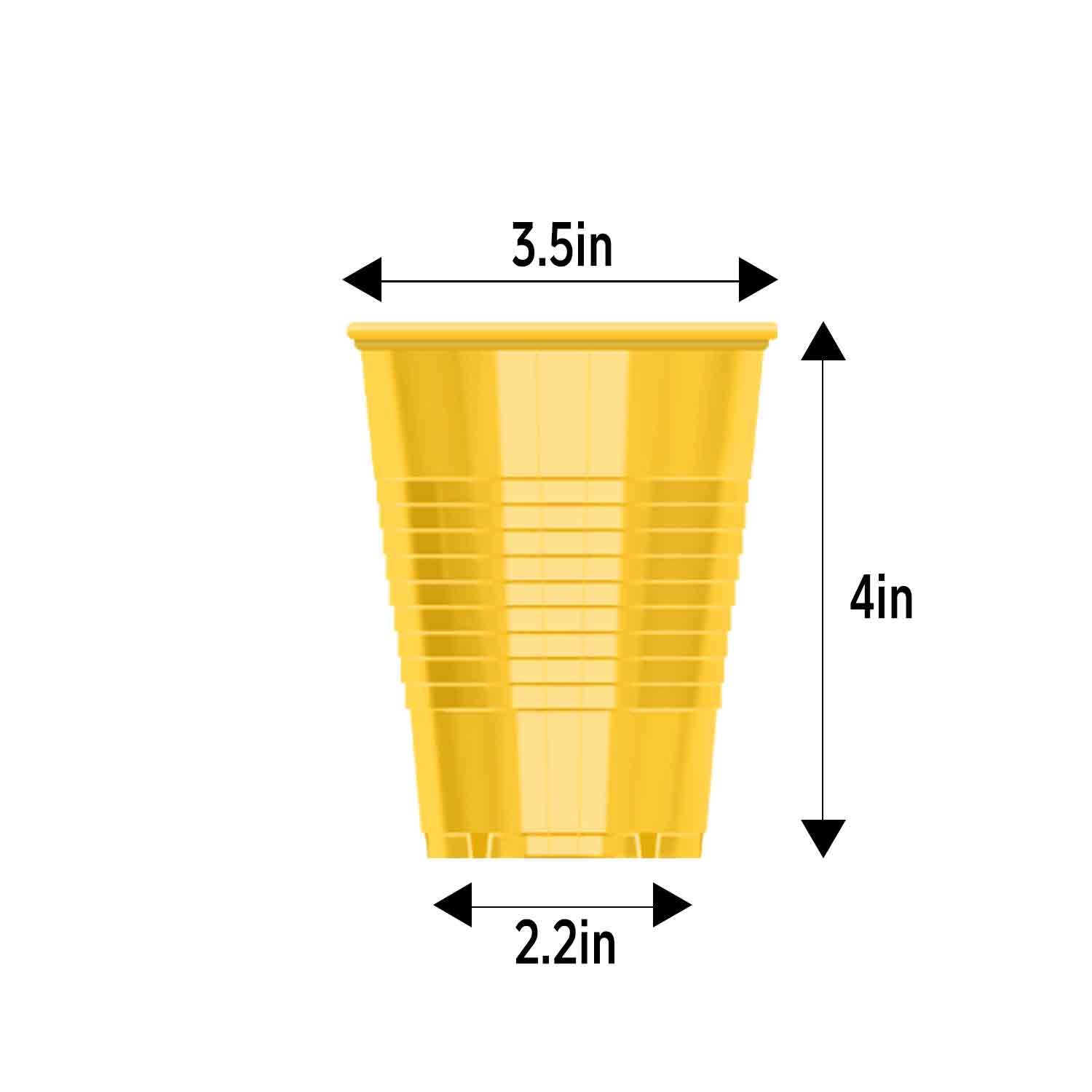
| Plain coloured stadium cup | 12 oz trade size | 360 ml | 7 g | PP | Colour-led service, games, giveaways |
| Clear coloured cup | 9 oz | 270 ml | 10.2 g | PS | Bar service, colour-coded drinks |
| Glitter cup | 9 oz / 10 oz | 270 / 300 ml | 11.5 g | PS | Dessert tables, toasts, photo-led events |
| Metallic-rim cup | 10 oz | 300 ml | ≈11.5 g | PS | Wine and soft drinks on gold or silver themes |
| Clear straight cup | 12 oz / 16 oz | 360 / 480 ml | 16.5 / 24.4 g | PS, 0.5 mm wall | Iced drinks, beer pong, lidded service |
Two families that look identical in a shelf photo can differ by 9 g of resin and 120 ml of capacity. Compare the row, not the photo.
The ounce on the carton is a trade size, not a fill line
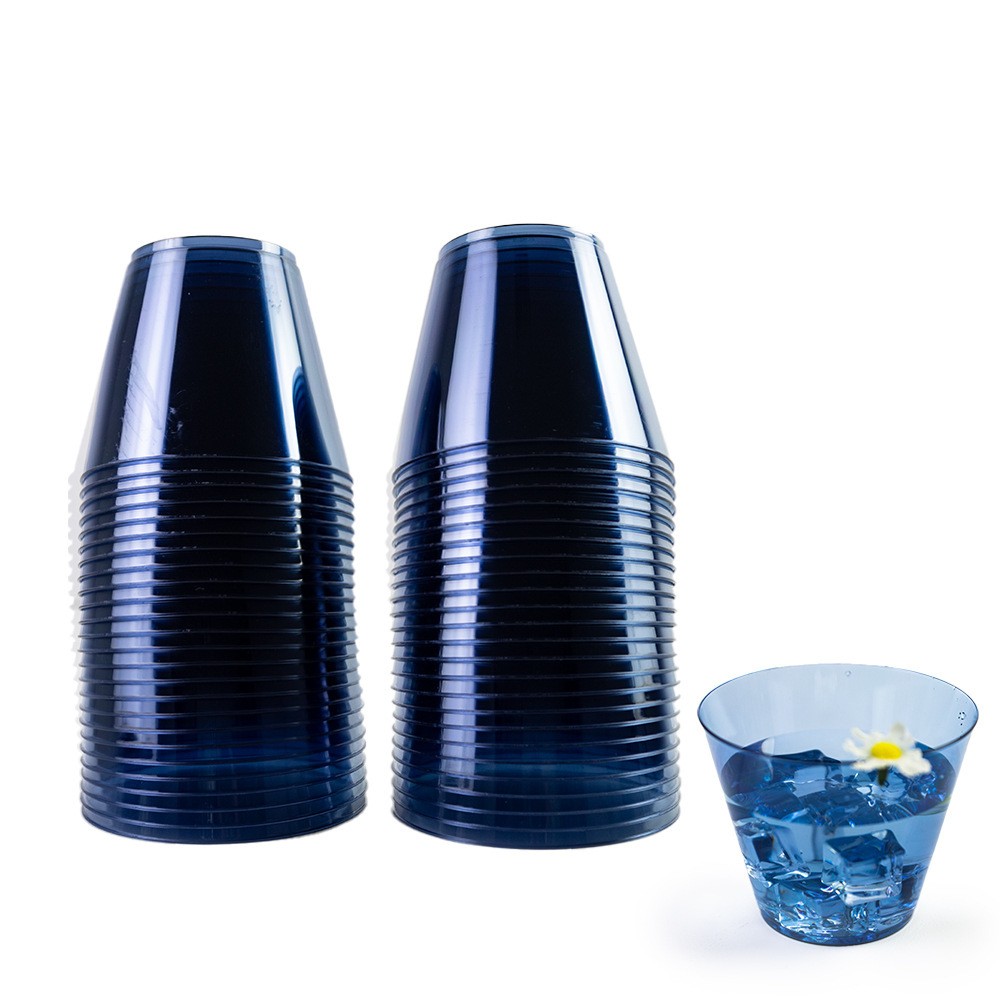
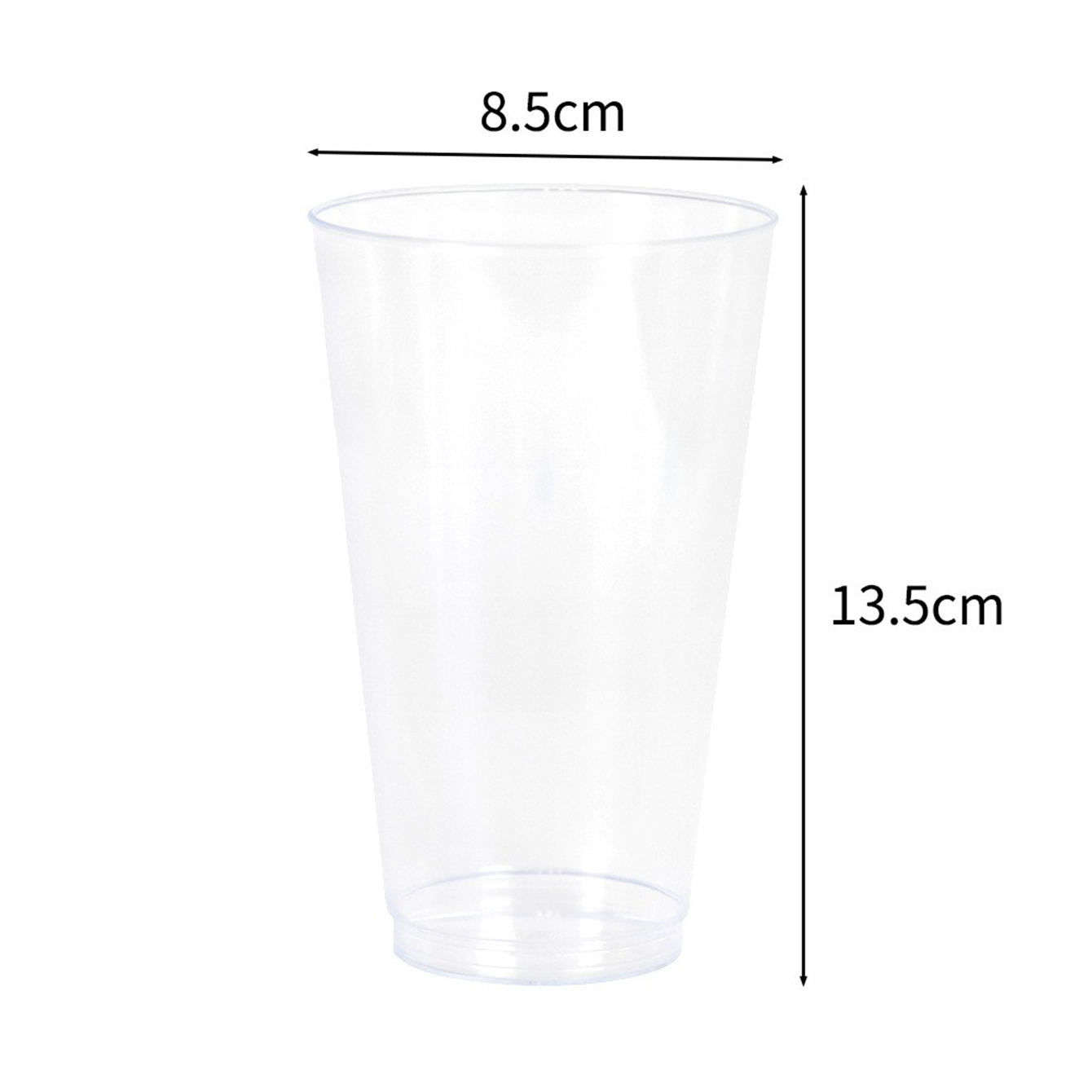
Every cup above measures slightly more than the straight imperial conversion: 9 oz holds 270 ml, 10 oz holds 300 ml, 12 oz holds 360 ml, 16 oz holds 480 ml. The gap is headspace, because a cup that reaches its brim at the nominal figure spills the moment a guest walks across the room with it.
Two consequences. Quote in millilitres as well as ounces: a bar operator budgeting a 300 ml pour plus ice is buying a 16 oz cup. And a private-label pack printed “16 oz” needs the 480 ml mould inside — switching to the 360 ml stadium cup to save resin turns the pack into a return.
PS or PP: the resin decides what the cup survives
Our clear, glitter and metallic-rim cups are injection-moulded polystyrene: glass-like clarity, and enough stiffness that a 16 oz cup holds 480 ml on a 0.5 mm wall without going soft. It does not forgive rough handling — squeeze a thin PS cup and it craze-cracks along the wall — and heat is its other limit; our PS dessert cups are rated to 60 °C, the right order of magnitude for the family.
The coloured stadium cup is the exception: PP, 7 g at 360 ml, opaque and almost impossible to split by hand. It also feels cheaper than a PS cup of similar size, and it is: at 7 g against 16.5 g for the 12 oz PS cup you are buying a different object, not a discount on the same one.
Neither resin is a hot-drink cup. A 9 oz coffee cup with gold or silver trim is a separate mould with a different wall and rim, so if the brief includes coffee or mulled wine, say so at RFQ stage instead of discovering it at the sample table. For the wider material comparison see our PP vs PS vs PET dinnerware guide.
Glitter and metallic rims are decoration, not a specification
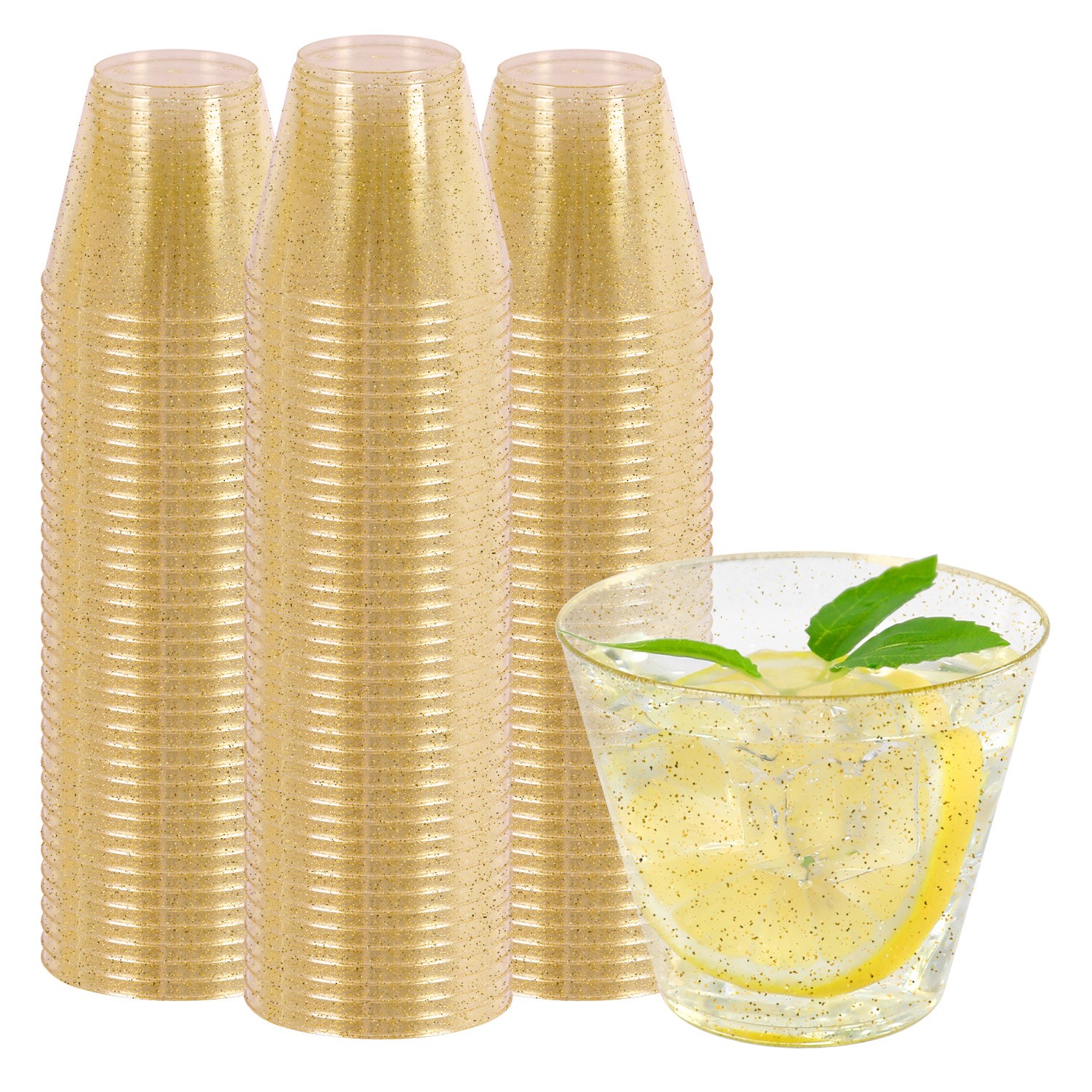
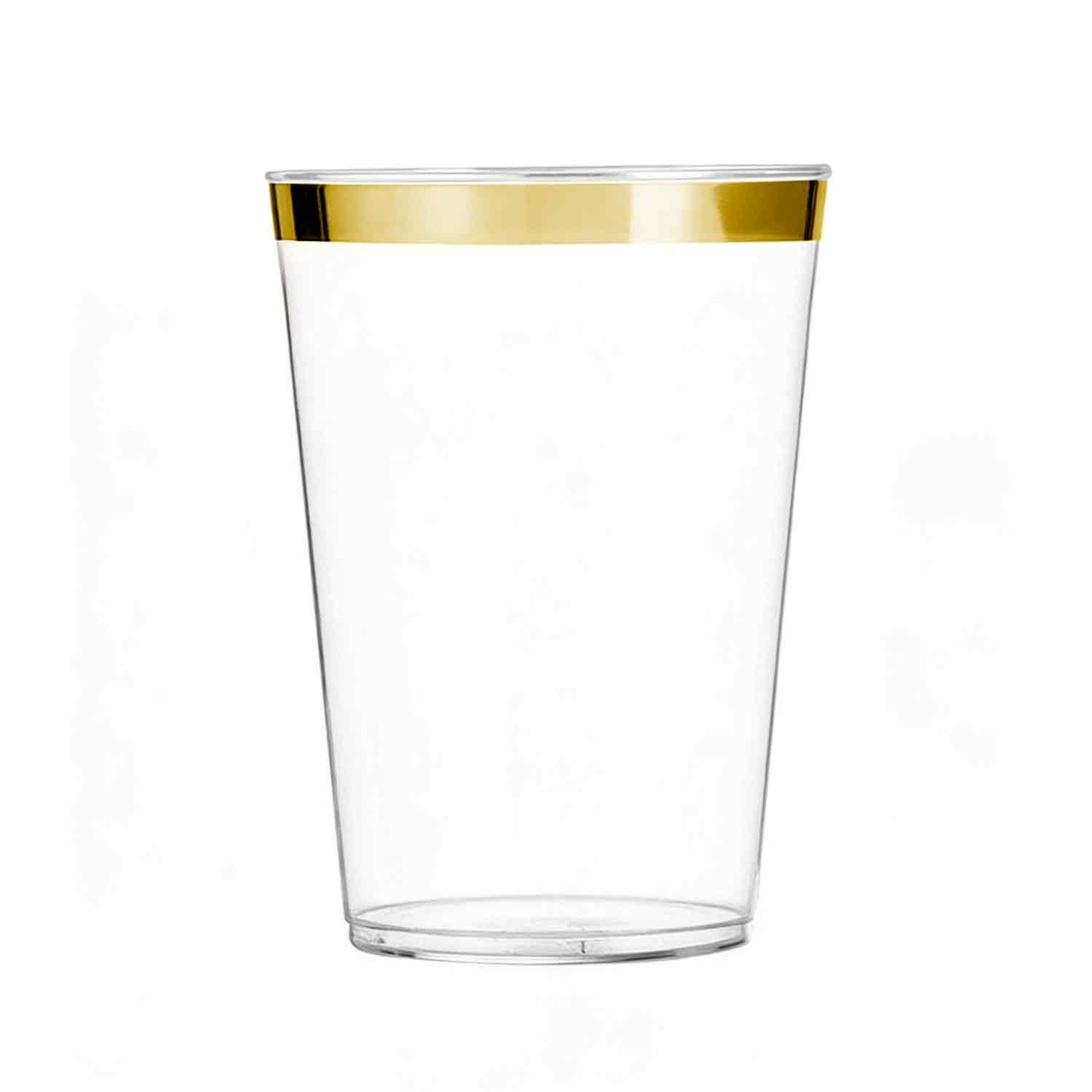
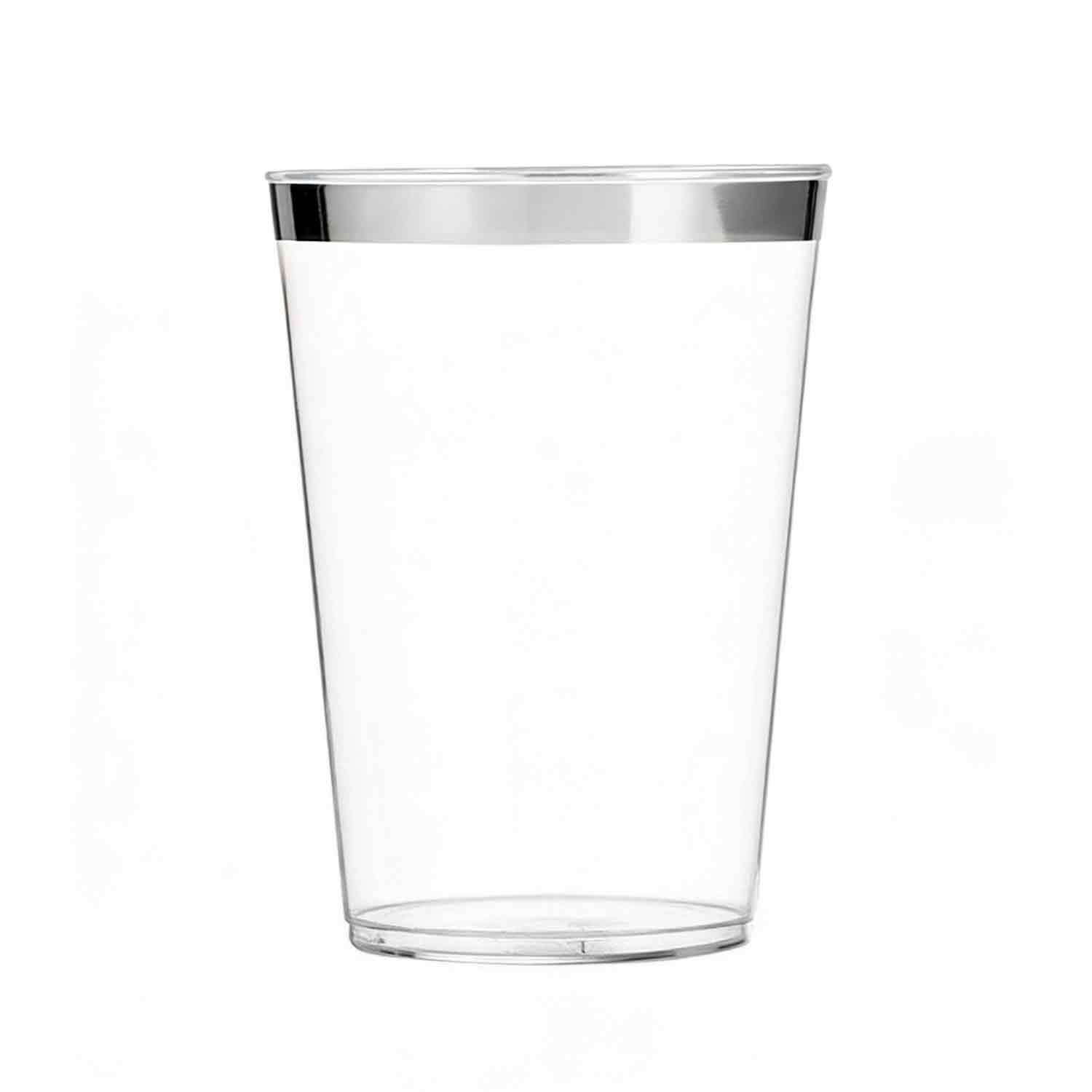
Both finishes sit on the outside of the cup, and that single fact should shape what you print and what you promise:
- No hot liquids, no microwave, no dishwasher. Heat and detergent attack the coating long before they attack the resin, and a glitter cup that sheds in a dishwasher is a complaint with a photo attached.
- Specify rub resistance, not “good quality”. A dry-tissue rub and a tape-pull on the decorated band, done on the sample you approve, is what predicts whether the finish survives packing and a party. Write the result into the spec sheet.
- Decoration is separate from the food-contact statement. The resin declaration covers the polymer — 21 CFR 177.1640 for polystyrene, 21 CFR 177.1520 for the olefin family — and says nothing about glitter, foil or ink. Ask for the two documents separately.
- A decorated rim cannot take a lid. Lids need a plain, dimensionally stable rim at a known outside diameter; a foil band adds thickness exactly where the lid has to seal. Our rim diameter and lid fitment guide covers the measurement.
Ten colours is ten SKUs, not one product
Our coloured stadium family runs to ten shades; the clear coloured cups add six more, plus gold and silver glitter and two metallic rims. That is a merchandising decision before it is a purchasing one, because every colour multiplied by every size is a separate line to forecast, store and reorder.
Three rules keep it manageable. Keep a core of four that never runs dry — black, red, blue, clear — because those are what a caterer reorders next month. Hold gold and silver as accents for events and year-end tables. Rotate one or two seasonal shades rather than carrying all ten at full depth all year.
Colour also has to agree with the rest of the table. A “black and gold” party is a tablecloth, napkin, plate and cup decision, and the fastest way to lose it is a cup whose gold reads green under shop lighting. Fix the shade against a physical master sample and a stated light source, as described in our tablecloth colour specification guide, then carry the same master to the cups. If you are building the whole table, our party tableware sets guide shows how parts are matched and packed together.
Nesting, lids and the cube you are really paying for
Cups ship nested, so carton count and carton dimensions — not unit weight — decide what a container costs per thousand pieces. Two families of the same nominal size can nest to different stack heights, and a millimetre of extra rim flare is multiplied by every cup in the sleeve. Put cups per sleeve, sleeves per carton and carton dimensions on the quotation, then divide by the cube; that number is comparable between suppliers, a unit price on its own is not.
Only the straight-wall families take a lid: our clear 12 oz and 16 oz cups, and the 7 oz and 14 oz in the same mould family. Coloured stadium, glitter and metallic-rim cups are open-top service, so a client needing a lidded cup wants a different line, not a lid that “almost” fits. Order lids with the cup — rim tolerances invisible on a cup can make a lid loose or unclosable. Our cups and lids range is grouped by mould family for this reason.
An order sheet that makes quotes comparable
Send these fields and two suppliers will finally be quoting the same object: family and mould; nominal size plus measured capacity in millilitres; resin; unit weight in grams with a tolerance; top diameter, base diameter and height in millimetres; colour reference with a master sample or Pantone; decoration type and position; lid requirement with rim outside diameter; cups per sleeve, sleeves per carton and carton dimensions; and the food-contact documents you need on file. Add the sample quantity and the date you need the sample — not the date you need the goods.
Seven checks before the season ships
On the approved sample: fill to the nominal figure and mark the line; stack twenty and press down; squeeze the wall on a PS cup and on a PP cup; drop one from table height onto a hard floor; rub the glitter or foil band with a dry tissue then with tape; fit the lid and lift the cup by the lid alone; hold the colour against the master sample under the lighting the customer will use. A failure here is a mould or decoration question to answer before production, not a discount to negotiate afterwards.
We have been moulding disposable tableware in Changzhou for over twenty years and these cup families are our own tooling, which is why we can say plainly that the coloured stadium cup is a 360 ml PP part and a lidded cup is a different mould. If you are building a party range, send the order sheet through and we will come back on the families that match it.
Next step. Send your cup specification to our team and we will confirm which mould family fits it; the quoting process covers what we need to price it, and the plastic dinnerware range and cups for bars and cafés show the rest of the line. Related reading: shot glasses in 1, 1.5 and 2 oz, stemware for the same table and how to read a tableware quotation.