
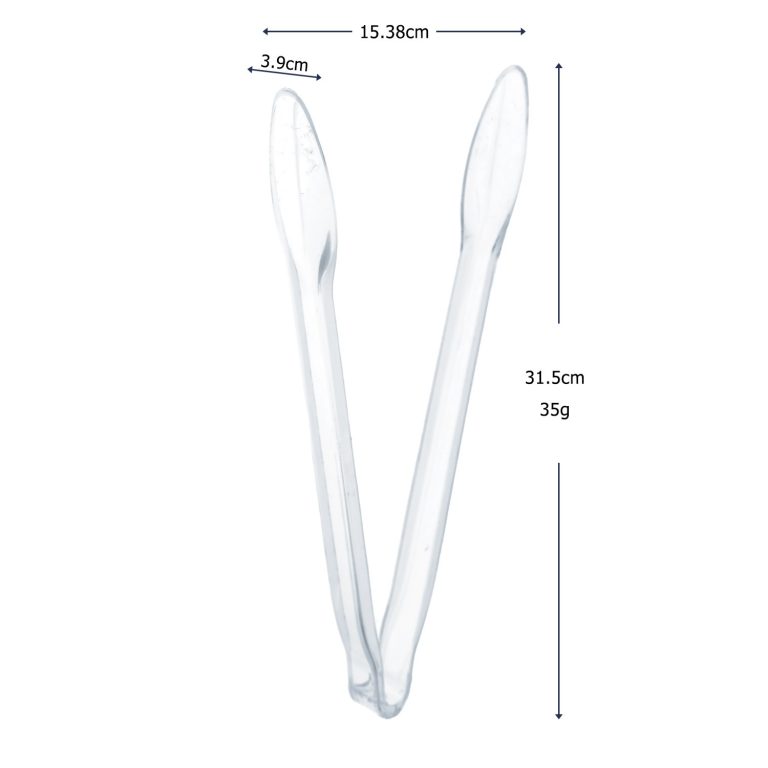
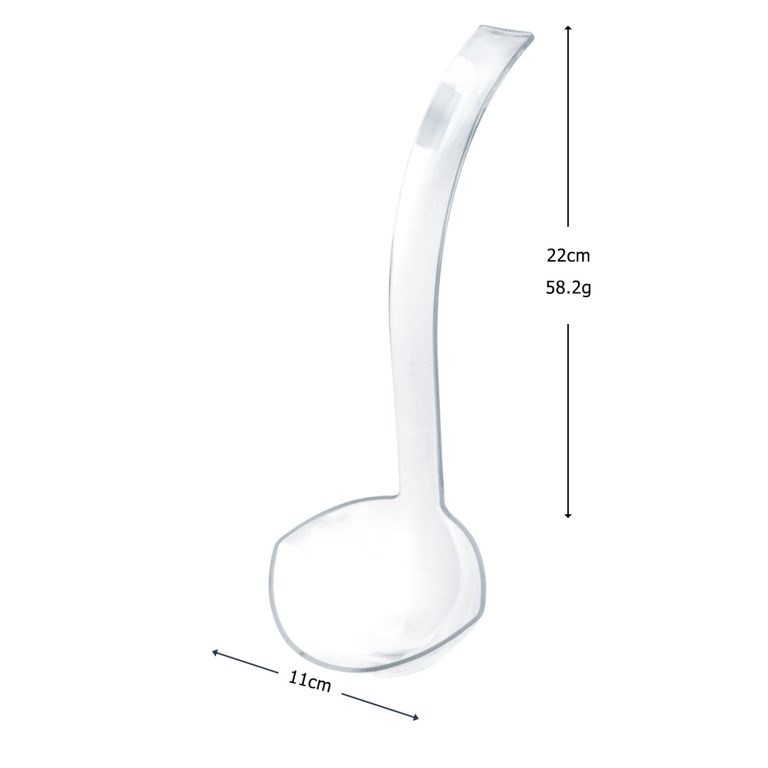
Shot cups are the cheapest item on most party and bar order sheets, and the easiest one to buy badly. Three moulds cover almost every job: 1 oz, 1.5 oz and 2 oz, all clear, all injection moulded. What matters at the sample table is the pour, the wall and the resin.
Quick answer. Our 1 oz cup holds 30 ml in 2.6 g of food-grade PS, the 1.5 oz holds 50 ml in 3.5 g, and the 2 oz holds 60 ml in 5 g, all on a 0.5 mm wall. A US standard shot is 1.5 fl oz, or 44 ml, so the 1.5 oz cup is the one that pours a standard measure with headspace left above it. Buy 1 oz for tasting and condiments, 1.5 oz for bar and wedding service, 2 oz for jello shots and sampling trays.
Three moulds, three different jobs
The three sizes are not the same cup scaled up. Each has its own rim diameter, base and height, which is what decides how it stacks, how it feels in the hand and how much carton it eats.
| Size | Capacity | Rim / base | Height | Weight |
|---|---|---|---|---|
| 1 oz | 30 ml | 3.8 cm / 2.7 cm | 4.1 cm | 2.6 g |
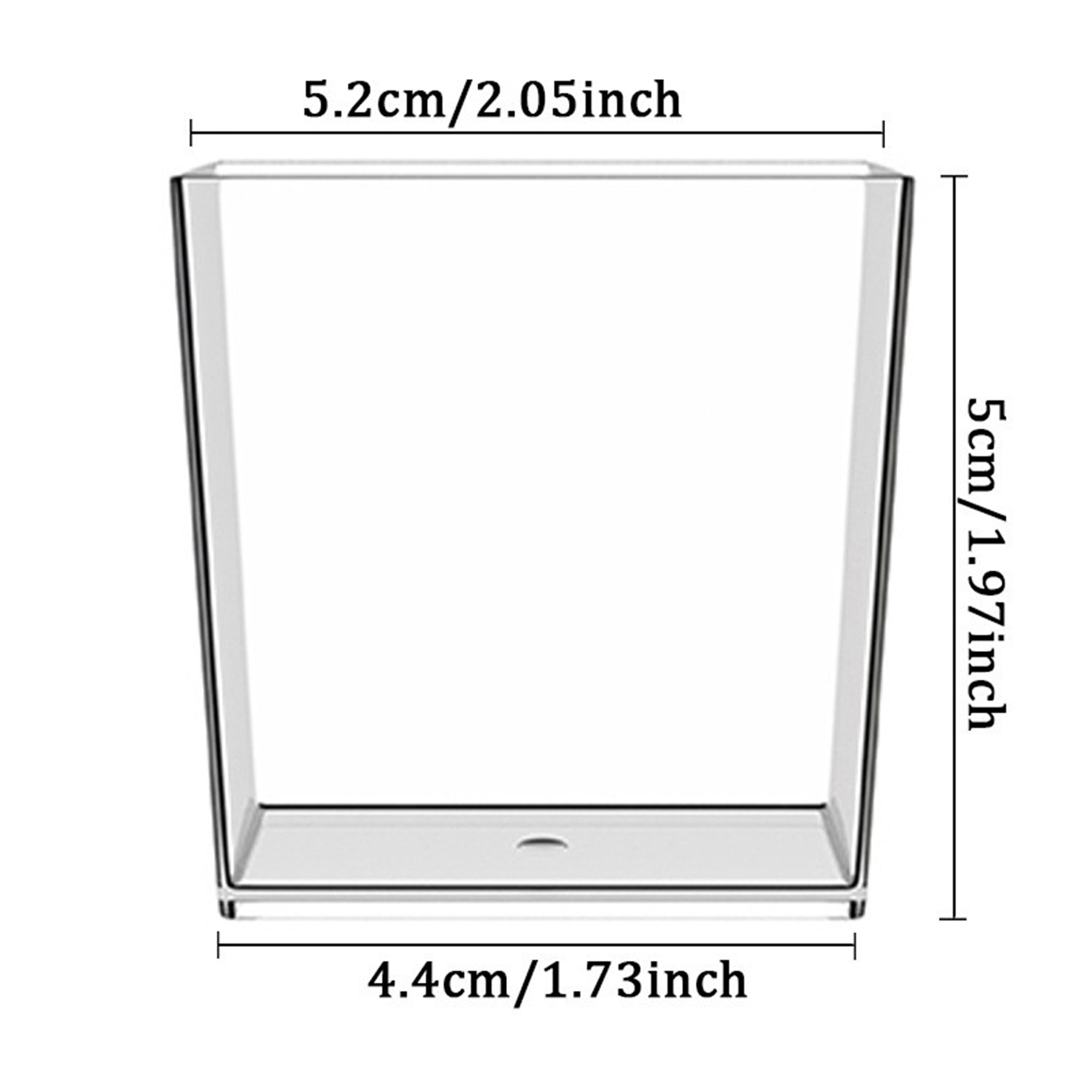
| 1.5 oz | 50 ml | 4.5 cm / 3 cm | 5 cm | 3.5 g |
| 2 oz | 60 ml | 5 cm / 3.2 cm | 5.3 cm | 5 g |
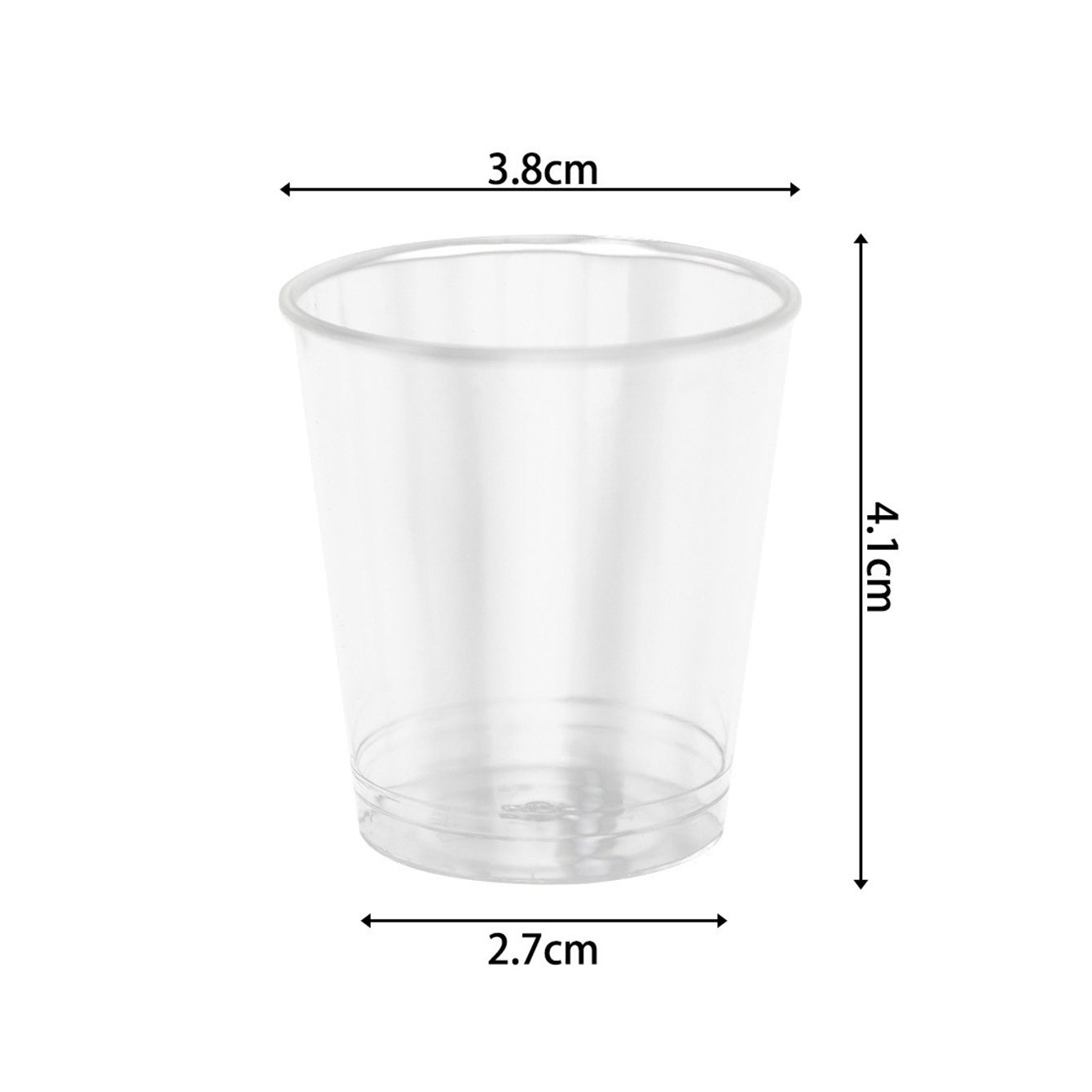
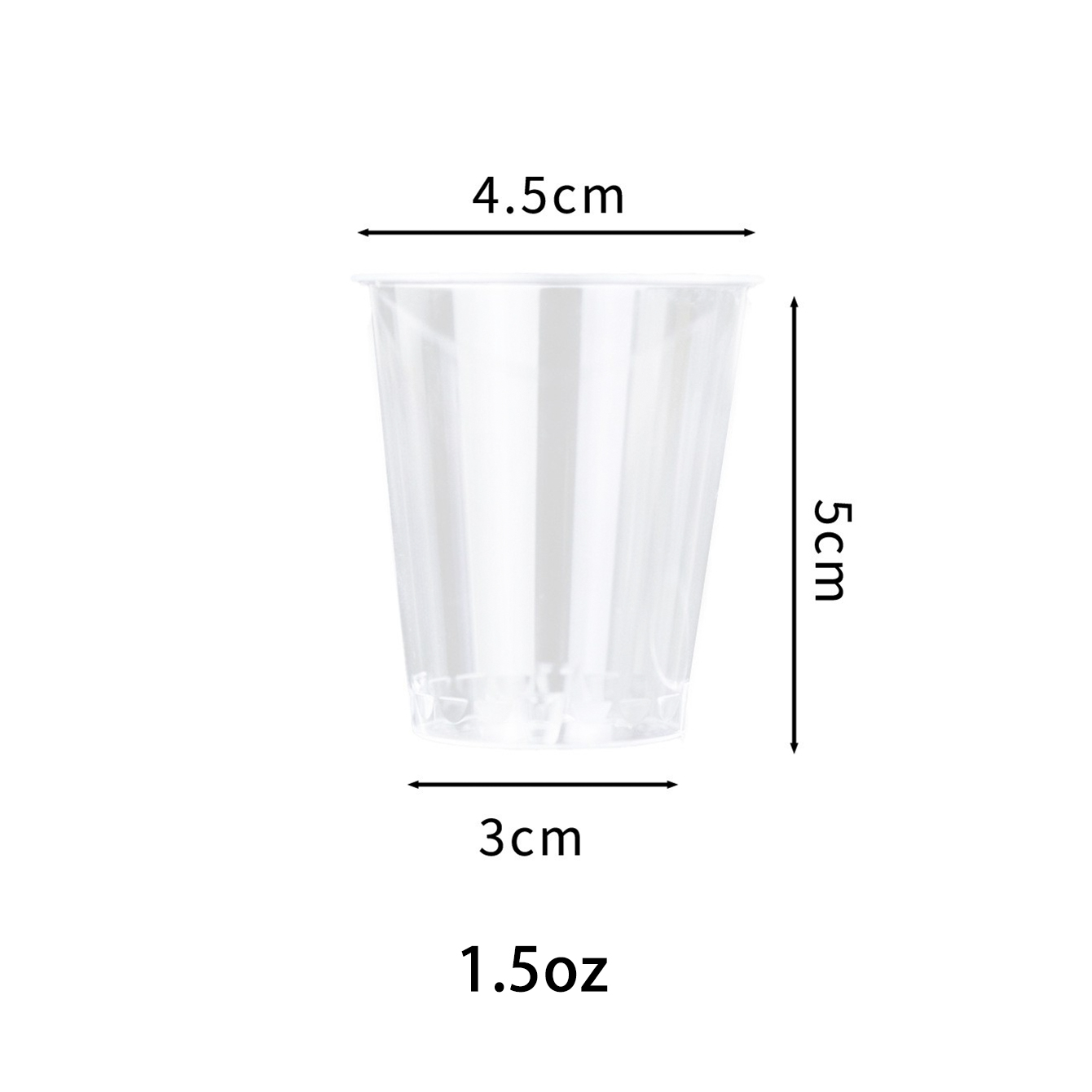
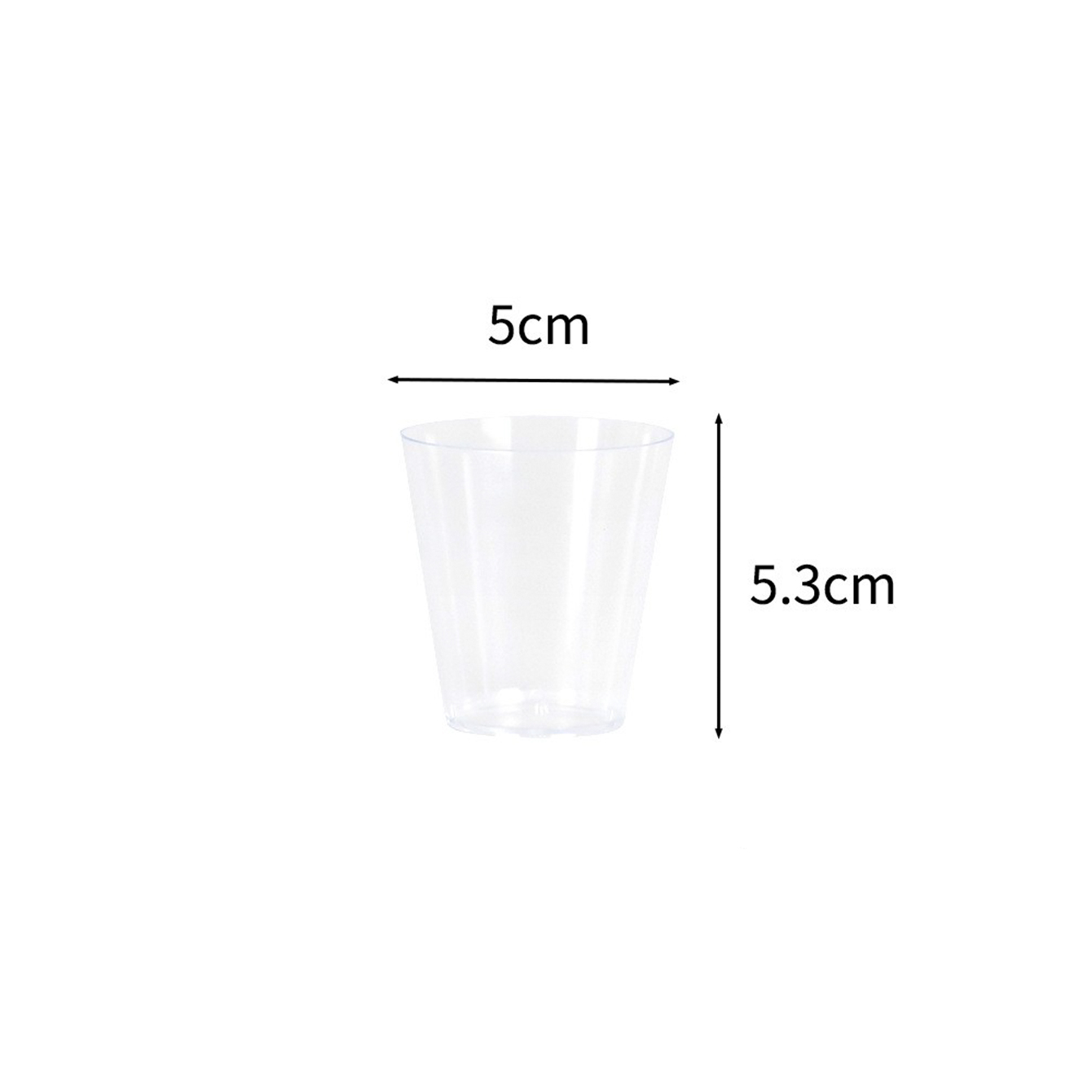
The 1 oz at 4.1 cm tall reads as a tasting cup, which is why it turns up at distilleries and sauce stations. The 1.5 oz is the workhorse, closest to a bar shot glass in the hand at 3.5 g. The 2 oz is where jello shots and sampler flights live.
The ounce on the carton is a brim figure, not a pour line
A 1 oz cup is 29.6 ml by conversion and our mould pours 30 ml to the brim; the 2 oz is 59.1 ml and ours pours 60 ml. Those are brim figures. Any serve you fill to the edge will slop at the first hand that lifts it, so the practical pour sits a few millimetres lower.
The 1.5 oz is the interesting case. The US standard shot is 1.5 fl oz, 44 ml, and our cup holds 50 ml, which leaves roughly 6 ml of headspace above a standard measure. That is the right relationship: enough room to carry the cup across a room without spilling, not so much that the pour looks mean. If you are serving a 50 ml measure instead, order the 2 oz and accept the larger footprint, or expect the last sip of every pour to sit below the rim.
Fill level is a costing decision too. Bars that pour by count, not by measure, treat that headspace as free stock. Write the pour in millilitres on the order, not just the ounce size.
At 2.6 g a cup, the money is in the carton, not the resin
A thousand 1 oz cups is 2.6 kg of polystyrene before any packing. A thousand 2 oz cups is 5 kg. At resin prices that gap is small change per order, which is why a quote that looks 20 percent cheaper is almost never a resin story. It is one of four other things.
- Wall thickness. 0.5 mm is our standard on all three sizes. A 0.35 mm wall saves grams and cracks at the rim on the second lift.
- Nesting ratio. Cups per 10 cm of nested stack set the sleeve and carton size, and the carton sets the freight. Two moulds of one size can differ by a third, so ask for nested stack height, not cup height.
- Carton cube. On a cheap cup, freight usually costs more than the product. Compare per cubic metre of packed carton.
- Packing labour. Sleeved, bagged and header-carded cups are three different lines. The cup is the same; the packing is not.
Ask every supplier for grams per piece and nested stack height beside the price, and the comparison becomes arithmetic instead of trust.
What a 0.5 mm wall buys, and where it fails
The strength lives in two places: the rolled bead at the rim, which stops the opening ovalling when the cup is lifted full, and the radius at the base, which spreads load so the bottom does not star out under a pour.
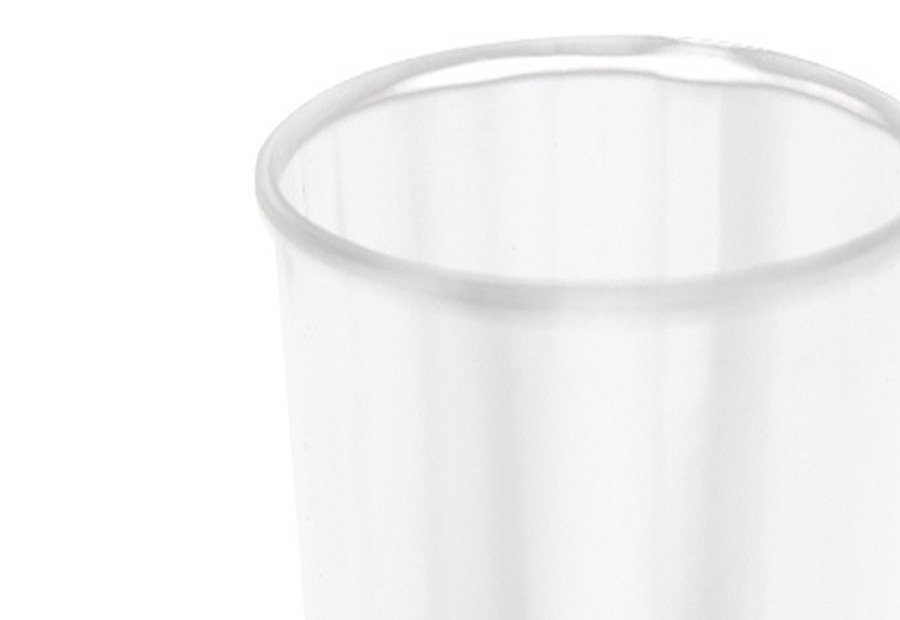
Where the wall stops helping:
- Freezer and ice. Water expands about 9 percent when it freezes. A cup filled to the brim and frozen will split, and no wall thickness fixes that. Leave headspace.
- Squeeze. PS is rigid, not tough. A hand that squeezes an empty cup will craze it, and a crazed cup leaks at the base, not at the crack.
- Stack pressure. Cups stored under heavy cartons in a warm warehouse oval at the rim and then leak. Store below 40 °C and do not put pallets on top of loose cartons.
PS is right for cold service and wrong for two other jobs
All three sizes are food-grade polystyrene, which is the correct resin for a clear, rigid, cheap, cold-serve cup. It is transparent, it takes a clean bead, and under US food-contact rules polystyrene is covered by 21 CFR 177.1640; the wider documentation set is on the FDA food-contact pages.
Two jobs it will not do. Hot liquid: PS softens in the range a hot toddy arrives at, and our PS dessert cups are rated to 60 °C for that reason. High-strength spirits: PS has limited solvent resistance, so a high-proof pour left standing for hours can dull or craze the surface, while a 40 % ABV toast of ten minutes is a non-issue. Test with your own product first. For hot service ask for the same mould in PP; the trade-offs are in our PP vs PS vs PET guide.
Jello shots sit comfortably in the PS column: cold set, no solvent load, and the 2 oz size is the standard for it. The square mini cup in the same injection family is the neater option when the tray has to line up.
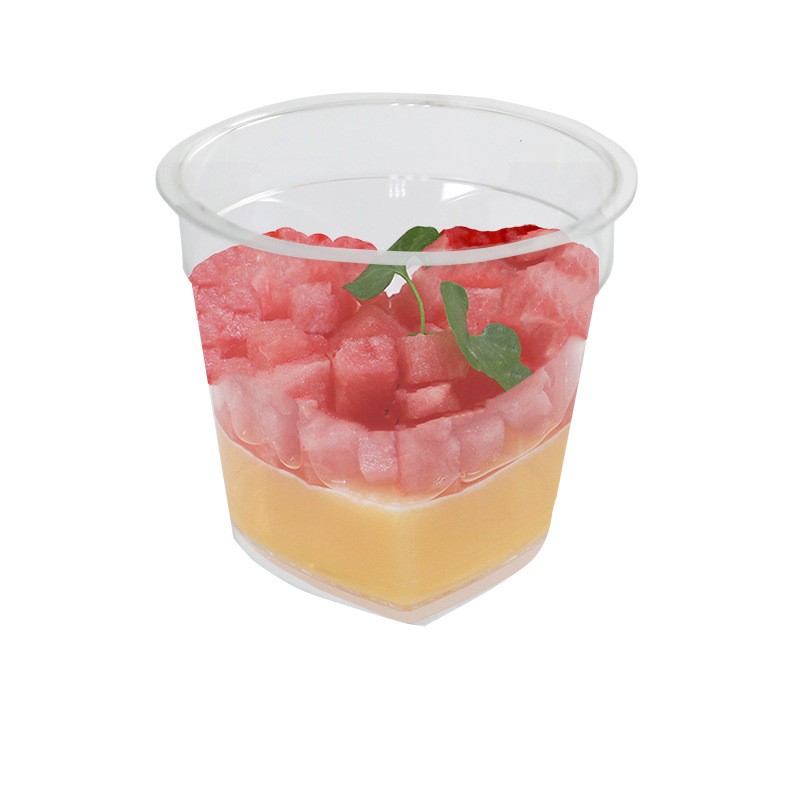
Tinted PS reads as coloured liquid from a distance, a merchandising choice rather than a performance one. Printing on a 4.1 cm cup leaves room for one small logo; if artwork is the point, this is the wrong canvas.
When the serve is a full drink, change the cup
Shot cups are a bad substitute for a drink cup, and buyers get talked into them every season. A 60 ml cup cannot hold a mixed drink and ice; the ice displaces more volume than the cup has. If the brief is a toast with a full glass, the 9 oz or 10 oz mould is the right unit, and the finish question moves to glitter and metallic rims, which we cover in the party cup sizing guide.
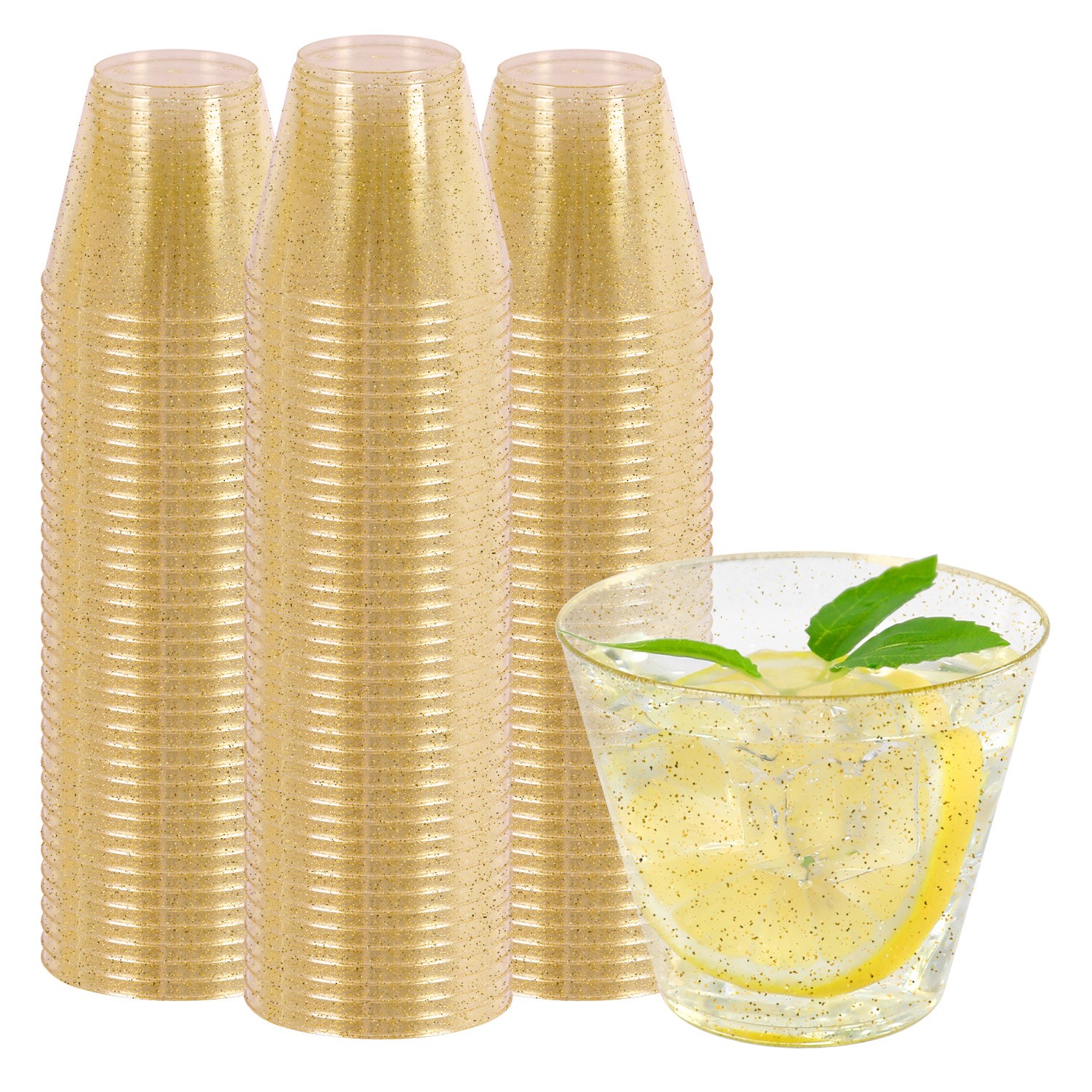
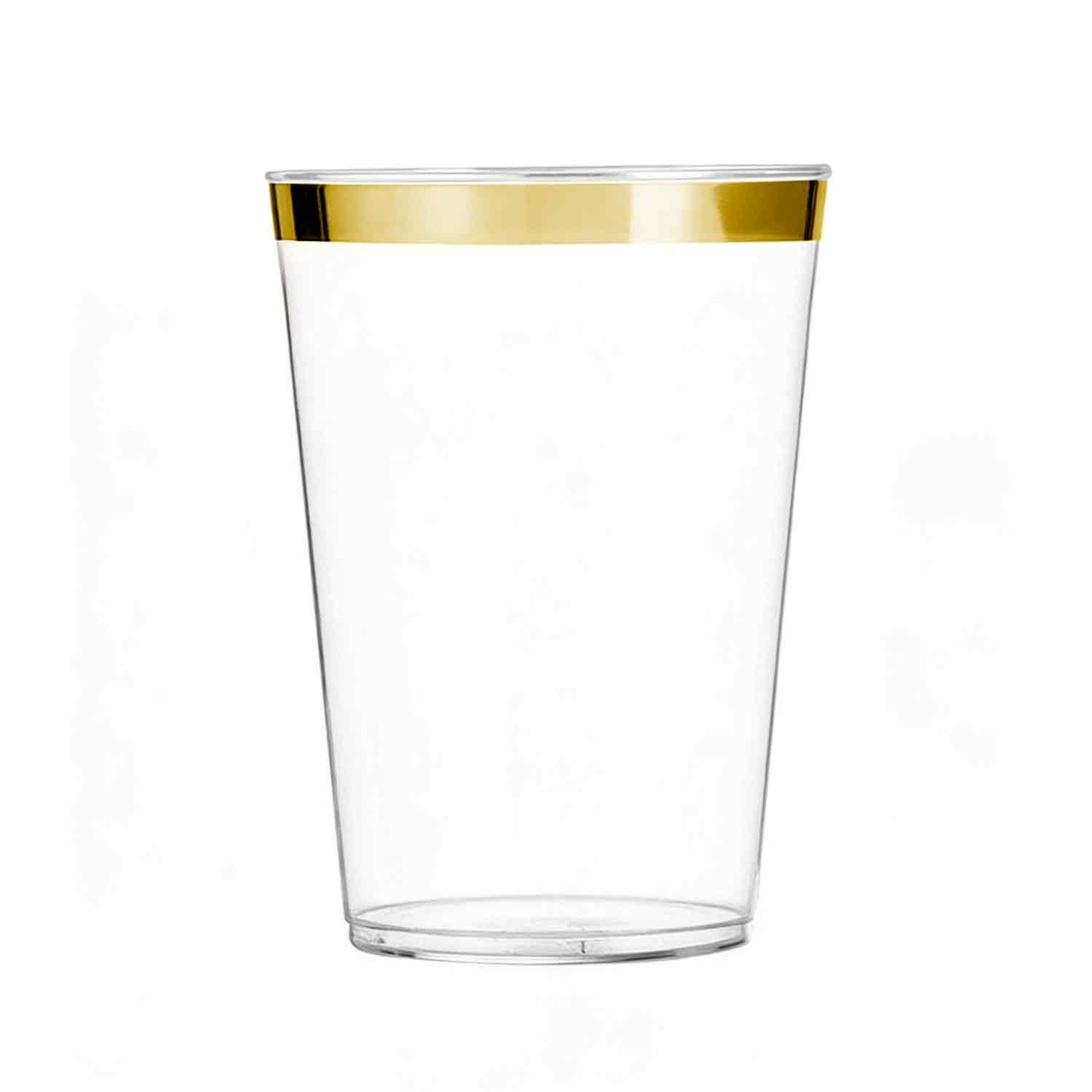
The catering middle path is a flight: 1.5 oz for the tasting pour, 9 oz for the drink that follows. Two lines on one order usually costs less than sizing everything to 9 oz and watching half come back full. Colour-matched sets are covered in party set colour matching.
Pack counts, sleeves and headers decide the channel
Three channels, three packing formats.
- Bulk and food service buys sleeved cups in plain cartons, priced per thousand, with the sleeve count sized to the bar’s par stock.
- Party retail buys header-carded or bagged packs in round counts, with barcodes and a hang hole; the cup has to survive a hook in a shop.
- Event and rental buys by the case and cares about nested stack height; storage is the constraint, not price.
None of it changes the cup; all of it changes the quote. Say which channel you sell into before the first price comes back.
What to put in the RFQ
Nine lines get a comparable quote:
- Size by millilitres and target pour, not just ounces
- Resin and colour or tint, with a Pantone reference if tinted
- Grams per piece, minimum and target
- Wall thickness and rim type, bead or flat
- Nested stack height and cups per sleeve
- Cups per carton and packed carton dimensions
- Packing format: sleeve, bag, header card, barcode
- Print or label requirement, with artwork size limits
- Ship date and destination port
Send that and the reply is a specification, not a price list. See the rim and lid fitment guide if the cups will be lidded.
We mould all three sizes on the same line in food-grade PS at 0.5 mm, tinted or printed on the same tooling. The cups and lids range covers the rest of the drinkware, drinkware category shows what ships alongside, and bars and cafés usually add the bulk drinkware line: 1 oz shot cups, 1.5 oz shot glasses, 2 oz shot glasses.
Next step. Send your size, pour and channel to our team and we will come back with grams, sleeve count and carton cube for the right mould; the quoting process lists what else we need to price it.