
Square plates look like the easy choice: more plate for the same inch number, edges that line up on a buffet, no rolled rim to catch a fork. In practice a square plate and a round plate of the same nominal size are different products, with different usable areas, stack heights and carton maths — and most quotations only give you the inch figure. Below is what the inch number measures on a square plate, how our three sizes are built, and where square wins or loses against round.
This is written from the specification side — side length, grams, resin, rim geometry, packing — because those are the lines a buyer can hold a supplier to.
What the inch number measures on a square plate
On a round plate the figure is the diameter, and area scales with its square. On a square plate it is the side length: a 9 inch square measures 23 cm on each side. Two consequences matter at the table.
Area first: a 9 inch square carries 81 square inches against 63.6 square inches on a 9 inch round — about 27% more, which is why squares are used where guests load a main and two sides onto one plate. Diagonal second: corner to corner, a 9 inch square measures 12.7 inches, longer than the diameter of a 12 inch round plate. That diagonal, not the side, is what hits a chafing dish wall, a crate side or a tray edge. When a buyer says a square plate “does not fit”, the diagonal is usually why.
Rim width takes part of that advantage back, because it eats inward from four sides instead of one circle. On a 9 inch square with a 0.75 inch rim the flat area is roughly 7.5 by 7.5 inches, or 56 square inches; the same rim on a round 9 inch leaves about 44.
Our three square sizes and what each one carries
The square party plate is rigid PS (polystyrene), injection moulded, and it runs in three sizes. The weights below are the ones we quote against, not estimates.
| Size | Side × side | Weight | What it carries |
|---|---|---|---|
| 6.25 in | 16 × 16 cm | 25.5 g | Dessert, cake slice, side salad, bread |
| 7.5 in | 19 × 19 cm | 38 g | Lunch portion, breakfast plate, kids’ main |
| 9 in | 23 × 23 cm | 58.5 g | Dinner, BBQ, carving station, one-plate catering |
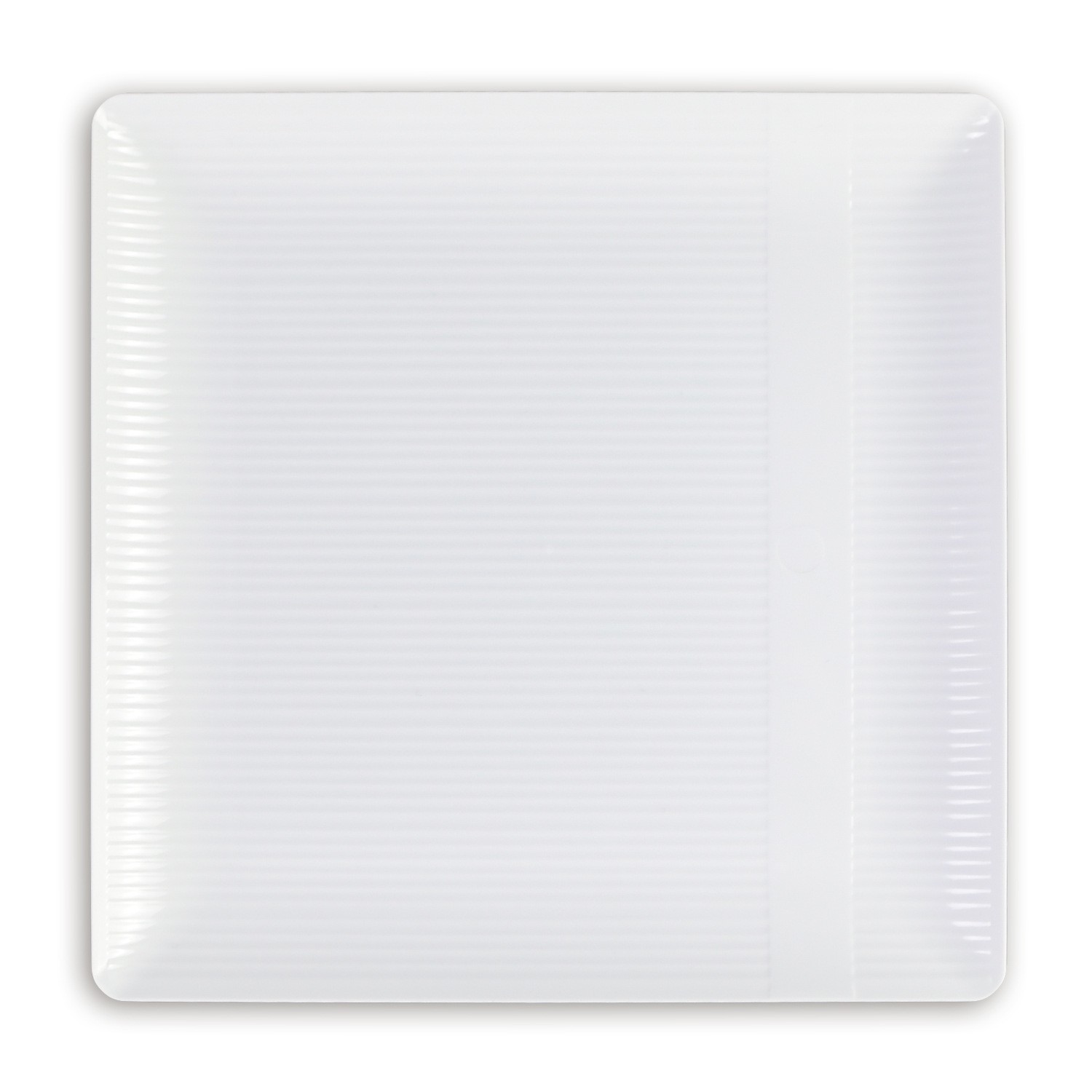
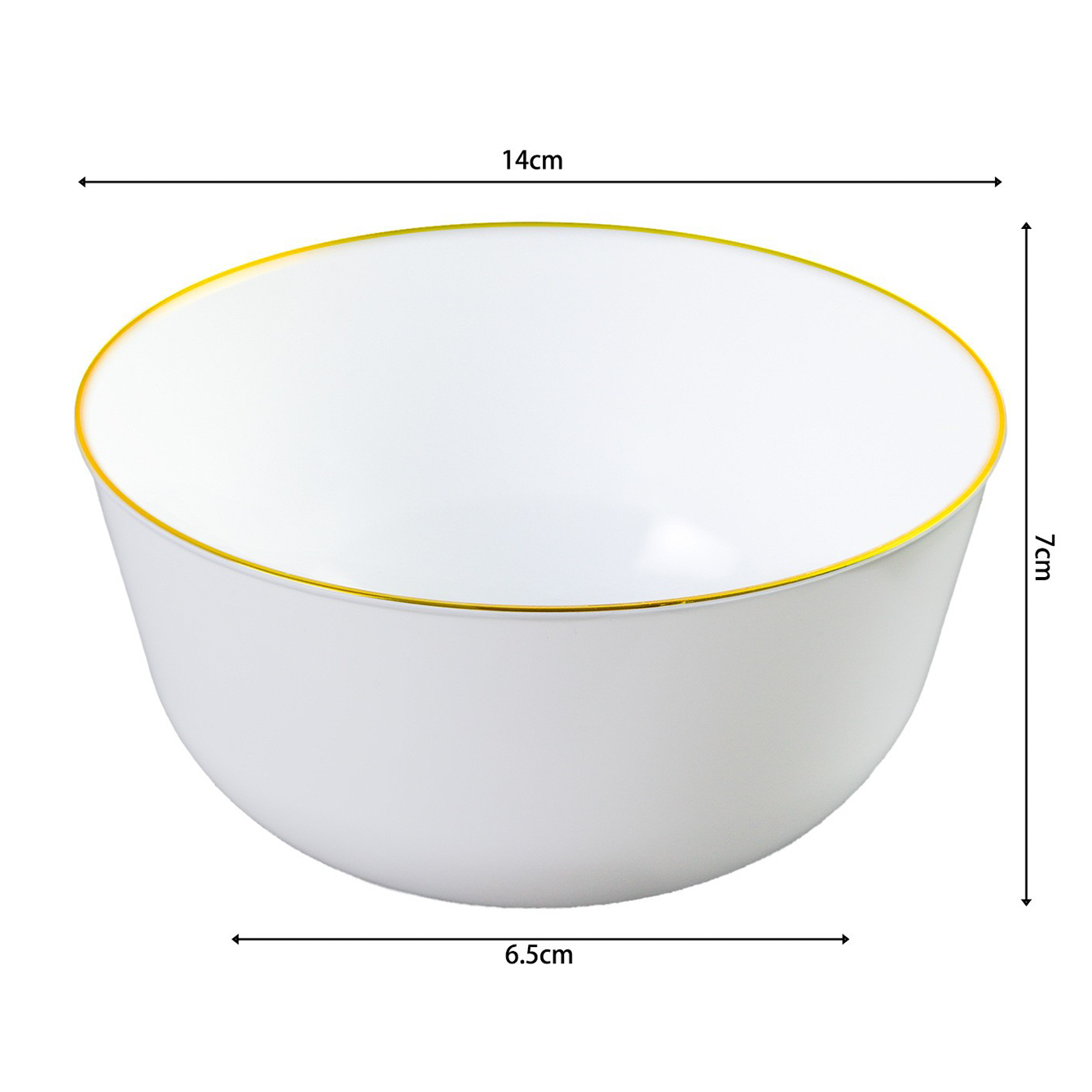
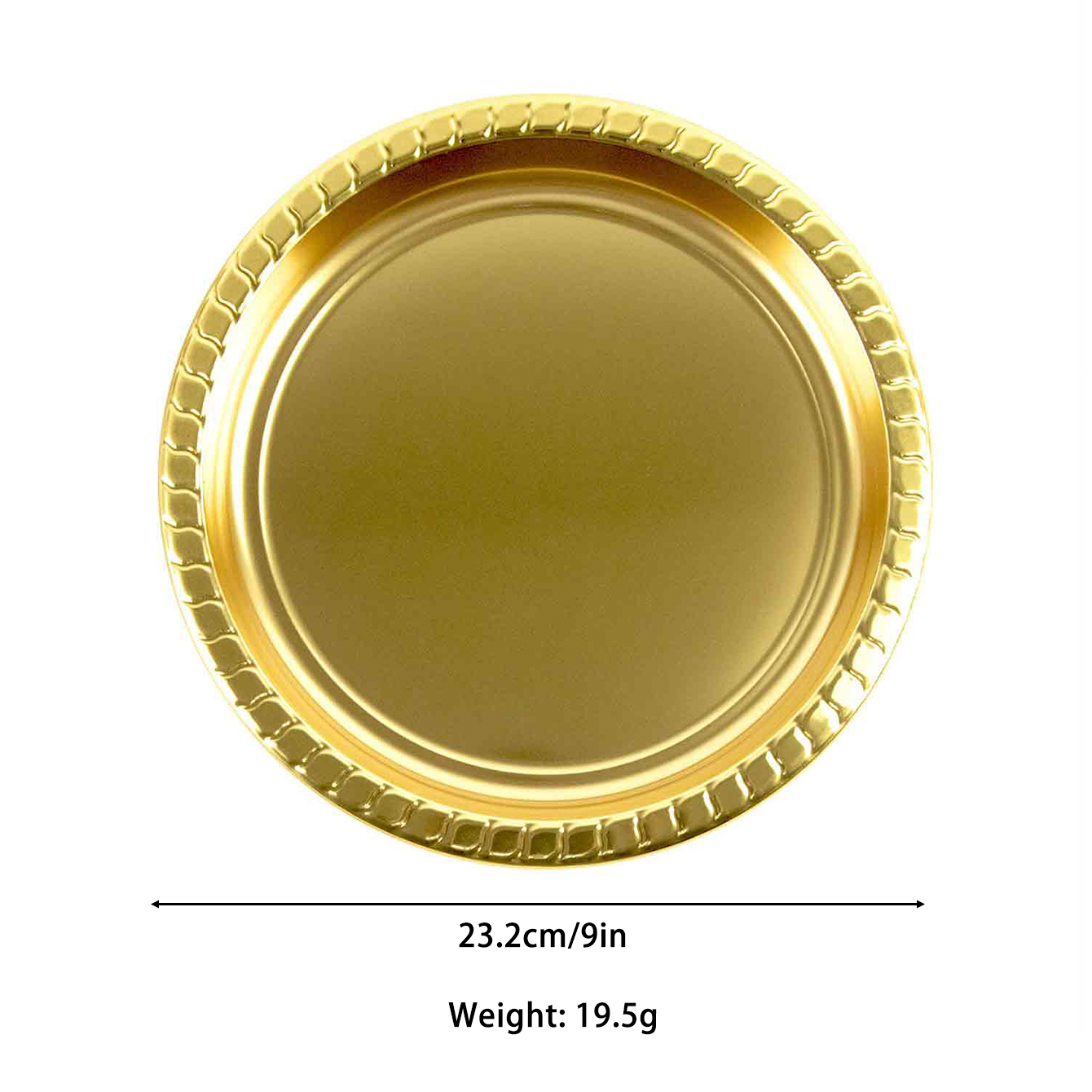
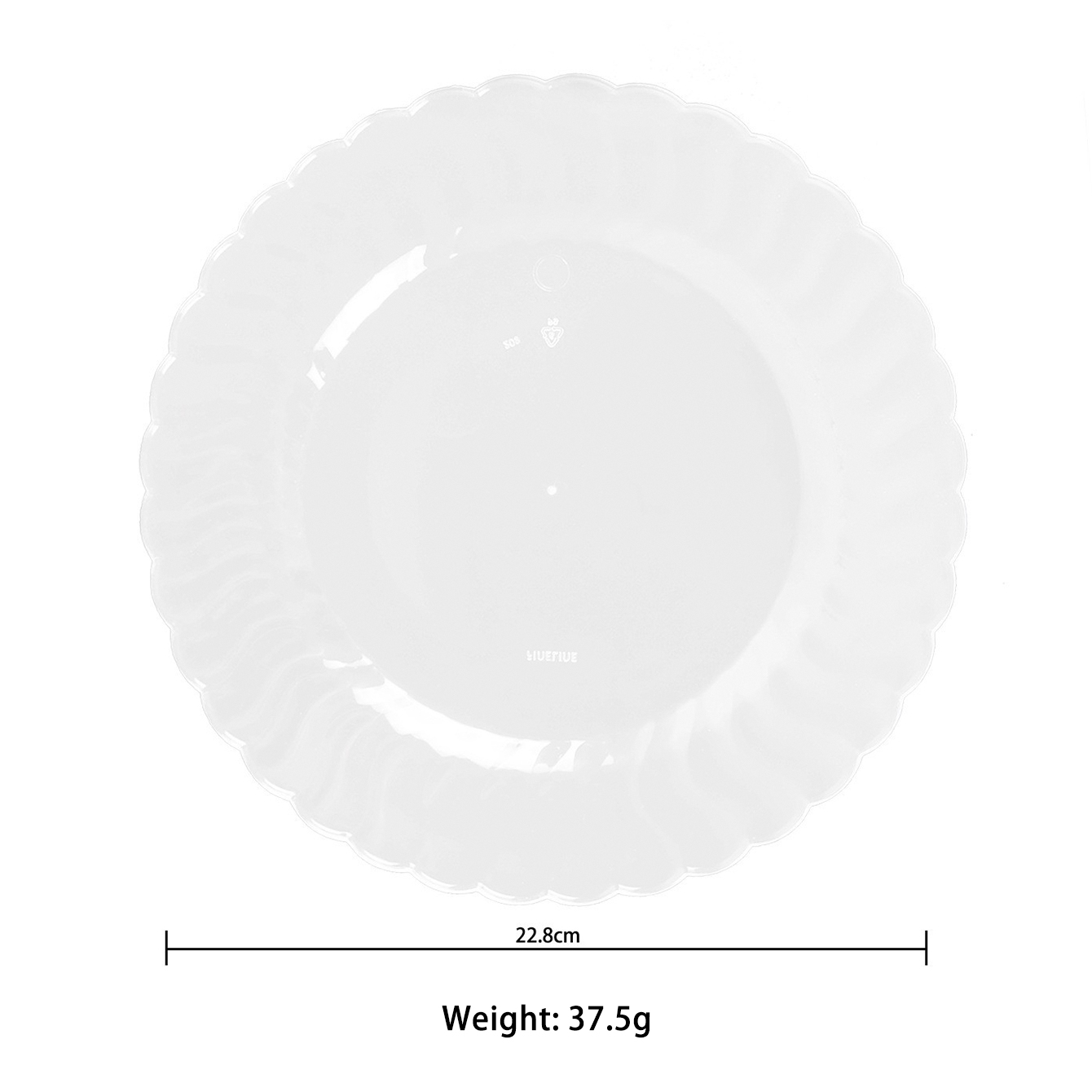
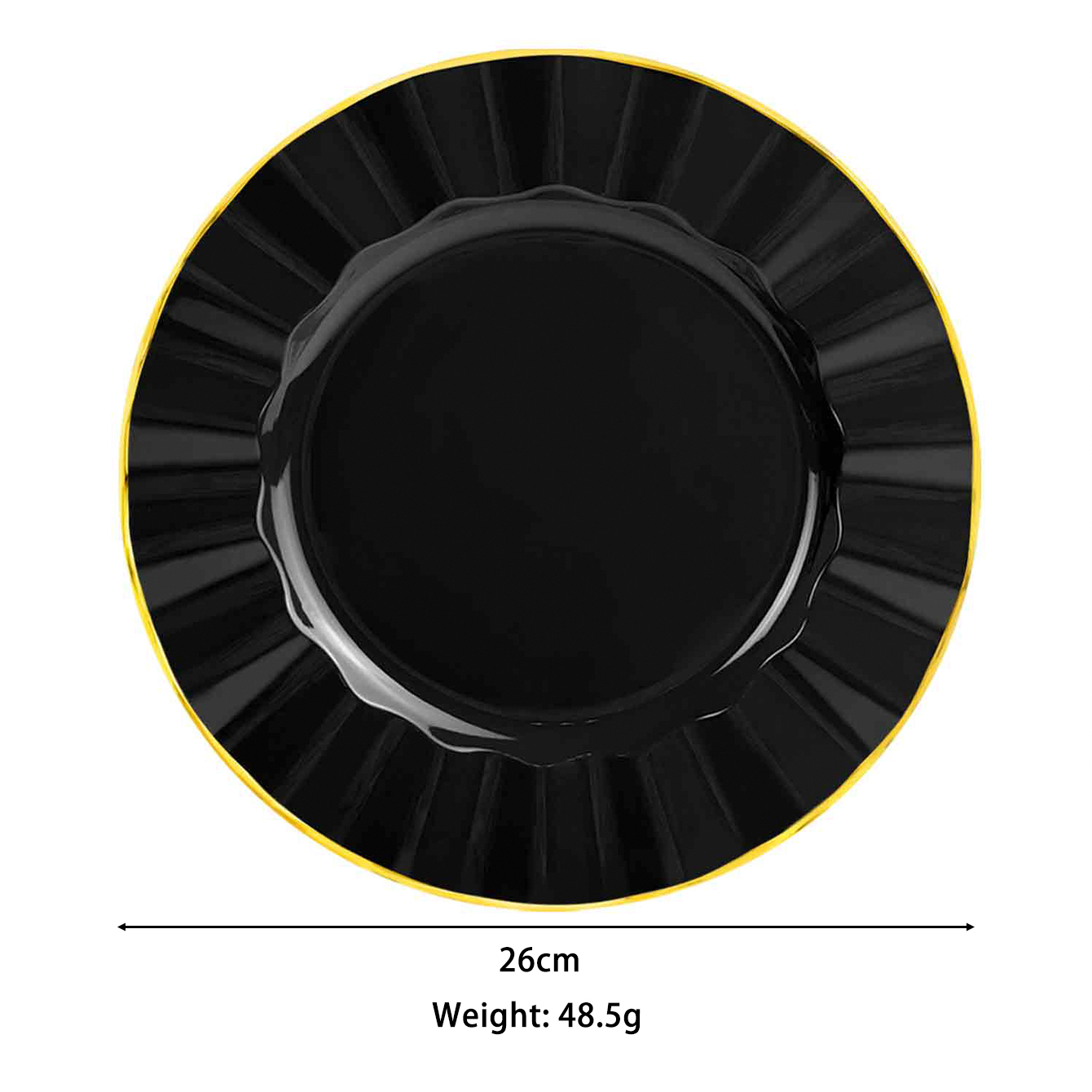
The pattern is worth reading: the 9 inch square at 58.5 g is heavier than a 9 inch round PS plate with a gold rim at 48.5 g, and far heavier than a thin round clear plate at 19.5 g. Square geometry needs material at the corners, and that material is what stops a loaded plate flexing one-handed. A 9 inch square quoted well under 50 g has had something taken out — ask what.
Corner radius, rim style and stacking
A square plate has four stress points a round plate does not: the corners. A tight radius concentrates load when the plate is stacked, or when a guest presses a knife down at the corner, and that is where cracks begin. A generous radius spreads the load and makes the plate easier to hold one-handed at a buffet.
Rim style is the second decision. A flat wide rim reads formal and gives the plate visual weight; it is also the surface our decorated lines use for gold or silver stamping. A narrow rim gives back serving area but looks institutional. Because the rim runs along four straight edges, any fault in the stamping shows as a broken line rather than a slightly uneven circle: square plates are less forgiving of a poor decoration process, which is something to judge on a sample, not on a spec sheet.
Radius also changes stacking. Squares nest on their walls, but corners bind before the centres do, so 20 squares stack taller and less stably than 20 rounds. Ask for stack height per 20 pieces before fixing shelf or crate height.
Square or round on the table
Squares align edge to edge, so a row of them on a buffet counter reads as a straight line, and plate rails hold them without the crescent gaps rounds leave. That is the main reason hotels and banquet operations like them for display. At the guest table the arithmetic is less flattering: a square of a given side takes the same depth as a round of the same diameter, but its corners extend past that footprint, so neighbouring settings need slightly more clearance. Long banquet runs usually fit more covers with rounds; squares give the stronger visual line and the larger working surface per plate.
Service follows the same split. Rounds are easier to carry several at once and to slide into a rack; squares suit food that is arranged rather than scooped.
Heat, cutlery and the limits of rigid PS
Rigid PS is the right resin for a square plate: stiff for its weight, it holds a wide flat rim without sagging and moulds a clean edge. What it does not take is heat. Above roughly 70–80 °C a thin PS plate softens and distorts, and a commercial dishwasher at 60–70 °C with detergent warps a stack. Rigid PS is a serve-and-clear material, not a reheat or wash-and-reuse material; if the service includes microwaving, the plate has to be PP and the claim has to come from the resin, not the label.
Cutlery marks are the routine complaint. A PS plate marks where a knife is pressed hard, and the mark shows more on white than on a decorated plate — a wall-thickness and rim-width issue as much as a resin one. Food contact for the resin is covered at 21 CFR 177.1640, decorated rim colourants at 21 CFR 178.3297, and the sheet used for clear plates at 21 CFR 177.1630. Ask for statements per resin, not per product family.
Finishes: what exists in square, and what does not
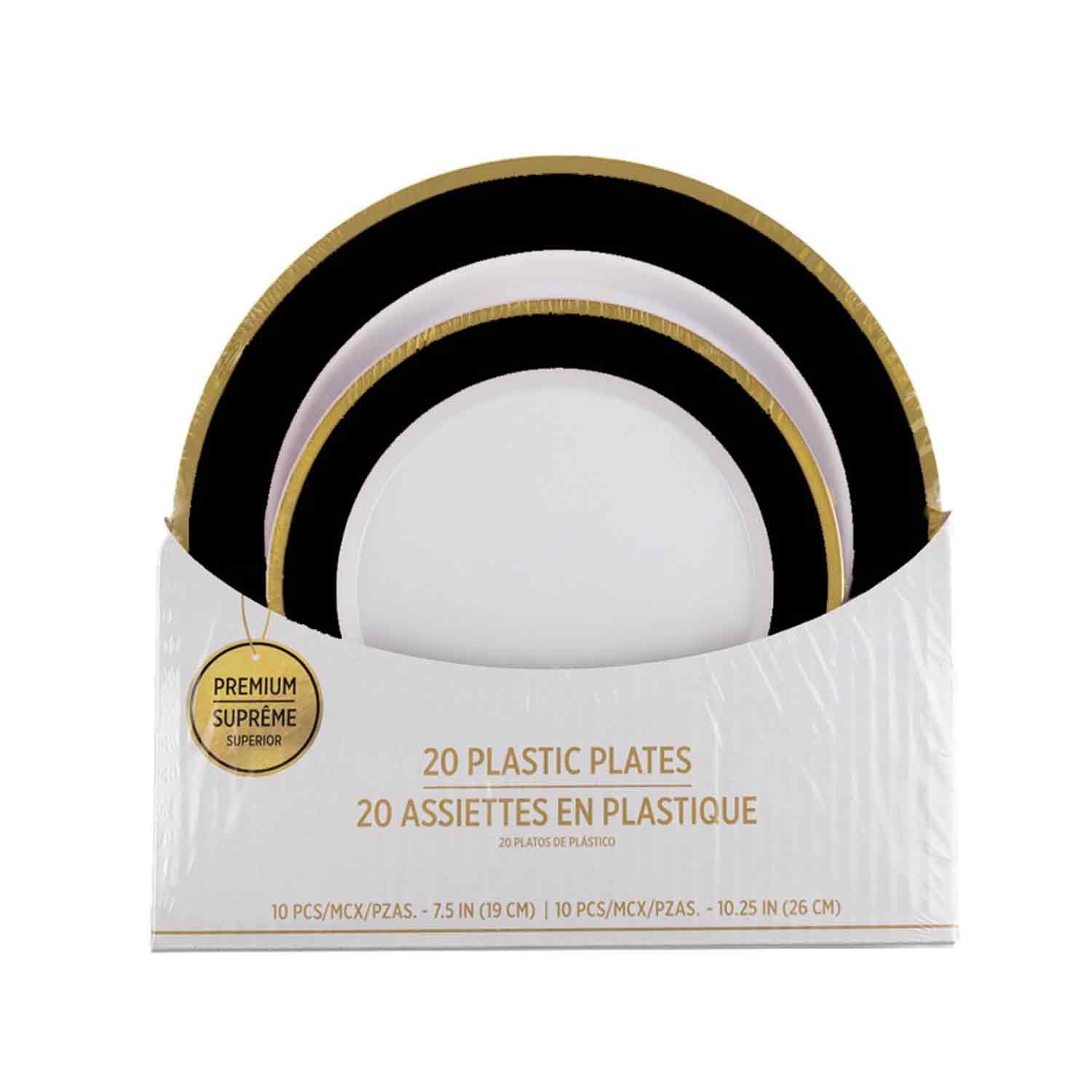
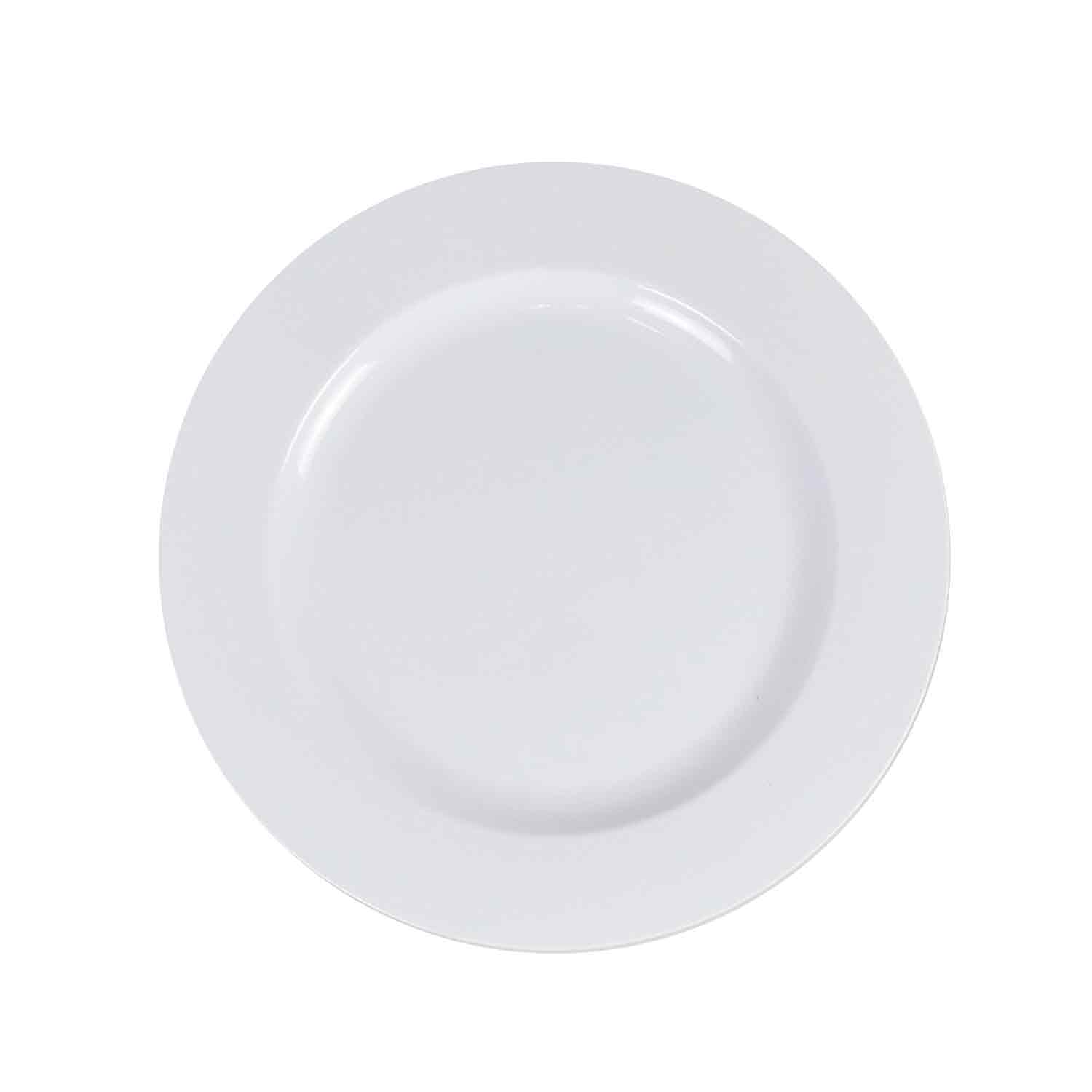
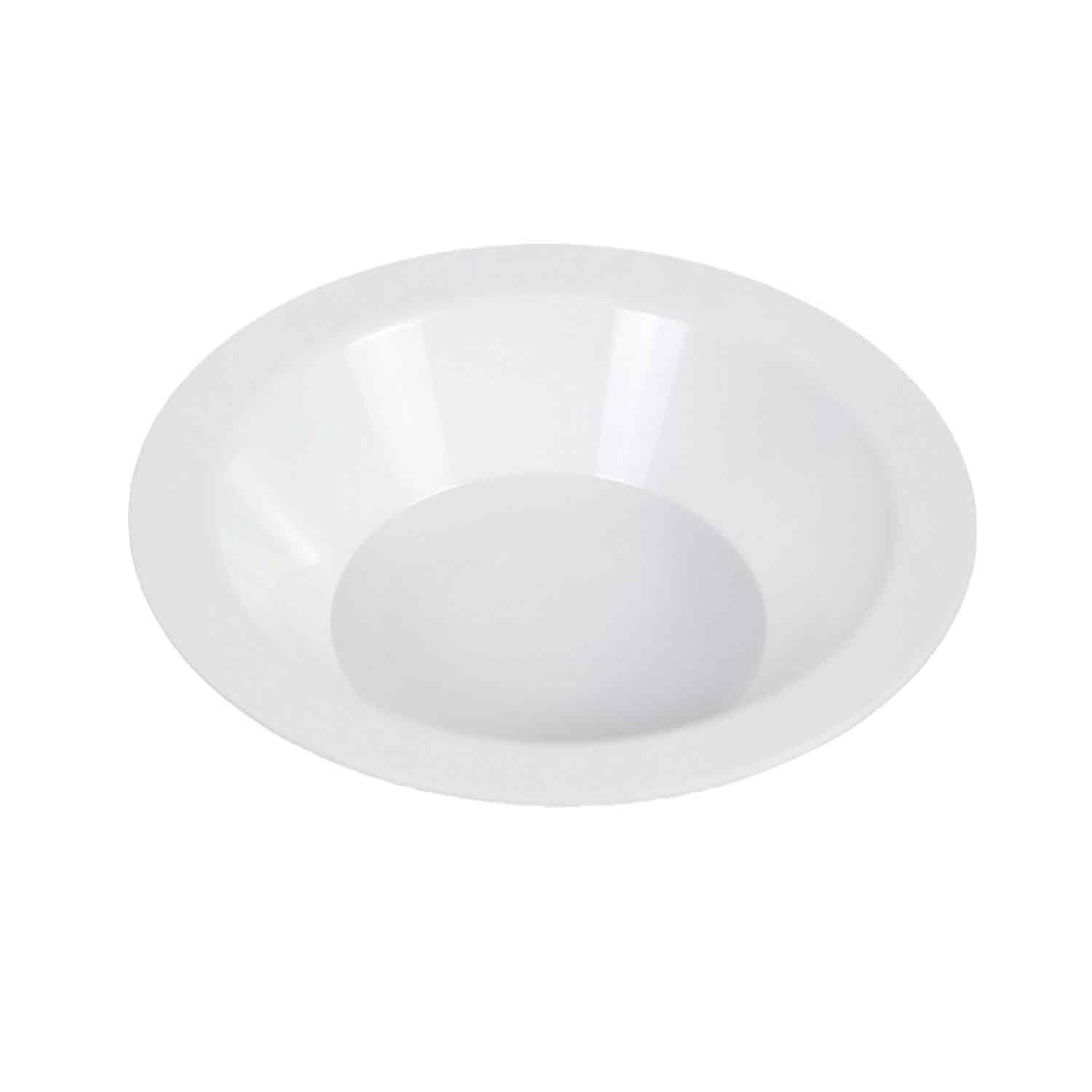
This is where range plans break. Our decorated round lines are broad — 7 inch and 9 inch plates with gold or silver rims, black-and-gold, clear-and-gold, and 7 in plus 9 in boxed sets of 20. Our square plate is currently a white rigid PS plate in three sizes. Assume every rim colour also exists in square and the plan will not survive the first order confirmation.
The practical answer is one colour language across two forms: white squares as the base for hot or informal service, round decorated plates for the dessert and drinks end, and the same white on both. A decorated square is a tooling and print question for quotation stage, not something to read off a photo.
The lines to put on the RFQ
A square plate enquiry that comes back comparable needs eight data points: side length in inches and centimetres, weight per piece in grams, resin and moulding process, rim width and corner radius, stack height per 20 pieces, carton count and carton dimensions, decoration with the colour reference, and the food-contact statement per resin. Add the service temperature the plate has to survive — if the answer is hot hold rather than serve and clear, square PS is the wrong starting point.
Two habits save money later: ask for a stack-height and top-load figure instead of a photo, and ask whether the sample comes from the production tool or a trial tool — corner radius and wall thickness change between the two, and the corner is where a square plate is judged.
We have been moulding and printing disposable tableware for 20 years, and our plates and bowls run on the same PS line as our cups and cutlery, which is why weights and rim widths hold across the catalogue. Send the sizes and the destination market and we will come back with weight options and packing that fit the carton.
Related pages: plastic plates, plastic dinnerware, the bowl or plate comparison, grams per piece and rim style, clear plate sizes, PP vs PS vs PET and dessert cups in bulk. For resin background, polystyrene is a starting point, not a specification source.
Next step: send your plate sizes, weight target and destination market to our sales team, or read how we quote to see what we need before a price is issued.