
Most dessert cups are bought by the name on the catalogue page — “4 oz cup”, “mini cup”, “parfait cup” — and then the samples arrive and none of them hold the dessert the way the menu promised. A 130 ml cup and a 140 ml cup are both sold as “4 oz”, yet on a tray they behave nothing alike: one is round, 6.8 cm across and 6 cm tall at 12 g; the other is square, 5 cm tall and 6.5 g. Four numbers decide whether a dessert cup works: the millilitres it holds, the shape of its footprint, the temperature it will meet, and the pack it ships in.
Start from the portion, not the product name
Drinking cups are specified by liquid volume because people drink until the cup is empty. Dessert cups are specified by spoonfuls, because the buyer is really asking how many servings a tray yields and whether the portion looks generous on a buffet. That is why two cups 10 ml apart can belong to different menus.
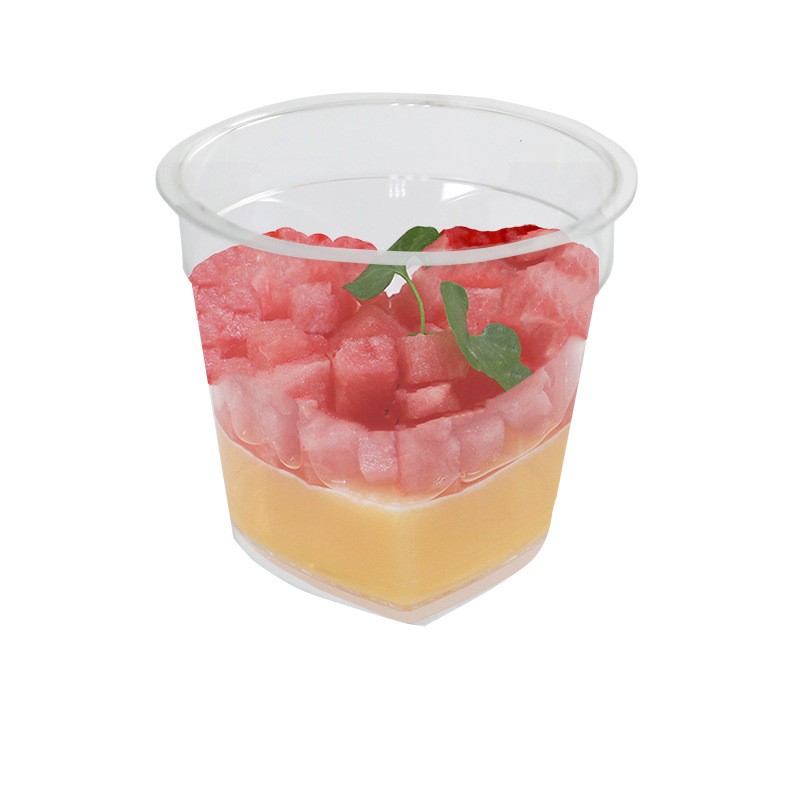
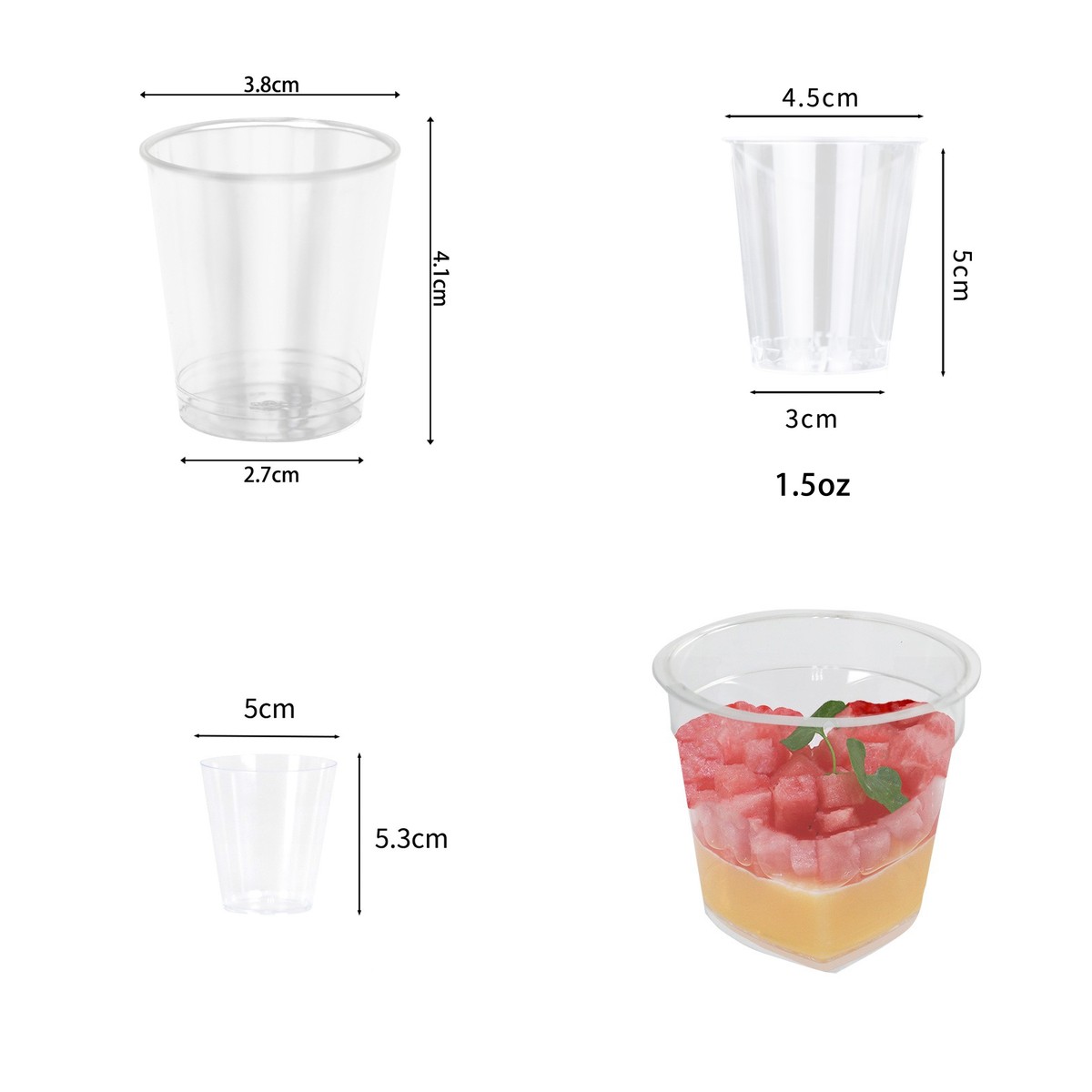
A single-serve mousse, panna cotta, pudding or fruit cup usually lands between 100 ml and 150 ml. Below that you are selling a taste, not a portion; above it you are selling a bowl. Our round dessert cup holds 130 ml (about 4.4 US fl oz) and the square mini cup 140 ml (about 4.7 fl oz), which makes them interchangeable on a menu sheet but not on a tray. The same portion-first logic for plates and bowls is set out in our guide to plate and bowl sizes in inches and ounces.
Round 130 ml or square 140 ml: the shape is the decision
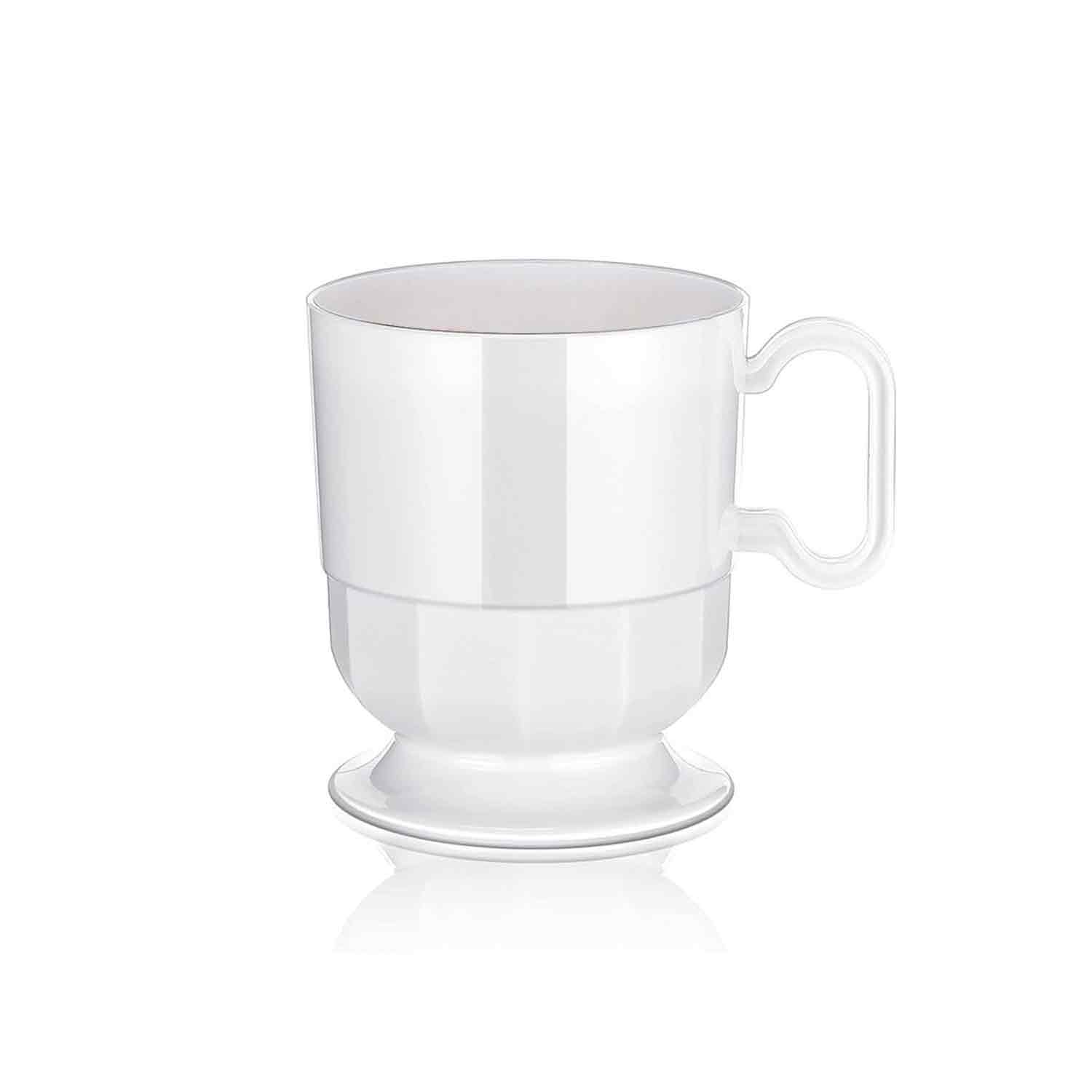
The round cup is 6.8 cm across, 6 cm tall and 12 g in food-grade PS. The round opening takes a dessert spoon at any angle, and the taller wall gives a layered dessert more vertical room to show through clear plastic. It occupies about 36 sq cm of tray per cup.
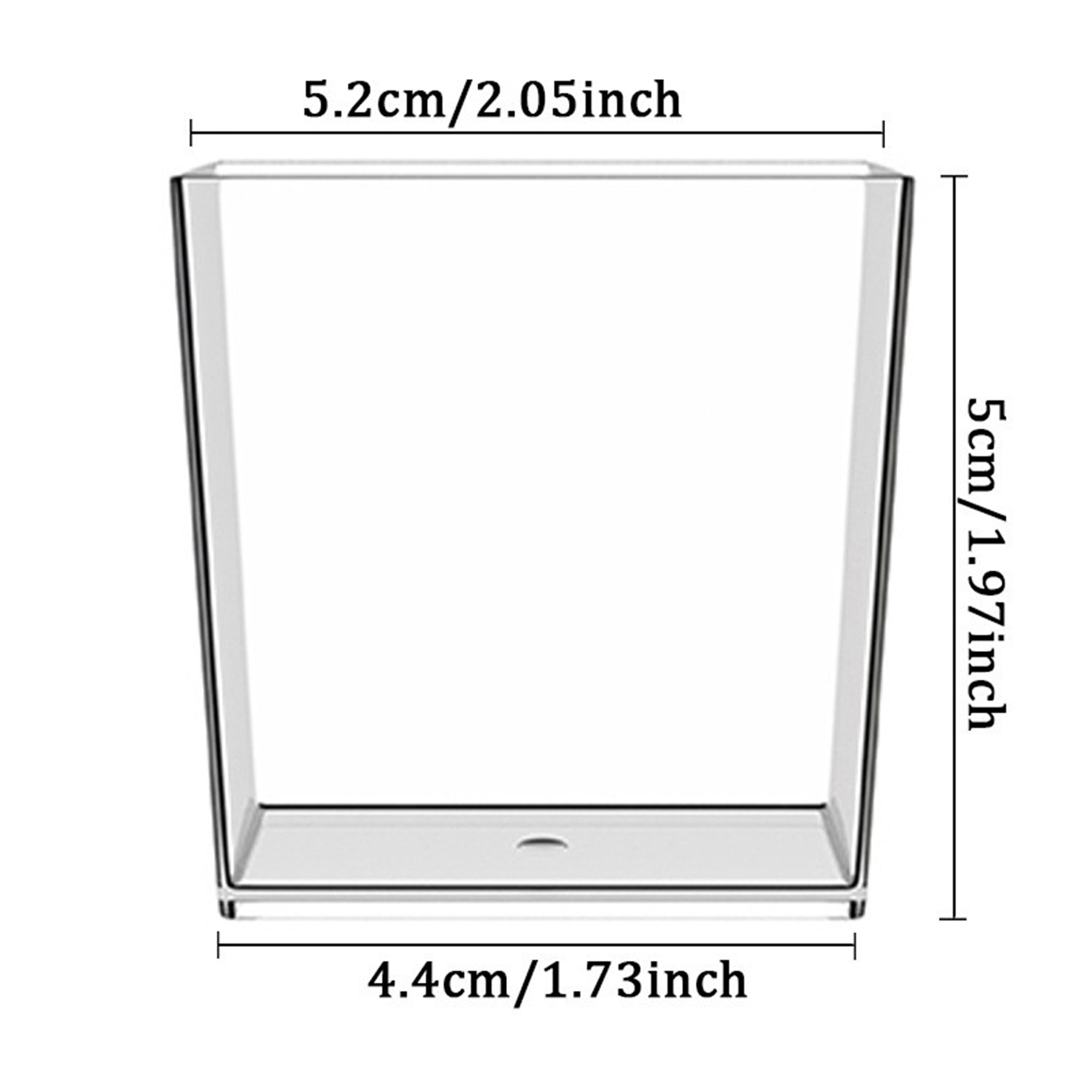
The square mini cup is 5.2 by 4.4 cm, 5 cm tall, 6.5 g, also food-grade PS, rated to 60 °C. Its footprint is about 23 sq cm — roughly 37% less table area per cup. That is the whole argument: a tray holding a given number of round cups holds noticeably more square ones, and a row of squares lines up edge to edge with no gaps.
It is also 5.5 g lighter per piece. Lighter cups nest tighter, so more pieces fit a carton and more cartons fit a container, and that effect on landed cost is larger than the effect of unit price. The trade-off is the corner: four seams where a round cup has none, so check for thin corners and flash lines on the sample, not just on the drawing.
The 60 °C ceiling and what it rules out
PS is a rigid, clear, low-cost resin and the right material for a cold dessert cup. It is the wrong material for anything hot, and the number to remember is 60 °C. Hot chocolate is served at roughly 70–80 °C, and hot fudge or caramel straight from the pan will soften the wall and distort the rim before the cup reaches the table.
That makes it a cold-service cup, not a fragile one: mousse, panna cotta, pudding, yoghurt, jelly and sorbet all sit far below the limit. The exposure risk is the journey — a summer loading bay, a car boot or a buffet in direct sun can push the cup past its rating with nothing hot in the recipe. For outdoor events, add a cooler box and a shorter set-up window, or move the hot-sauce line to PP.
Food-contact paperwork follows the resin, not the shape. PS articles are covered by 21 CFR 177.1640, and any colourant must be a listed substance under 21 CFR 178.3297. Ask for the resin and colourant statement for the exact SKU rather than a generic “food grade” line — the polystyrene family covers several grades that are not interchangeable on a compliance document.
Lids, spoons and hygiene
A cup without a lid is a dessert table item; a cup with a lid is a takeaway item, and the two are ordered differently. If the cup leaves the building — bakery counter, delivery order, hotel breakfast box — the lid has to be specified with the cup, because a lid that does not match the rim diameter is the most common fitment failure in disposable packaging. Our guide to cup and lid rim diameters explains why 2 mm is enough to leak: give us the cup SKU and we confirm the lid, rather than assuming a universal “4 oz lid” exists.
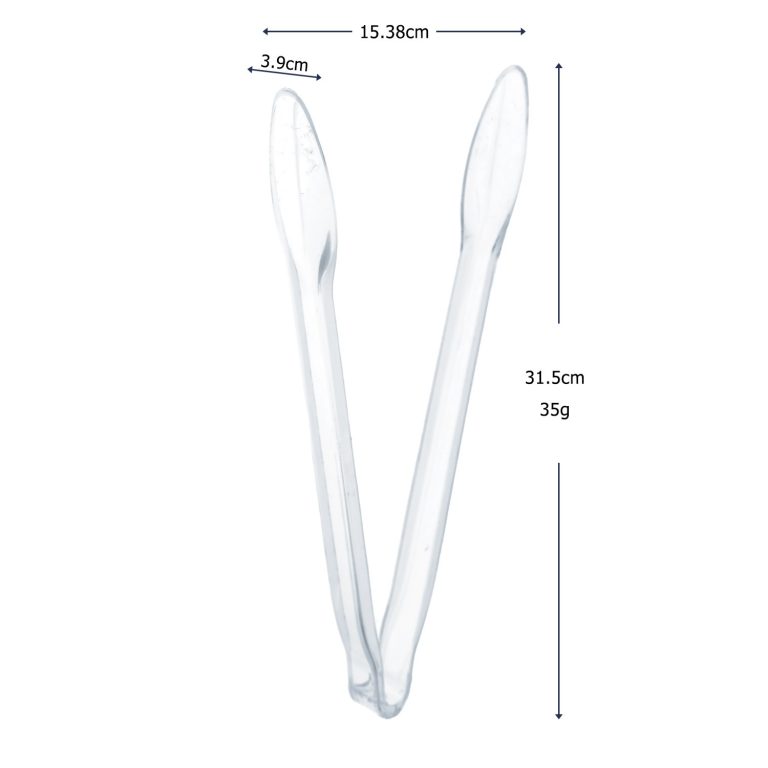
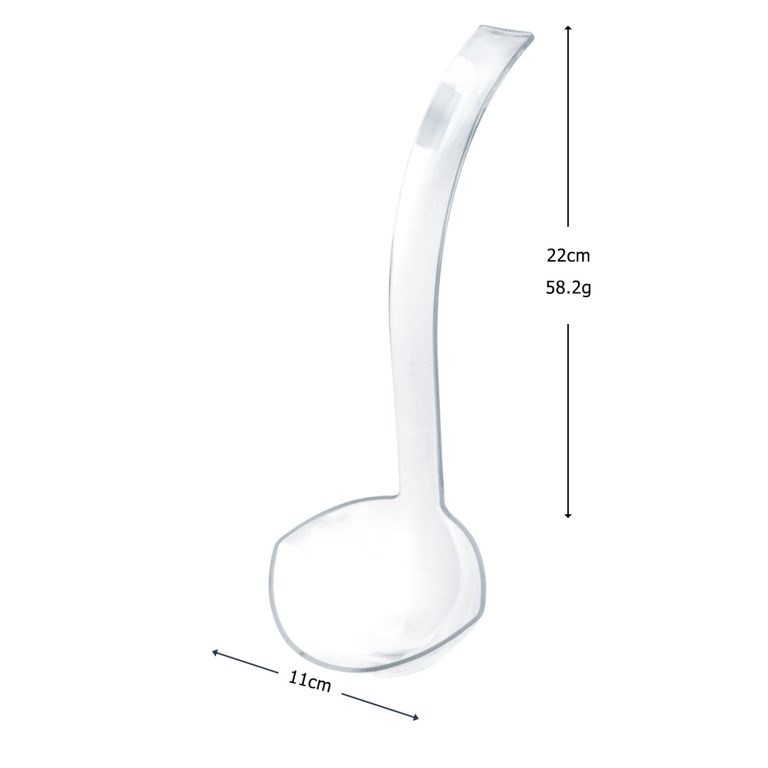
Spoons are the other half of the spec. The round opening is 6.8 cm and the square cup is 5.2 cm on its long side, so a spoon head wider than the smaller dimension will not reach the bottom corner without tipping the cup. For tasting service the 1 oz to 2 oz cups in our shot glass size guide are the better vehicle — 30–60 ml is a two-bite sample, while 130 ml is a commitment.
Case packs and container space
Dessert cups are nested, not boxed individually, which changes what you should ask for: pieces per inner pack, pieces per master carton, carton dimensions and gross weight. Then work out the cube per 1,000 cups yourself, because the catalogue rarely gives it and it is the number that decides your freight. A 6.5 g square cup and a 12 g round cup differ by nearly half a gram per piece, and nested cups add wall thickness to the stack, so carton counts are not proportional to weight alone.
Also ask whether cups are sleeved or loose, and whether the carton carries your brand: in own-label programmes the master carton is often the only place your name appears.
Fitting the cup into the rest of the table
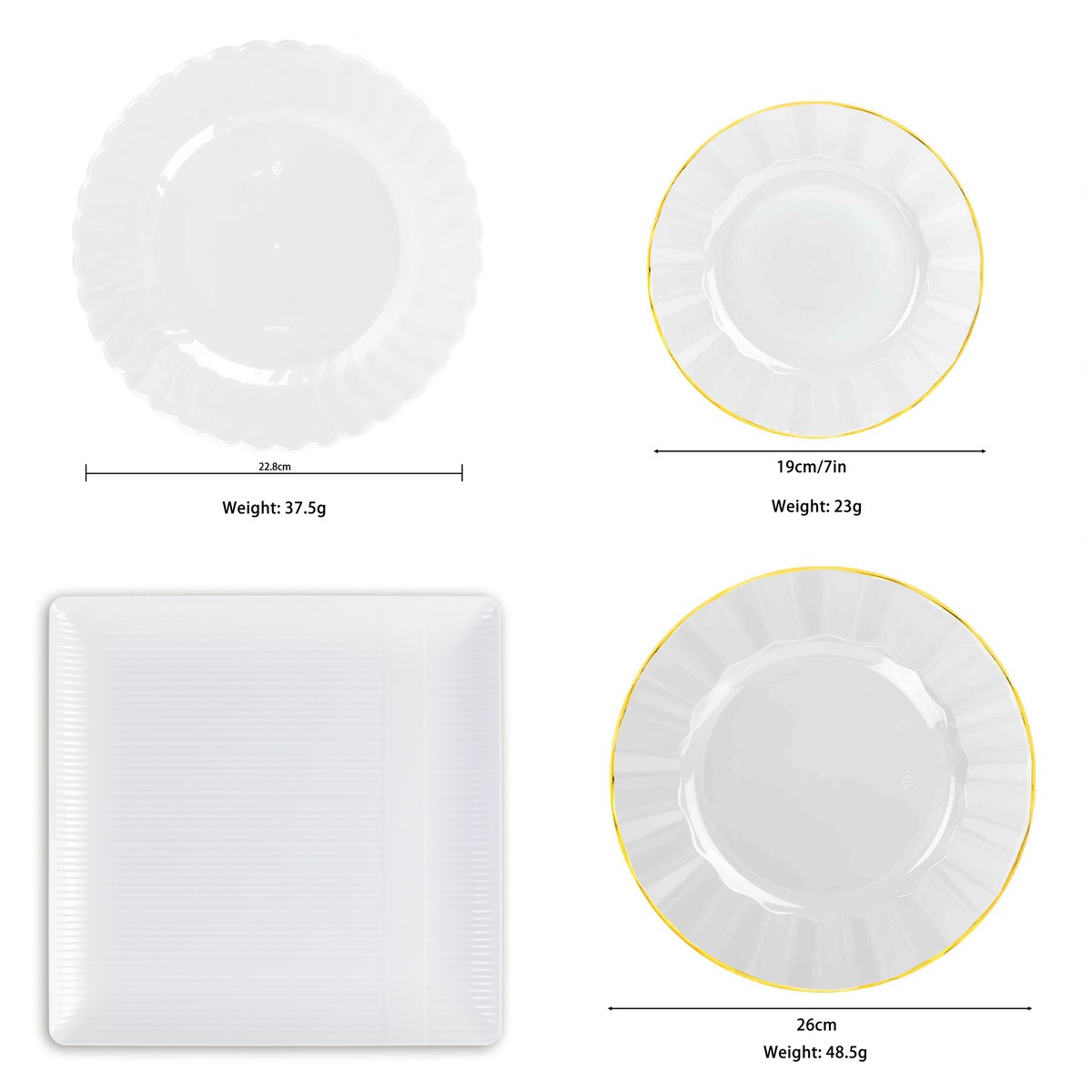
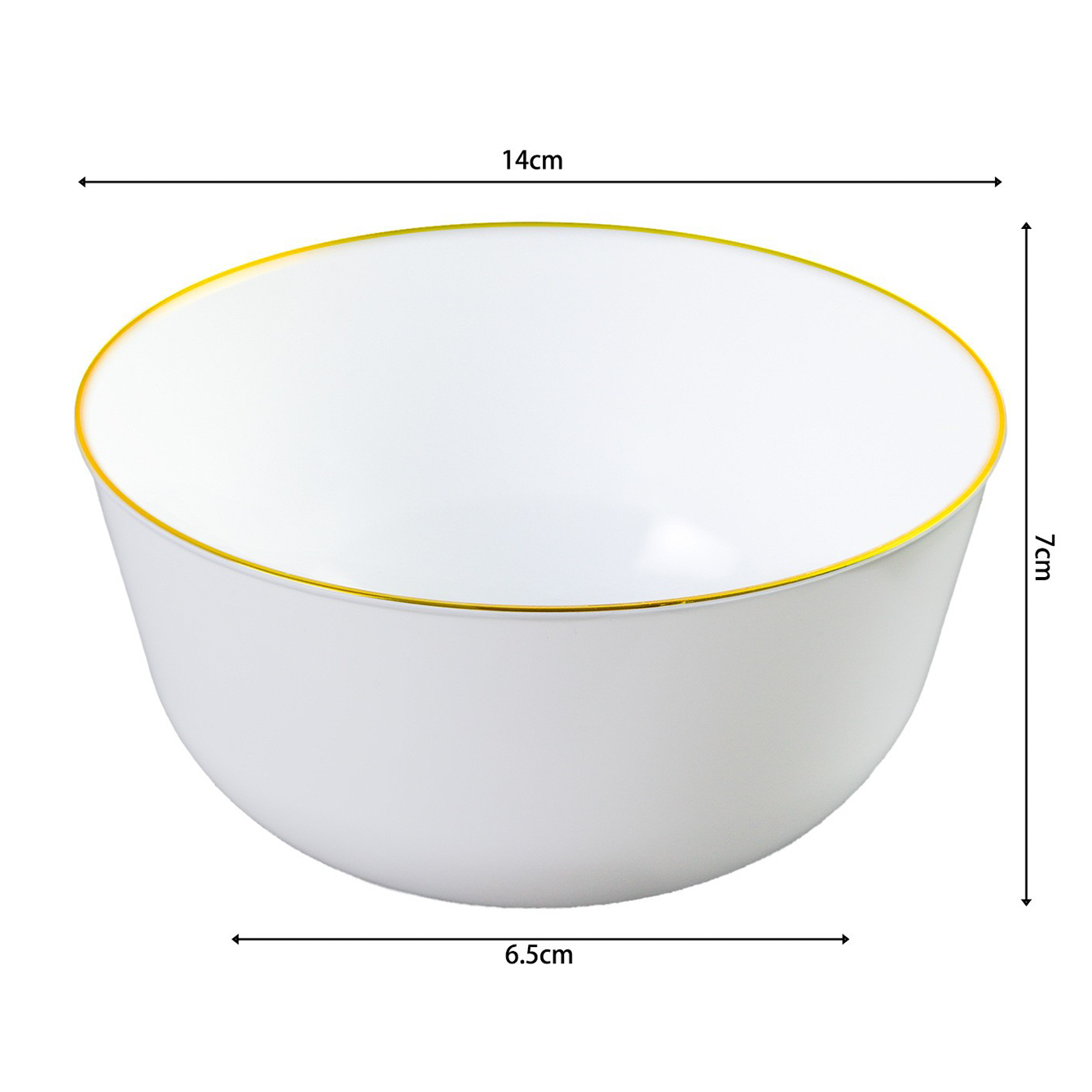
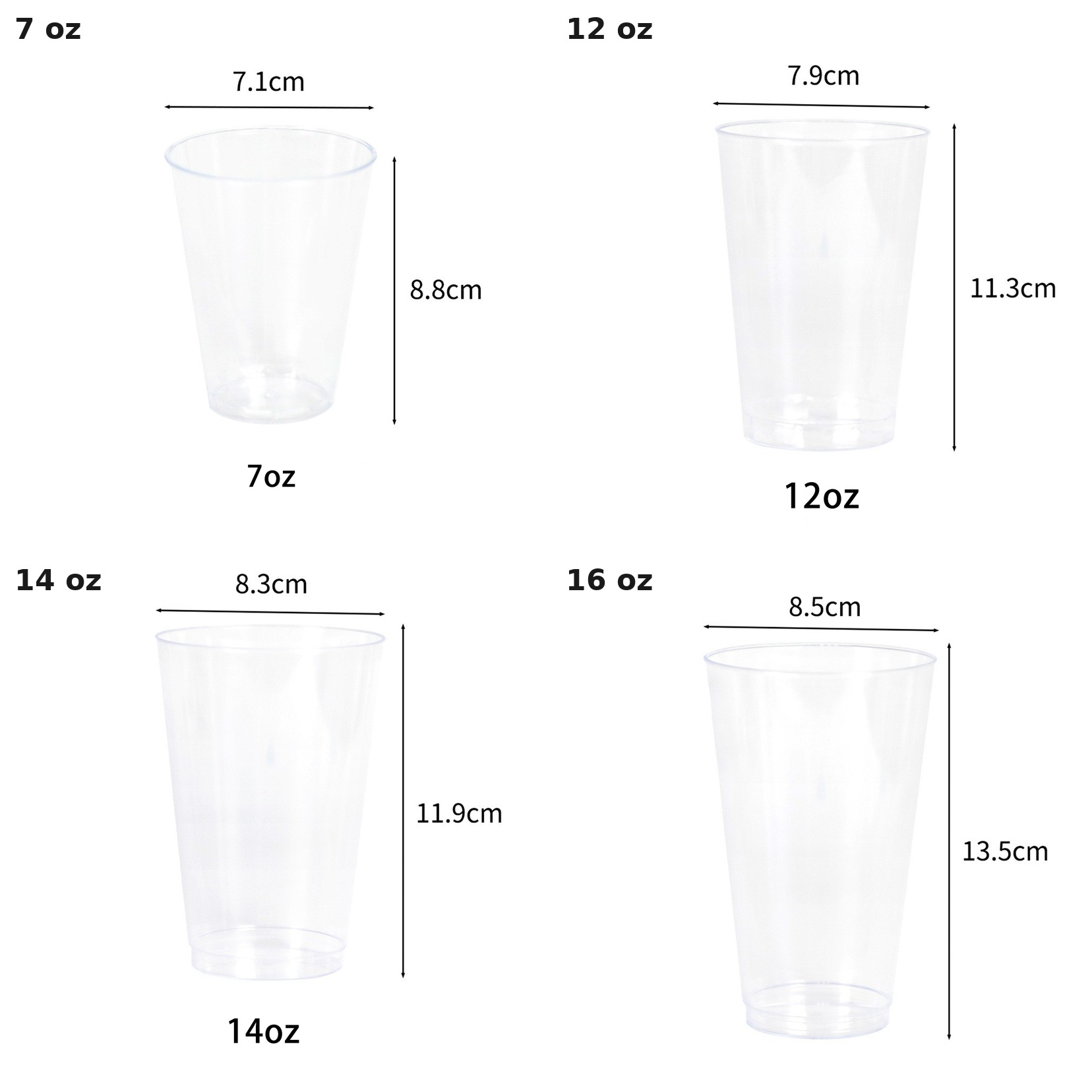
Plan the capacity ladder of the whole table in one pass: 1–2 oz cups (30–60 ml) for tasting, the 130–140 ml dessert cup for the single portion, an 8 oz bowl (240 ml) for a sundae or fruit salad, and a 24 oz bowl (720 ml) for a shared dessert. The drink side runs on a different ladder — 7 oz to 16 oz, as set out in our plastic party cup size guide — and mixing the two is how buyers end up serving a 130 ml dessert in a 16 oz cup.
Clear cups show the layers; a coloured or gold-rimmed cup hides an uneven fill and reads as a premium line, the same way a stemmed disposable glass changes the perceived price of the drink inside it. When the cups form part of a kit with plates, napkins and cutlery, the colour has to be matched across materials rather than eyeballed — our guide to party tableware sets covers why the same red looks different on PS, paper and film.
What to put on the enquiry
Dessert cup enquiries go wrong when they are written as a product name and a quantity. Write them as a specification and a supplier can quote in one pass:
- Capacity in ml, not “4 oz” — 130 ml and 140 ml are different cups.
- Shape and footprint: round with rim diameter, or square with both base dimensions.
- Height, if the cup must fit under a dome or in a chiller drawer.
- Material and heat exposure: cold service, or a hot-sauce line that needs PP.
- Lid: none, or a specific lid with its rim diameter, and whether it must be leak-resistant.
- Colour and finish, matched to the rest of the kit if there is one.
- Pieces per inner pack and per carton, plus carton dimensions, so freight can be estimated.
- Samples filled with your own dessert recipe, not just empty cups.
Runxiang has moulded PS dinnerware and converted PE and PEVA table covers for 20 years, and dessert cups come off the same injection line as our plates, bowls and serving pieces — one supplier, one set of food-contact declarations, one loading plan for a mixed order. The cup range sits on the plastic dinnerware category page and the drink side on the drinkware page; the two specifications are the clear 130 ml dessert cup and the square 140 ml mini cup.
If the cups are part of a larger catering or party order, send the menu, the guest count and the service format in one message. We will come back with a line-by-line quotation covering cups, plates, bowls, cutlery and napkins against the same colour reference, so the tray and the cup arrive matching rather than three shades apart.
Next step. Send your dessert menu and guest count through the contact form and we will confirm cup capacity, lid fitment and carton counts before you commit to a run; the quoting process explains what comes back.