
Most buyers pick the tablecloth print first and the napkins last, and that order is why so many seasonal ranges look almost right. The cloth carries the theme, the plates carry the weight, and the napkin becomes a colour match — often in a shade that reads two steps off once the table is lit.
The napkin is the smallest printed surface on the table and the one guests touch first. Making it work is a design decision, not a colour pick: the artwork has to survive a 2-ply sheet, a fold line that hides the centre, and a die-cut edge. Four things go wrong most often — artwork placement, edge finish, colour matching to the cloth, and range planning.


Start with the table, then repeat it at 13 inches
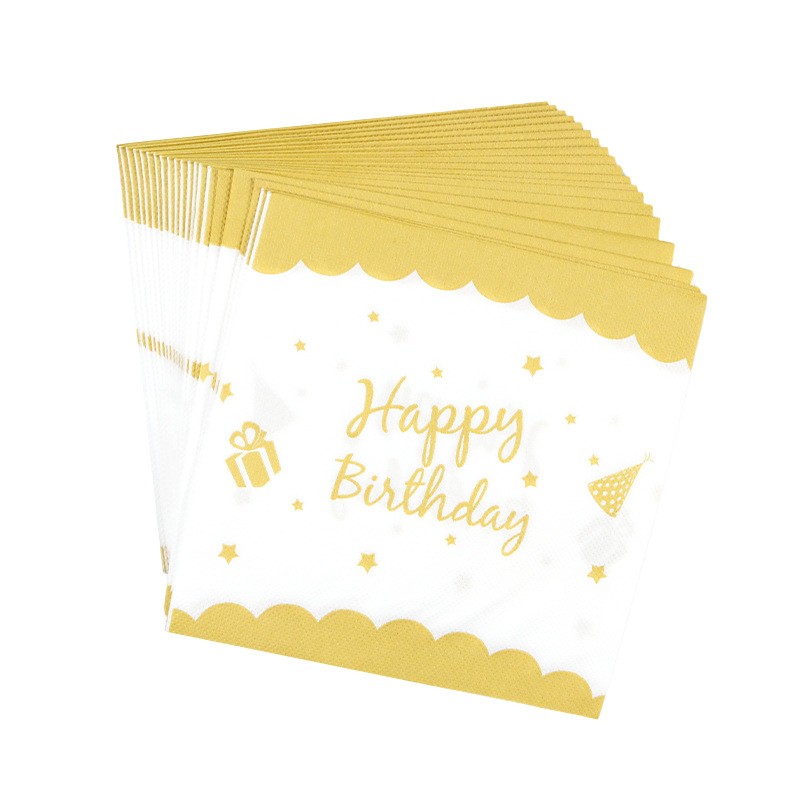
A printed napkin works when it repeats one idea from the table at a smaller scale: the same motif, the same two or three colours, the same metallic accent. It fails when it introduces a fourth story: with a watercolour floral cloth in blush and sage, a modern geometric gold napkin is a second design rather than a match, and the table looks assembled instead of styled. When the cloth is a floral or lace print, the napkin motif is scaled from the cloth repeat, and our guide to floral and lace plastic tablecloths lists the five stock prints and their ground colours.
That means building the napkin range around the cloth. Solid napkins are the base stock that carries volume across a season: they pair with almost any print and stay sellable after the theme moves on, while printed napkins carry the theme and are bought per design. A working split is deep stock in a few solid shades and two to four prints per season, so see the solid colour napkin range and the printed napkin range as two different jobs rather than two versions of the same product.


What a printed napkin is made of
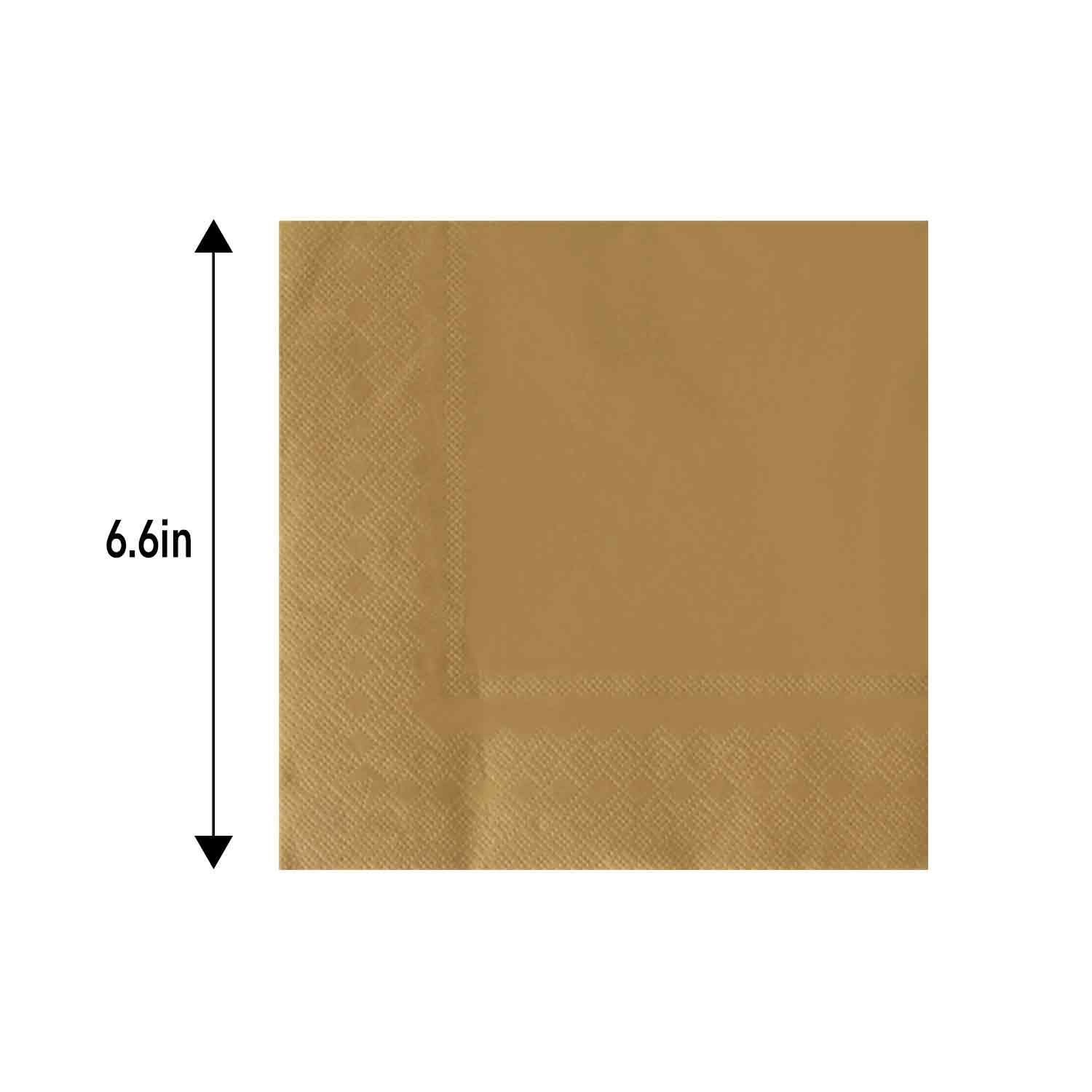
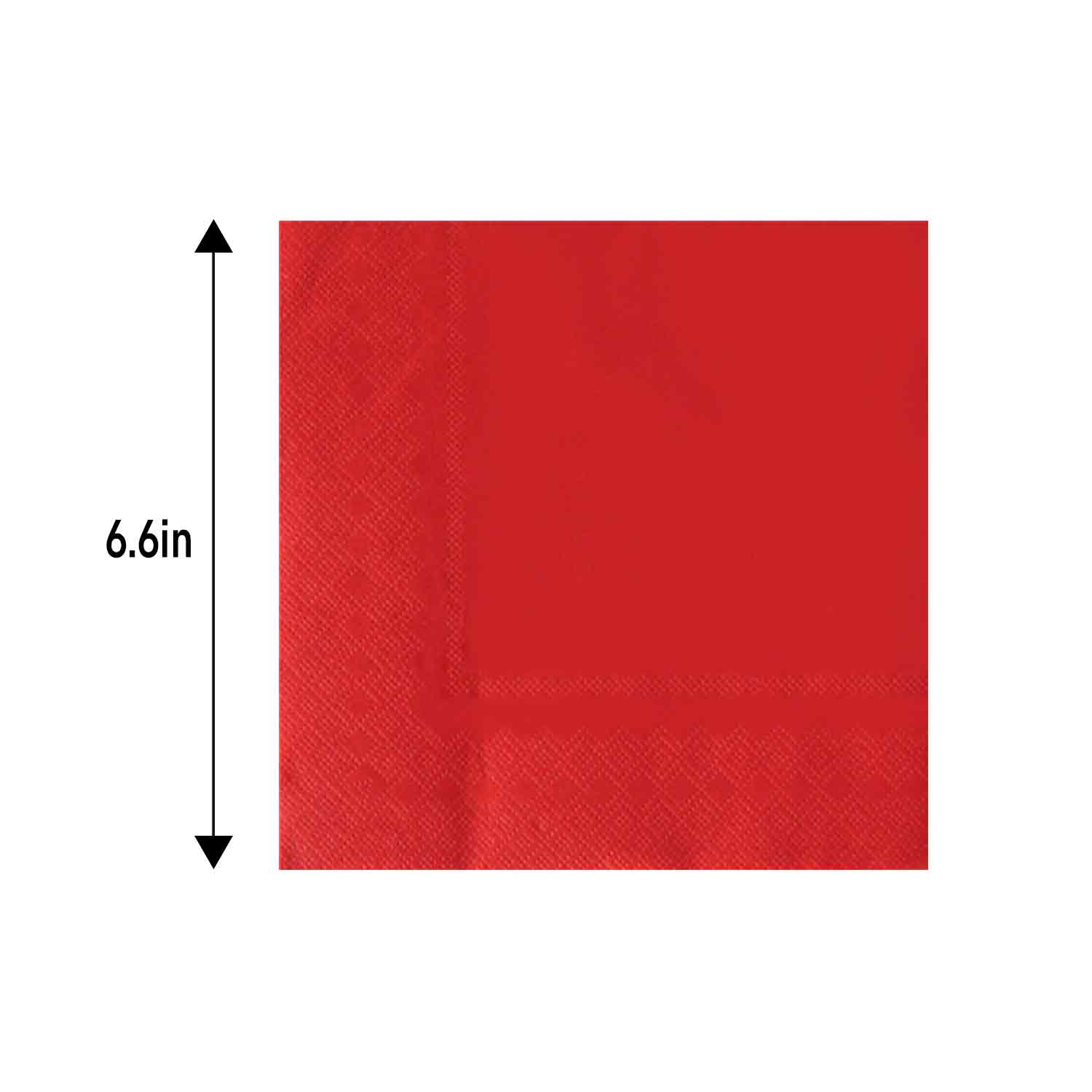
Our napkins are a 13 × 13 in paper sheet, 2-ply, 50 g, printed. That geometry matters for design work: a 13 in sheet quarter-folds to roughly 6.5 × 6.5 in, which is the surface a guest actually sees at the place setting, so half the printed area is folded inside and never displayed.
Ink sits on the outer ply; the inner ply provides absorbency and hand feel and is not printed, so heavy coverage on the outer ply changes how the sheet feels and releases from the stack. Two further finishes sit alongside plain print: an embossed sheet that carries the pattern in relief rather than ink, and a scalloped die-cut edge.
| Item | Spec | Why it matters |
|---|---|---|
| Sheet size | 13 × 13 in | Quarter-fold display face is about 6.5 × 6.5 in |
| Ply and weight | 2-ply, 50 g | Absorbency and stiffness at the place setting |
| Edge | Straight trim or scalloped die-cut | Die-cut needs artwork set inside the outline |
| Finish | Flat print or embossed | Emboss adds texture without adding ink coverage |
Where the artwork lands once the sheet is folded
The fold is the part most artwork files ignore. On a quarter fold the two creases cross in the middle of the sheet, so a logo or central medallion placed dead centre is broken by the crease and half-hidden inside the fold. Put the mark off-centre, or design a border or corner motif that survives the crease and still reads when the napkin is opened flat on a lap.
Scale is the second trap. A repeat that looks restrained on a 13 in sheet turns noisy when the visible face is 6.5 in square, and fine repeats fill in on textured paper — small type and hairline rules lose their gaps. Keep text readable across a table and fine detail on the outer ply.
If the edge is die-cut, artwork has to respect the dieline rather than the sheet edge: bleed is set to the die outline, and anything in a corner the scallop removes is simply gone. The layout habits that work on printed plastic tablecloth panels transfer to napkins only after the fold and the dieline are taken into account.
Edge finish: straight trim, scalloped cut or embossed
Straight trim is the standard stack and the easiest to pack and dispense. A scalloped edge gives the sheet a silhouette that reads as a party product on a shelf, but it needs a die tied to that outline — change the shape and it is a new tool. Where a range shares one edge shape across several colourways, the tooling is spent once and carried across designs, which is how a shaped edge is normally justified.
Embossing is the quieter option: the pattern is pressed into the sheet instead of printed, so it holds tone-on-tone colour without adding ink coverage and photographs well in white and pale shades. Combining emboss with print asks for registration, so approve a physical sample for anything that layers them.
Matching the napkin print to the tablecloth print
Most colour drift here is a substrate problem rather than an ink problem. A paper napkin absorbs ink; a PE or PEVA tablecloth film holds it on the surface, and the same ink recipe lands a shade apart on the two materials. Add metamerism — two colours that match under one light and separate under another — and a sample approved on a phone screen or under office fluorescent light can look wrong under the warm LED of a banquet room.
Two habits prevent it: approve against a physical master sample of both the cloth and the napkin, viewed under the light the table will be seen in; and record the measured difference instead of trusting the eye. ASTM D2244 is the standard method for instrumented colour difference, and the Delta E scale is what most buyers quote when they put a tolerance into a purchase order. The metamerism effect is why a single number never tells the whole story.
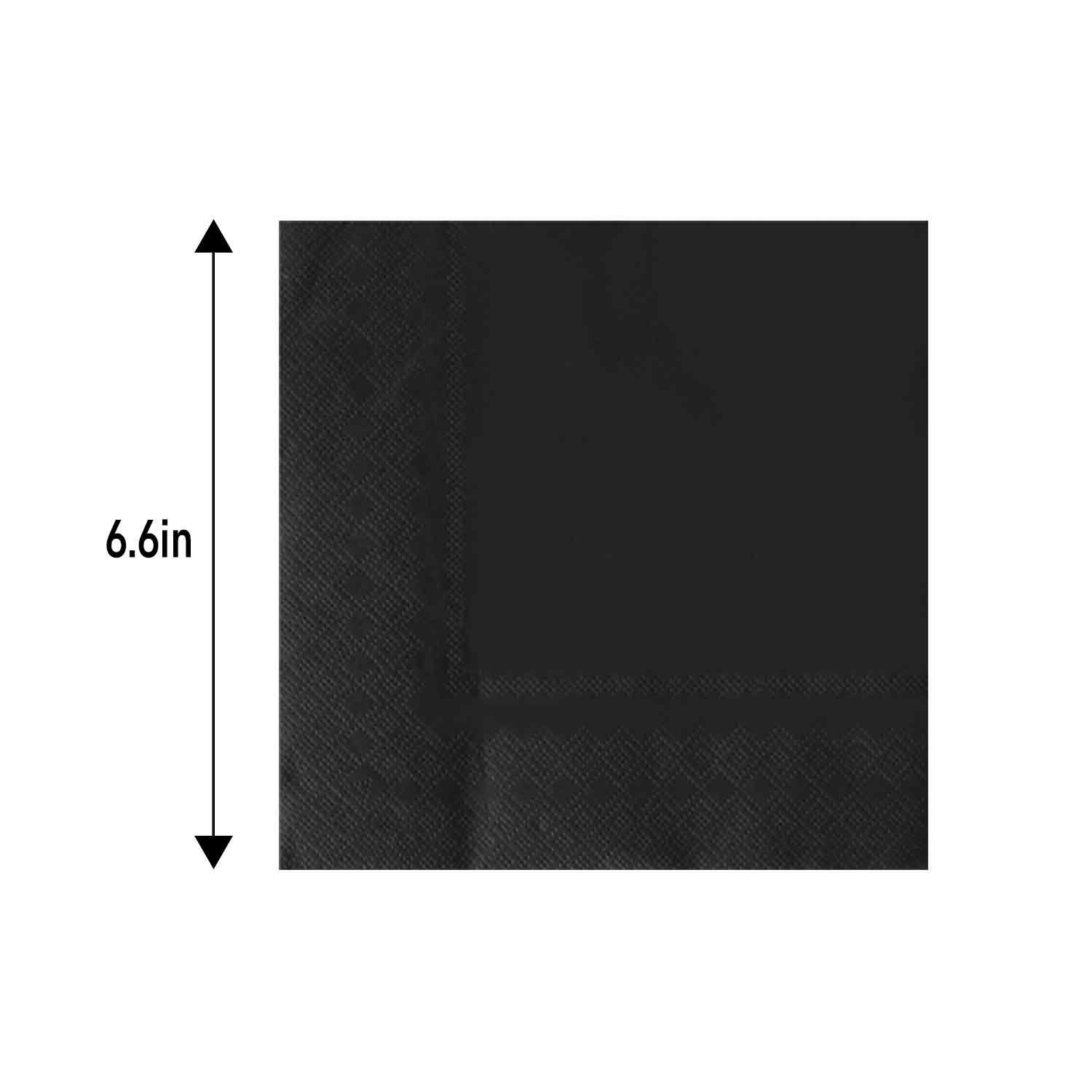
There is a structural difference worth naming. On a black-and-white tablecloth the white is usually unprinted film, not white ink; on a printed napkin white is the paper itself and black is a printed layer, so the black carries different density and sheen on each. That is why the pairing is judged on a sample table, not on two swatches held side by side. Our colour specification guide covers the same master-sample approach from the cloth side, and the substrate rules behind it sit in 21 CFR 176.170 for paper components in food-contact use.
How many napkins, and how to split a season across designs
Napkin counts follow the service, not the headcount alone. For a seated meal, plan two per guest and hold a third as buffer for dessert and spills; buffet and cake service push the number up because guests take a fresh napkin at each pass, and cocktail service consumes napkins with drinks rather than at a place setting.
For range planning, treat the print as the theme and the solid as the volume. Each print should sell on its own at 6.5 in — a single motif or a tight border beats a busy all-over pattern at that size — while the solids absorb the reorders when a season runs longer than expected. The mechanics of ply, folded size and colour matching across a full range are covered in the bulk napkins buying guide.
What to send, and what to check on the sample
An enquiry that returns a usable sample on the first pass carries five things: vector artwork with fonts outlined, the artwork placed on the dieline rather than a bare sheet, the edge and finish wanted, a colour reference for both napkin and tablecloth, and the packing format per design. Where a range mixes prints and solids, say so up front — per-design packing and mixed cartons are packing decisions, not afterthoughts.
When the sample arrives, check four points: the fold breaks the artwork where you expected, the die-cut edge clears the border, the colour holds against the cloth under warm light, and the two plies separate cleanly at the corner. Those four checks catch almost every fault that turns up in a bulk run, and they make a quotation line by line readable when print and tooling items appear on it. Print and tooling charges behave the way they do on custom printed tablecloths: one charge per design or shape, approved on artwork, carried through the run.
Runxiang has made PE and PEVA tablecloths, printed napkins and rigid PS tableware for wholesale buyers for over twenty years, and we quote printed napkins alongside the cloth and dinnerware they sit with, so the colour story is approved as one set. Send the artwork, the edge and the table you are matching and we will come back with a spec sheet and a sample plan. See the full napkin range or the plastic tablecloth range for the pieces that share the table.
Next step. Send your artwork, edge choice and the tablecloth print you are matching through our contact form, and read how we quote before you brief the design. Related reading: bulk napkins ply and size guide and printed tablecloth layout and repeats.