










Ask two suppliers for the same plastic tablecloth and you can end up with two very different products at the same quoted thickness. The difference is rarely in the price list. It is in the process behind the quotation: which resin went in, how evenly the film was pulled, whether the surface was treated before a single drop of ink was applied, and how much of the run was lost to print register waste. This is a walk through the line that turns resin pellets into a printed PE tablecloth, and what each step means for the buyer holding the sample.
Why the Process Explains the Quote
A tablecloth is a film product with a print on it, and both halves carry tolerances. Thickness varies across the web, ink adhesion depends on a surface treatment you cannot see, and print position moves whenever web tension moves. None of that appears on a quotation listing only size, thickness and price per piece — which is exactly why two products that look identical on paper behave differently in a restaurant, a party pack or an outdoor market stall.
Follow the five steps below and you will know the two or three measurements that actually predict performance, and be able to ask for them by name.
Step 1: Resin and the Additive Package
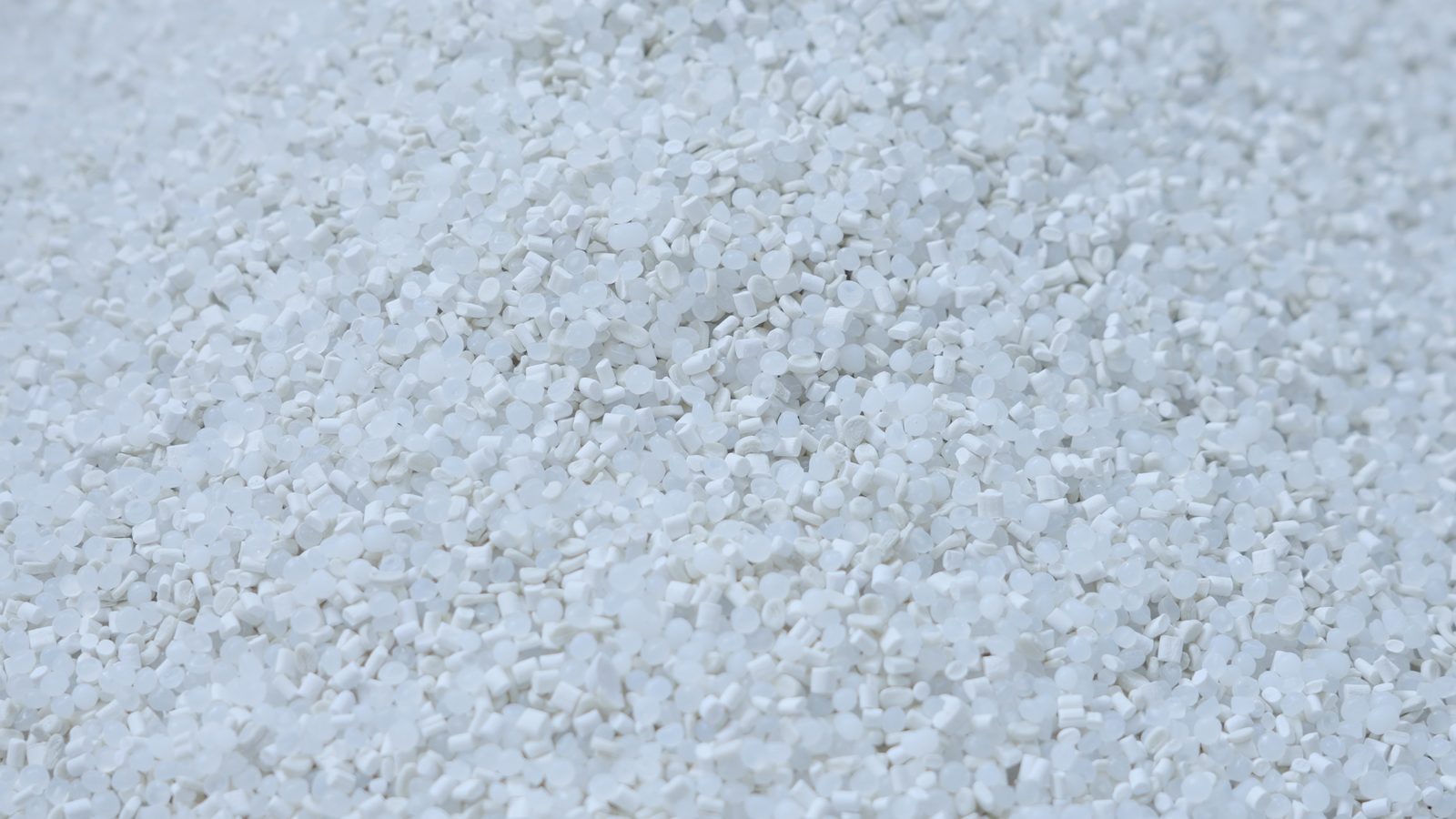
Tablecloth film is polyethylene, most often a blend of LDPE and LLDPE grades selected for softness, tear resistance and the right feel at the required thickness. It is also the point at which a supplier chooses between straight polyethylene and a PEVA blend, which is a product decision before it is a production one; our comparison of PVC, PEVA and vinyl tablecloth materials covers when each one wins.
Into the base resin go three things buyers should know about:
- Masterbatch. The colour concentrate, typically a few per cent of the recipe. It is what makes a black tablecloth black rather than charcoal grey under marquee lighting.
- Slip and anti-block agents. Without them, film that has been wound or folded sticks to itself and staff cannot open a cover one-handed during service.
- Stabilisers. Relevant mainly for outdoor and catering use, where sun exposure and repeated handling age the film faster.
Recycled content is a legitimate choice, and increasingly a requested one. Be aware of what it does: reprocessed polyethylene can reduce clarity and can shift colour slightly between production lots, so if your market asks for recycled content, specify the percentage and agree a colour tolerance rather than assuming it is cosmetic. Polyethylene film carrying the #4 resin code belongs in store drop-off film collection rather than curbside recycling, which is worth stating plainly on your own packaging if you sell to consumers.
Step 2: Blown Film — Turning Pellets into a Bubble
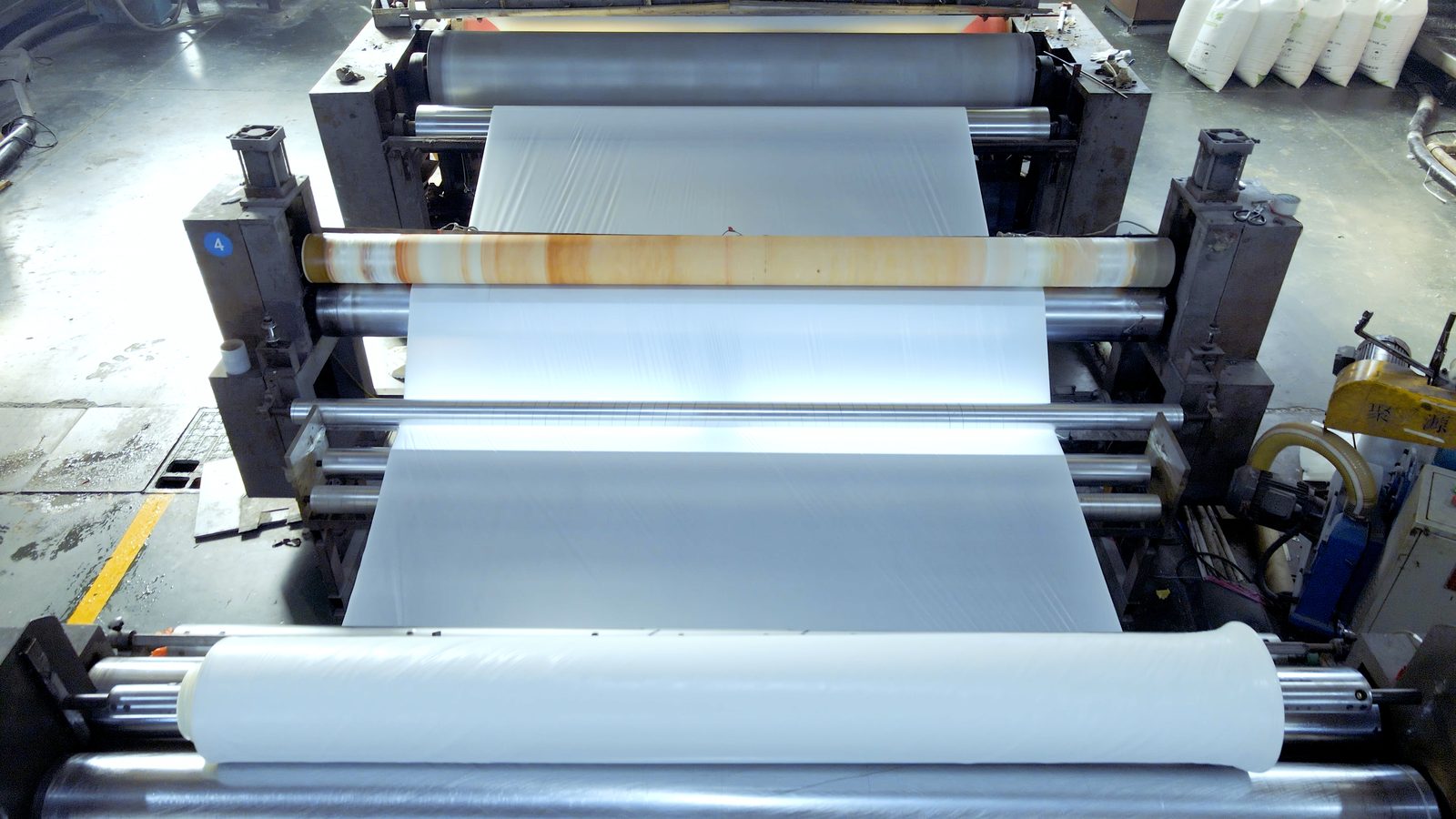
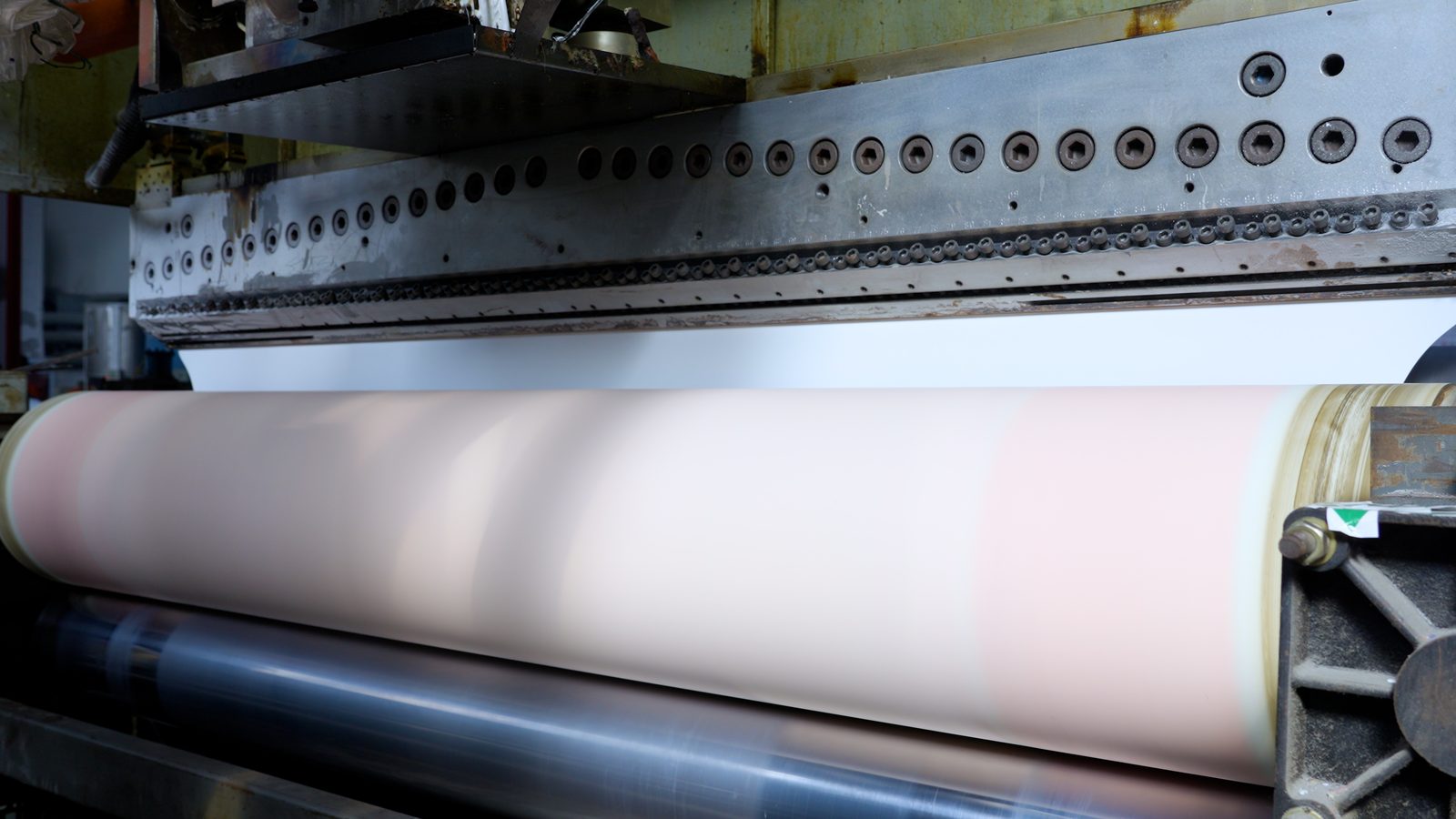
The resin blend is melted in an extruder, pushed through a circular die, and inflated into a bubble. An air ring cools it from the outside, nip rolls collapse the bubble into a tube, and the tube is slit into flat film. The whole tablecloth exists at this stage; printing only decorates it.
The critical variable is gauge. A bubble never has perfectly uniform thickness — it develops thick and thin bands running up its length. Rotating the die and the air ring spreads those bands around the film instead of letting them run in one place, which is why good lines rotate both. Rotation redistributes the variation; it does not remove it. The practical consequence for a buyer is this: a nominal 0.05 mm film with a local low point will tear at the low point, every time, and a local high point wastes material and reads differently in transmitted light.
So when you specify a product, ask for the gauge range, not only the nominal figure, and ask where it was measured. For the full vocabulary — mil, micron, GSM and grams per piece — our guide to tablecloth thickness measured in mil, micron and GSM explains how the units relate and how to compare two quotations fairly.
Step 3: Corona Treatment — The Invisible Step That Makes Print Stick
Polyethylene is chemically unreactive by design; that is why it resists water and oil so well. The same property makes it a difficult printing surface, because ink that cannot wet the surface beads and rubs off. Untreated PE sits at a low surface energy, well below what a water-based flexographic ink needs, so the film passes through a corona discharge that raises the surface energy before printing.
For PE printed flexographically with water-based ink, the usual target band is in the region of 38 to 44 dynes per centimetre, and treatment is normally done in line rather than days ahead, because treat level decays with time and handling. The verification is cheap and physical: a dyne pen drawn across the roll shows immediately whether the surface is live. If print scuffs off a folded tablecloth, or ink offsets onto the bag, the treatment step is the first place to look — and it is the one step no quotation ever mentions.
Step 4: Printing — Plates, Registration and Colour
Most production of a printed plastic tablecloth is flexographic: one flexible photopolymer plate per colour, each mounted on a cylinder, each transferring its own ink onto the moving film in a continuous pass. Because the plates are physical objects, the process has three consequences that reach straight into your order:
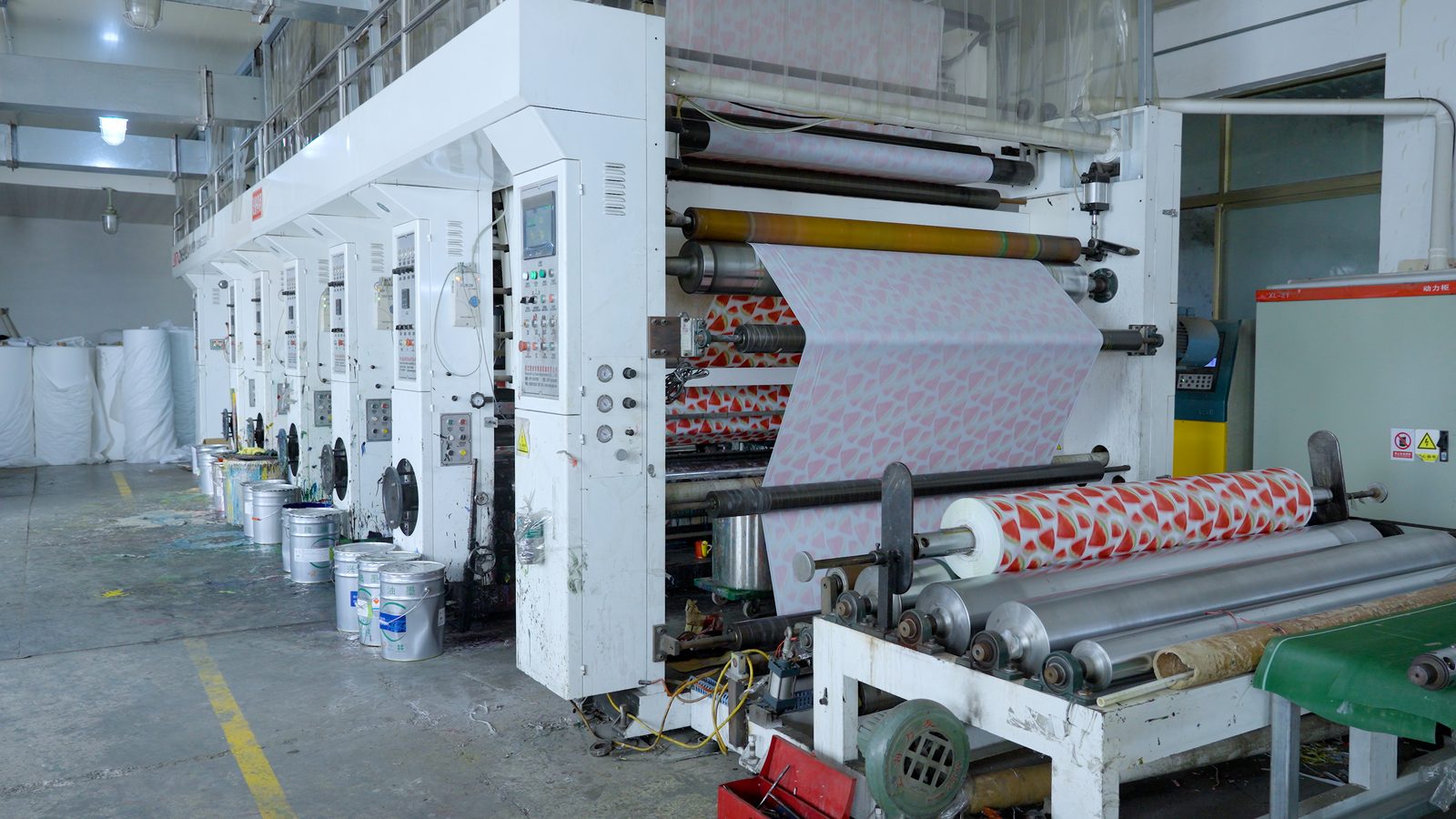
- One plate per colour. More colours means more tooling cost and more registration risk, which is exactly why plate and cylinder fees appear on a quotation for a custom design. We cover how those fees and artwork approvals work in our guide to plate fees, artwork and colour approval.
- Registration drifts. Colour-to-colour alignment moves with web tension, film stretch, gauge variation and press speed, so a slightly uneven film prints slightly out of register. Ask for a registration tolerance in millimetres and agree it before the run, not after the first carton arrives.
- Colour needs a reference and a light. Compare printed goods against the approved sample under the same lighting; two people looking at one tablecloth under different lamps will disagree every time.
Print repeats on a fixed repeat length set by the cylinder circumference, and repeat length also constrains artwork layout. If a design depends on a continuous border or a repeating motif, say so before plate making, not after.
Step 5: Slitting, Folding and Packing
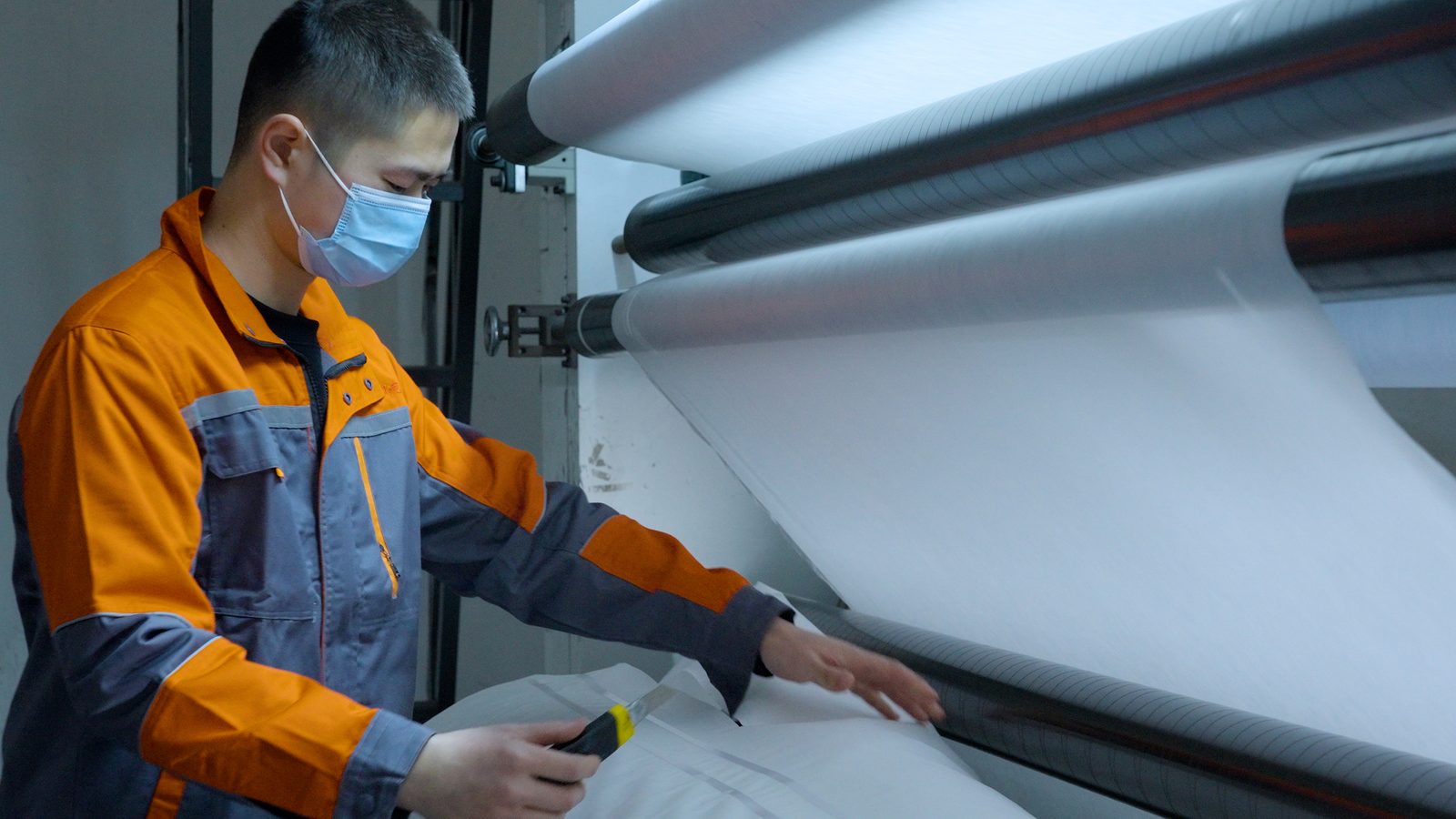
After printing, the web is slit to finished width and rewound to the specified roll length and core, or cut and folded into individual covers. Rolls suit restaurant and catering tablecloth use, where staff cut to table length; count-per-pack covers suit retail party packs and online sellers who need a predictable piece count per order.
There are tolerances here too, and they are the ones buyers notice last: roll length against nominal, core diameter, fold accuracy, bagging and sealing, and the number of pieces actually inside the carton. These are also the numbers that decide your freight, because carton size and count drive how many cartons fit in a container. That is why the carton specification belongs in the line-by-line check of a tablecloth quotation, not in a later email.
Step 6: The Six QC Gates Worth Asking About
Good factories check at fixed points rather than inspecting finished cartons. Ask which of these are recorded, and ask to see the record — a promised check and a logged check are different things:
- Resin and masterbatch identity on receipt, against the agreed grade.
- Gauge on the line, with the measured range written down for the run, not just the set point.
- Treat level checked with a dyne pen and logged by shift.
- Print against the approved sample, including registration and print position measurement.
- Roll or piece verification: length, core, count, sealing and cut quality.
- Packing audit: pieces per carton, bag seal, carton marking, and a loading photo record at shipment.
What This Means on Your Next Order
You do not need to become a converter to use any of this. You need to write a specification in terms the process can be held to: gauge range instead of a nominal thickness, a treat level plus a retained reference sample, a registration tolerance in millimetres, a roll length tolerance, and a defined pieces-per-carton count. Then add the market you sell into, and the priorities sort themselves: catering lives or dies on roll consistency, retail lives on print and count accuracy, outdoor work asks for the stabiliser.
If you are moving from a stock item to your own printed design, our OEM and ODM manufacturing guide walks through the tooling, sampling and approval sequence that sits on top of everything above. And if you would rather have the numbers checked for you, send us the SKU list and the use case: email simon@runxiangplastic.com or call / WhatsApp +86 18617181658, and we will tell you which measurements actually move your cost and which are noise — from a single sample order to a full program run on our own extrusion, printing and packing lines.
Sources: LyondellBasell — how to solve blown film problems (gauge bands, die and air ring rotation); Enercon — recommended surface energy ranges for printing on polymer surfaces; Eagle Flexible Packaging — flexographic printing 101; How2Recycle — store drop-off for LDPE #4 film.
Shop the range: printed plastic tablecloths · solid colour tablecloths