
Dot prints look like the simplest design in the party aisle, yet a polka dot plastic tablecloth hides four decisions that change the artwork, the price and the reorder: the ground colour, the dot scale, the cover shape and the film weight. Buyers who choose on colour alone end up with a pattern that reads flat across a long banquet table, a rectangle cut that loses dots at the edges, or a second batch that no longer matches the first. This guide walks through how a dot tablecover is actually specified, using the dot range we make every month.
Why dot prints carry a party tablecloth range
A dot sells in every season without a licence, a theme or a translation — birthdays, showers, graduations, picnics and New Year’s Eve all fit the same print. That is why the dot family is one of the deepest lines we run: our printed plastic tablecloths cover white dot on a coloured ground, coloured dot on a white ground, metallic gold dot and a multi-colour confetti scatter. For a buyer the value is in the word “family”: choose a dot and you can sell a round cover, a rectangular cover, a runner and matching napkins in one story, lifting the basket without a second design budget. The trap is treating the family as one product — each ground colour and dot colourway is its own print run.
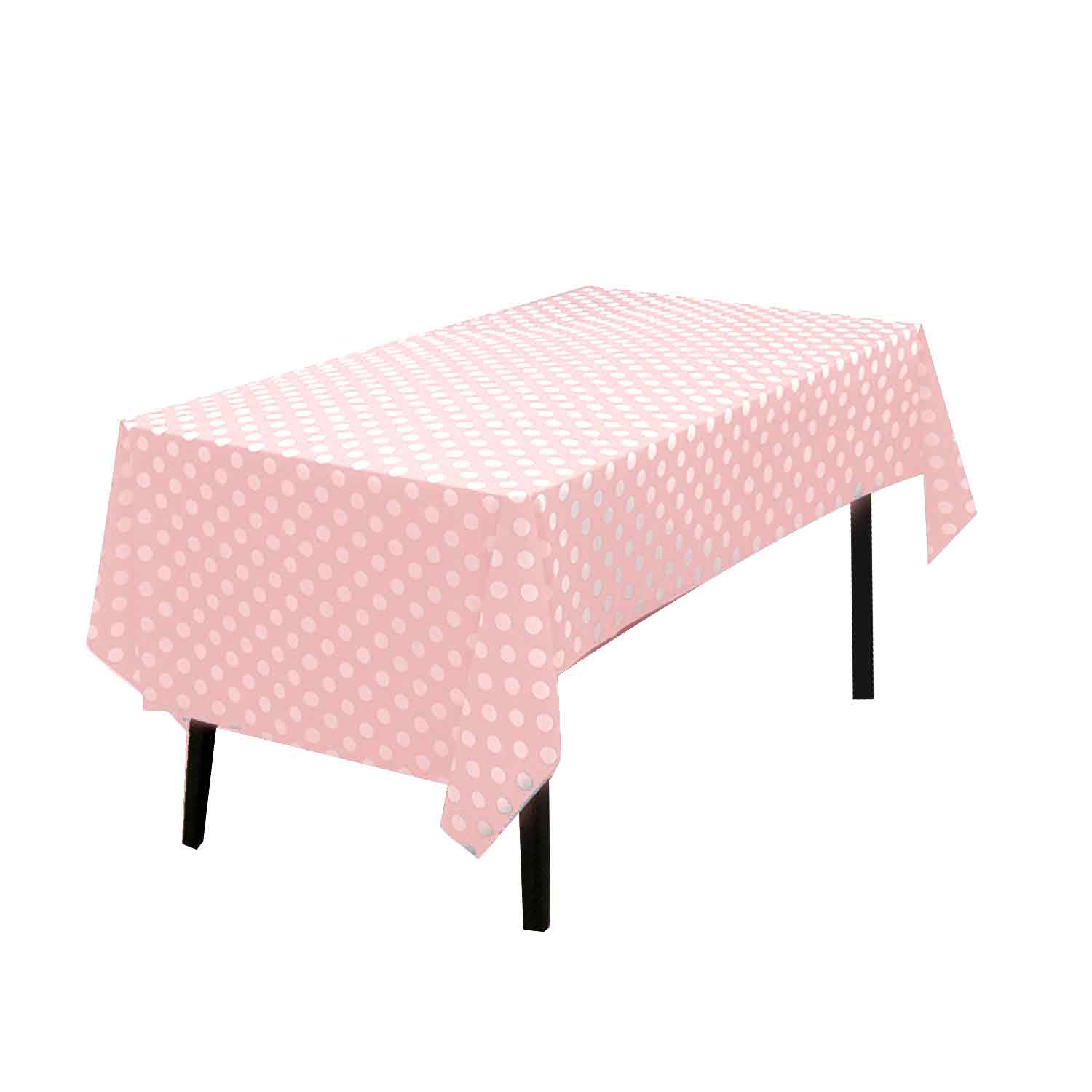
White ground or colour ground — the first decision
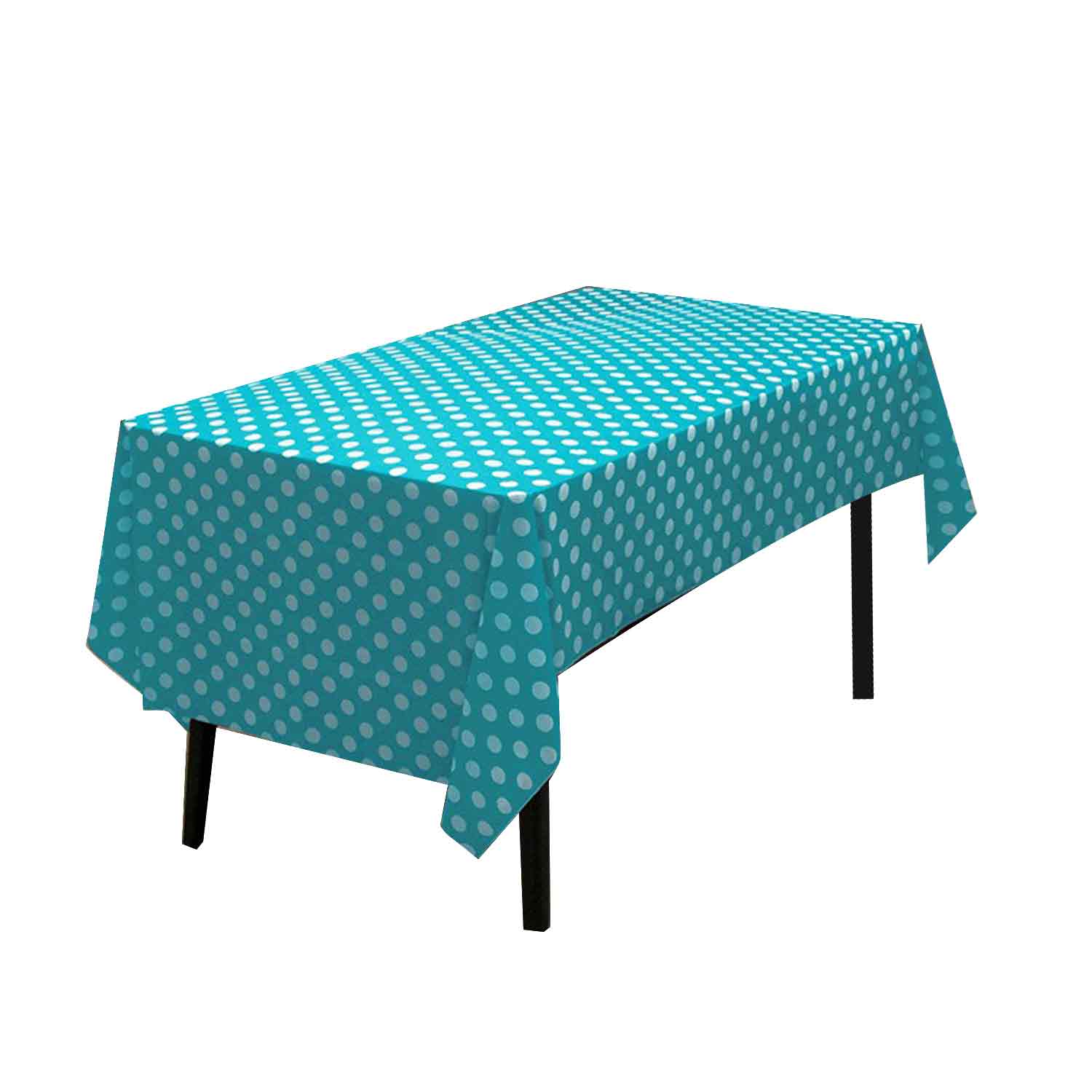
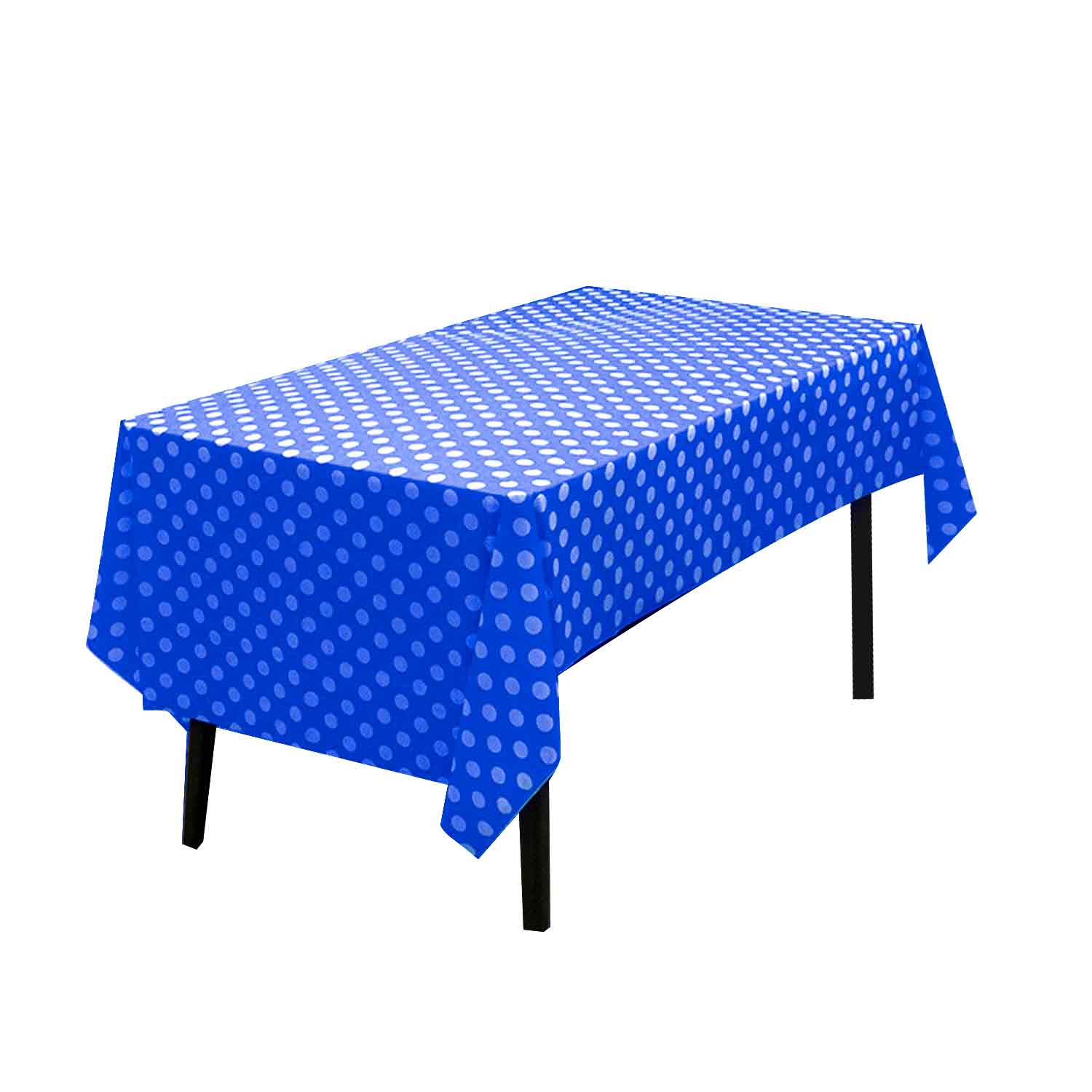
Every dot print starts with one question: is the white the background, or is the colour? On a white-ground cover the film reads clean and bright and the dots do the talking — the blue-and-white, white-and-black and white-and-gold styles buyers recognise instantly. On a colour-ground cover the coloured film carries the mood and white dots keep it crisp, which is where the light blue, light purple, lime green, pink and fuchsia round covers come from. The choice also changes what happens in a dim hall: a white ground throws more light back, so white-dot-on-colour reads softly from a distance, while a strong colour ground keeps its pattern at the far end of a room. Daytime outdoor events lean white-ground; evening banquet work holds better on the colour grounds.
Dot scale and pitch: a sample beats a screen
Dot scale is the number most often ordered wrong, because a screen shrinks the pattern and hides how big a dot really is on a 54×108 inch or 84 inch cover. On a wide round cover a fine dot reads as texture from two metres away, while a large dot reads as a design from across the room; the pitch — the gap between dots — matters just as much, because a tight pitch looks busy on a big cloth and a wide one looks sparse on a small cover. The name has a history worth knowing: “polka dot” is borrowed from the polka, the Czech dance that swept Europe and America in the mid-1800s, and it was attached to the evenly spaced round dot around 1857, as the history of the polka dot records. That longevity is why the pattern is safe for a stock range. Before a bulk order, ask for a swatch printed at the real dot size and judge it looking down at table distance, not at arm’s length.


Round covers and rectangle covers are different dot canvases
Our dot line is built in two shapes that behave very differently for printing. The round covers run from 84 inch (213 cm) upward, a large uninterrupted print area where a dot that looks right on a small table can look stretched across a 90 inch round. The rectangular covers are cut at 54×108 inch, the classic banqueting size, and that is where the edges matter — the dot must be placed so a full dot, not a half-dot, lands at the hem on every panel. Drop changes with the table, so the same rectangle frames its dots differently on each one: on a 6 ft table a 54×108 inch cover gives roughly 18 inch drops at the ends and 12 inch at the sides, while on an 8 ft table the end drop shrinks to about 6 inch. That wider plain margin on the 6 ft table can make a spacing that looked balanced in artwork look loose in the finished cover. Round covers avoid the corner problem but demand a centred repeat, so confirm the repeat position on the round cut too, not only on the rectangle.
Film weight and opacity behind a dot print
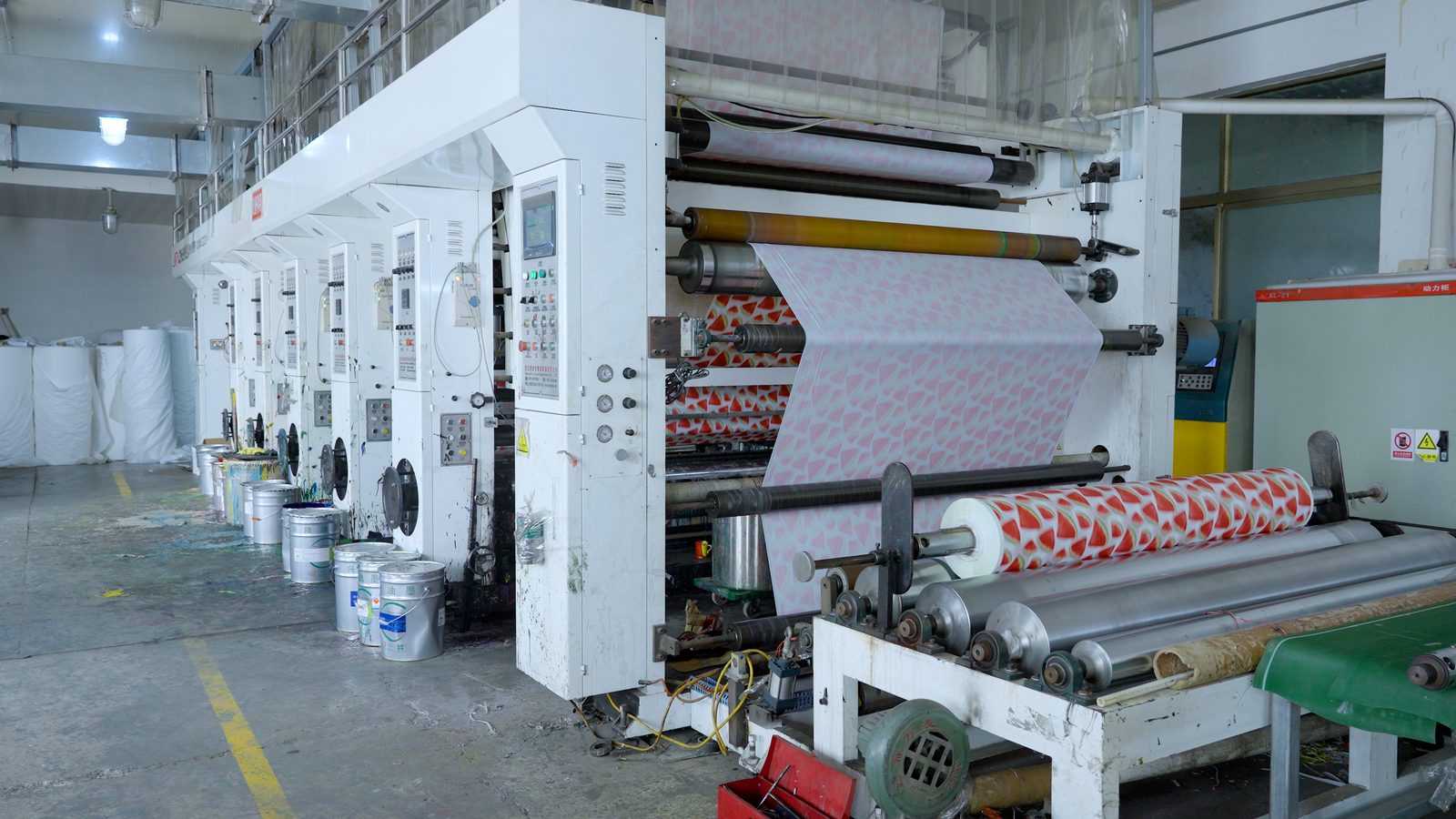
A dot is only as good as the film under it. We print on PEVA at a 25 g/m² standard weight, which keeps a 54×108 inch cover light enough to fold and pack in quantity while staying opaque enough that a white dot reads as a true white rather than a see-through one. When the film is too thin the printer must lay down more ink to make the dot opaque, and that heavier ink load is what smears or scuffs in transit. Dot images come off a plate rolled across the web, so every colourway is a separate plate and a separate run — the process described in the standard note on flexographic printing. If a cover is meant to take food directly, the resin and any colourant must be confirmed as food-contact grade; the underlying polyolefin rules sit in 21 CFR 177.1520, and we match the exact grade to the end use rather than guess.

Colours, solids and matching napkins
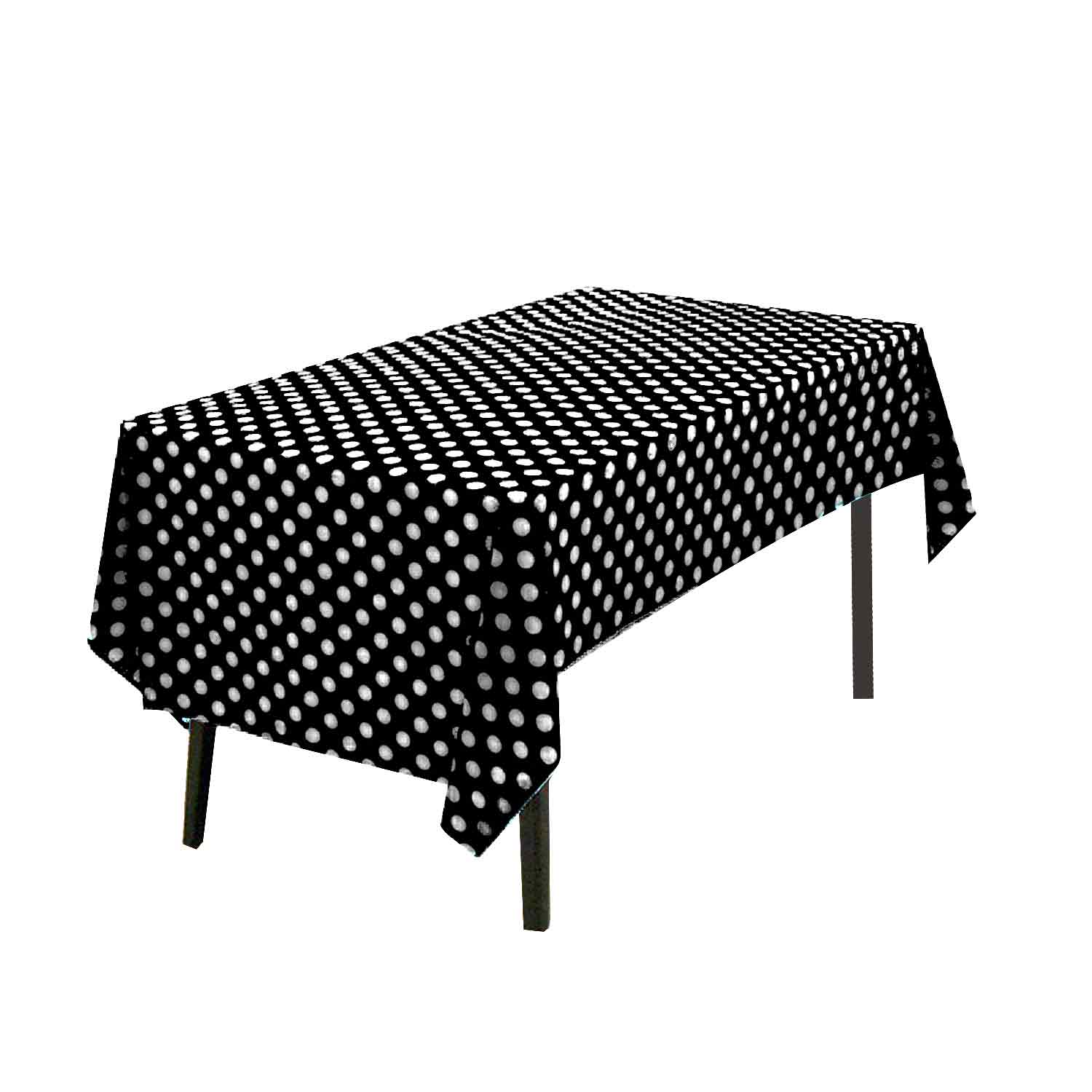
A dot print is really two colours — the ground and the dot — and both must sit inside your wider colour story. The current range runs from white-and-black and white-and-gold at the neutral end, through blue-and-white and dark-blue-and-white for summer and nautical themes, to light purple, lime green, pink and fuchsia for kids’ parties; gold dot on a purple or blue ground is the entry to the more premium table, and a multi-colour confetti dot covers a broad festival audience in one print. Standardising the ground colour is what makes a set look bought together: pick one ground for the season, then order the dot cover, a matching solid-colour tablecloth and napkins that echo the same tone. Mixing the dot with a checkered or novelty print in different colours is the fastest way to make a table look unresolved. Our plastic tablecloth colour guide explains how to fix a shade across a range, and the same master-sample discipline applies to dots.
What to put on the enquiry
Two “blue dot” covers can be a completely different print, so send the following to get a comparable price:
- Shape and size — round (from 84 in / 213 cm upward) or rectangle (54×108 in), and the table it must drop onto.
- Ground and dot colour — named as a pair, e.g. white ground with gold dot, or pink ground with white dot.
- Dot size and pitch — confirmed on a printed swatch, not a screen image.
- Film weight — 25 g/m² standard unless the use needs heavier.
- Print placement — full-dot at the hem for rectangles, centred repeat for rounds.
- Colour tolerance — the ΔE you will accept between batches against a master sample; how small a colour step the eye notices is in the standard note on colour difference.
- Packing — retail folded sleeve or bulk carton, stated up front.
Send those seven lines and a supplier can quote a dot cover that will not surprise you on the second shipment. Leave out the dot size or the ground colour and you are comparing two prices for two different products.
Dot prints from a factory that runs the whole line
We have made disposable PEVA tablecloths and plastic table covers for more than twenty years, and the dot family is one we print, cut and pack in-house rather than buy in, so the film, the print and the finished cover are controlled end to end and a batch can be held to the master sample you approved. Alongside dots we run solid-colour covers, checkered plastic tablecloths, tablecloth rolls and matching napkins, so a full tabletop can come from one supplier. With OEM and ODM orders we take your own dot artwork, scale it to the required cover shape, and send a printed swatch before the run.
Next step. Tell us the cover shape, ground and dot colours, film weight and packing you need, and we will quote with a sample timeline — see how we quote or contact us to start. Related reading: round plastic tablecloth diameter and drop and tablecloth thickness in mil, micron and GSM.