










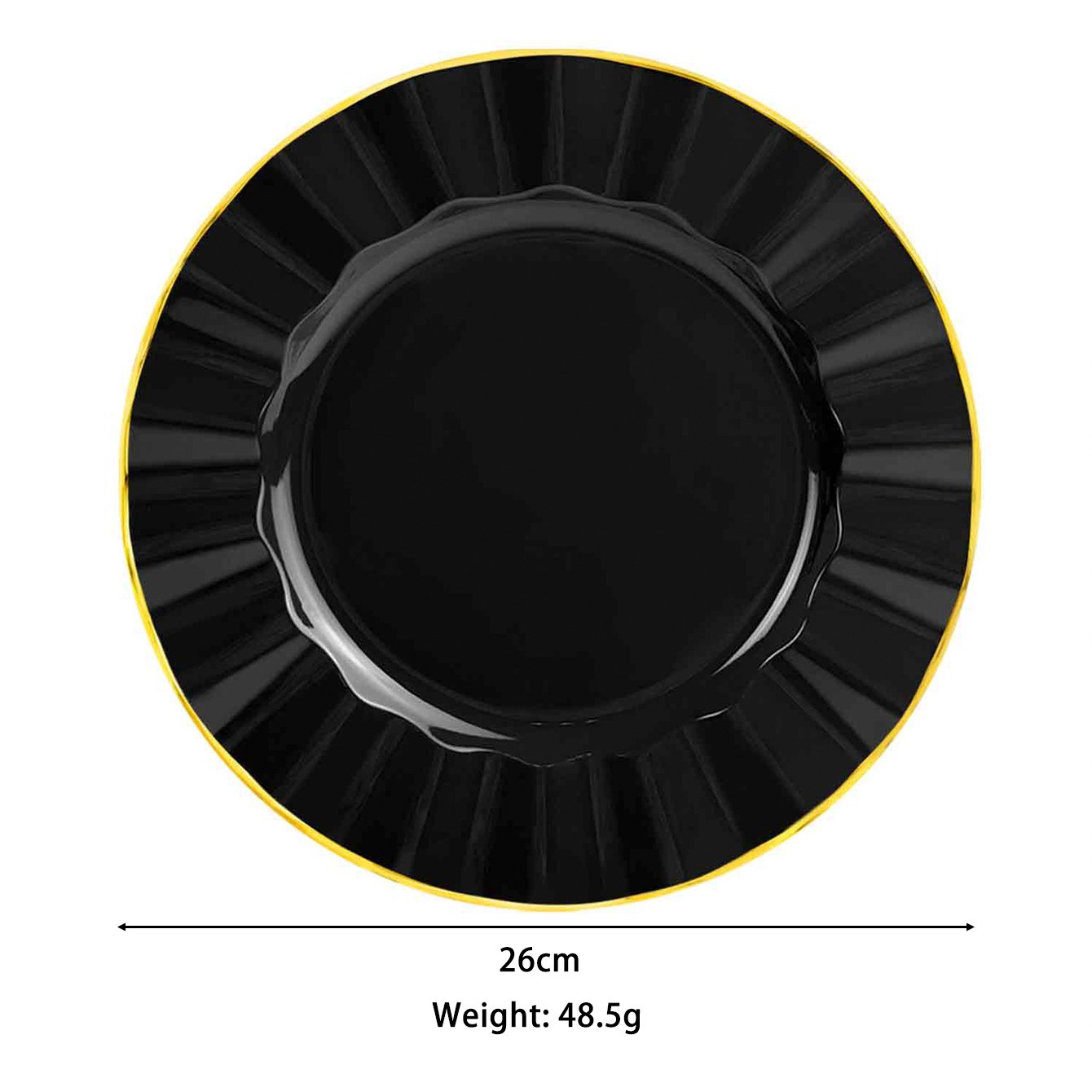
Three plates can sit in the same catalogue described as “9 inch heavy duty” and still be three different products: a 19.5 g gold-plated PET plate for cold service, a 48.5 g injection-moulded PS plate for hot mains, and a 58.5 g square plate that carries a full dinner without bowing. The size on the label is identical. The behaviour in service is not.
“Heavy duty” is a claim. Grams per piece, resin and rim geometry are the specification you can actually order against, compare between suppliers, and verify on a bench in five minutes. This guide is for caterers, event companies, foodservice distributors and party-goods wholesalers who need plates that survive the way their customers use them — and who would rather not discover the difference at a buffet line.
Three plates, one nominal size, three different products
Ranges in this category are built from two constructions, and the weight tells you which one you are buying.
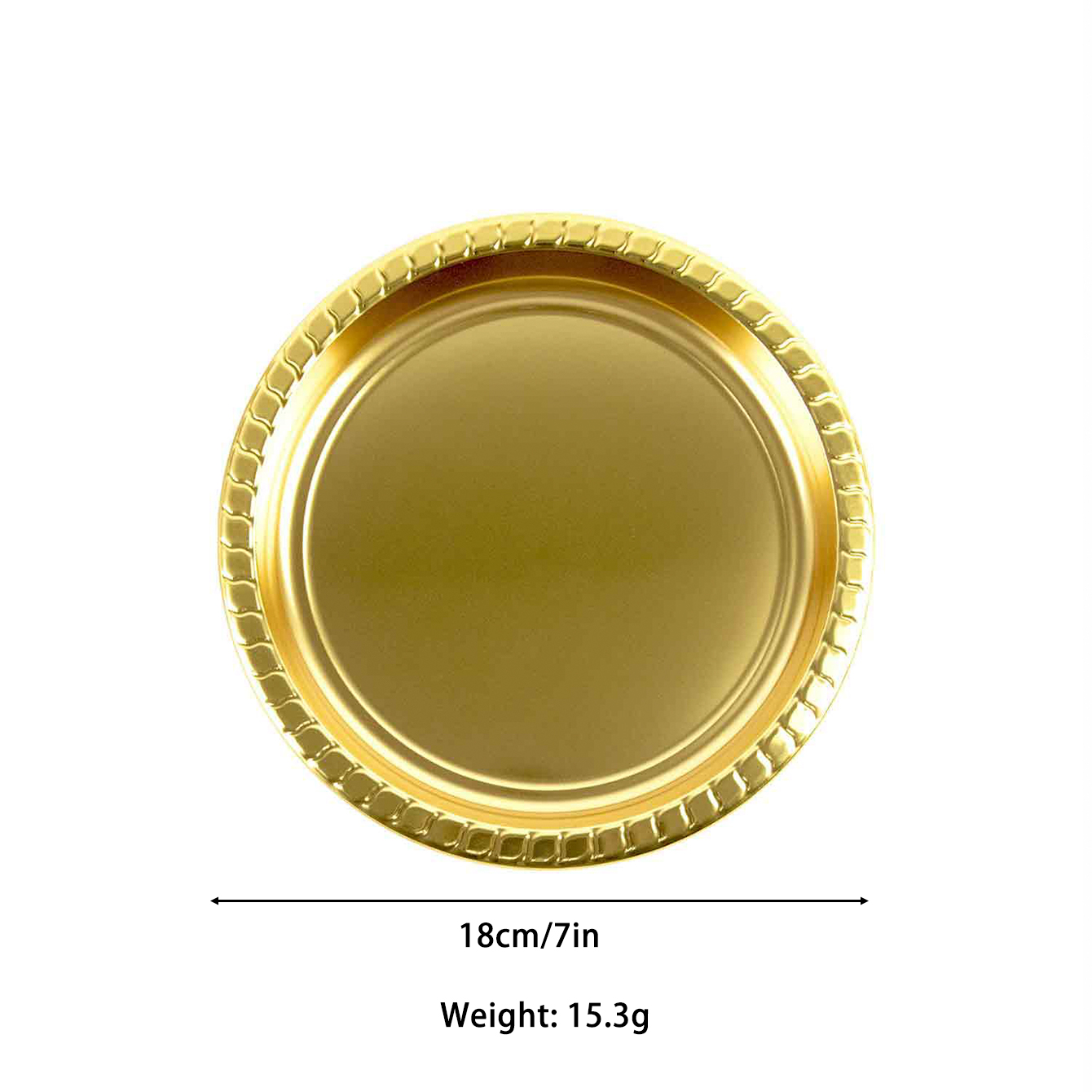
A sheet-formed, plated plate is pressed from plastic sheet and finished with a metallic or decor surface. It is light: a 7 inch round in PET with a gold-plated finish weighs about 15 g, and the 9 inch version about 19.5 g (23.2 cm across). These are the plates that make a wedding table look set rather than supplied, and they belong to cold and ambient service: cake, canapés, cheese, dessert tables.
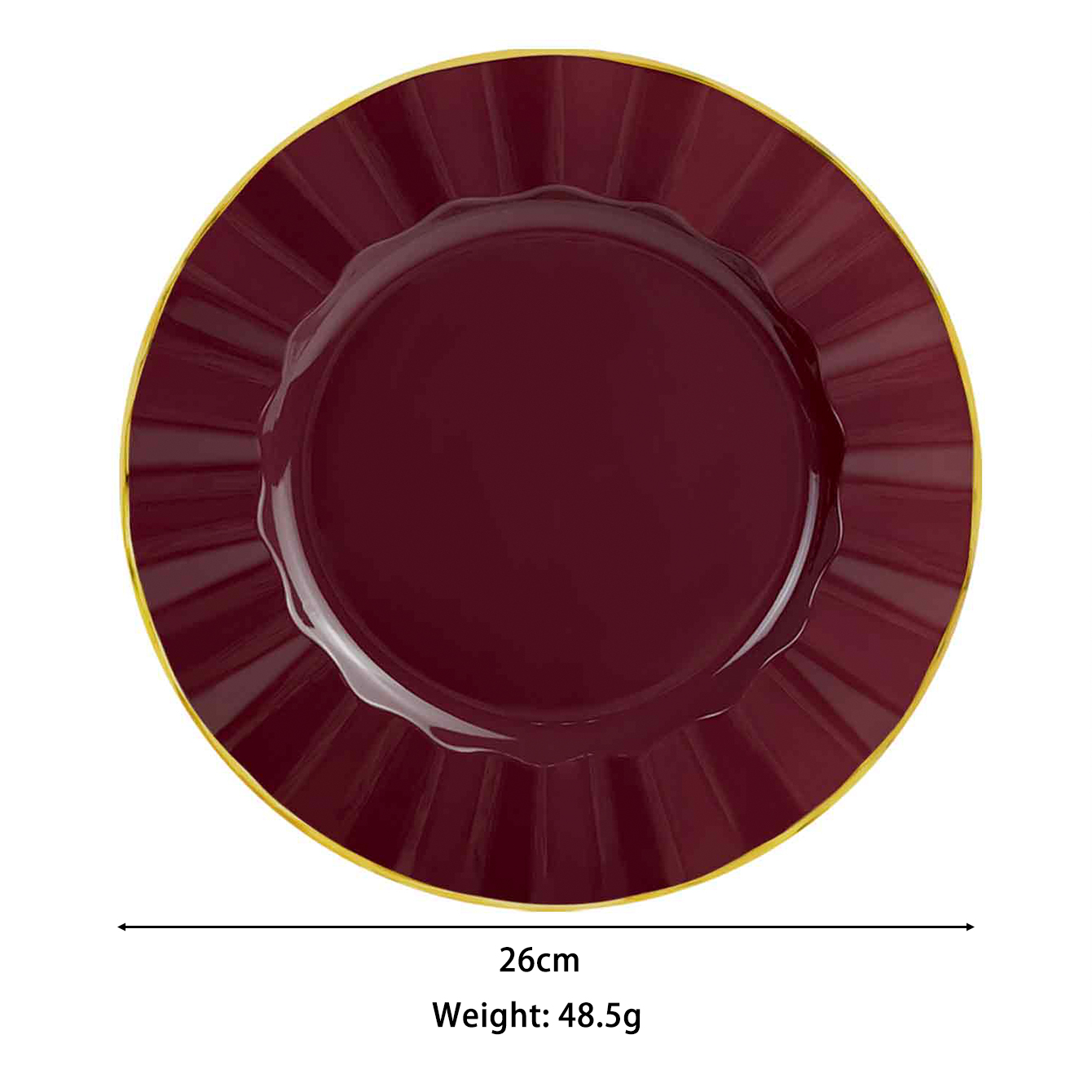
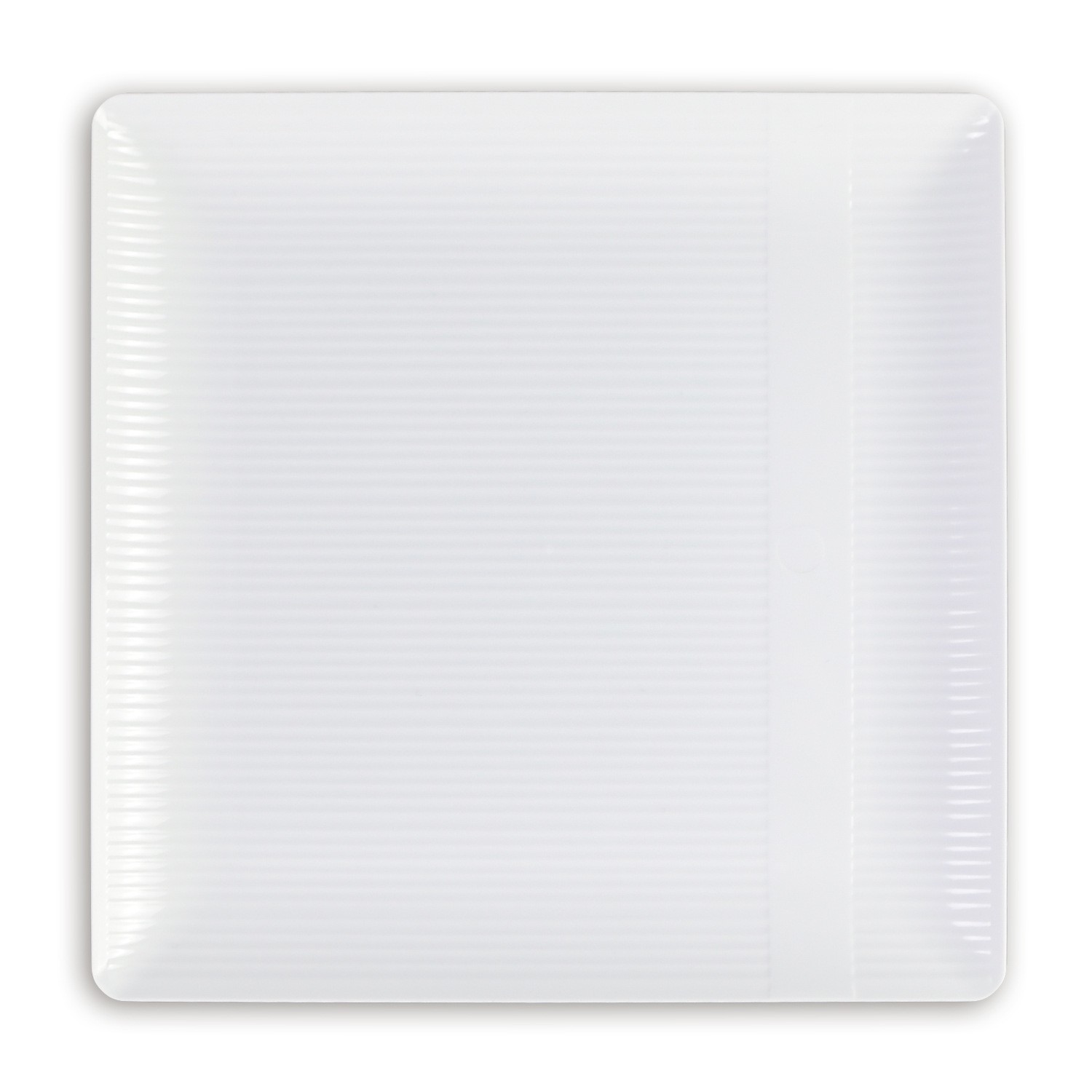
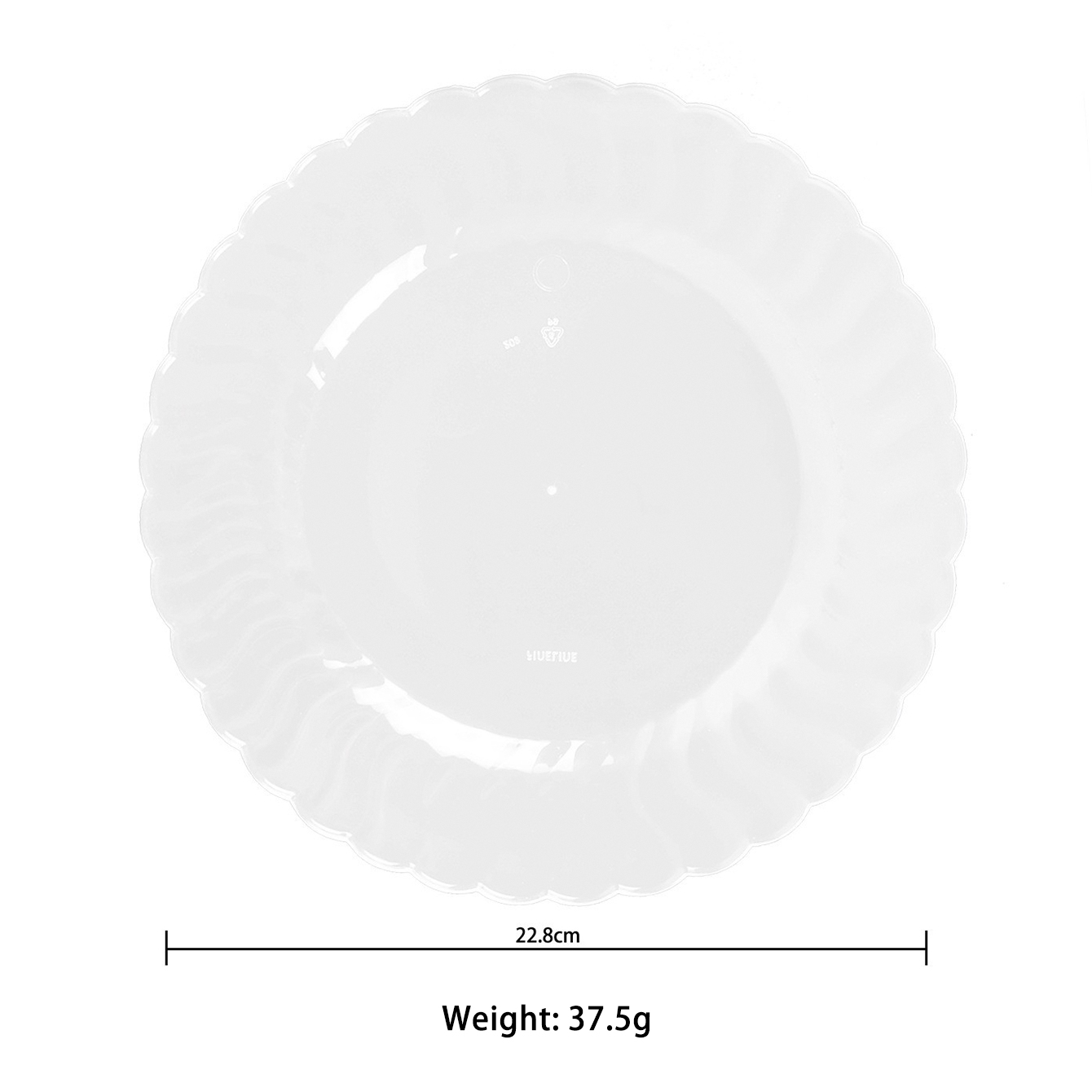
An injection-moulded plate is moulded from granule to finished rim in one shot. It is heavier and stiffer per unit of span: 9 inch round PS with a gold-plated rim runs about 48.5 g, a 9 inch square in PS about 58.5 g, and a 12 inch white dinner plate with a wide edge about 75 g. The square line scales in the same direction: 16 cm at 25.5 g, 19 cm at 38 g, 23 cm at 58.5 g. This is the family that takes a loaded plate of hot food down a buffet line.
A 14 oz plate measuring 18.5 cm at 36 g sits between the two: light enough for volume retail packs, stiff enough for a salad or a side.
What the extra grams buy in service
Material in a plate is not decoration. It is what stops the plate from behaving badly at the moment a guest is holding it:
- Load. A plate with more material keeps its shape when a filled bowl is set on one side of it. A thin plate bows, and a bowed plate slides food towards the edge.
- Cutting. Rigid plates resist scoring when a guest cuts through food. Soft or thin plates flex under the knife and mark.
- Heat. Hot food softens thin plastic. A plate that is fine with cold salad can bow within a minute under a hot main.
- Handling. Wind on an outdoor table, guests standing up to eat, and staff clearing a banqueting room at speed all punish a light plate.
- Double-plating. The hidden cost of a thin plate is the second plate a guest takes to feel safe. That halves the effective count of your case.
The counter-argument is just as real. Light plates are the right answer for dessert tables, retail party packs, kids’ parties and cake service, where the plate is a brief surface and nobody loads it. Matching grade to use is cheaper and better than buying one grade for everything — and it is the same logic as choosing between plastic cup formats for cold and hot drinks.
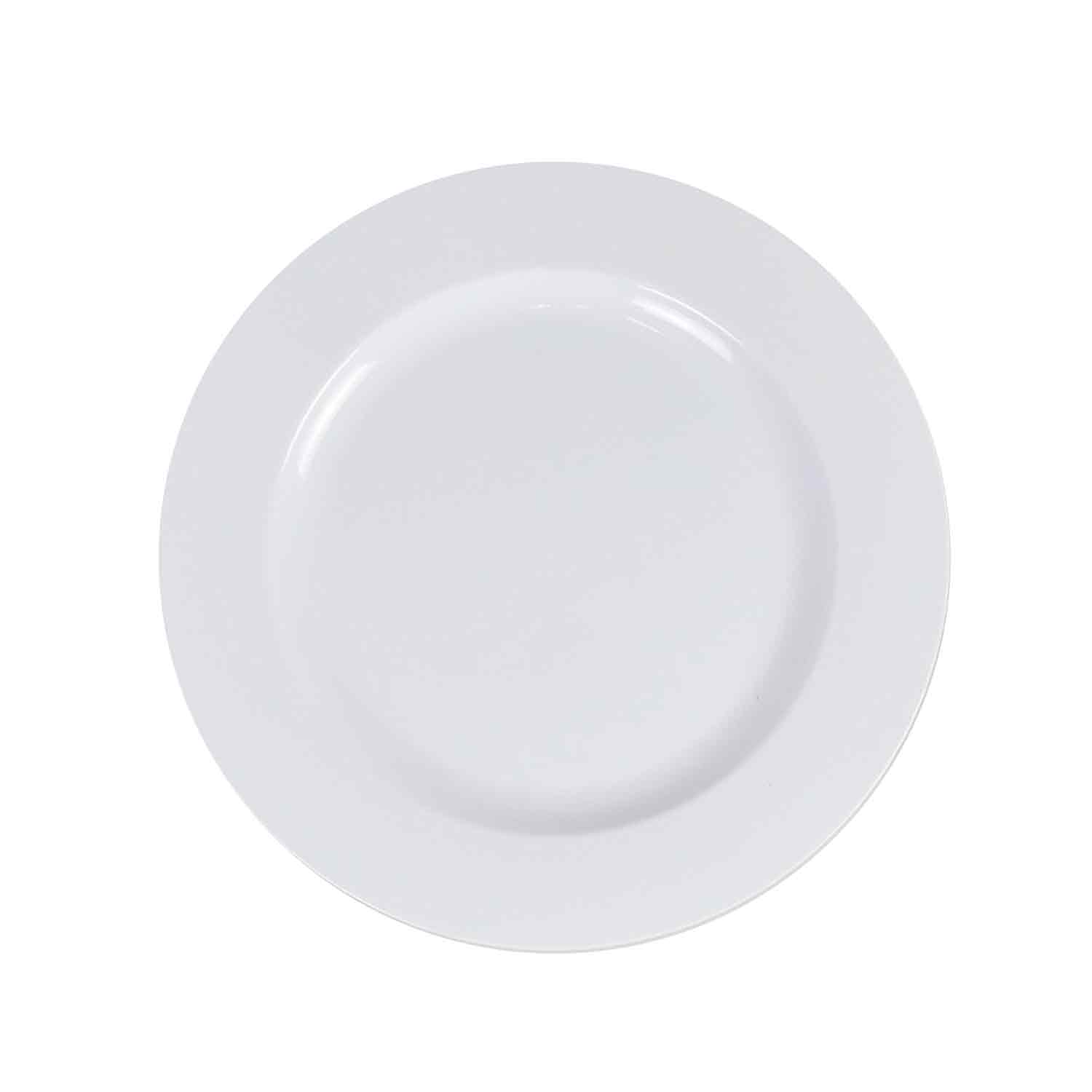
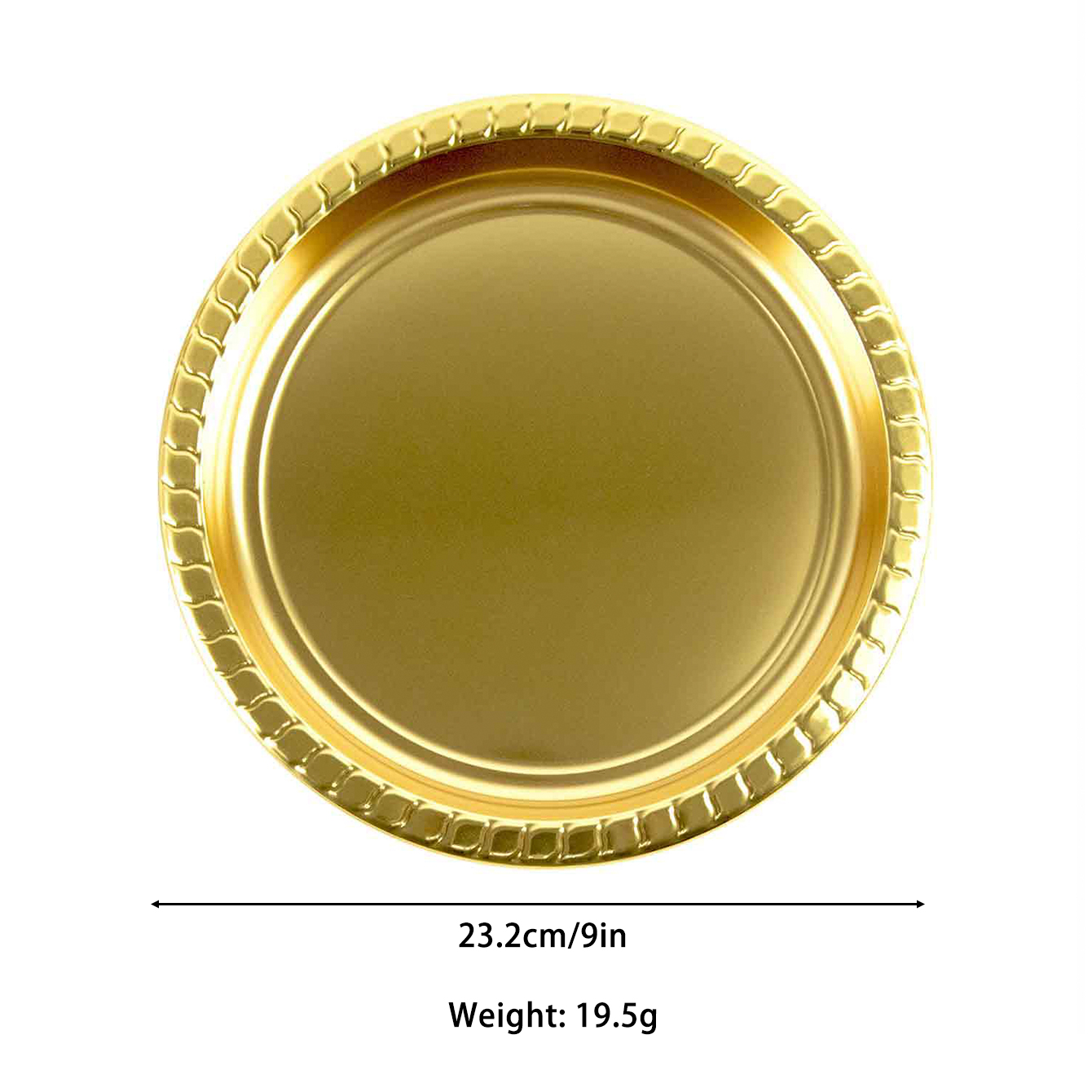
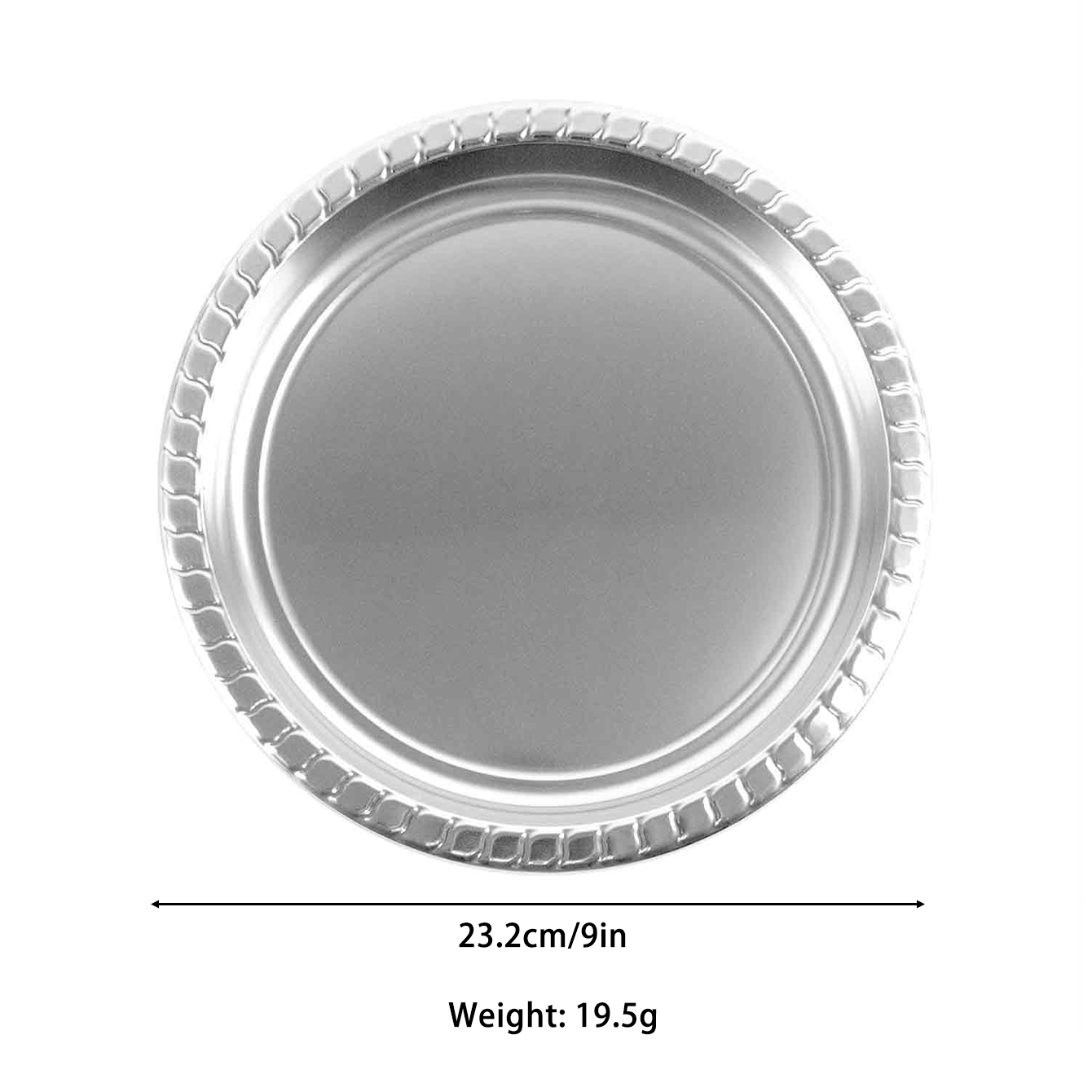
Resin choice: PS, PET and PP do not behave the same
Two plates with the same diameter and the same finish can be moulded in different resins, and that decides temperature use, stiffness and the food-contact paperwork that comes with the order.
- PS (polystyrene) is the workhorse of injection-moulded tableware: stiff, crisp-edged, holds higher walls, and takes a matte or plated decor finish. It delivers the most rigidity per gram in the ranges above.
- PET (polyethylene terephthalate) is used for sheet-formed plates. It is dimensionally stable and gives a clean surface, which is why the lighter decorative plates are made this way. A plated PET plate is not a microwave vessel.
- PP (polypropylene) is the resin that normally carries a microwave-safe statement, and the one foodservice buyers ask for when the plate doubles as a reheating container.
Food-contact compliance is declared per resin, not per catalogue page. In the United States the relevant sections are 21 CFR 177.1640 for polystyrene, 21 CFR 177.1630 for PET, and 21 CFR 177.1520 for olefin polymers such as PP. When you ask a supplier for documentation, ask for the resin reference rather than a generic “FDA approved” sentence, and check that the temperature limits in the statement cover the way your customer will actually use the plate.
The rim decides as much as the weight
Rim geometry is where a plate’s stiffness is won or lost, and it is the first thing a photo will not tell you.
- Wide edge. A broad, flat outer edge — the feature on the 12 inch dinner plate — adds rigidity and gives the hand somewhere comfortable to hold.
- Plated rim. Metallic and decor finishes are added after moulding. Check adhesion at the rim, and keep these plates out of microwave use.
- Beaded or rolled rim versus flat. A rolled rim resists bending at the edge; a flat rim on the same wall thickness flexes sooner.
- Square versus round. A square plate of the same span carries more usable surface, which is why the square line runs heavier at equal diameter — 58.5 g at 23 cm for the square against 48.5 g at 26 cm for the round plated plate.
How to compare two quotations at the same size
Quotation sheets hide grade in different ways, and the fix is to normalise the line item before comparing it.
- Fix the diameter. A 9 inch plate is not a spec until you add the rest.
- Ask for the part weight in grams. Between the three 9 inch plates above, the heaviest carries roughly two and a half times the material of the lightest.
- Ask which resin, and whether the finish is plated.
- Ask for the temperature statement and the food-contact resin reference.
- Compare pieces per case, then price per piece — a lower case figure can hide a smaller count.
- Confirm the packing and the carton count, since these drive landed cost more than the plate itself does at volume. The classification rules behind the customs line are covered in our guide to plastic tableware HS codes.
None of this requires a laboratory. It requires asking two questions — grams, and resin — before talking about the word “heavy”.
Five checks in five minutes, on your own bench
Sample approval is where a grade gets decided, and it is worth doing properly once rather than arguing over a shipment later.
- Load test. Put a full bowl slightly off-centre on the plate. Watch the rim, not the plate: a rim that flattens is a thin plate.
- Cut test. Cut through a firm item. Look for scoring and for a knife that skates because the surface is flexing.
- Heat test. Add hot food or hot water for a minute. Thin plates bow; plated rims can lift or blister if adhesion is weak.
- Stack test. Build a stack of ten and carry it. Slippage and wobble show up here before they show up at the counter.
- Finish check. Run a thumb around the plating and the print. Check adhesion, colour consistency across the carton, and that no decoration sits where food will be served.
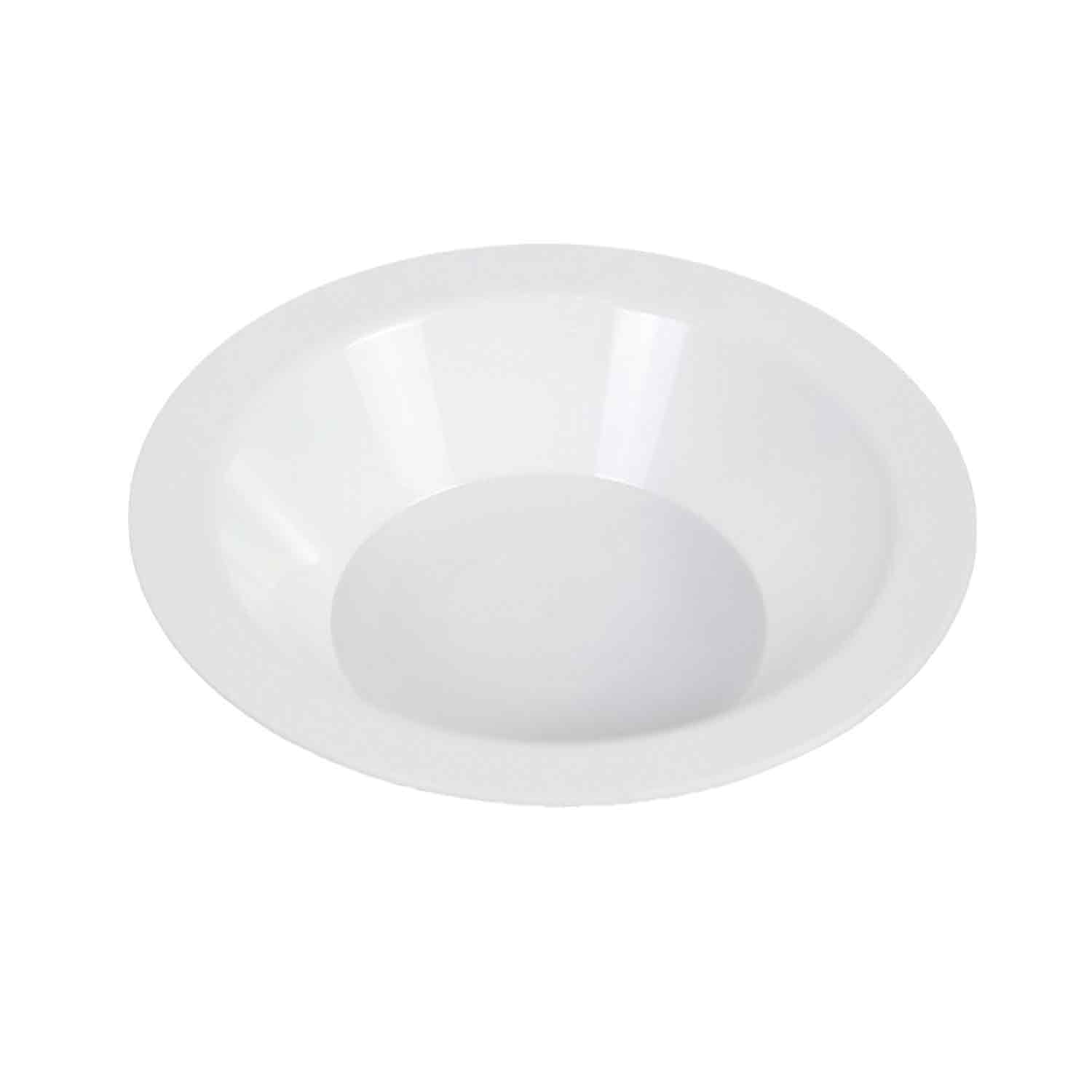
What belongs on the purchase order
Once the grade is agreed, the plate line on a purchase order should carry more than a size. The buyers who avoid disputes write these fields down:
- Diameter and shape (round, square, compartment) in inches and centimetres.
- Resin — PS, PET or PP — and whether the finish is plated or printed.
- Part weight in grams, quoted per piece.
- Rim style: wide edge, rolled rim, flat.
- The temperature statement the plate is expected to meet.
- Pieces per case, cases per carton, and the packing configuration.
- The food-contact declaration, referenced to the resin.
If the supplier cannot give you the grams and the resin, the grade is a marketing word and nothing more.
Where plates fit in the rest of the order
Plates are rarely ordered alone. The same service style decides bowls, cups, cutlery and covers, and the counts per guest should be planned together: our plates and bowls size and portion guide covers the diameter-to-menu mapping, and the materials comparison covers where each resin wins on heat and cost. For the drink side, the rim and lid logic is in the cups and lids fitment guide; for buffet service ware and the counts that go with a loaded plate, see the serving utensils guide and the dinnerware sets for restaurant and catering. Napkin sizes and packing counts are in the bulk napkins guide.
Why buyers place these orders with Runxiang
Runxiang has made disposable plastic tableware for more than 20 years, with film and injection capacity in house and a plated decor line for event-grade finishes. That means one supplier can quote a light decorative plate for the cake table and a heavy plate for the mains line, in the same colour family, on the same order — and can keep the grams consistent carton to carton. Tell us the diameter, the resin and the weight you need, and we will come back with the specification, the sample and the packing.
Browse the full range on our products page, or send us your plate specification for a quote.