










Most plate and bowl complaints start with a diameter, not a material. A buyer orders “9 inch dinner plates” and receives something that measures 8.5 inches across the rim; a caterer plans one 8-inch plate per guest for a three-course dinner and watches half the room come back for a second plate; a café swaps a 24 oz salad bowl for a 32 oz one and the food cost per serving rises without anyone noticing until the quarter closes. Diameter, rim height and bowl capacity are the specification, and they are the three lines buyers read last on a quotation.
The category is big enough for that mistake to repeat at scale: the disposable plates market is estimated at USD 9.24 billion in 2026 and projected to reach USD 16.8 billion by 2036, a 6.2% CAGR, with foodservice demand leading the product type segment. This guide sets out the sizes that actually exist, how capacity relates to portion, how many pieces a venue needs per guest, and what belongs in the spec sheet so the second container matches the first.
Diameter Decides the Course, Not the Product Name
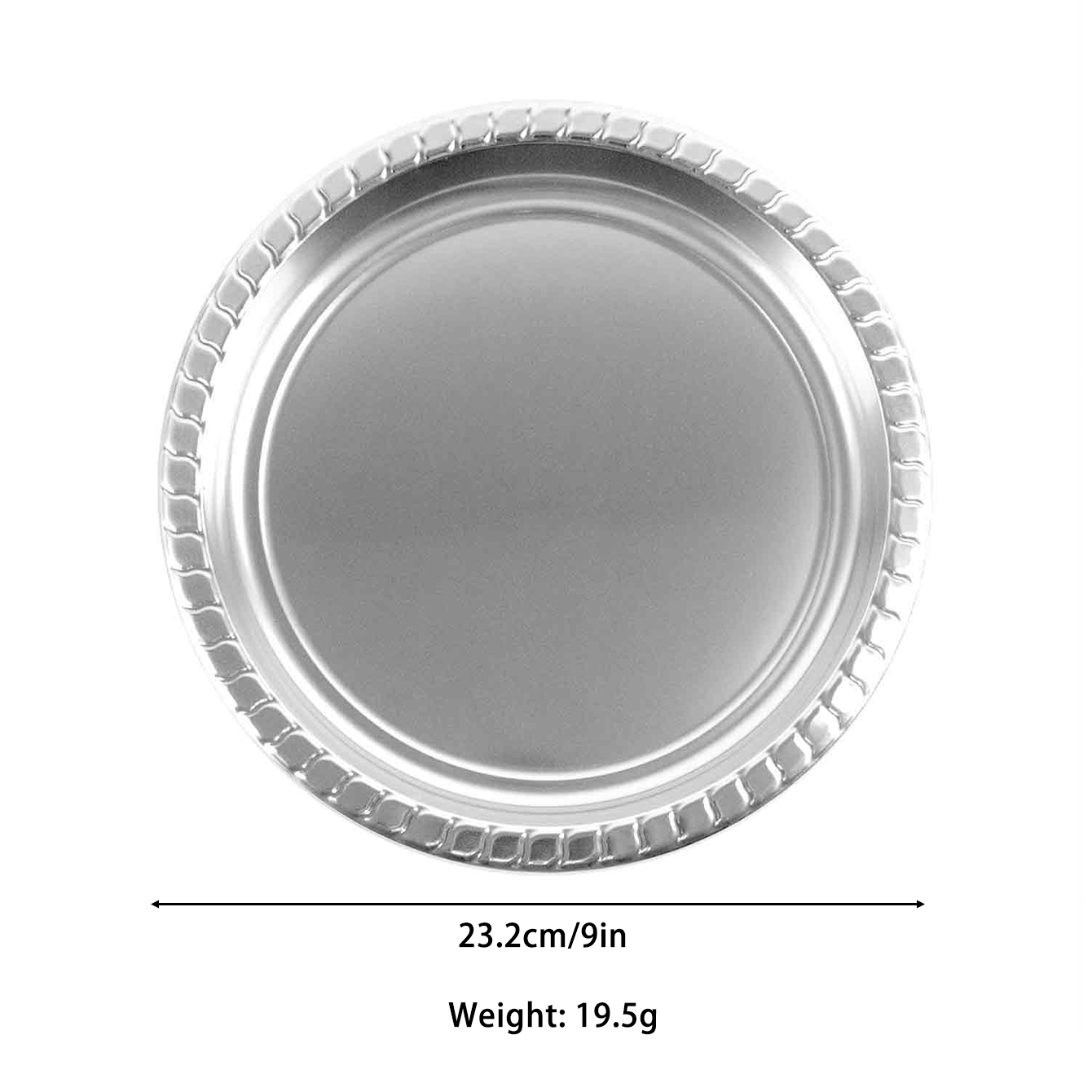
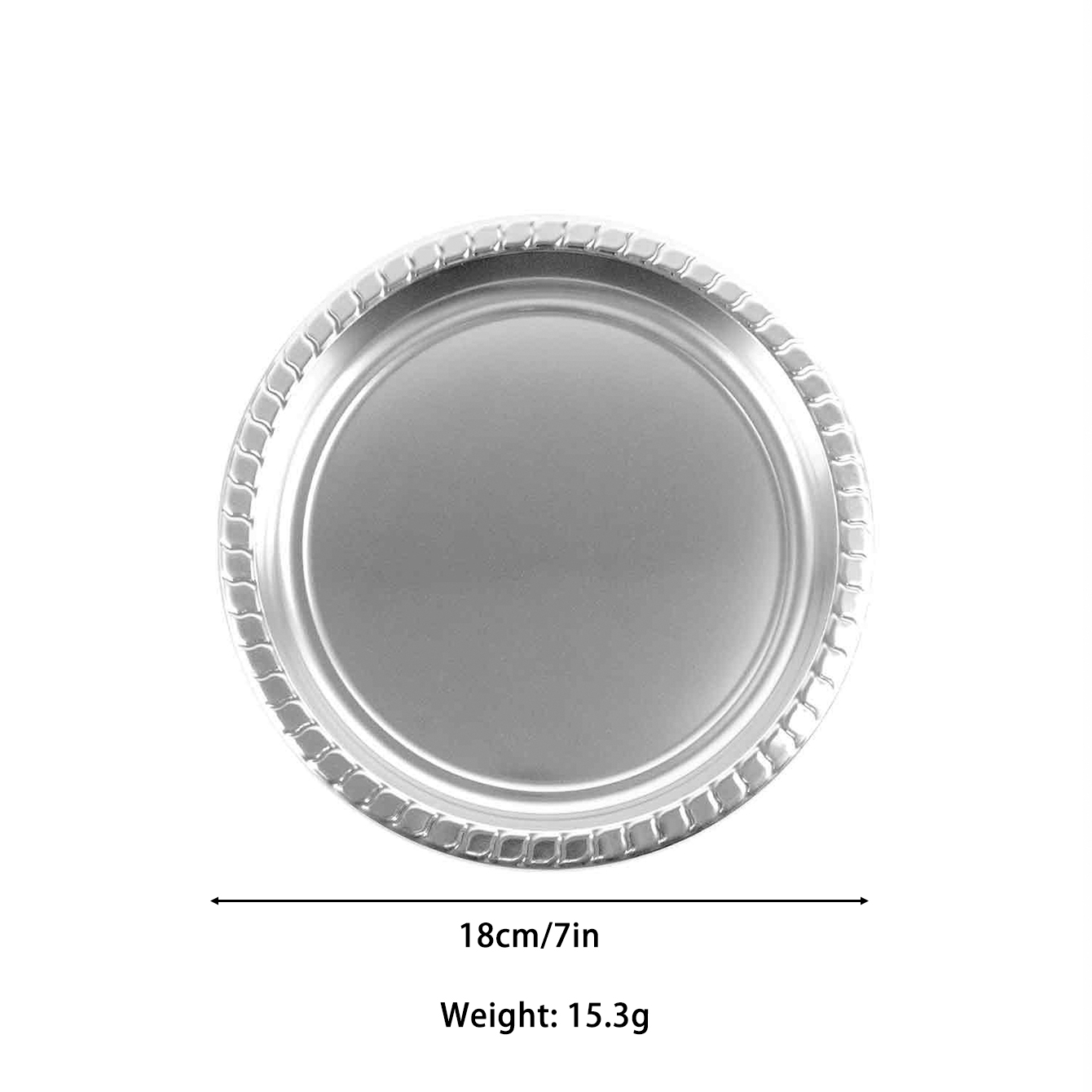
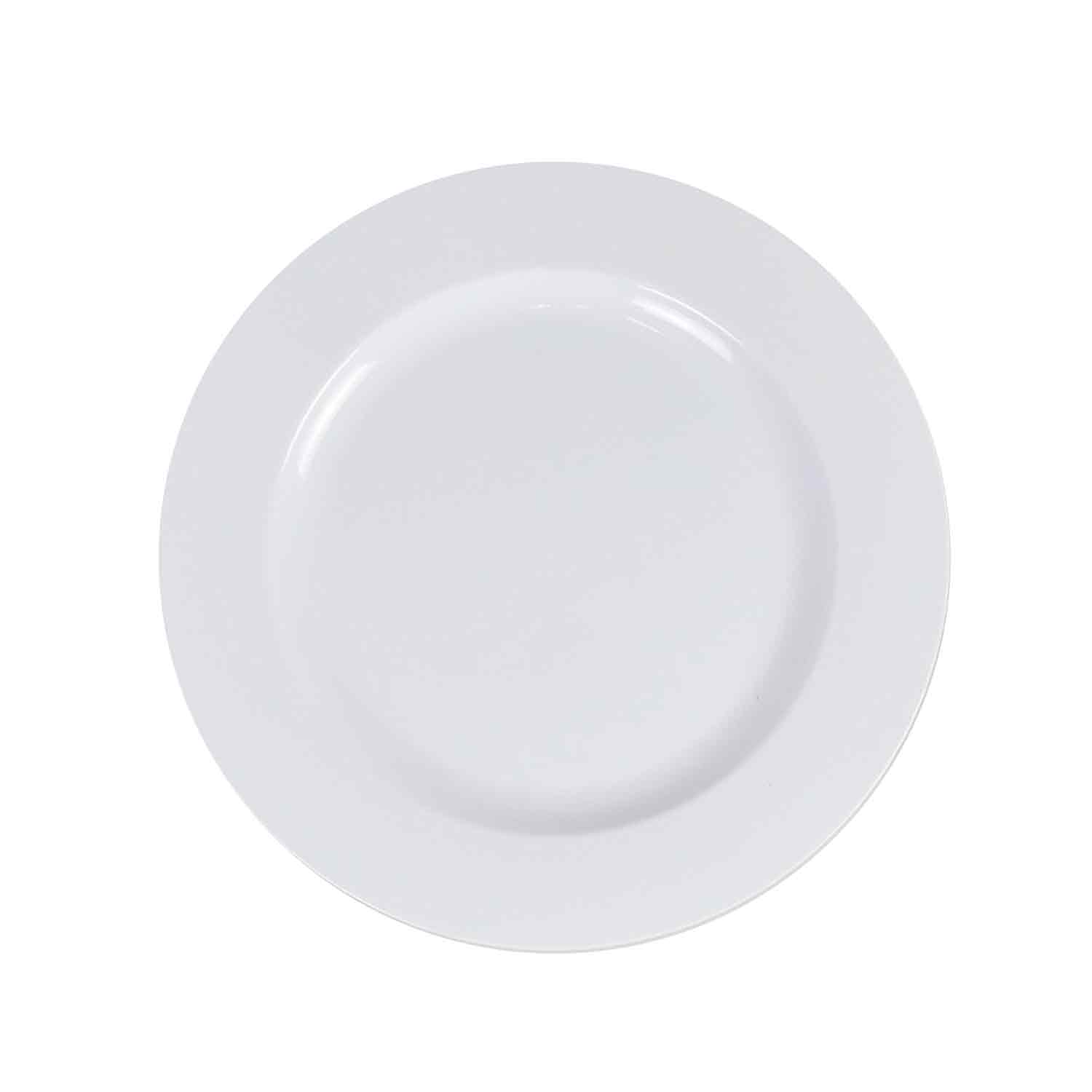
“Dinner plate” is a rough label; the diameter is the fact. Standard dinner plates run 10”–12” with 10.5” as the usual default, salad plates 7”–8.5”, luncheon plates about 9”, dessert and bread-and-butter plates 6”–7”, and appetizer plates 4”–7”. Disposable ranges follow the same ladder, and most foodservice programmes sit between 7” and 10”. The practical mapping is short:
| Diameter | What it carries | Typical use |
|---|---|---|
| 4”–6” | Dessert, bread, tasting bites | Cake slices, pastries, canapés, kids’ portions |
| 7” | Side or salad | Side salads, desserts, children’s mains, buffet refills |
| 8”–8.5” | Salad, appetizer, grazing | Cocktail receptions, starters, buffet top-ups |
| 9” | Luncheon plate, standard disposable dinner plate | Plated mains, BBQ, buffets, catering lines |
| 10”–10.5” | Full dinner plate | Plated main courses, larger portions, banquet service |
| 11”–12” | Large mains and sharing | Family-style service, platters, carving stations |
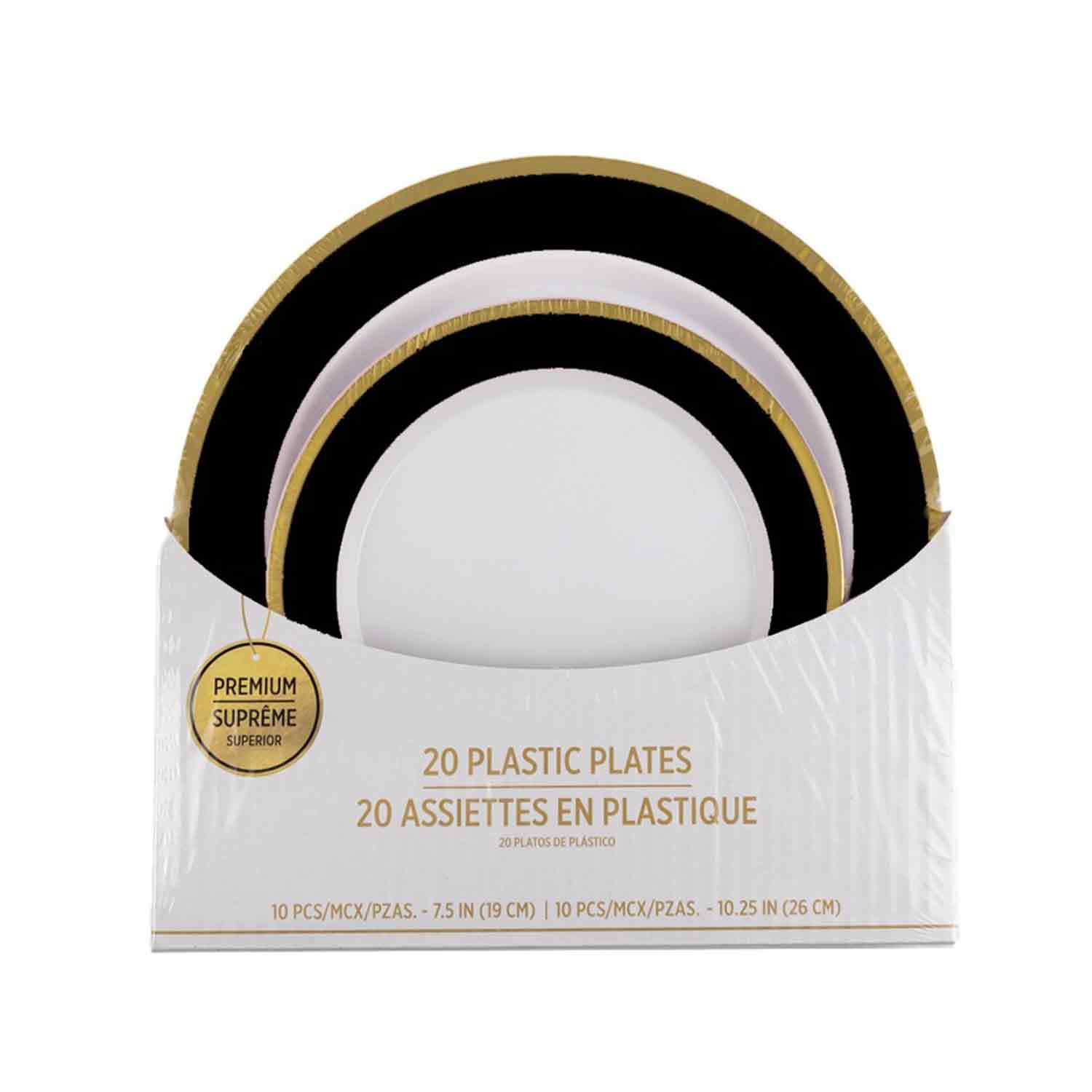
The most common buying error is ordering one size for a whole programme. A 9” plate carrying a dessert looks oversized and consumes table space; an 8” plate carrying a Sunday roast forces food to stack on itself and guests to queue for a second plate. Two diameters — one around 7” and one around 9” — cover nearly every menu, which is why our party sets are built as a paired format rather than a single-size pack.
Rim, Depth and Compartment Layout: Three Specs Buyers Forget
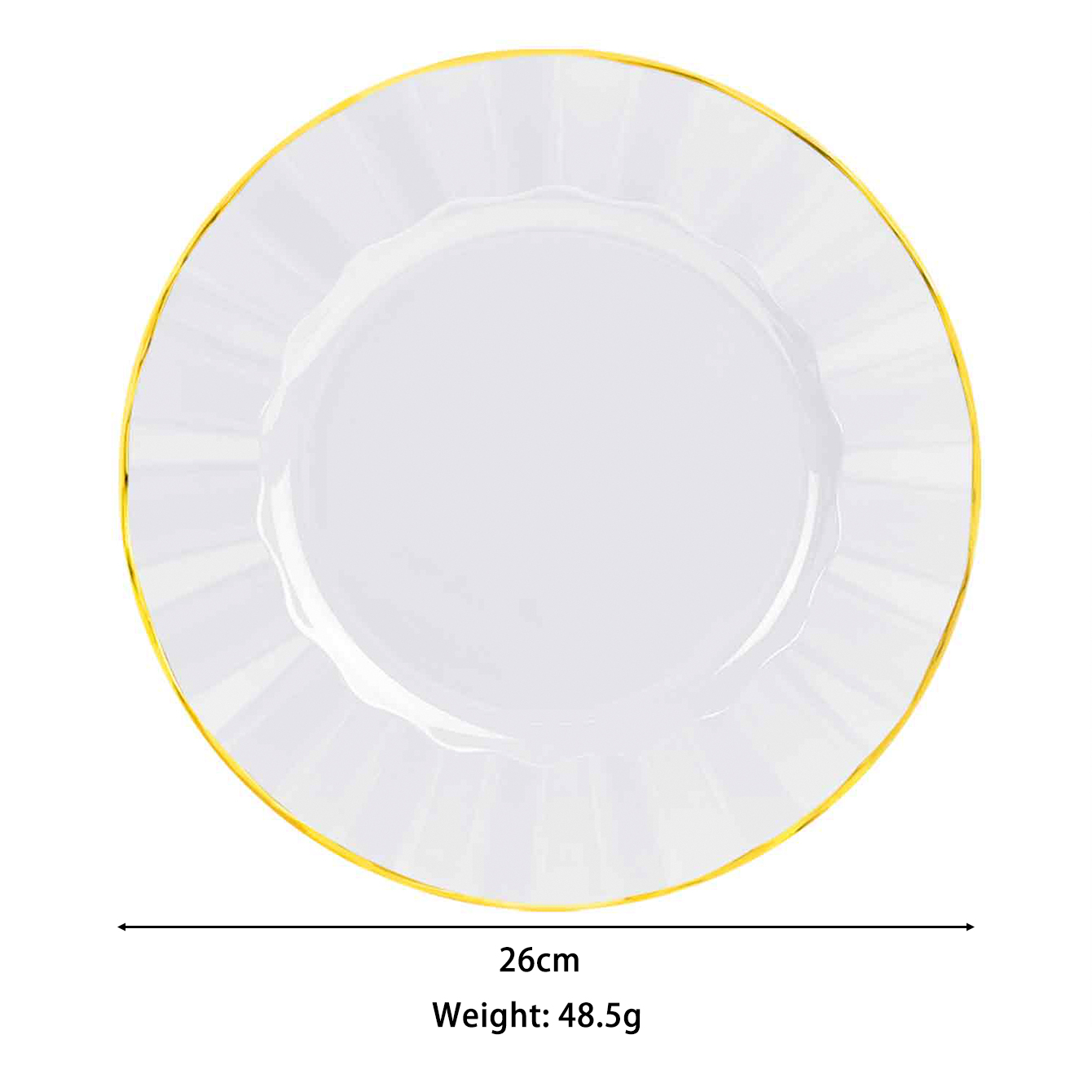
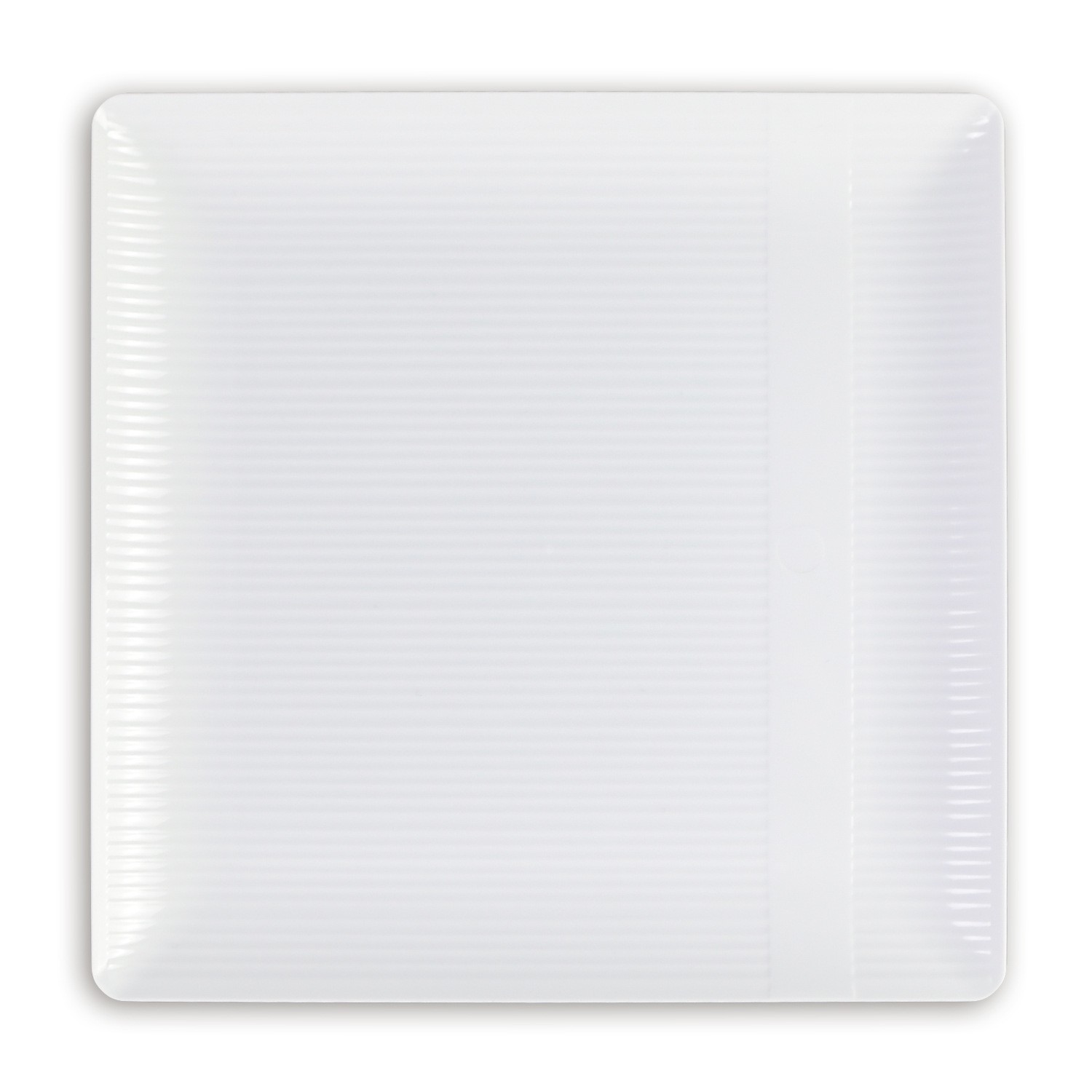
Two plates can share a diameter and behave nothing alike. Rim height decides whether sauce stays on the plate during service; a raised rim also adds stack height, which changes carton cube. A rimless or low-rim plate looks closer to porcelain and stacks tighter, but it gives a generous portion nowhere to sit. Compartmented plates, usually two or three sections, replace a side dish and a side bowl in cafeterias and takeaway boxes.
Then there is stiffness. Under a hot main course, a thin plate bows, which is when guests notice the product at all. Piece weight in grams is the fastest proxy for wall thickness, and it is the number to compare when two quotations look identical on diameter. Ask a supplier for:
• Top diameter with its tolerance (commonly ±0.5 mm, ±1 mm on larger formats)
• Rim height and base (foot) diameter
• Piece weight, grams per unit, and the sample it was measured on
• Nested stack height for 100 pieces, which is really a freight number
Bowls Are Bought by Capacity, Not Diameter
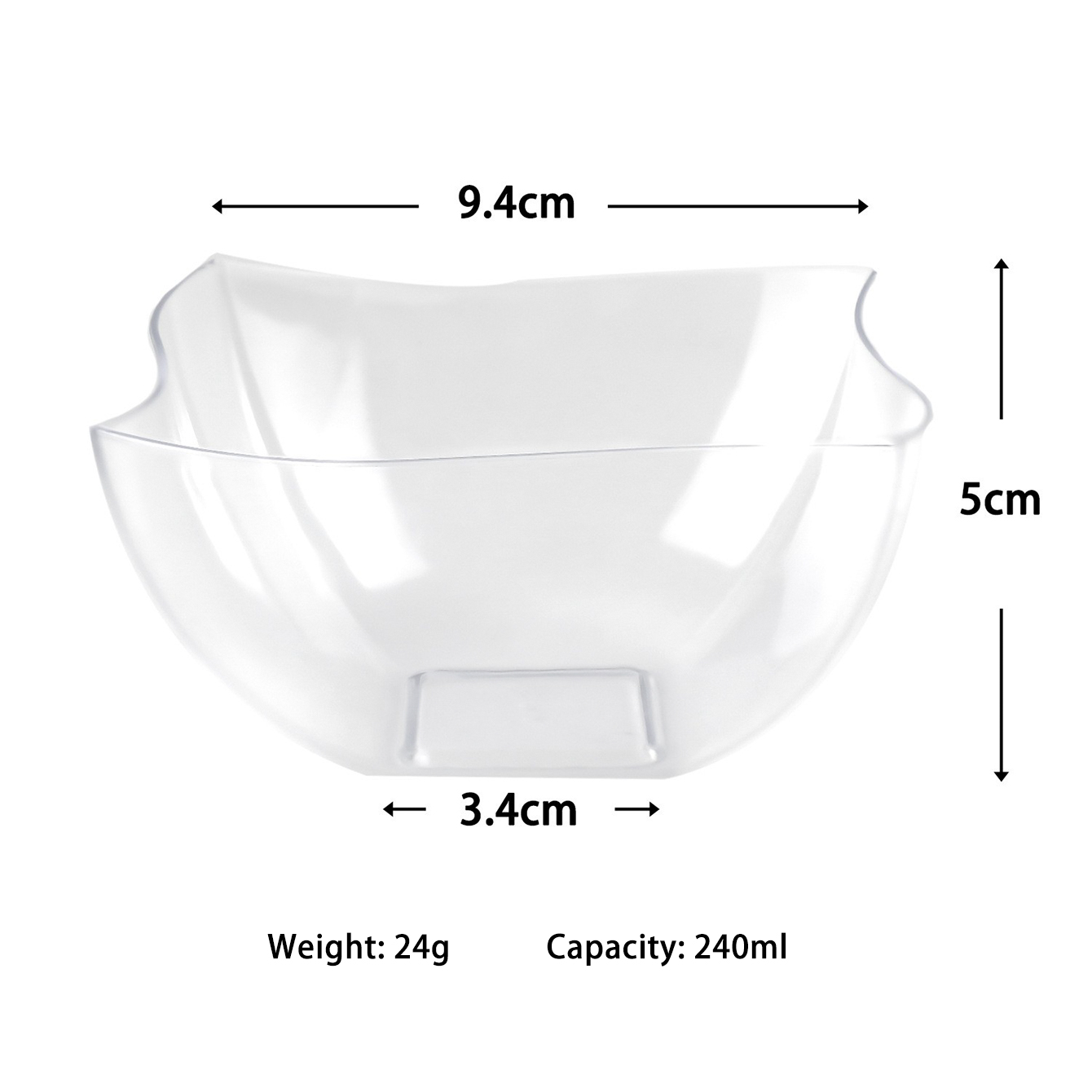
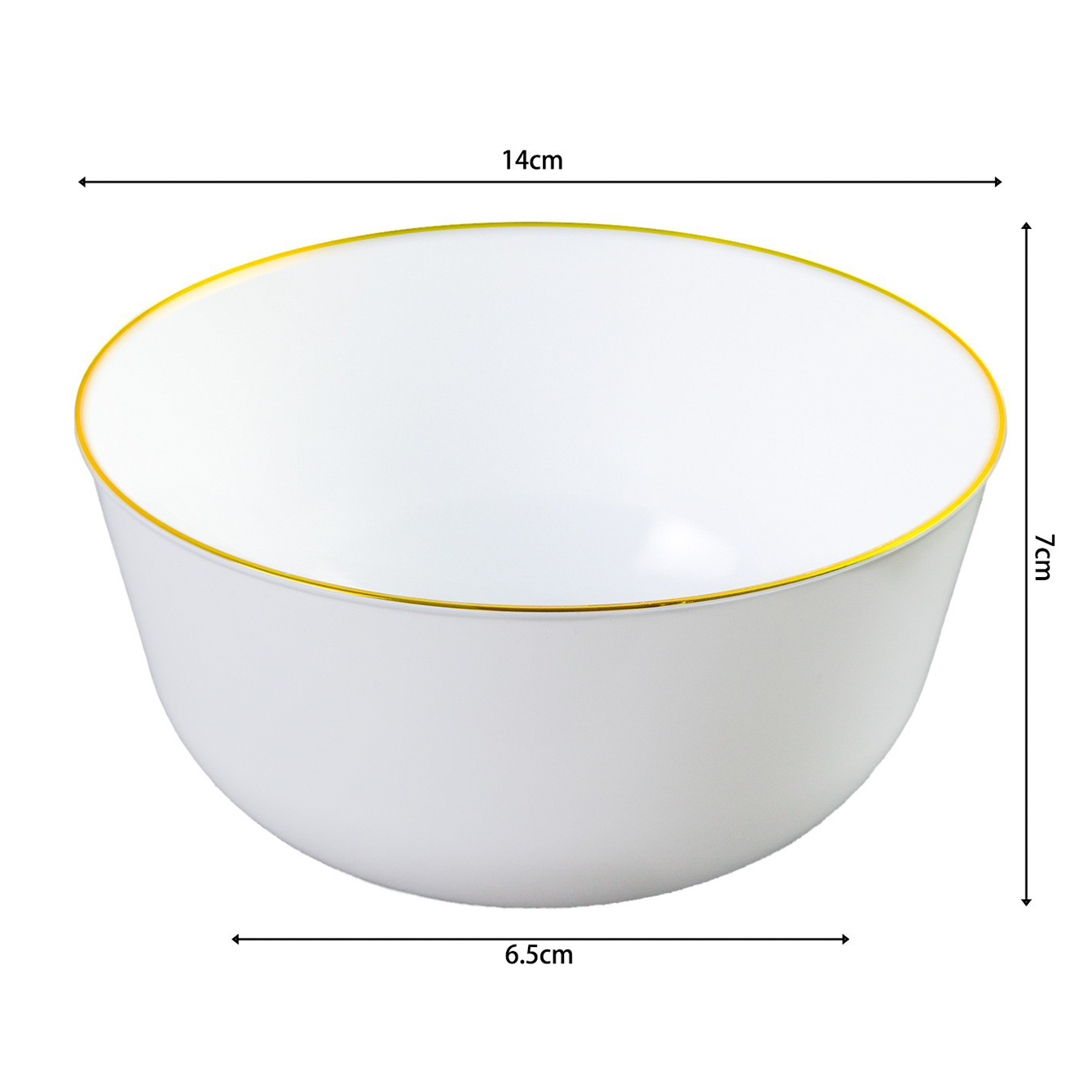
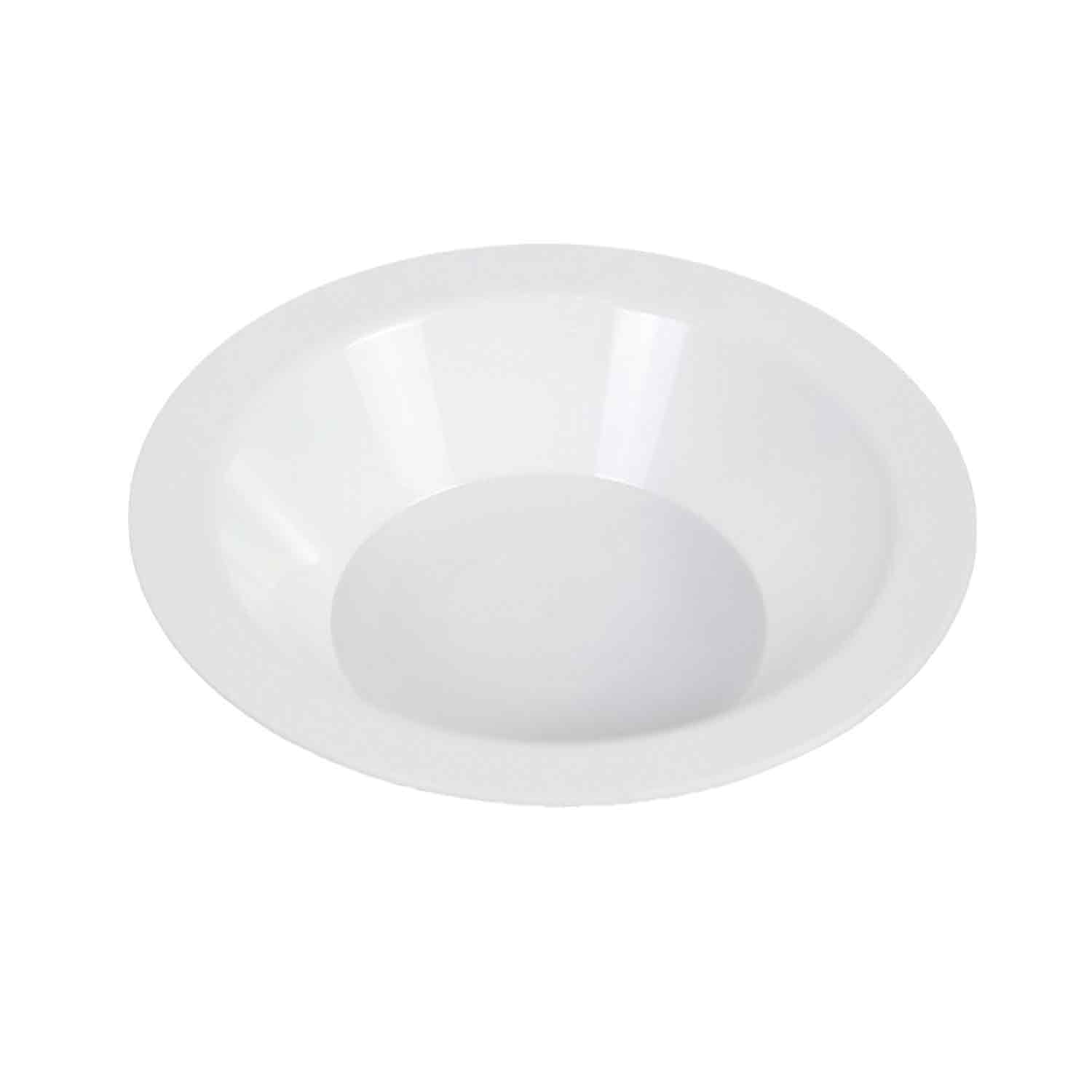
A bowl’s diameter tells you little; capacity in fluid ounces does the work. Salad and foodservice bowls cluster at 12–16 oz for side portions, 20–24 oz for single-serve lunches, 28–32 oz for full meal salads, and 40 oz and above for sharing or catering trays. Where the liquid is the dish, the same ladder applies with more headroom: soup bowls run roughly 12–16 fl oz for a starter and 18–24 fl oz for a main course, filled to about 80–90% of capacity in service — 8 fl oz is one cup and 32 fl oz is one quart, so the conversions are easy to check.
| Capacity | Volume | What it serves |
|---|---|---|
| 8–12 oz | 236–355 ml | Desserts, fruit, soup starter, kids’ portions |
| 14–16 oz | 414–473 ml | Side salad, light lunch bowl, cereal |
| 20–24 oz | 591–710 ml | Standard single-serve salad or grain bowl |
| 28–32 oz | 828–946 ml | Full meal salad, poke, pasta and noodle bowls |
| 42 oz+ | 1 240 ml+ | Sharing bowls, family-style, deli and catering trays |
Shape is the second decision. A shallow 24 oz bowl presents a salad like a plate; the same capacity in a deep format reads as a soup bowl and needs a taller lid. If the bowl is going out for delivery, capacity and lid are one specification: check that the lid seats on the rim you ordered, and that the stack height with the lid on still fits your carton.
How Many Pieces Per Guest — the Number Buyers Under-Order
Caterers plan plates by course, not by guest count, and the ratios are well established: a sit-down dinner needs about two plates per guest (main plus dessert), three when there is an appetizer course; a buffet runs about three plates per guest with a small buffer; a two-hour cocktail reception runs two to three small plates per guest; and children’s parties need two to three plates per child. Converted to a purchasing sheet:
| Service style | Plates per guest | Notes |
|---|---|---|
| Sit-down dinner, main + dessert | 2 | One 9–10” plus one 6–7” |
| Sit-down with appetizer course | 3 | Add a 7–8” small plate |
| Buffet | 3–3.5 | Guests change plates between courses |
| Cocktail reception | 2–3 small | Small plates are used faster, not fewer |
| Children’s party | 2–3 | Smaller format, spares for spills |
Bowls and napkins follow the same logic: one bowl per guest per soup or salad course, one napkin per course plus a spare (our napkin ply, size and colour guide covers the matching rules). Order 5% above the calculated figure for breakage and staff service, and check what a carton actually contains before rounding: case packs of 25, 50, 100, 125 and 500 pieces are all common, so a 100-guest event rarely lands on a whole number of cartons.
Carton Counts, Nesting and Cube
Plates and bowls are mostly air, so the freight conversation is about nesting, not diameter. A heavier plate nests less tightly and can add several percent to container utilisation; a deep rim adds stack height to every piece in the case. Ask for nested stack height and carton dimensions alongside the piece count. Mixed cartons — plate, bowl, cup and cutlery in one shipper, or a paired 7”/9” plate set — cut handling and storage at the destination, and are the format most distributors consolidate towards. In autumn, when cold-salad and hot-meal programmes overlap, plan mixed containers a quarter ahead rather than splitting a reorder late.
Material and Heat: Which Plate for Which Service
Rigid PS gives a plate or bowl a porcelain-like feel and holds a cold or room-temperature service well, but it does not go in a microwave. PP takes hot service and reheating comfortably and is the standard choice for hot-food bowls and containers, while clear PET is for cold display where the food needs to be seen. Lamination and coating change what a plate can carry too. The trade-offs between the three polymers are set out in our PP vs PS vs PET material guide; the short version is that material belongs in the specification before artwork, because changing polymer later usually means new tooling and a new sample cycle.
What to Check Before the Container Ships
Four checks catch nearly every plate and bowl problem, and all of them can be done on a sample carton in ten minutes. First, measure the diameter across the rim on ten pieces from different cavities of the mould: warping and shrinkage show up here before a customer sees it. Second, place each plate on a flat surface and press the rim — a rocking plate will not sit level on a table. Third, weigh a piece against the approved sample; weight is the fastest check on wall thickness. Fourth, for bowls, fill to the marked capacity, fit the lid, and carry it across the room: capacity that only exists in a spec sheet is not capacity. Colour has to be checked against a master sample under the same light, and printed formats against the approved artwork. Where the container is bound for a regulated market, the classification lines on the documents should be verified too — our HS code guide for plates, cups, cutlery and tablecloth lists the headings that apply.
Why Importers Work With Runxiang
Runxiang has manufactured disposable tableware for 20 years from Changzhou, China, running 30+ machines and 160,000 pieces a day across tablecloths, dinnerware, cups, containers, cutlery, napkins and party sets. Our plate range and bowl range cover 7” and 9” plates in single-colour, gold-rim and printed finishes from 8 oz to 24 oz, with in-house film extrusion, printing and in-line QC. OEM and ODM programmes cover colour matching, tooling, print and packaging, with samples approved before bulk production.
Building a 2027 menu programme? Send us your dish list with the portion you serve and the guest count you plan for; we will come back with a size matrix, the piece counts per service style and samples to test at the pass. Email simon@runxiangplastic.com or call +86 18617181658.
Related reading: Disposable Cups and Lids: Oz Sizes, Rim Diameters and Fitment | Plastic Tablecloth Size Chart | Plastic Tablecloth Complaints: Eight Problems and the Spec That Prevents Them | Disposable Dinnerware Wholesale
Shop the range: plastic dinnerware · plastic plates by size · disposable bowls · serving ware · 9 inch silver disposable plates