










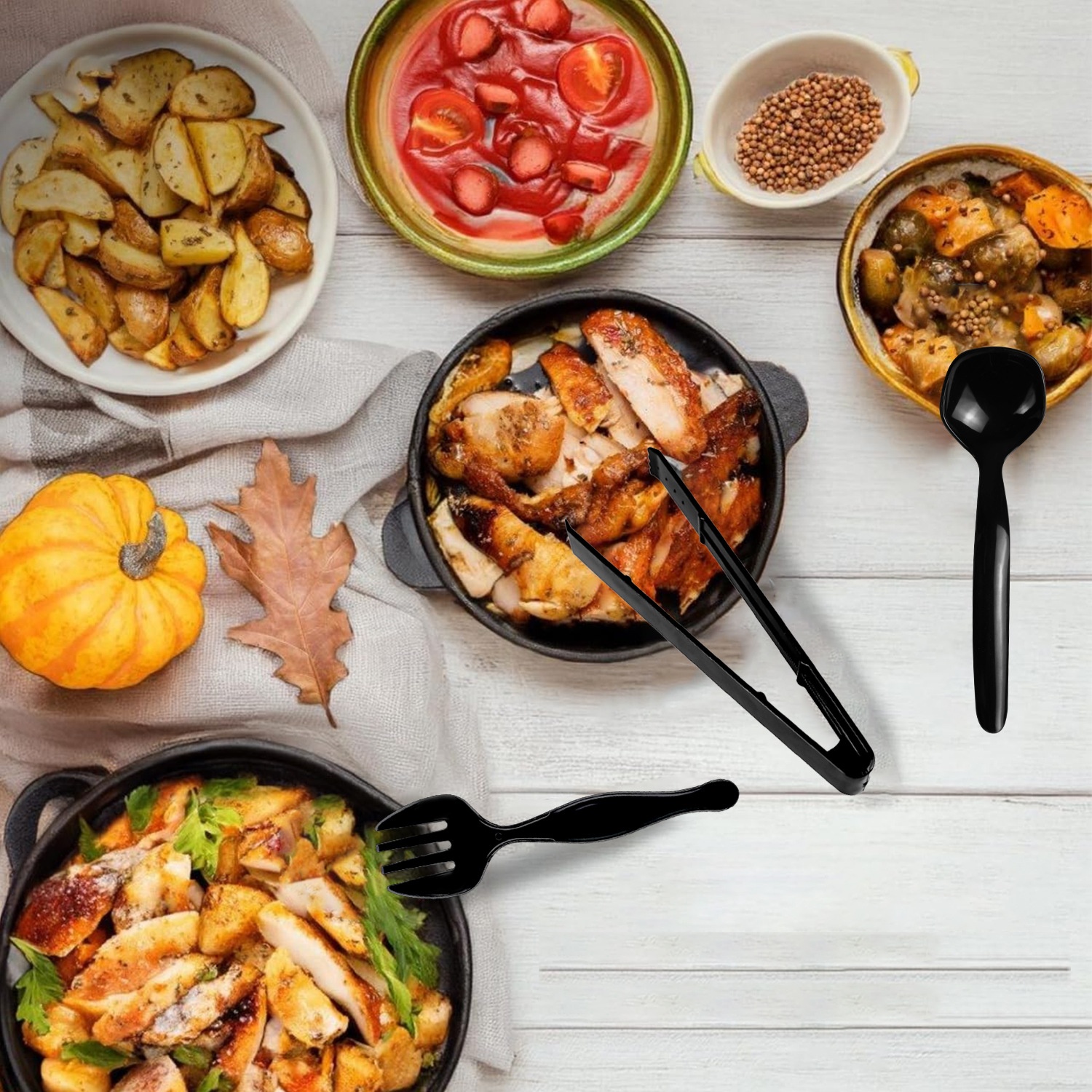
Serving utensils are the quiet workhorses of every buffet line, catered event and chafing dish setup. Serving spoons, serving forks and tongs do not generate the volume that disposable forks and knives do, but they carry higher margins, they are reordered on a predictable cycle, and they are the items event operators notice immediately when quality is poor. For distributors already selling disposable tableware, a complete serving utensil range is one of the easiest additions to a catalog, and it serves buyers that cutlery alone cannot reach.
Why serving utensils deserve their own range
Everyday cutlery is bought by the box for takeaway and delivery. Serving utensils are bought by caterers, hotels, banquet halls, buffets, community kitchens and restaurants running salad bars or hot buffets. Their buying logic is different: they care about length, grip, heat tolerance and how the utensil performs when a guest has to lift a portion of hot food unaided.
That difference shapes the product. A serving spoon needs a longer handle than a dinner spoon, a deeper bowl to hold a portion without dripping, and enough rigidity that it does not flex in a chafing dish. A serving fork needs tines long enough to lift sliced meat without tearing it. Tong designs vary by application, from long utility tongs for hot buffet items to short scissor-style salad tongs and small tongs used at dessert and appetizer stations.
The core items in a wholesale serving range
Most successful programs are built from a compact set of items that covers the majority of customer requests. A solid serving spoon and a slotted spoon for draining cover most hot food stations. A serving fork, sometimes called a cold meat fork, handles roasts and sliced proteins. Salad servers, usually sold as a spoon-and-fork pair, are a standard pairing item that lifts average order value. Tongs come in several lengths and styles, and ladles cover soups, sauces and gravies.
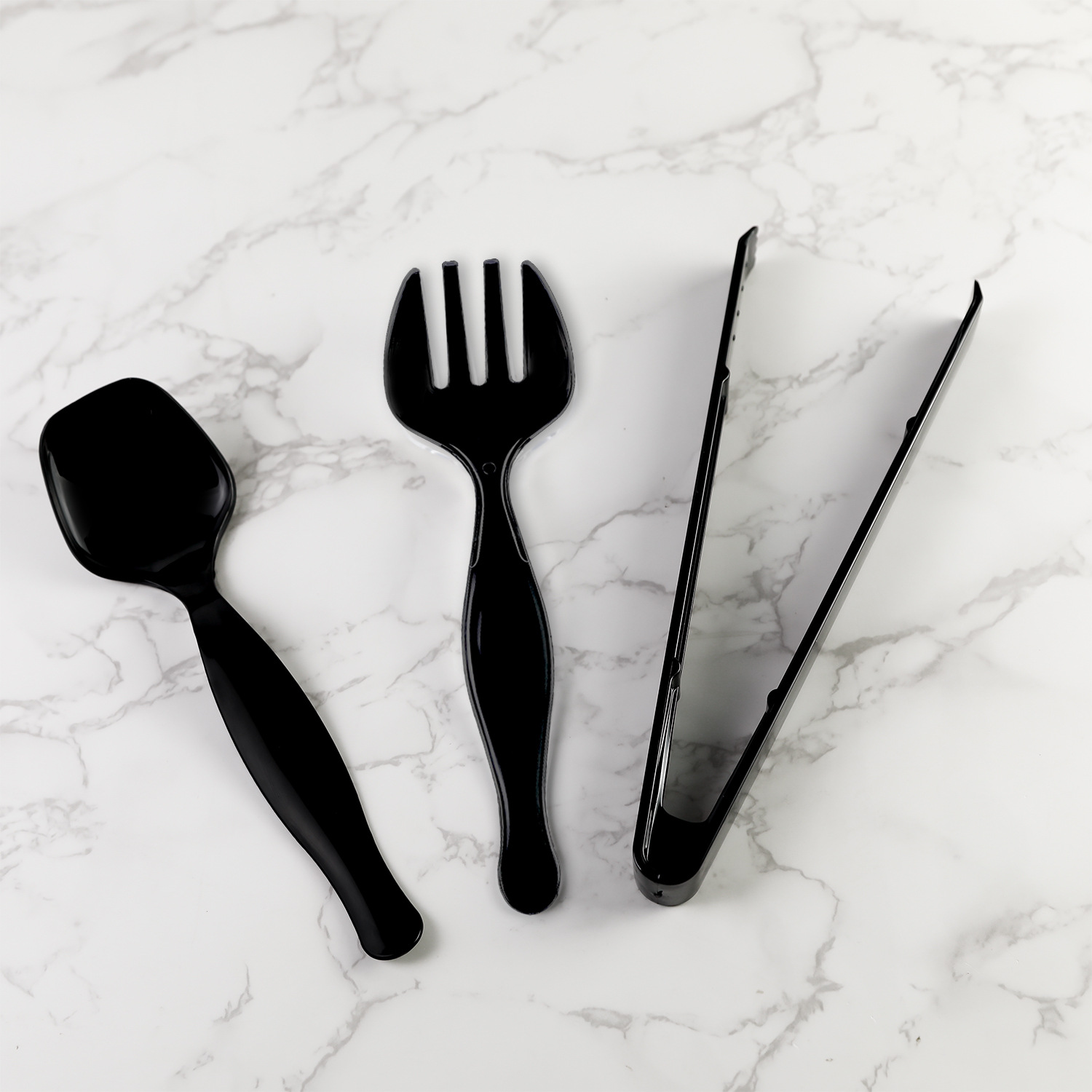
Sets are worth stocking alongside individual items. Pre-packed serving utensil sets, typically combining several spoons, forks and tongs, sell well to party retailers, event suppliers and one-off buyers who want a complete solution rather than individual pieces. Individual items suit professional operators who replace whatever breaks or wears out.
Hygiene rules push demand toward single-use and high-turnover options
Food safety rules in many jurisdictions treat self-service utensils as a handled, shared item with specific cleaning requirements. Some US state food sanitation rules, for example, require consumer self-service utensils such as tongs, scoops and ladles to be cleaned at least every 24 hours. Off-site caterers have an even simpler problem: there is nowhere to wash utensils during an event.
Both pressures support demand for disposable and high-turnover serving utensils. Caterers increasingly treat serving tools as consumables for off-site work, while venues that reuse them buy more units than they once did so that clean utensils can be rotated through a long service. Distributors who can supply both a reusable heavy-weight option and an economical single-use option serve the whole market rather than one segment of it.
Specifications that separate a good utensil from a bad one
Material comes first. Polypropylene is the standard choice because it combines rigidity with enough heat tolerance for buffet service and will not become brittle in normal use. Food-grade, BPA-free formulations with clear documentation are the baseline expectation for professional buyers and for retail listings.
Wall thickness and handle design decide how a utensil feels. A thicker bowl resists flexing under a heavy portion; a wider, textured handle gives servers a secure grip when hands are wet. Length matters as much as strength, particularly for hot food, where short utensils put staff and guests closer to steam and spills.
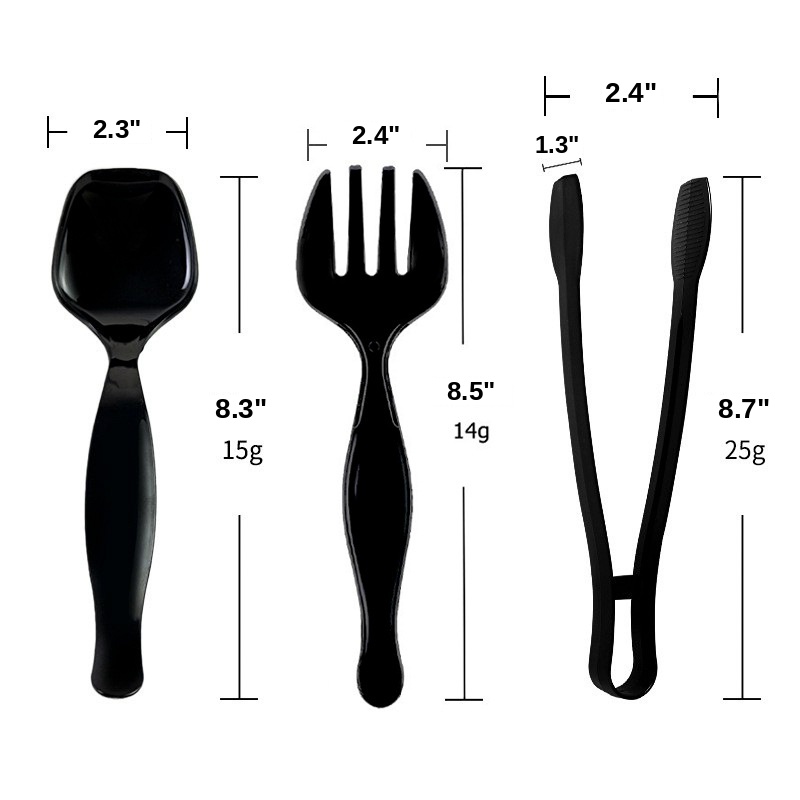
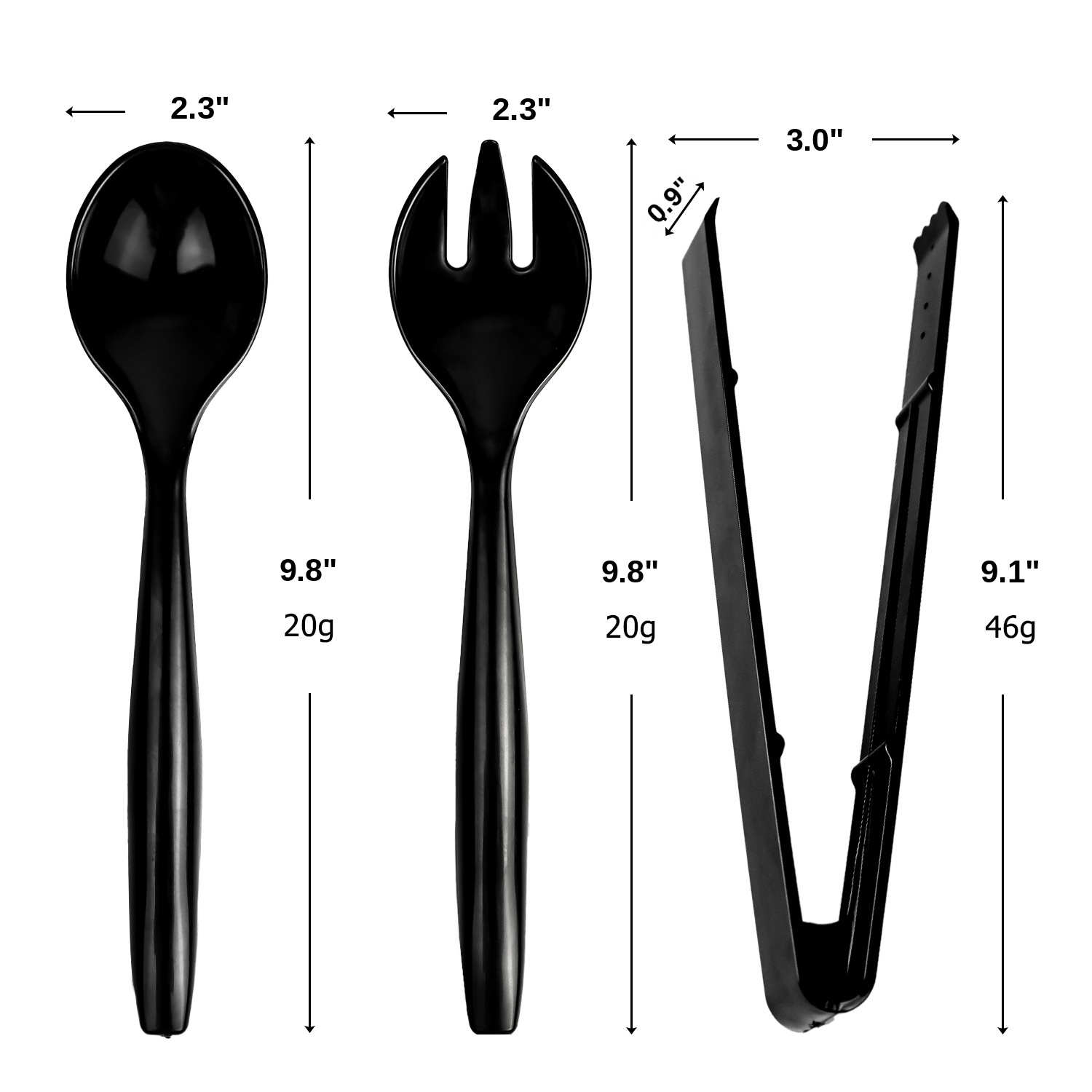
Finish and color affect presentation. Clear utensils look clean and neutral and are the safest default for catered events and hotels. Colored ranges, including solid black and pastel options, sell into party and retail channels and can be matched to an event theme.
How to plan a serving utensil order
Start with the mix, not the total. Ask each customer type which utensils they actually use and in what ratio; most buffets run through spoons and tongs faster than forks. Confirm minimum order quantities for individual items, since small accessories often have different MOQs than the main lines.
Check whether sets or individual packing suits your channel. Retail buyers want retail-ready packaging with clear labeling; food service buyers want economical inner packs with accurate carton counts. If you sell under your own brand, confirm whether private label packaging and color matching are available before you quote.
Finally, plan around the event calendar. Catering demand peaks in spring and autumn and again through the holiday season, and production capacity fills before those windows. Suppliers that run their own molding, printing and packaging hold tighter lead times than those that subcontract each step.
Why Runxiang for serving utensils
Changzhou Runxiang Plastic Products has manufactured disposable plastic tableware for more than 20 years, with in-house molding, printing and packaging under one roof. The company operates 30-plus machines and produces about 160,000 units per day, supplying serving spoons, serving forks, tongs, ladles, cutlery and dinnerware and drinkware to wholesale buyers across North America, Europe, Australia and the Middle East. Custom colors, packaging and private label programs are available.
If you are building or expanding a serving utensil range, request samples and current pricing at simon@runxiangplastic.com or +86 18617181658. Tell us your market and target price point and we will recommend the right specification.
Related pages
Serving utensils are bought with the table, not on their own:
- Plastic cutlery in bulk
- How we supply cutlery: items, sets and gauges
- Plates for buffet and catering service
- Bowls, with and without lids
- Disposable dinnerware wholesale overview
Shop the range: serving ware · disposable cutlery