
A 24 oz bowl and a 9 inch plate are not two versions of the same thing. One is a volume, the other a diameter. Pour 24 oz of chili onto the plate and it spreads into a shallow puddle that reaches the rim as soon as the table is bumped. Keep it in the bowl and it sits 6.5 cm deep with room to stir. That difference decides whether service is clean, and it is the first thing to settle before a purchase order goes out.
This guide is for catering buyers, distributors and private-label programmes committing to one piece or the other. Every number below comes from a product we mould, so you can put it in front of a factory.
Same Ounces, Two Different Geometries
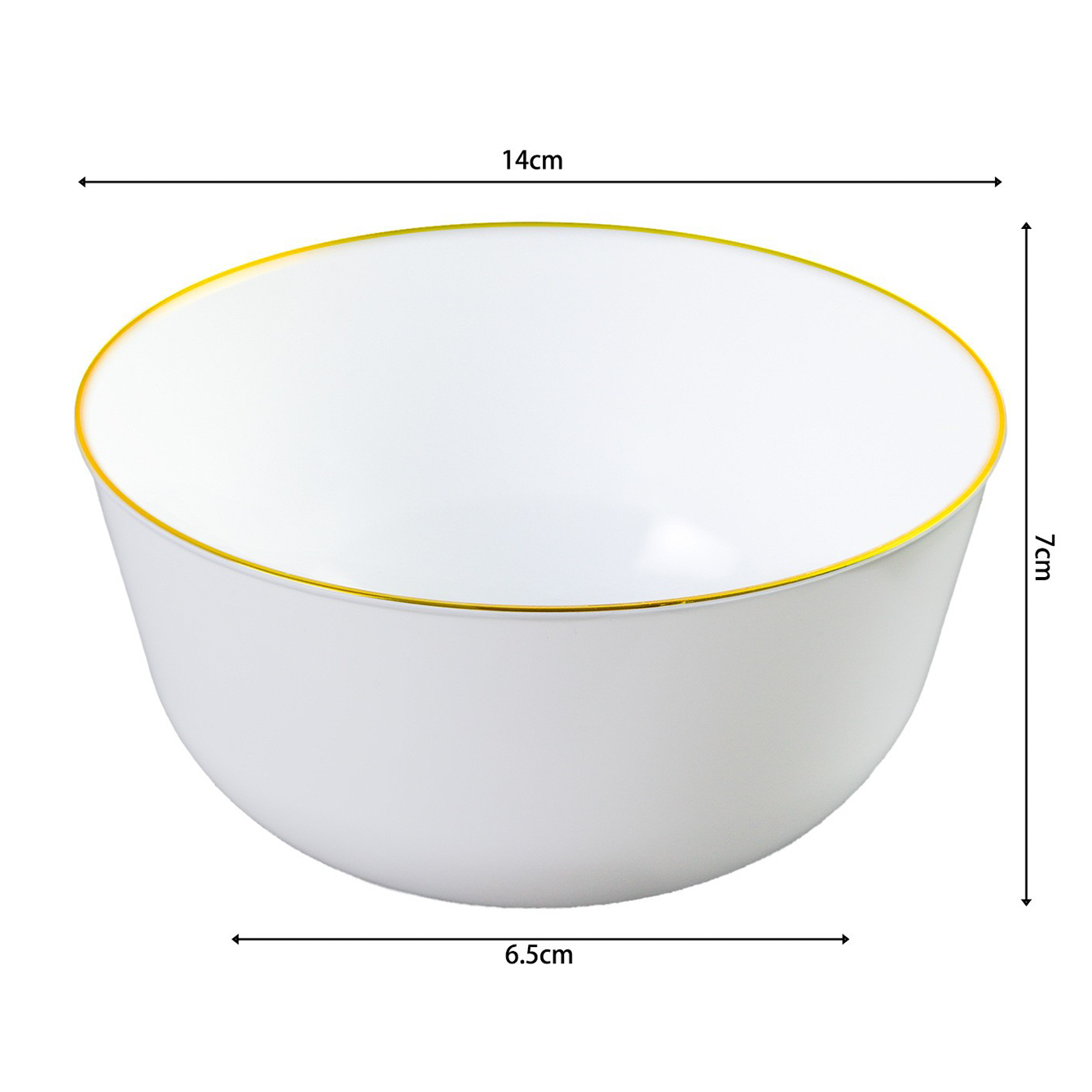
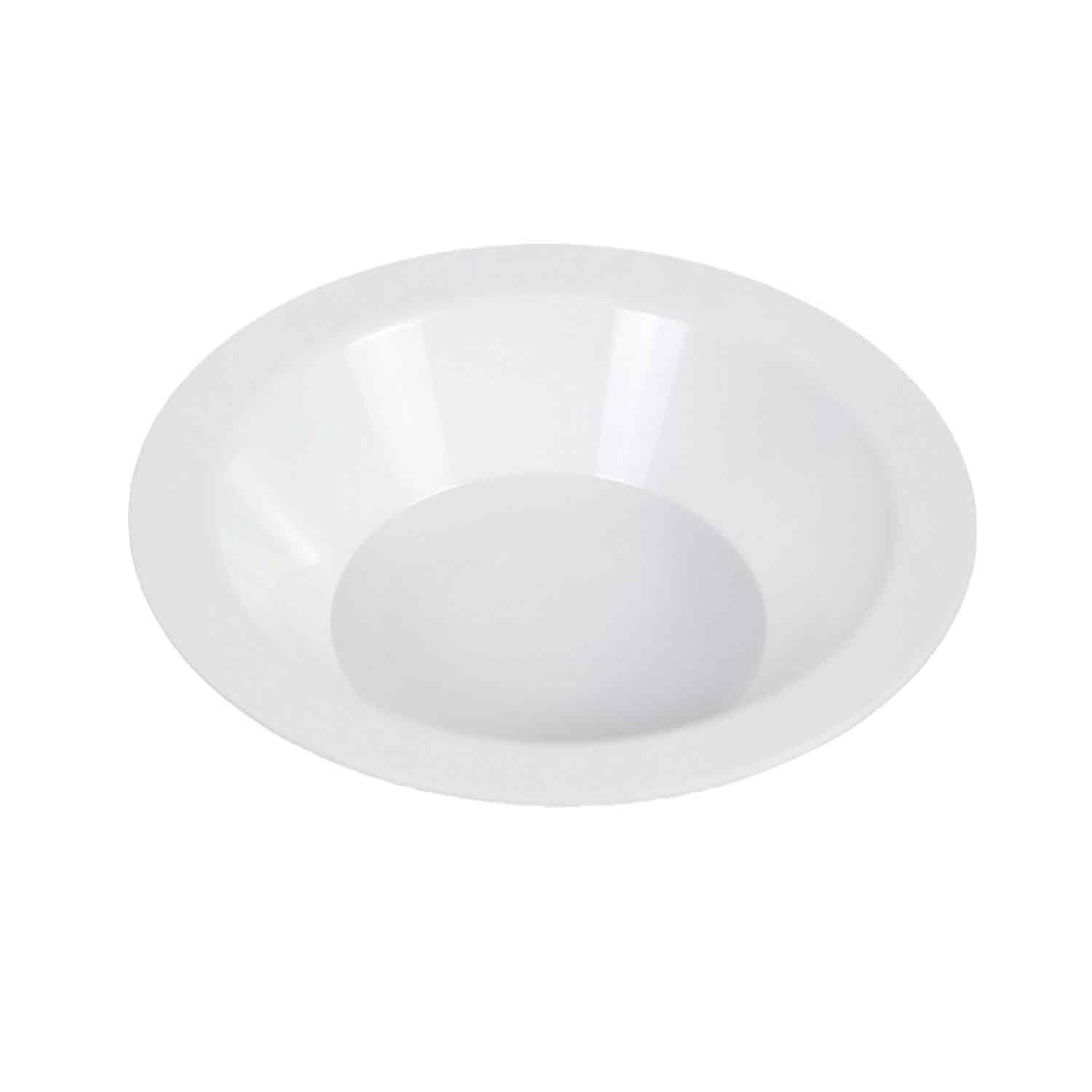
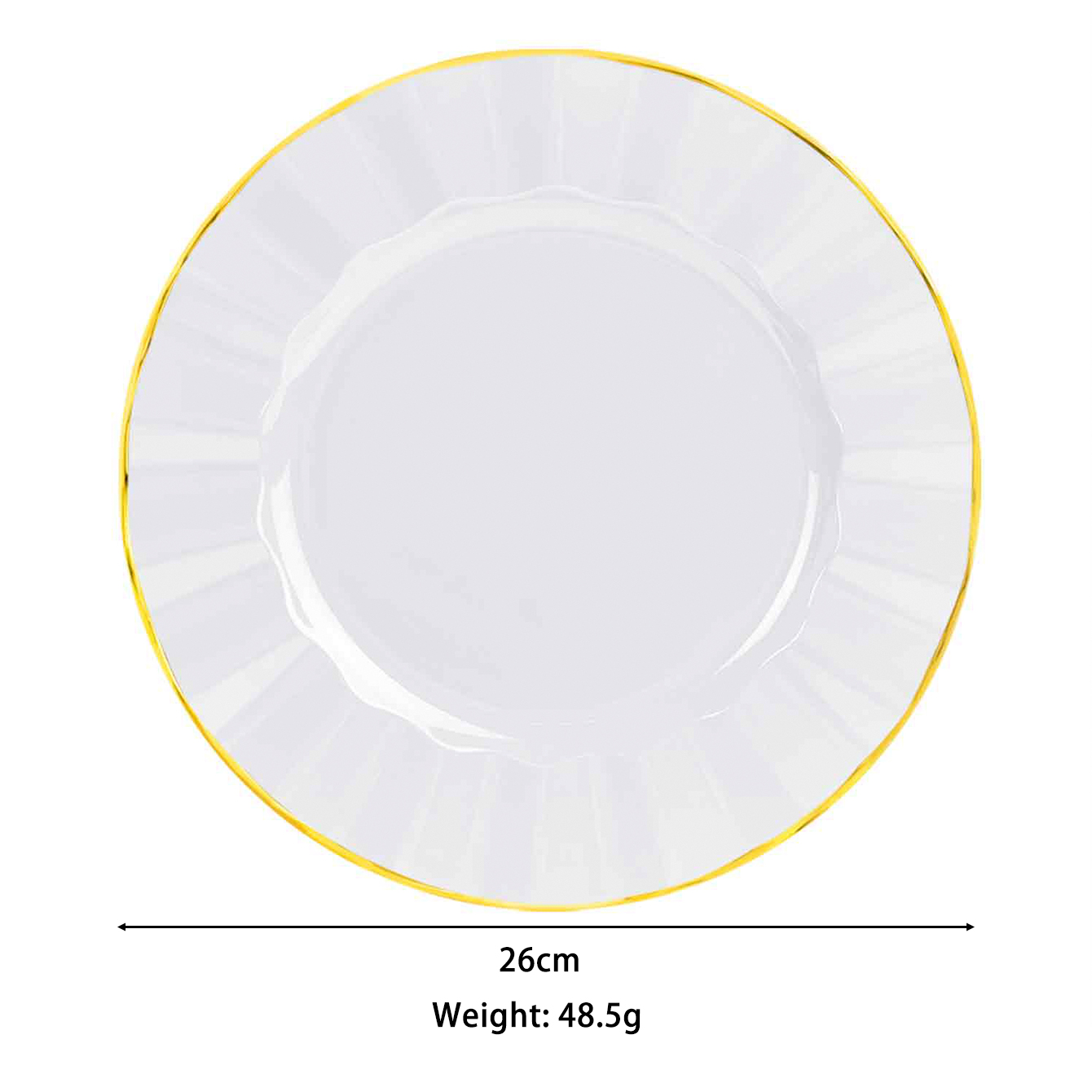
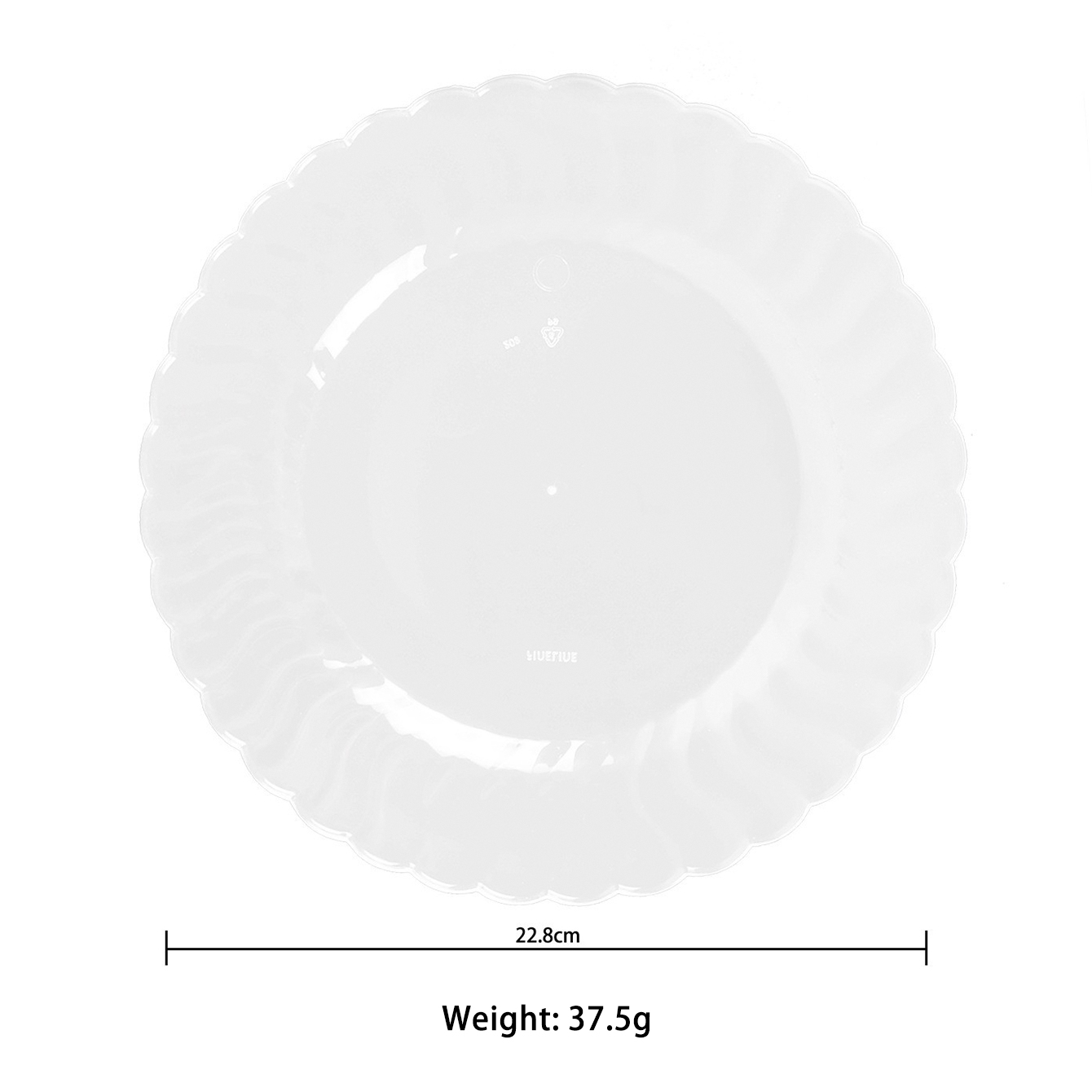
Capacity tells you how much a piece holds; diameter tells you how much table it takes. Our 24 oz bowl is 14 cm across the rim and 6.5 cm deep; our 9 inch plate is 26 cm across in rigid PS and 23.2 cm in plated PET. The bowl holds the same volume in roughly half the footprint, because nearly all of its capacity sits in the depth. The plate spreads that volume into a layer a centimetre thick — fine for a burger, useless for a curry.
| Piece | Capacity | Rim / diameter | Depth | Weight | Resin |
|---|---|---|---|---|---|
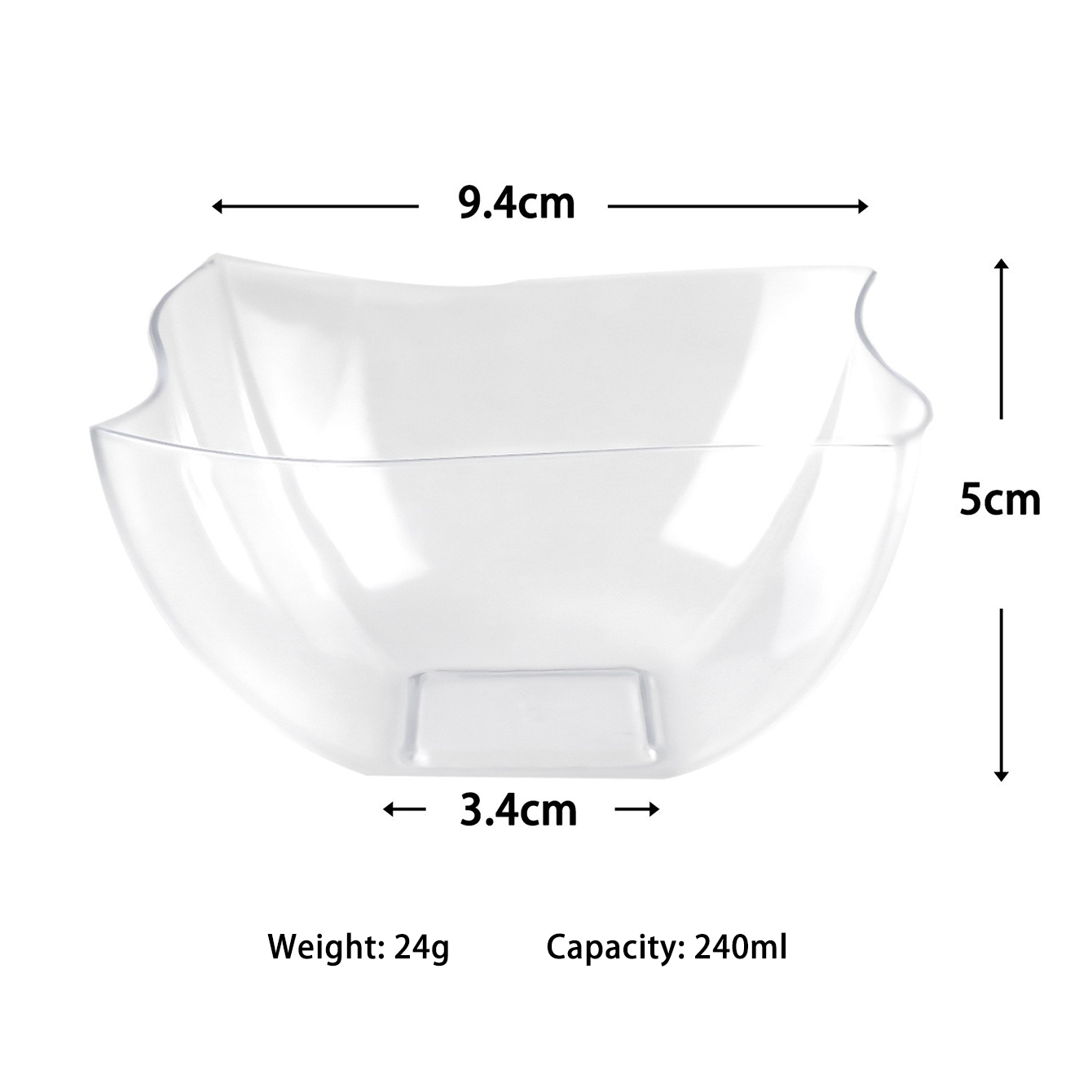
| 8 oz clear bowl | 240 ml | 9.4 cm | 3.5 cm | 24 g | PS |
| 14 oz white bowl | 14 oz | 18.5 cm | shallow | 36 g | PS |
| 24 oz gold-rim bowl | 720 ml | 14 cm | 6.5 cm | 45.7 g | PS |
| 7 inch plated plate | — | 18 cm | flat | 15.3 g | PET |
| 9 inch plated plate | — | 23.2 cm | flat | 19.5 g | PET |
| 9 inch gold-rim plate | — | 26 cm | flat, wide rim | 48.5 g | PS |
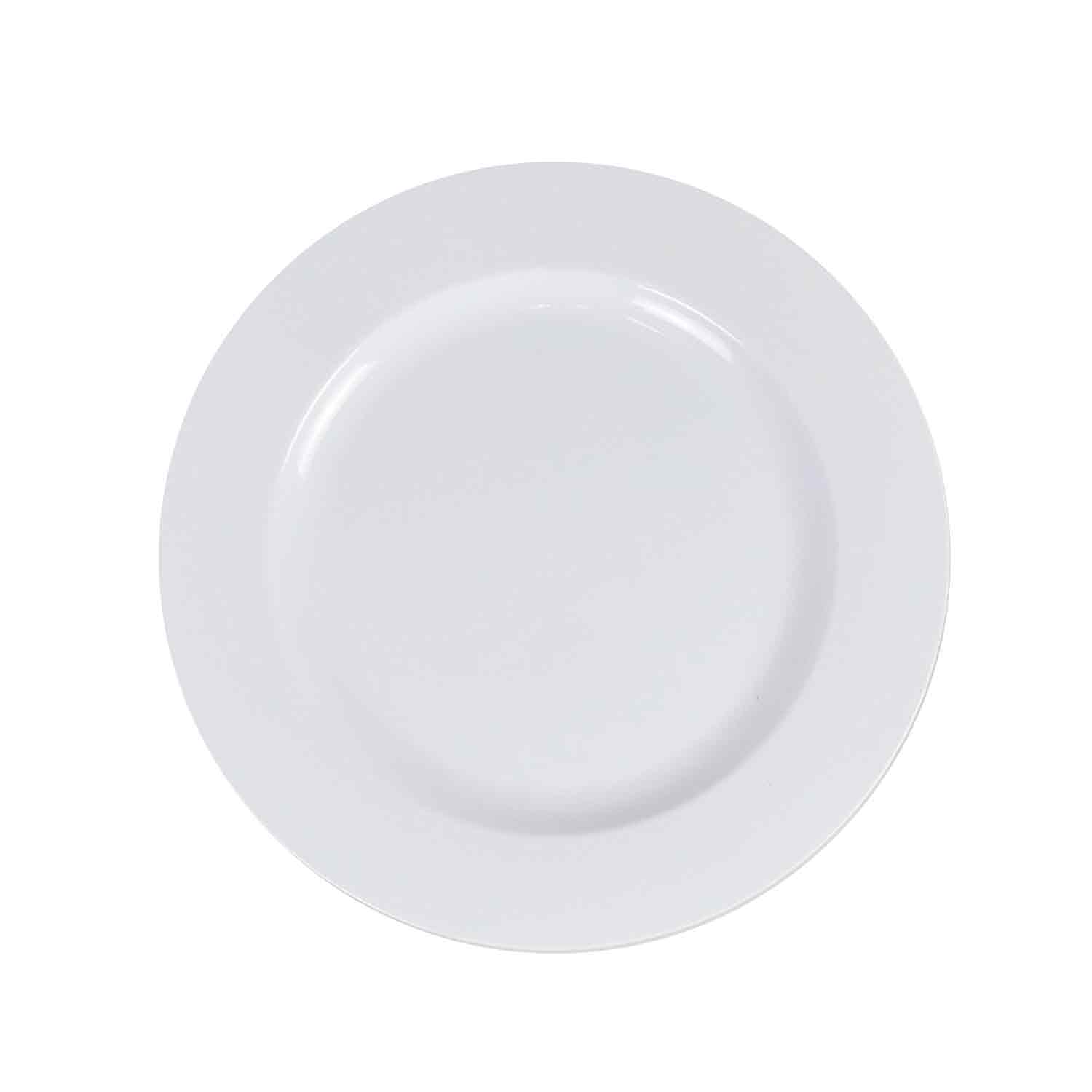
| 12 inch wide-edge plate | — | 12 in | flat, wide edge | 75 g | PS |
The bowl and the PS plate share a resin but solve opposite problems; the plated PET pieces are for cold service.
Match the Piece to the Dish, Not the Guest Count
Guest count tells you how many pieces to buy; the menu tells you which piece. Work the service list first.
- Soups, stews, chili, curry, dal — bowl. A plate cannot hold the liquid fraction, and a rimmed plate encourages over-serving.
- Pasta with sauce, noodles, rice bowls — bowl. Depth lets sauce pool instead of running to the rim.
- Salads — a wide shallow bowl or a plate. Leaves need surface area, not depth; a narrow deep bowl compresses them into a mound.
- Roasts, BBQ, ribs, pizza, sandwiches — plate, usually 12 inch; a bowl forces guests to cut against a curved wall.
- Dessert, ice cream, fruit, condiments — the 8 oz bowl. At 24 g it is the lightest piece in the range and portions dessert without inviting a second scoop.
- Shared sides, bread, chips — the 24 oz bowl. One per four guests is a common buffet rule; confirm it against kitchen portions.
Menus that mix both formats usually settle on three pieces: a 9 inch plate for the main, an 8 oz bowl for dessert or side, and a 24 oz bowl for shared items — also the combination that packs most efficiently.
Three Numbers on a Bowl, Two on a Plate
A bowl is specified by rim diameter, depth and working volume. Working volume is the number buyers forget: a 720 ml bowl does not serve 720 ml of soup, because filling to the rim means spilling in transit. Leave 15 to 20 percent headspace, which puts a 24 oz bowl at a realistic 570 to 610 ml — a main-course soup or a large pho, not a sharing portion.
A plate is specified by diameter, rim width and weight — weight being your only proxy for rigidity before you handle a sample. A 9 inch moulded PS plate at 48.5 g carries a loaded burger without flexing; a 9 inch plated PET plate at 19.5 g bends if lifted by one edge. When a quote says only “9 inch plate”, ask for weight and rim width: those explain most price gaps.
Rim Profile Decides How It Carries
Rim width is a service decision, not decoration. Wide rims give waitstaff a grip and keep fingers out of the food, which is why the 12 inch 75 g plate exists in a wide-edge profile. Narrow rims give more usable surface at the same diameter, so a tight-rim 9 inch plate reads as bigger to a guest.
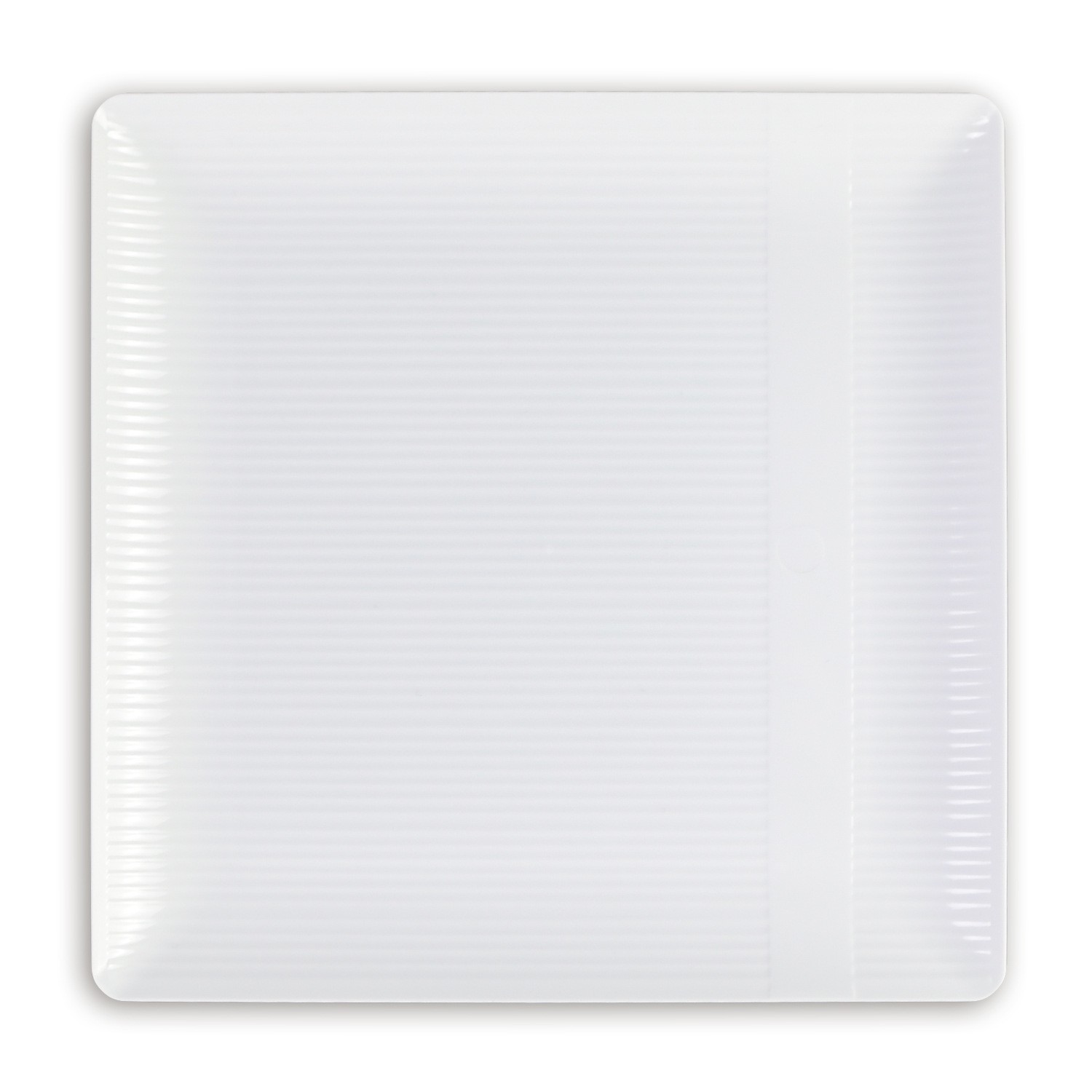
Square is a third option: our square party plate runs 16 cm at 25.5 g, with a larger 7.5 inch size, and its straight edge lines up on a buffet without gaps. The trade-off is packing — square pieces nest less tightly.
PS and PET Are Not Interchangeable Under Heat
Rigid PS is stiff for its weight and holds a wide rim without sagging, which is why most of our plates and all of our bowls are PS. It is not the resin for food at simmering temperature: let hot food drop below a hard simmer before it goes into a thin PS bowl, or specify a heavier wall and confirm heat performance in writing.
PET is the plated decorative line: bright gold or silver finish, crisp edge, suited to cold platters, dessert tables and room-temperature buffets. Hot gravy dulls the plating and a light gauge can distort, so if a menu mixes hot and cold, split the order.
Paperwork matters as much as resin. In the United States, polystyrene food-contact articles fall under 21 CFR 177.1640 and PET under 21 CFR 177.1630. Ask for a declaration naming resin, grade and colourants, not a generic “food grade” sentence; EU and UK orders need the migration declaration instead.
Stacking, Case Packs and What You Actually Order
Bowls nest, but every bowl in the stack adds height: ten 24 oz bowls do not stack into 6.5 cm, and the ratio changes with wall angle. Plates nest almost flat, so a carton of plates is a thin dense block while a carton of bowls is taller and lighter. That shows up in container loading before it shows up on the invoice.
Ask any supplier three questions before a mixed order: nested stack height for ten pieces, pieces per sleeve and sleeves per carton, and carton dimensions with gross weight. Those give you cube per piece and a like-for-like comparison.
A Twelve-Line Spec Sheet
Send this to a factory and the quotes come back comparable. Leave a line blank and you get a price for something you did not ask for.
- Piece type and the service role it fills.
- Stated capacity in ml and oz, for bowls.
- Rim diameter and depth in cm, measured across the outside.
- Resin, with the food-contact grade named.
- Colour and finish: clear, solid, plated, matte or gloss.
- Rim style: narrow, wide edge, square or sample profile.
- Target weight per piece in grams, with a tolerance.
- Pieces per sleeve, sleeves per carton, carton size and gross weight.
- Nested stack height for ten pieces.
- Food-contact declaration for the destination market.
- Artwork, lid or sleeve needs, if part of a branded set.
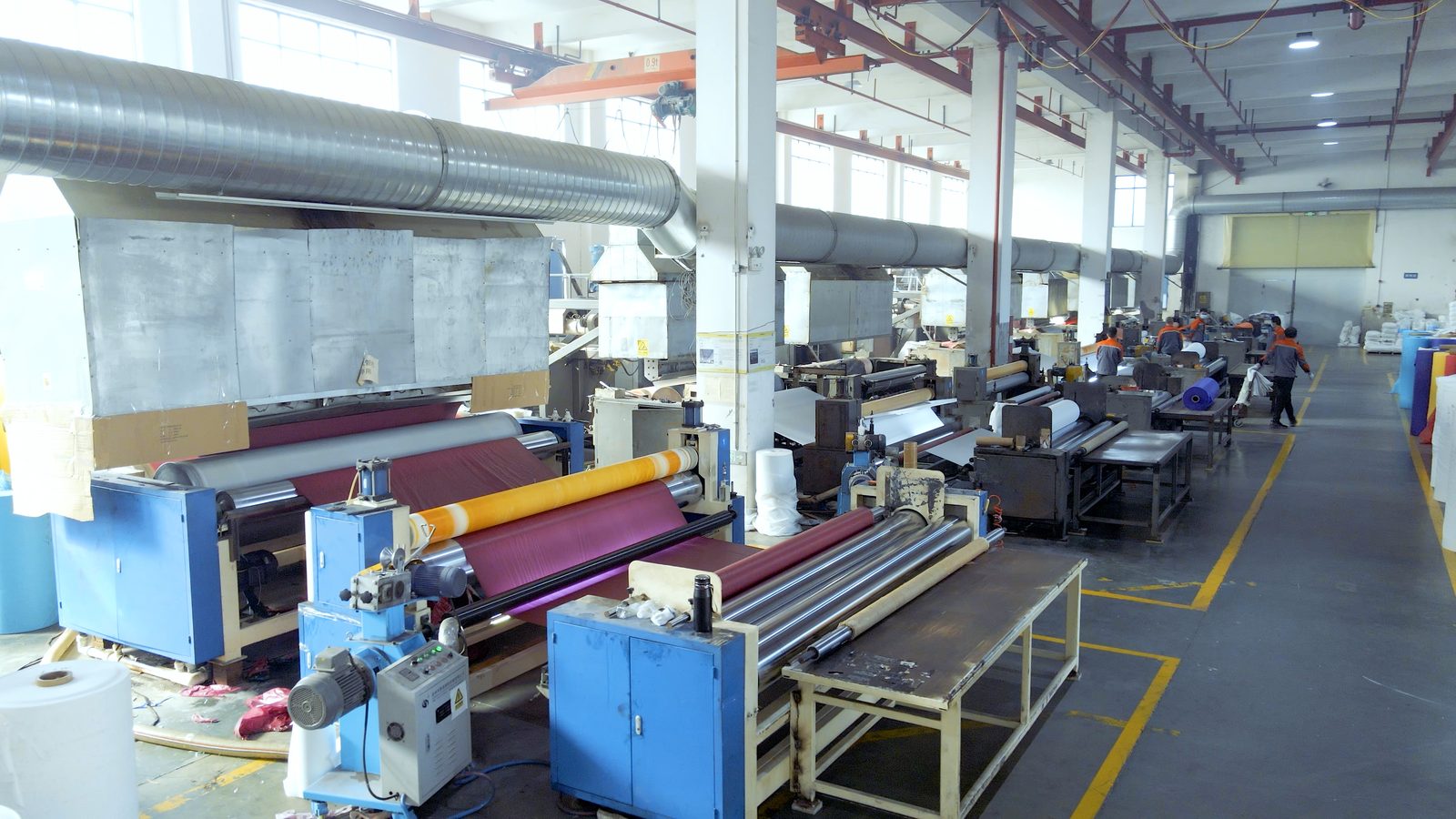

Runxiang has moulded rigid PS dinnerware and run PE and PEVA tablecloth lines in Changzhou for more than twenty years. We make plates from 7 to 12 inches, bowls at 8, 14 and 24 oz, cutlery and napkins, and we quote from a spec sheet rather than a catalogue page. Send the menu and service style and we will map the pieces, telling you where a bowl saves you a plate and where it does not. See our bowl range and plate range, or the size and portion guide for quantities.
Next step. Send your menu and guest count through our contact form for a piece list; for sampling, tooling and artwork see how we quote. Related: grams per piece and rim style, clear plate sizes.
Frequently asked questions
Can I serve soup on a plate?
Only a thick soup or stew in a very small quantity. A flat plate spreads liquid into a thin layer that reaches the rim as soon as it tilts. Use a bowl with depth and leave headspace.
Is a 24 oz bowl enough for a main course?
At 720 ml it holds roughly 570 to 610 ml after 15 to 20 percent headspace: a main-course soup, a large noodle bowl or a sharing side for three to four.
Why does a 9 inch plate weigh 19.5 g in one line and 48.5 g in another?
Different constructions: 19.5 g is plated PET at 23.2 cm; 48.5 g is moulded PS at 26 cm with a wide rim. The heavier resists flexing; the lighter is for cold display.
Can PS bowls go in the microwave?
Rigid PS is not for repeated microwave heating: it softens well below boiling and a thin wall will distort. If reheating is part of the service, specify it at quotation and ask for heat data.